
Comparison · AI Garden Planner
AI Garden Planner vs. Landscape Designer: Cost, Time and Results Compared (2026)
An AI garden planner can sketch a beautiful new backyard from a single photo in under a minute. A traditional landscape designer can also do that — over several visits, several drawings, and several thousand pounds. Most gardens do not really need both. This kind, plain-English comparison helps you decide which one your garden truly needs in 2026, and how the two can work together when you really do want a professional touch.
AI Garden Planner ComparisonsPublished April 18, 2026Updated April 27, 20268 min read
What does an AI garden planner actually do?
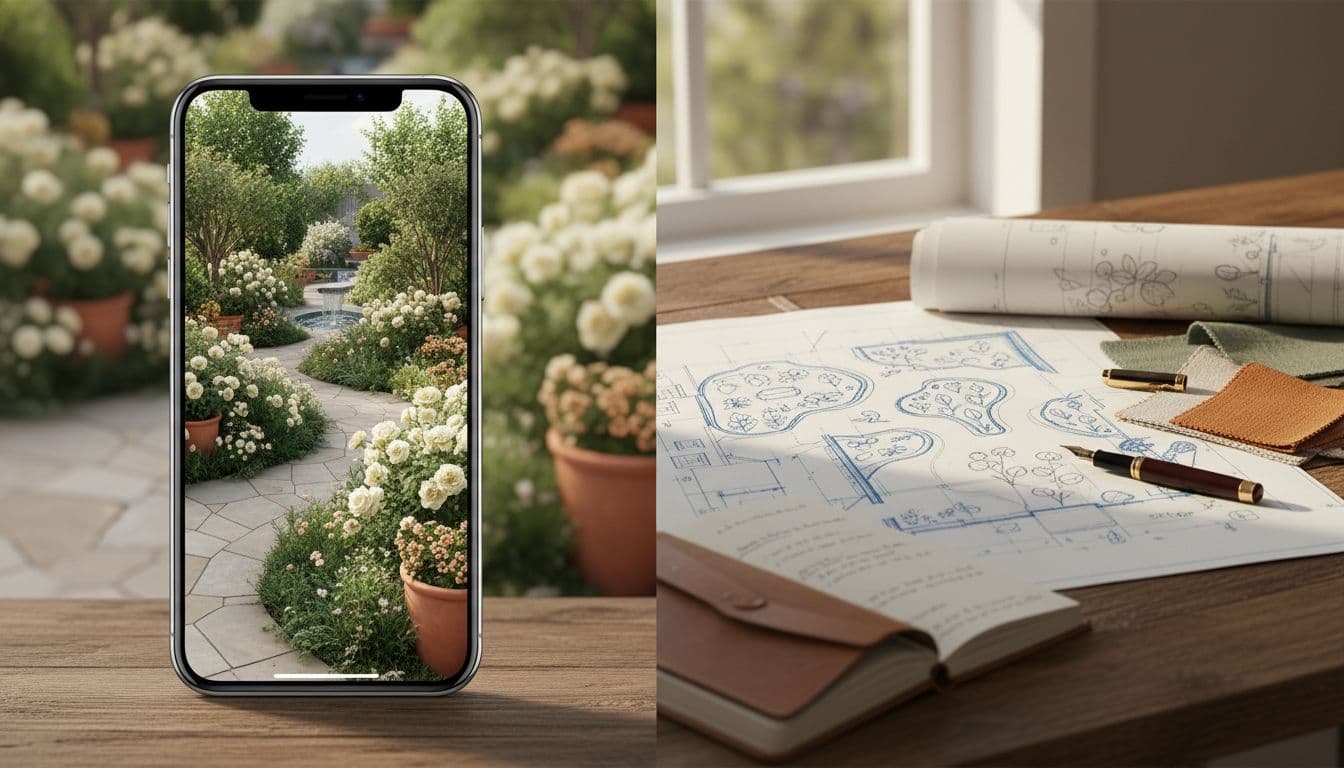
An AI garden planner is a friendly piece of software that takes a photo of your garden and shows you what it could look like with new planting, paths and seating. The shape of your real space is kept exactly as it is — your fence, your shed, your favourite tree all stay. Only the design changes.
You do not need to draw anything. You do not need to know any plant names. You take one photograph, pick a style you like — cottage, modern, Mediterranean, Japanese — and the AI garden planner produces a believable, photo-realistic image of the finished garden. If you would like a slow, plain-English walk-through, our AI garden design guide takes you through it step by step.
A good AI garden planner like FlorAI works on iPhone, Android and the web app, so you can use whichever feels easiest. Most people try three or four redesigns before they settle on one — and that is the point. Trying ideas in an AI garden planner is free, fast and reversible.
What does a traditional landscape designer cost in 2026?
A landscape designer is a real, qualified human being who visits your garden, takes measurements, listens to what you would like, and prepares drawings on paper or in design software. They can be wonderful — and they tend to be expensive.
In 2026, a typical landscape designer will charge in one of three ways:
- An hourly fee, usually £75–£150 in the UK and US$100–US$250 in the US.
- A flat fee for a design package, often £1,500–£5,000 for a small to mid-size garden in the UK, or US$2,000–US$8,000 in North America.
- A percentage of build cost, typically 10–15%, when the same firm also handles the build.
On top of the design itself, you may pay for site visits, soil analysis, planting plans, and detailed specifications. For larger projects with hard landscaping, retaining walls or planning permission, a designer is often worth every penny. For a small backyard refresh, the bill can feel rather steep.
For background on what landscape design as a profession actually covers, the overview on Wikipedia is a fair, neutral starting point.
AI garden planner vs. landscape designer: a side-by-side comparison
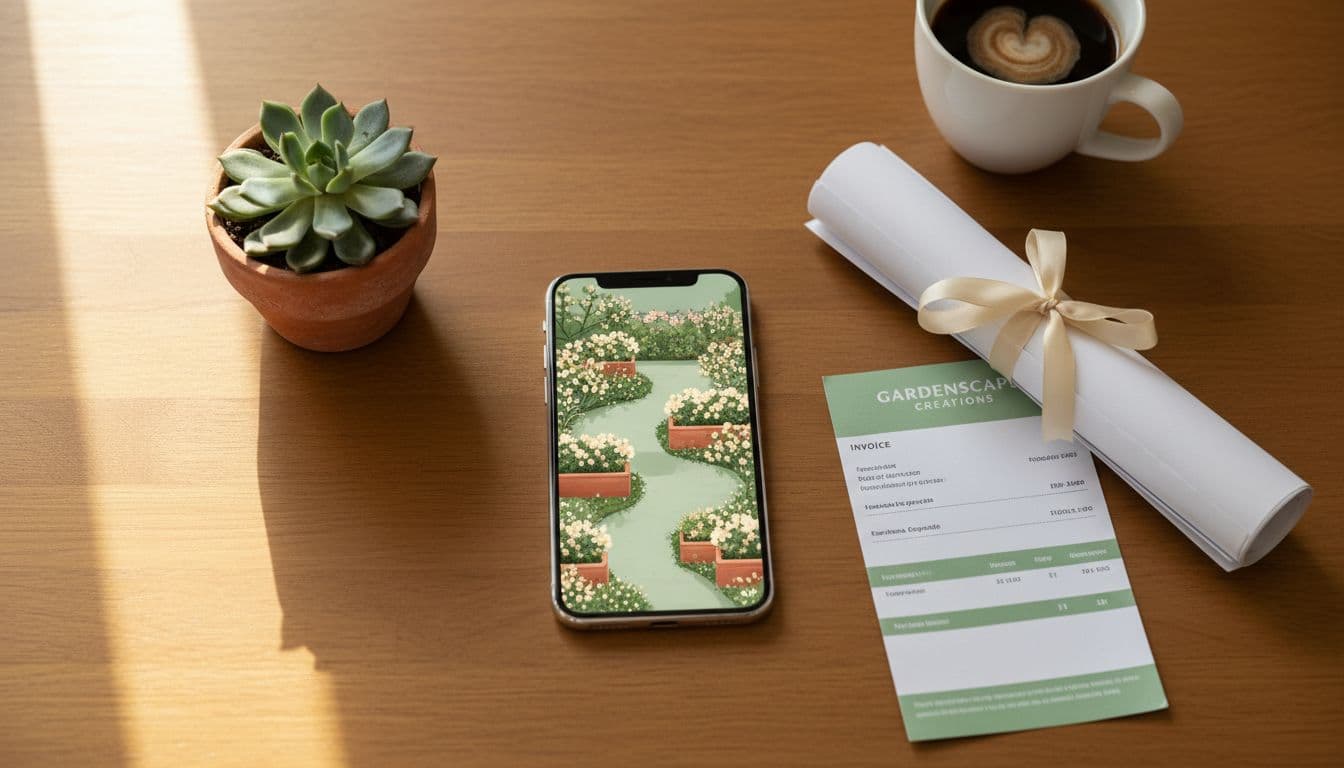
The two approaches are not really enemies — they answer slightly different needs. Here is how they tend to compare for a typical home garden in 2026.
- Cost. AI garden planner: free to start, with optional plans from a few pounds a month. Landscape designer: usually £1,500–£5,000 for a single design package.
- Time to first design. AI garden planner: under a minute. Landscape designer: typically four to eight weeks from first call to final drawings.
- Number of ideas you can try. AI garden planner: as many as you like. Landscape designer: usually one or two concepts, with limited revisions.
- Visual style. AI garden planner: photo-realistic image of your real garden. Landscape designer: technical drawings, sometimes with a 3D render.
- Plant lists. AI garden planner: suggested planting in plain English. Landscape designer: detailed planting plan with quantities and spacing.
- Build supervision. AI garden planner: not designed for this. Landscape designer: can manage contractors and build quality.
- Best for. AI garden planner: most home gardens, especially under half an acre. Landscape designer: large, complex, or technical projects.
Time: how long does each take?
Time is the quietest cost. With a landscape designer, you typically book a first visit, wait two to four weeks for concept drawings, give feedback, wait another two to four weeks for revisions, and only then start sourcing plants. Most home gardens take six to twelve weeks of design work before a single spade goes in the ground.
With an AI garden planner, the same first sketch arrives in seconds. You can try ten styles before lunch. You can sleep on a redesign and check whether you still love it in the morning. There is no awkward call to cancel, no appointment to reschedule, no apologetic email to a designer who has already drawn what you have changed your mind about.
Quality: what the finished garden actually looks like
Older garden software produced cartoon previews. A modern AI garden planner produces photo-realistic results — pictures that look like they could have been taken on a sunny Saturday in your own backyard.
A skilled landscape designer can still beat that on the most subtle details — the exact relationship between a wall and a stepped lawn, the way a path narrows by a hedge, how the planting will look in five winters. For most home gardens that is more accuracy than you need. For a large country garden with serious hard landscaping, that level of judgement is worth paying for.
For inspiration on what good real-world planting actually looks like — at every budget — the RHS garden design library is a calm, ad-free reference you can dip into for free.
When to use an AI garden planner (and when to hire a landscape designer)
A simple rule of thumb after years of helping gardeners with both: an AI garden planner is the right starting point for almost everyone, and a landscape designer is worth the money on a smaller number of projects.
Reach for an AI garden planner when:
- You are refreshing a backyard, front yard, patio or balcony.
- You want to try several styles before committing.
- You are working with a budget of under £10,000 for the whole garden.
- You enjoy gardening yourself and want to plant in your own time.
- You want a picture you can show your partner before you spend a thing.
Hire a landscape designer when:
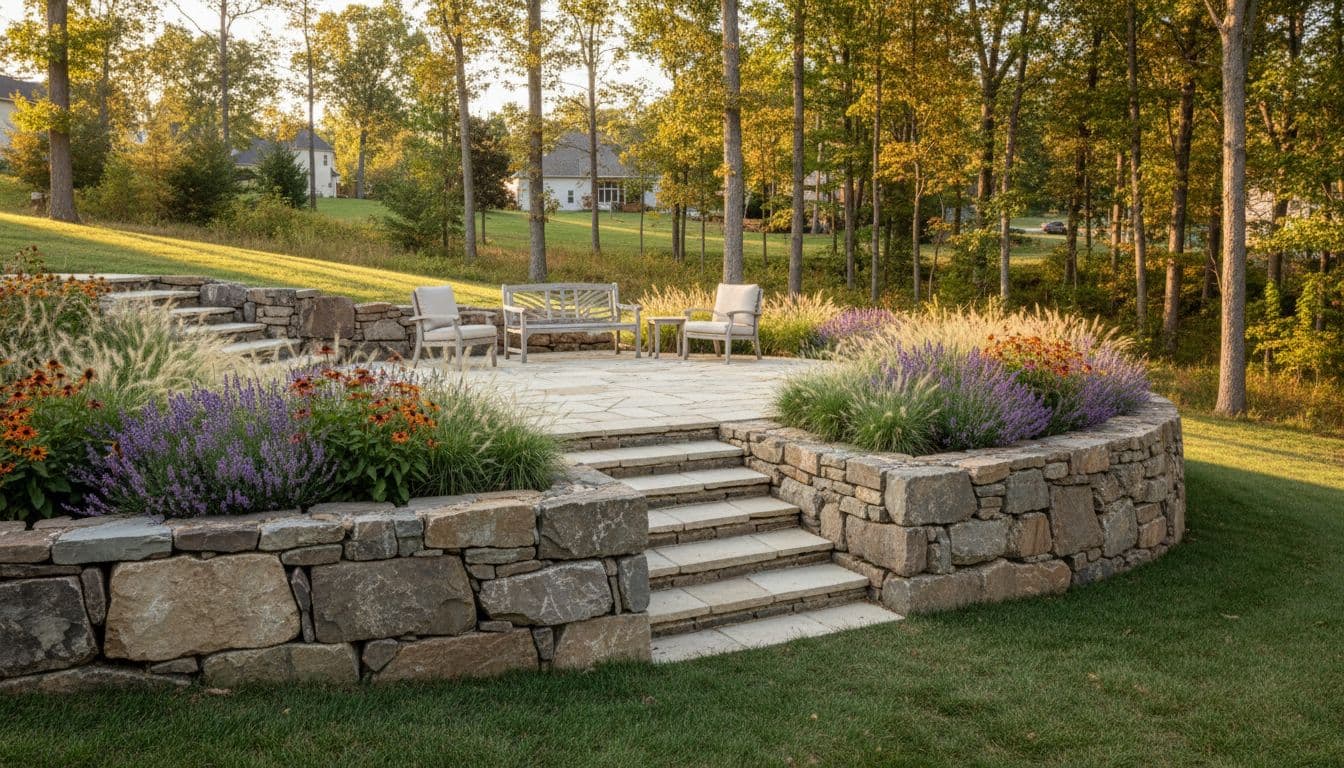
- You are building serious hard landscaping (steps, retaining walls, large patios).
- Your project needs planning permission or drainage drawings.
- You want one professional to manage contractors and build the garden too.
- Your garden is large enough that small mistakes become very expensive.
How to combine an AI garden planner with a landscape designer
The kindest, most cost-effective approach for many gardens is to use the two together. Run your first AI garden design at home, on your sofa, with a cup of tea. Try a few styles. Save the redesign you keep coming back to.
Then, if you would like a professional pair of eyes, take that picture to a landscape designer. The conversation starts in a much better place. The designer can refine the planting, sort out the technical details, and do the things AI garden planners do not yet do — soil reports, drainage, lighting plans. You will usually pay them less because you have already done the early thinking.
If you would like a longer guide to picking the right AI garden design tool before you start, our AI garden design app buyer's checklist covers the features that matter most.
Cost-saving tips when you use an AI garden planner
- Generate three or four AI garden designs before you buy a single plant. Most overspending happens because people change their mind half-way through.
- Keep your fence, paving and good trees. The AI garden planner will design around them. Hard landscaping is the expensive part of any garden.
- Plant in stages over a year. Most AI garden designs are easier to plant in three small weekends than one heroic one.
- Use the AI garden planner to make a short shopping list, then buy plants from a trusted local nursery rather than impulse trolleys at a big-box shop.
- Share the redesign with anyone who is helping. A photograph everyone has seen is much cheaper than a misunderstanding.
Frequently asked questions about AI garden planners
Is an AI garden planner as good as a landscape designer?
For most home gardens — backyards, front yards, patios, balconies — yes, the finished result is comparable, particularly when you are happy to plant the garden yourself. For very large or very technical gardens a landscape designer still has the edge.
How much does an AI garden planner cost?
Far less than a designer. FlorAI is free to download on iOS and Android, and the web app is free to try as well. Optional paid plans cost a few pounds a month for unlimited redesigns and higher-resolution exports.
Can an AI garden planner give me a real planting list?
Yes. A modern AI garden planner suggests plants by name, in plain English, suited to the style and conditions you describe. You can take that list straight to a local nursery.
Will the AI garden planner share my photos?
A good AI garden planner is private by default. FlorAI does not publish your garden photos and you can delete a redesign whenever you like. Always read the privacy page of any AI garden design app before you upload pictures of your home.
Where can I read more about garden planning?
For wider, plain-English reading on real gardens, BBC Gardeners' World is a kind, ad-free starting point. Bookmark a few articles before your first AI garden planner session and the ideas tend to land more clearly.
Last updated April 2026. Costs are typical 2026 ranges and vary by region. Written by the FlorAI gardening team after years of helping gardeners decide between an AI garden planner and a designer.