
Inspiration · Before and After
AI Garden Design Before and After: 10 Real Makeovers (2026)
There is something quietly wonderful about seeing a tired garden become a lovely one without a single spade going in. These ten AI garden design before-and-after makeovers were each made from a single phone photo with FlorAI — same fence, same shed, same view from the kitchen window, only kinder. If you have been wondering what AI garden design could do for your real space, this is the gentlest place to start.
AI Garden Design InspirationPublished May 21, 20267 min read
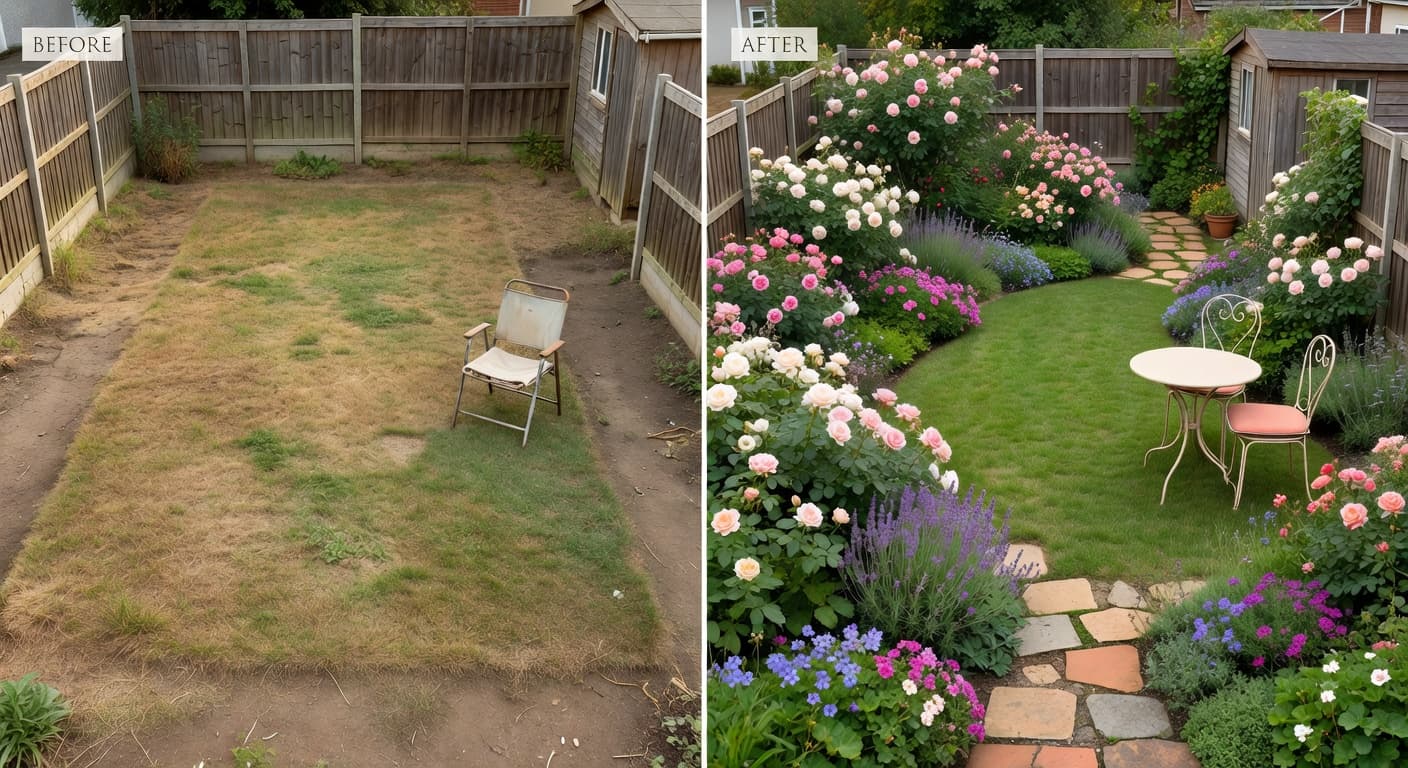
All ten gardens below are real spaces — small backyards, front yards, patios, balconies and side returns — redesigned in seconds with AI garden design. Each makeover started with one photo taken on a phone. The AI garden planner kept the bones of the space (the fence, the paving, the shed, the boundary trees) and changed only the planting, the path and the seating. If you would like the full method behind these pictures, our AI garden design guide walks through it gently.
Small backyards
Most gardens are small gardens. That is not a problem — it is often where AI garden design is most useful, because every square metre matters and you really want to get the layout right before you buy a single plant.
1. Tired lawn → soft cottage garden
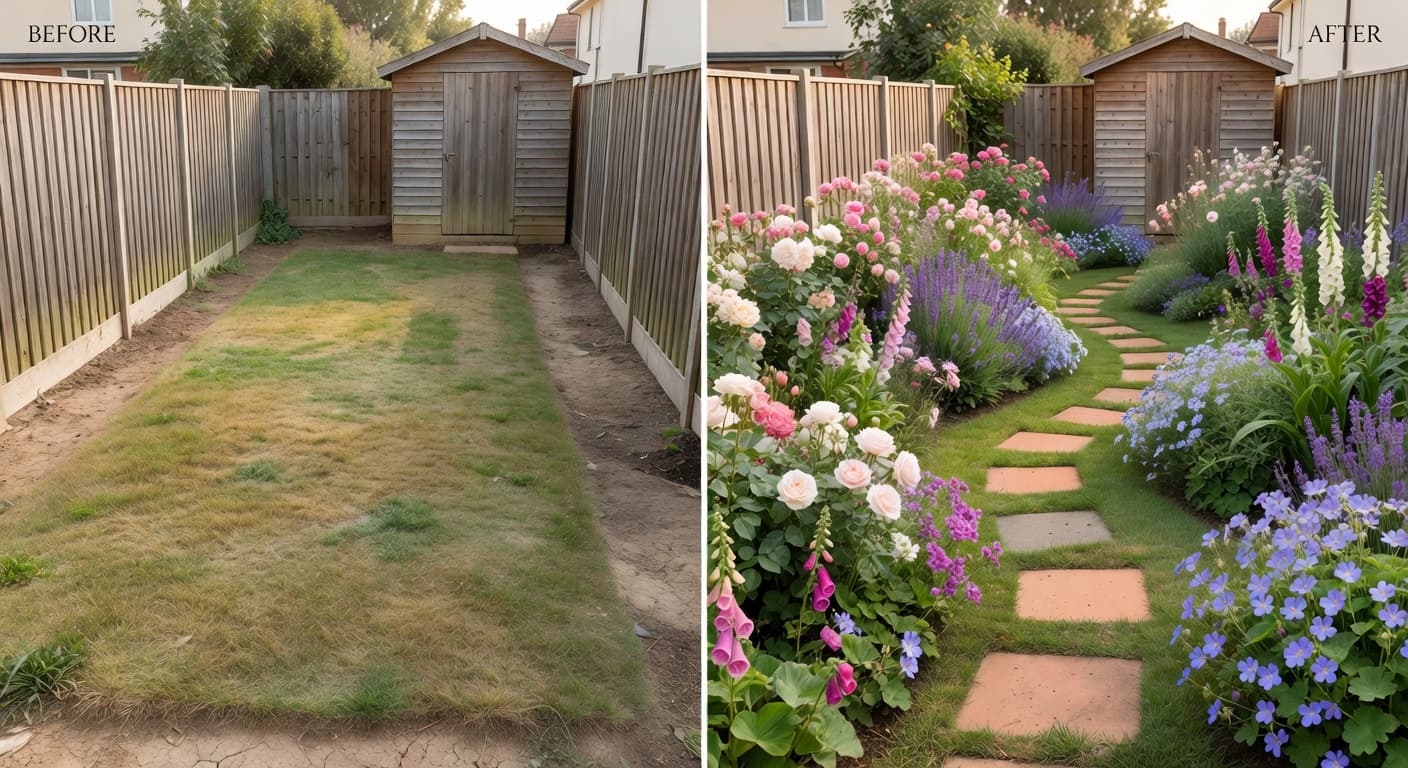
The before is a familiar one — a narrow rectangle of patchy lawn, a wooden fence, a shed in the corner. The AI garden design keeps every line of the boundary and softens the middle with curved borders, a stepping-stone path and warm cottage planting. The lawn shrinks; the garden grows.
2. Concrete patch → modern minimalist backyard
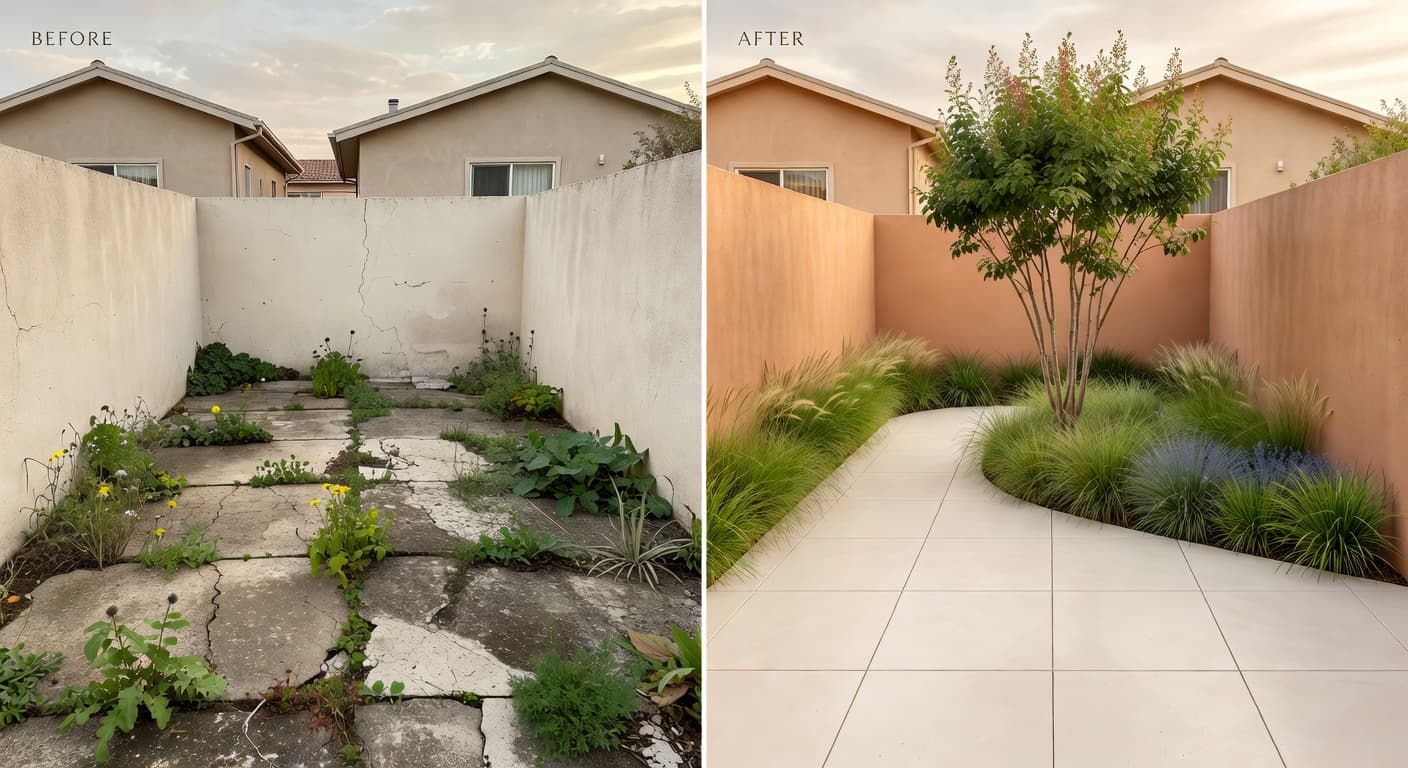
A small back yard that was mostly cracked concrete becomes a quiet modern space: clean paving, a single multi-stem tree, a generous band of ornamental grasses. There is room to breathe, which is the whole point of a small modern garden.
3. Bare lawn → wildlife and pollinator garden
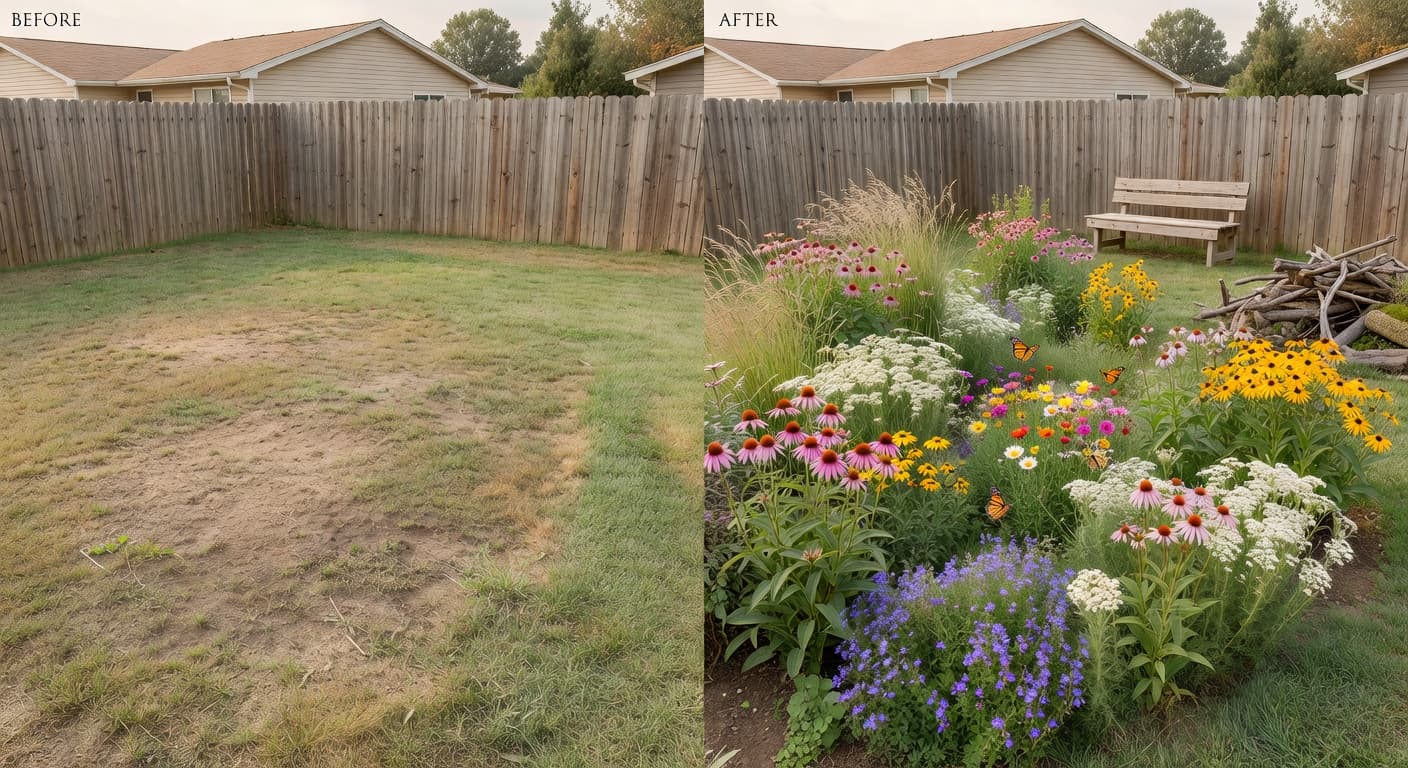
A bare patch of mown grass becomes a kinder garden for bees, butterflies and hedgehogs. The AI garden planner kept the dimensions exactly and layered in native planting, a small wildflower patch, and a quiet seating corner. The RHS guide to gardening for wildlife and the BBC Gardeners’ World plant directory are both lovely places to read more.
Front yards
A front yard does not have to be a strip of grass and a row of bins. AI garden design is particularly happy here, because the shape is simple and the right planting changes the feeling of the whole house.
4. Concrete driveway edge → Mediterranean curb appeal
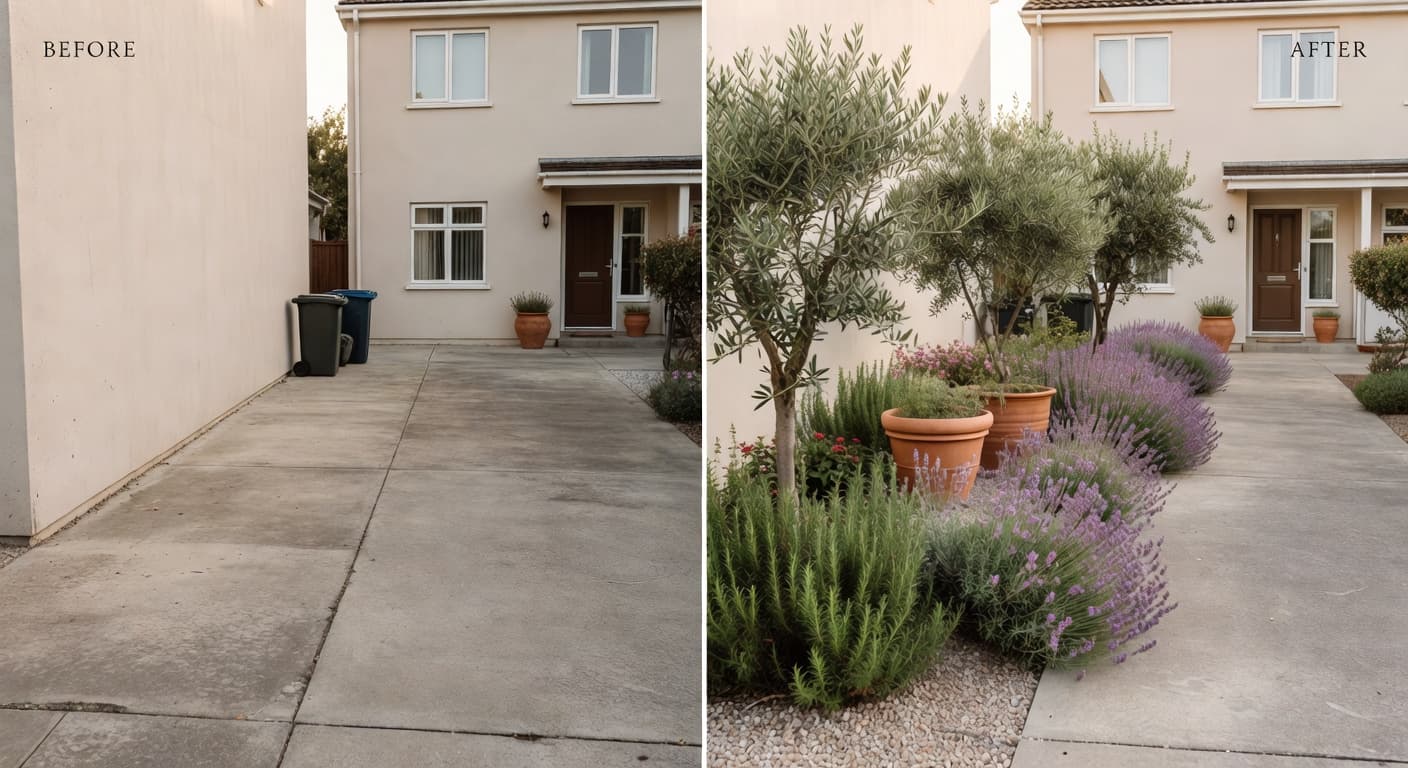
The driveway stays exactly where it is. The AI garden design adds a soft Mediterranean border alongside it — olive, lavender, rosemary, a few warm terracotta pots — and the whole street suddenly feels a little kinder.
5. Patchy lawn → modern minimalist front yard
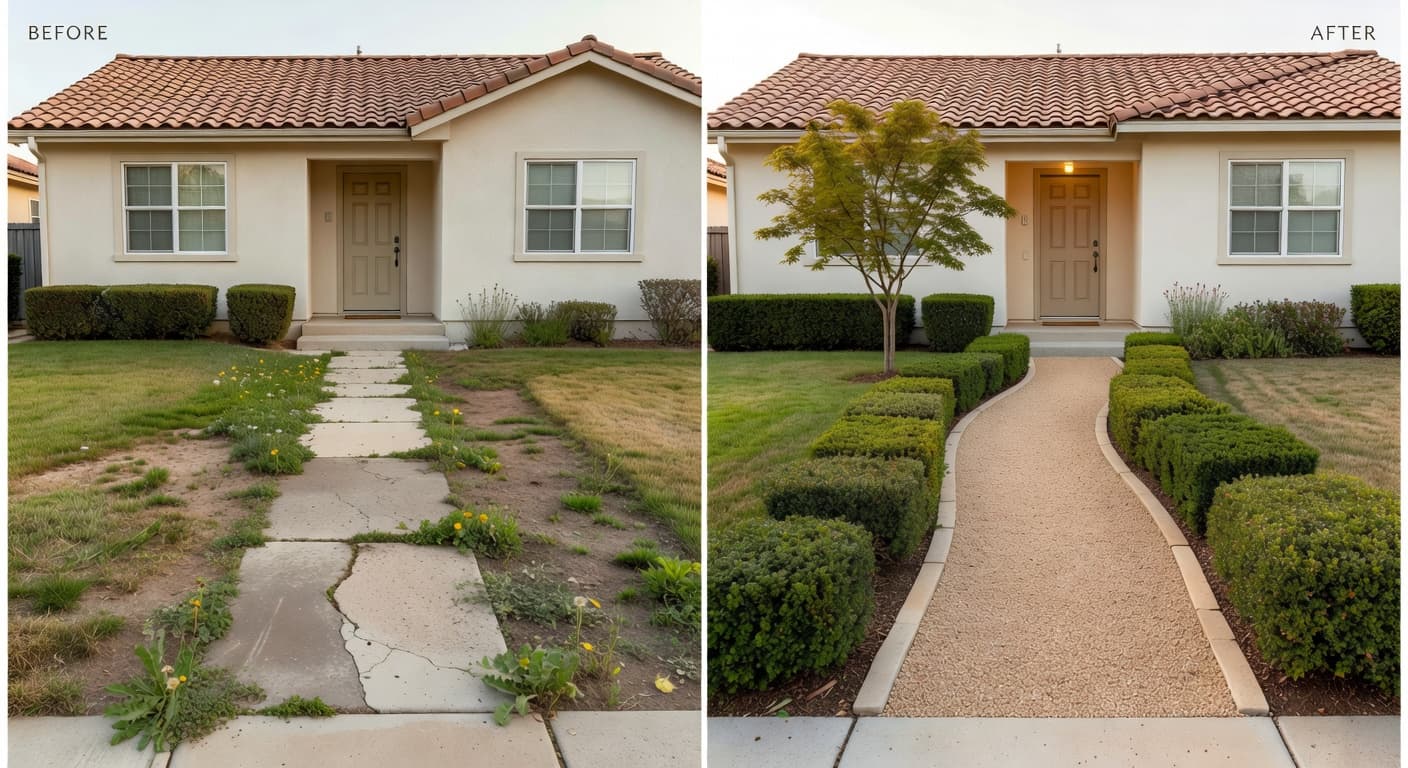
A worn-out front lawn becomes a calm, tidy entrance: a softer walkway, a single ornamental tree, low evergreen planting and one warm light by the door. The house itself does not change at all, and yet it looks looked-after.
Patios
6. Bare patio → tropical retreat
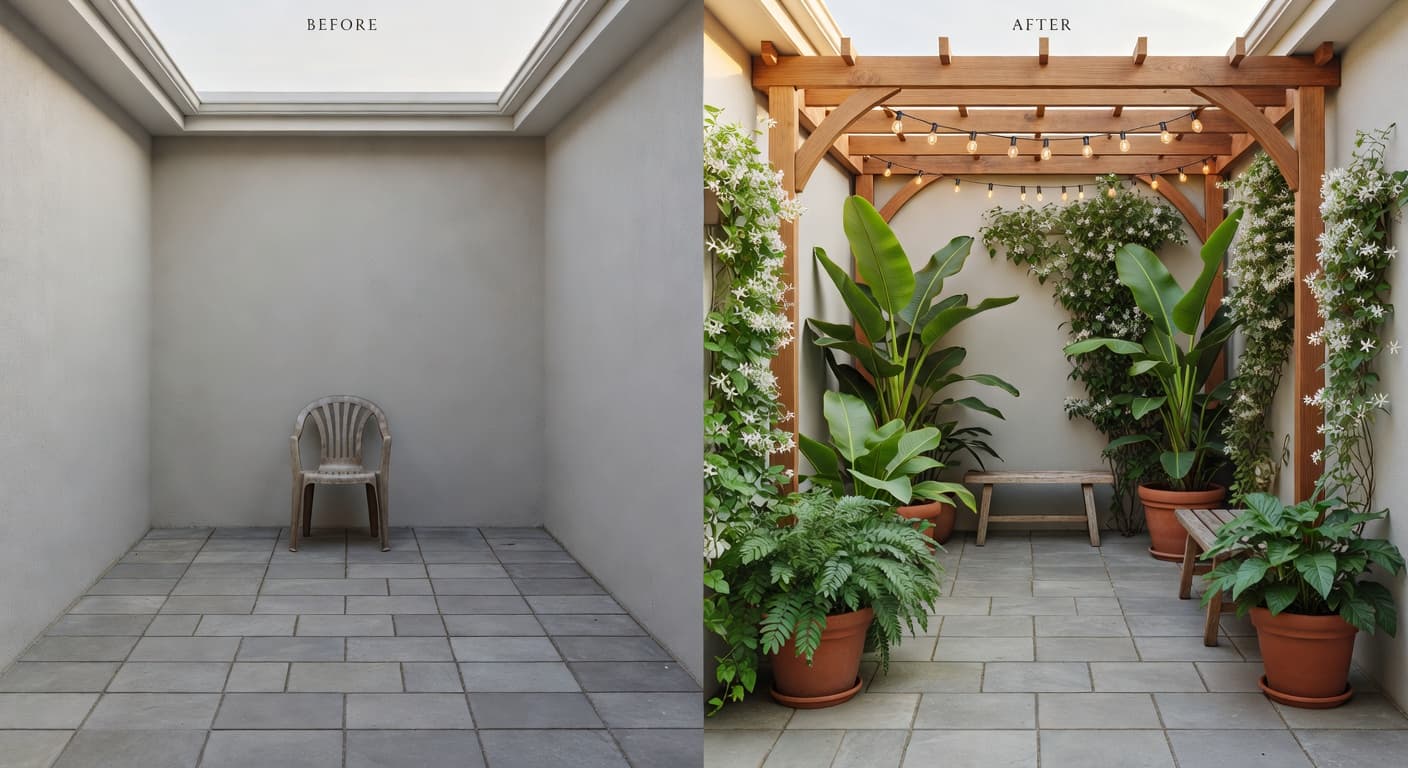
The paving stays. The boundary stays. The AI garden planner adds a pergola, two large pots of banana and fatsia, climbing jasmine, and a quiet bench in the corner. A patio that used to be passed through becomes a place you actually want to sit.
7. Tired patio corner → Japanese-inspired calm
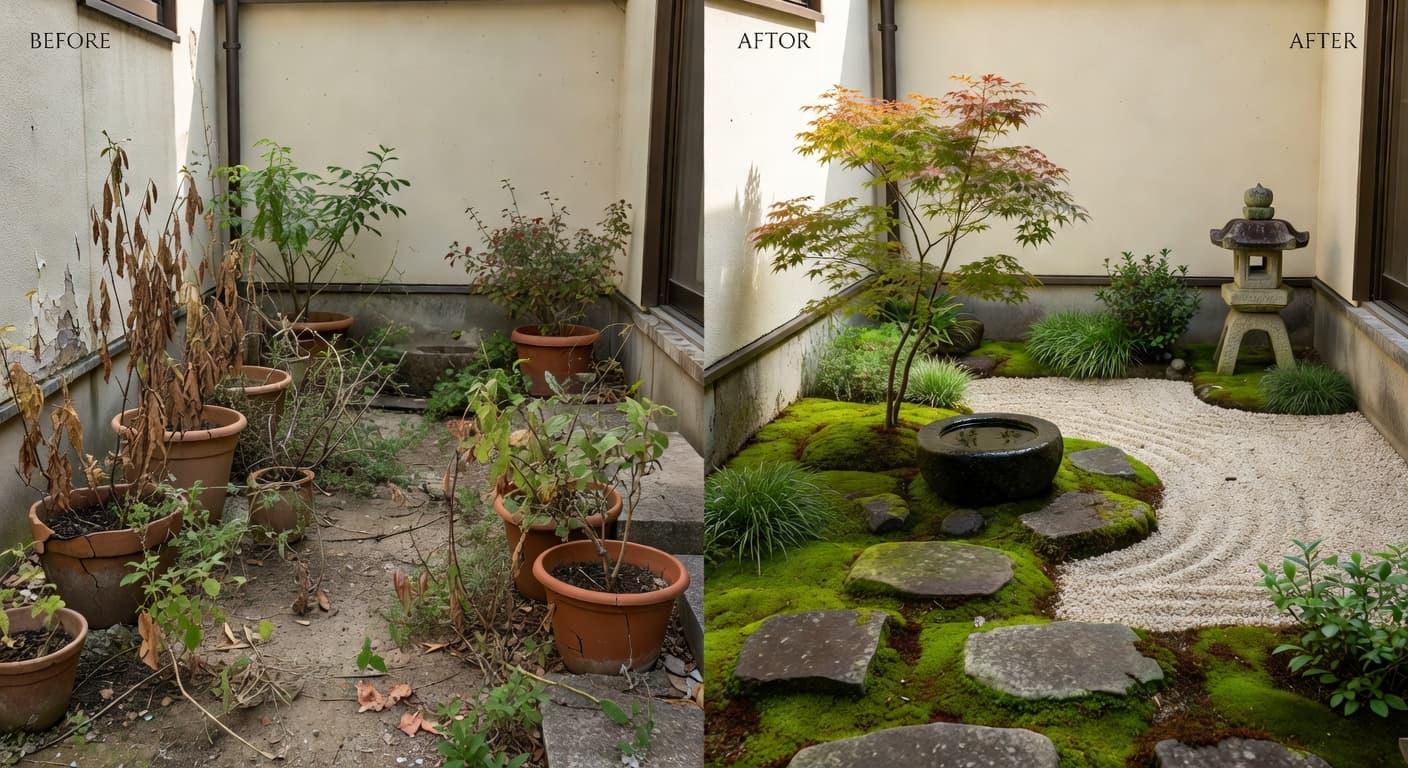
A neglected corner of a patio becomes a Japanese-inspired space — moss, stone, a small water feature, quiet planting. It is the kind of corner that lowers your shoulders a little every time you look out of the window.
Balconies, side returns and tricky spaces
The smallest, narrowest, most awkward spaces are often the ones that benefit most from AI garden design — because every centimetre matters and you really do not want to plant the wrong thing.
8. Empty balcony → tiny garden in a tiny space
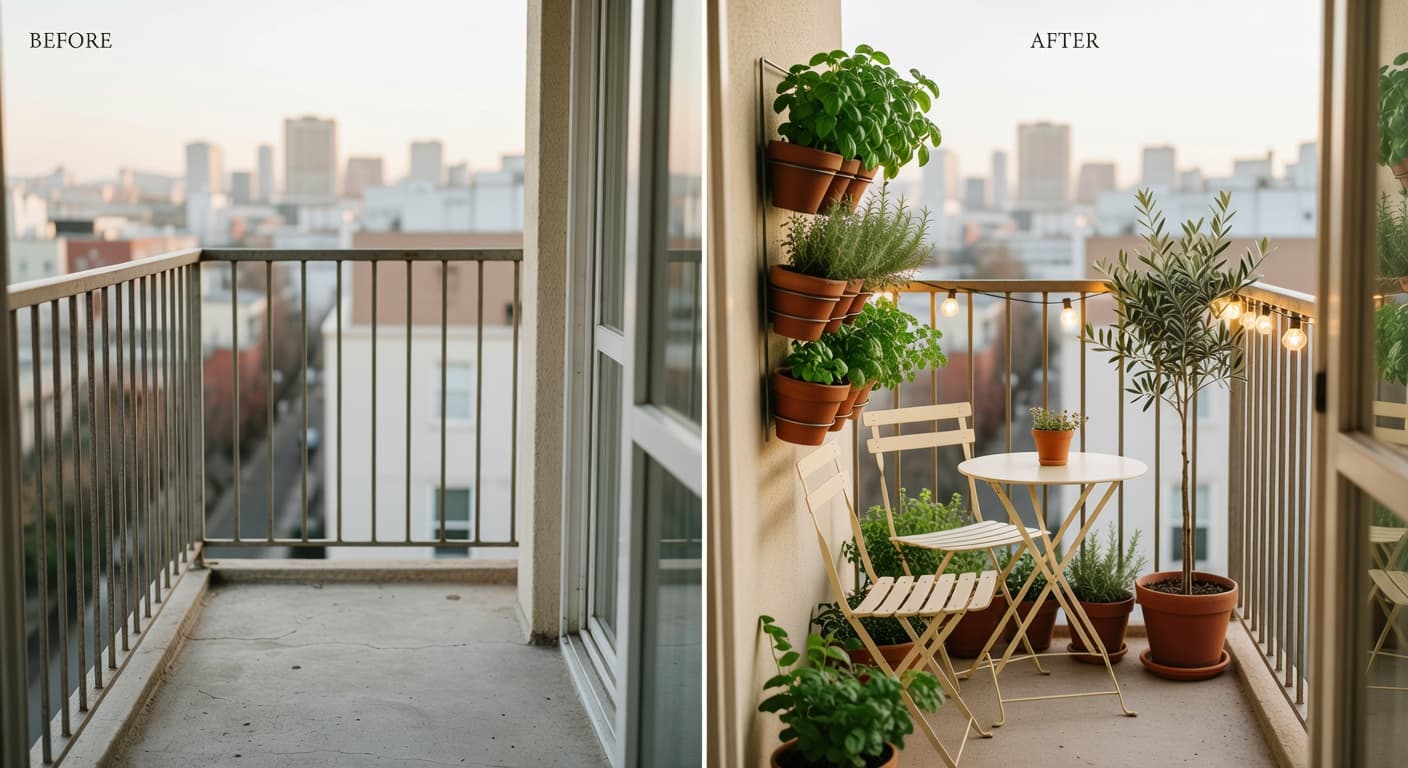
A bare apartment balcony becomes a quietly useful little garden — a vertical herb planter against one wall, a folding bistro set, a small pot of olive, and warm string lights overhead. Nothing here needs permission from a landlord; everything moves with you when you do.
9. Forgotten side return → ferns and stepping stones
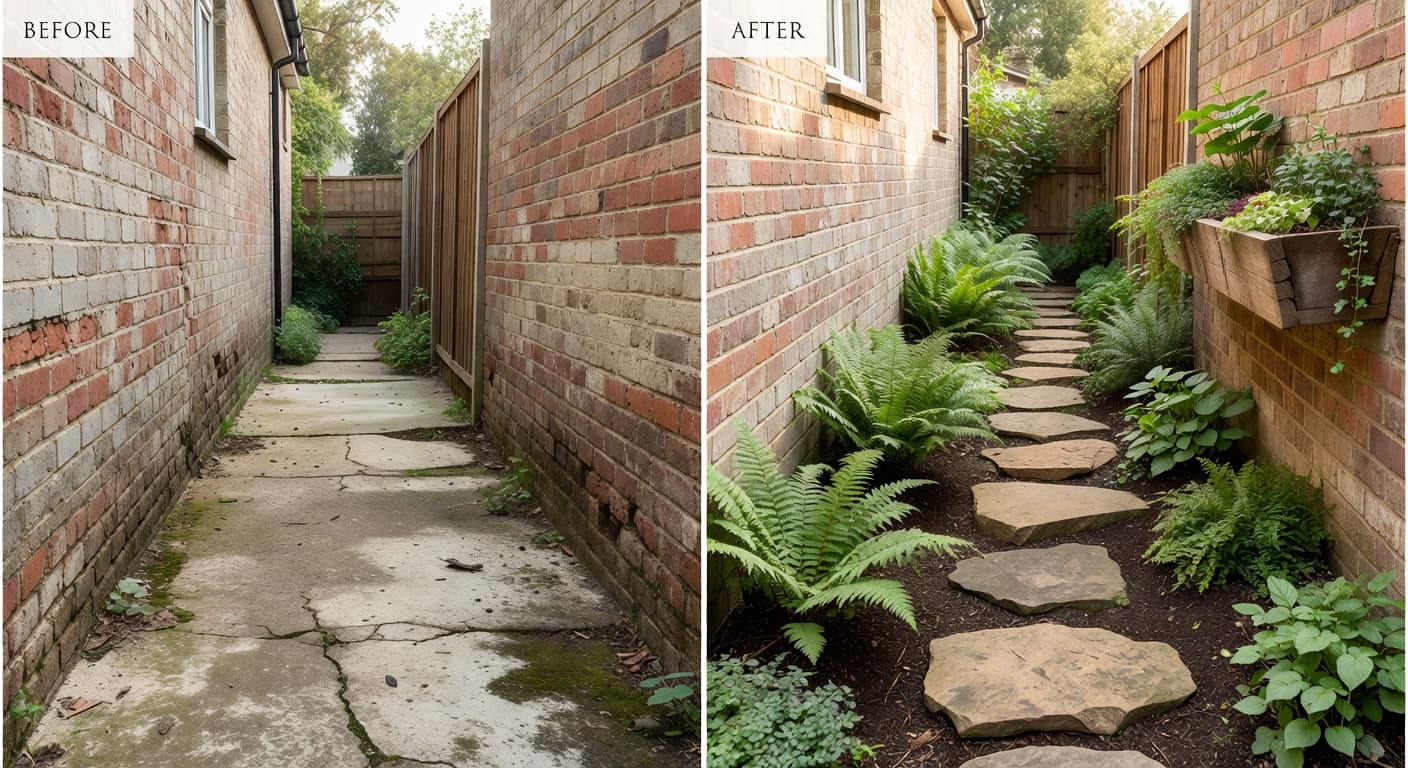
The narrow strip of paving between the house and the fence becomes a calm woodland path: stepping stones, ferns, a wall-mounted trough of shade planting. A part of the house you used to ignore turns into a part of the garden you walk through on purpose.
10. Steep slope → tiered cottage garden
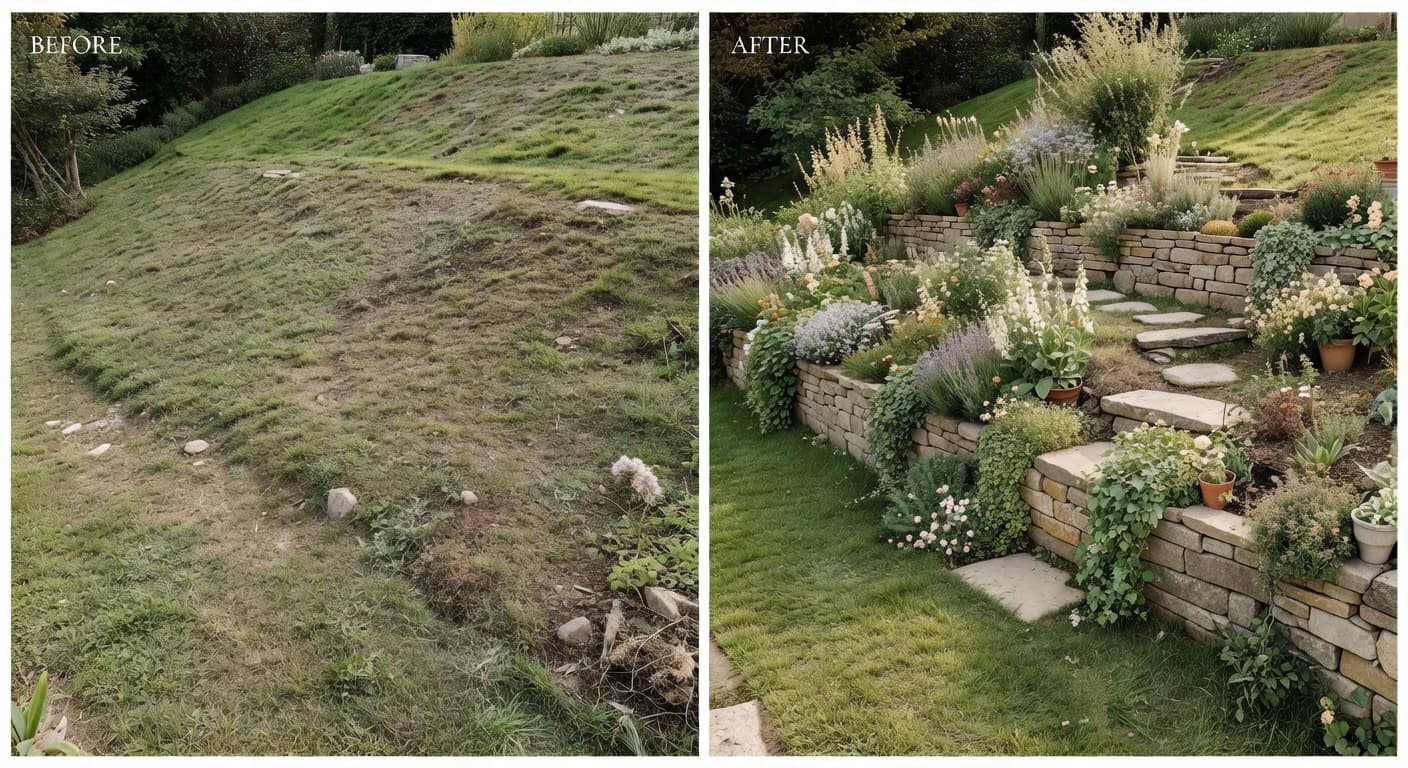
A steep, awkward back slope is one of the hardest gardens to imagine on your own. The AI garden planner keeps the slope but lays in two gentle terraces, low retaining lines and cottage-style planting — a real garden where there used to be only a mowing problem.
What every before-and-after has in common
If you look across all ten makeovers, three quiet patterns appear. They are worth remembering when you try AI garden design on your own space.
- The bones stay. Fences, sheds, paving, mature trees, the shape of the lawn — all kept. AI garden design is not a clean slate, it is a kinder version of what you already have.
- Less lawn, more layers. Almost every makeover trades a slab of mown grass for layered planting, a softer path or a quiet seating corner. Small change, large difference.
- One style at a time. Each garden picked one mood — cottage, modern, Mediterranean, Japanese, tropical — and stuck with it. AI garden design is happiest when you choose a single direction first.
If you would like to weigh AI garden design against working with a traditional designer, our AI garden planner vs. landscape designer guide walks through both kindly and honestly. And if you are choosing between apps, the AI garden design app checklist is the calmest place to compare features.
How to make your own before-and-after
You can run through your first AI garden design before-and-after in less time than it takes to make a pot of tea.
- Stand at your usual spot. The kitchen window, the back door, the seat by the patio. Take one photo. Daylight is kinder than midday sun.
- Open the app and pick a style. Cottage, modern, Mediterranean, Japanese, wildlife, tropical — choose the mood, not the plant list.
- Press the redesign button. The AI garden planner keeps your real space and fills it with planting, paths and seating in that style.
- Try two more styles on the same photo. This is the part most people enjoy most. The same garden, three different moods, in about five minutes.
- Save the one that feels like home. Send it to your partner, your neighbour or your landscaper. The conversation about your garden becomes easier when everyone is looking at the same picture.
Before you head to the garden centre, it is worth checking your USDA plant hardiness zone (or your local equivalent) so the planting in the after actually thrives in your climate.
Before-and-after FAQs
How accurate are AI garden design before-and-afters?
Very accurate for the shape of your space — the AI garden planner keeps your real fence, paving, shed and boundary trees. The planting in the after is a believable suggestion, not a planting list of named cultivars. Most gardeners use the redesign as a calm starting point for choosing real plants at the garden centre.
Can I try several styles on the same photo?
Yes. That is, quietly, the best part of AI garden design. Most people try three or four styles on the same photo — cottage, modern, Mediterranean, Japanese — before they decide which one feels like home.
Will the after look like my real garden could?
For most gardens, yes. The AI garden design keeps the shape, the orientation and the boundary, and suggests planting that suits the look you have chosen. For your climate and soil, our pillar AI garden design guide has gentle notes on USDA zones and the USDA plant hardiness zone tool if you would like to read more.
Is AI garden design only for big gardens?
Quite the opposite. Six of the ten makeovers above are small spaces — a balcony, a side return, a sloped back garden, a tiny front yard. Small spaces are where AI garden design saves you the most worry.
Last updated: May 2026. Written by the FlorAI garden team. Every AI garden design before-and-after on this page was generated from a real garden photograph.