
Tool guide · 2026
AI Flower Bed Design: The 2026 Guide
AI flower bed design turns a single photo of your real border into a finished, planted picture in seconds — with named plants, sensible heights and a layout you could plant this weekend. Instead of staring at a patch of bare soil and hoping, you see the finished bed first: which perennials go at the back, what fills the middle, what spills over the edge, and how it all looks in flower. In 2026 the best tools do this on a free tier, suggest climate-appropriate planting for where you actually live, and let you try several looks on the same bed before any plants are bought. This guide explains, in plain English, what AI flower bed design does, the design rules it follows, the plants worth trying this year, what a real border costs to build, and how to tell a genuinely useful tool from a pretty toy.
AI Garden Design GuidesPublished June 24, 2026Updated June 24, 202610 min read
What is AI flower bed design?
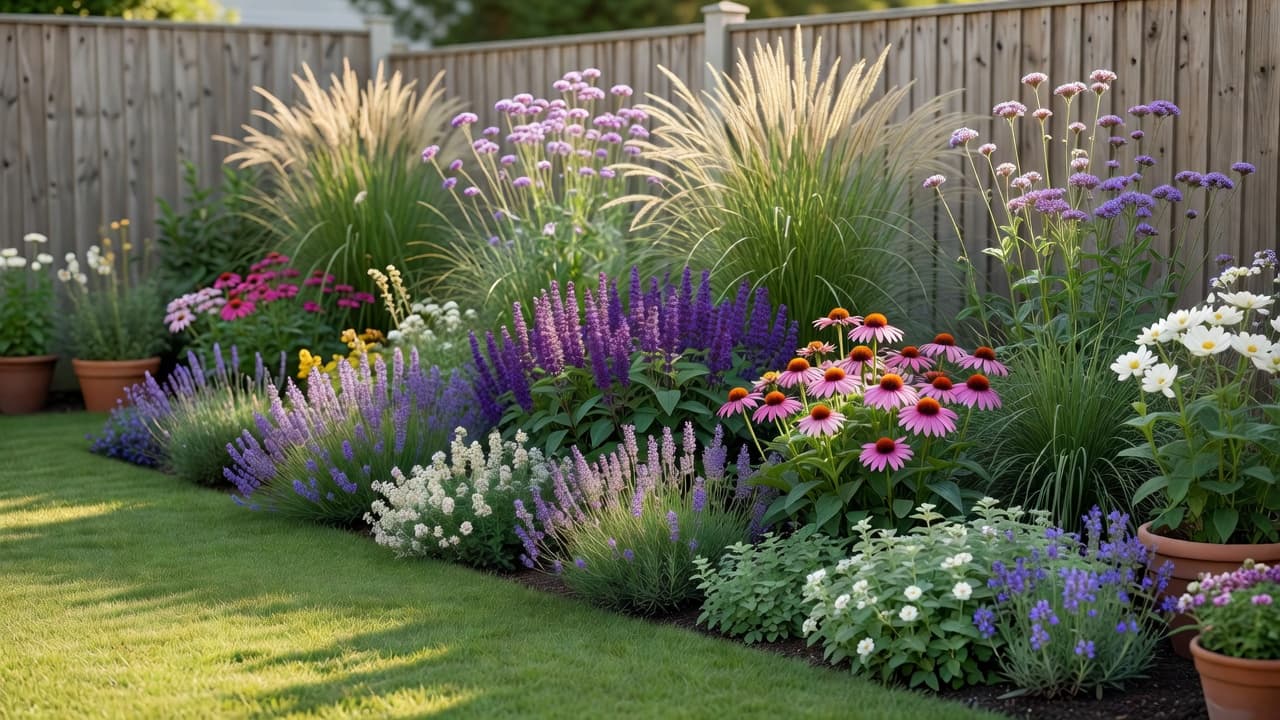
A flower bed is the hardest part of a garden to picture in advance. Paving and lawn are easy to imagine; planting changes through the year, grows up and out, and only looks "finished" two summers after you plant it. AI flower bed design closes that gap by drawing the mature bed for you — the same border, the same boundaries, but planted — so the leap of faith becomes a picture you can study. If the whole idea is new, our plain-English explainer of AI garden design is the gentlest starting point, and the complete AI garden design guide walks through a full redesign with real before-and-after photos.
The word that matters is your. A weak tool shows a generic border that belongs to nobody; a strong one redesigns your bed, keeping the fence, the path edge and the house behind it, so the picture is genuinely useful when you start digging and buying plants. FlorAI was built around exactly that — read one photo, keep the bones of the real space, redesign the planting — and it runs in any browser as well as on iPhone and Android, with a free tier so you can see your own bed reimagined before deciding whether it is worth paying for.
Why design a flower bed with AI?
Designing a border by AI rather than by guesswork removes the two things that make planting stressful: the cost of getting it wrong, and the difficulty of imagining it right. The practical advantages:
- You see it before you buy it. A flower bed is the most expensive part of a garden to redo, because a mistake means digging up living plants. Seeing the finished bed first means you commit once, not twice.
- It names real plants. A good result gives you a shopping list — lavender, Salvia, coneflower, ornamental grasses, alliums — not a vague green smudge you cannot reproduce at the nursery.
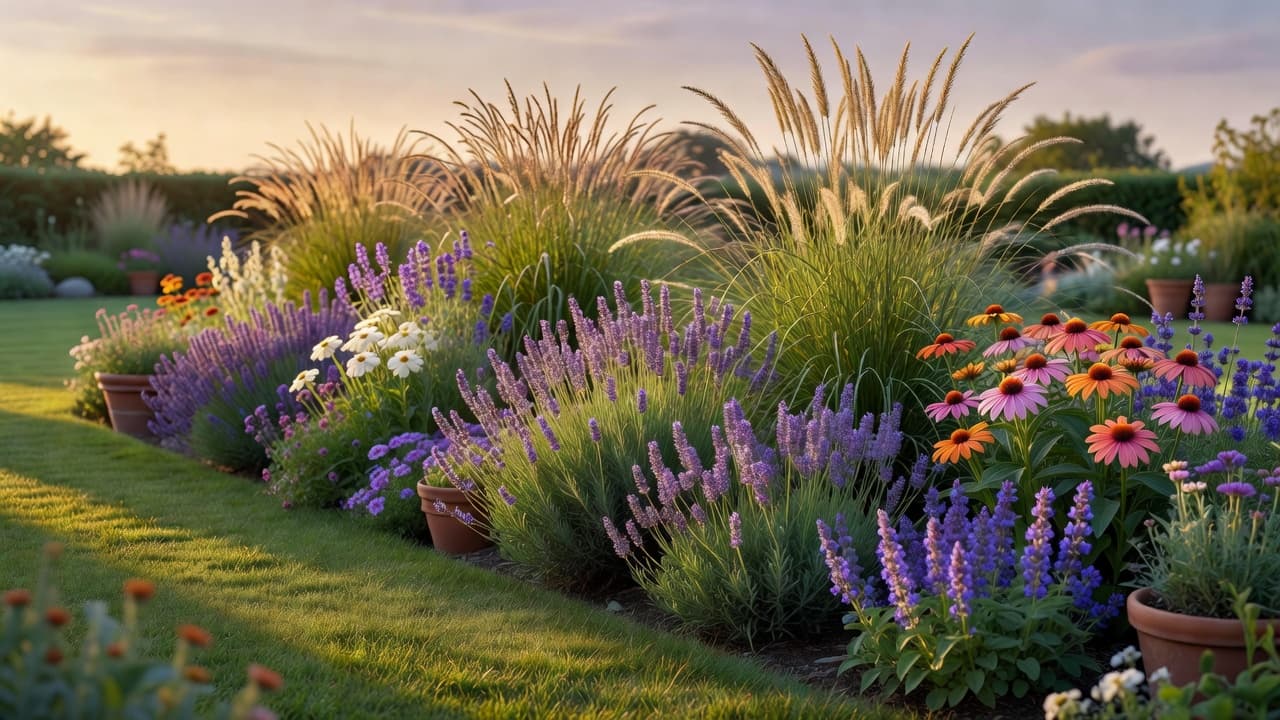
- It gets the heights right. AI arranges planting in layers, so tall plants sit at the back, mid-height fills the middle and low edging spills to the front — the single rule most home-planted beds get wrong.
- It tries several looks fast. Run the same bed as a hot, dry gravel border, a soft cottage mix and a calm grasses-and-perennials scheme, then choose with your own eyes rather than in your head.
- It respects your climate. The best tools suggest planting suited to your hardiness zone, so the bed you draw is one that will actually survive your winters and summers.
None of this replaces the pleasure of gardening — it removes the guesswork that comes before it. If you want to see the approach applied to a whole garden rather than one bed, our guide to AI landscape design from a photo covers the same photo-first method at a larger scale.
How AI flower bed design works
Most people get a usable plan in a few minutes. The exact steps vary by tool, but the modern, photo-first approach follows a simple path:
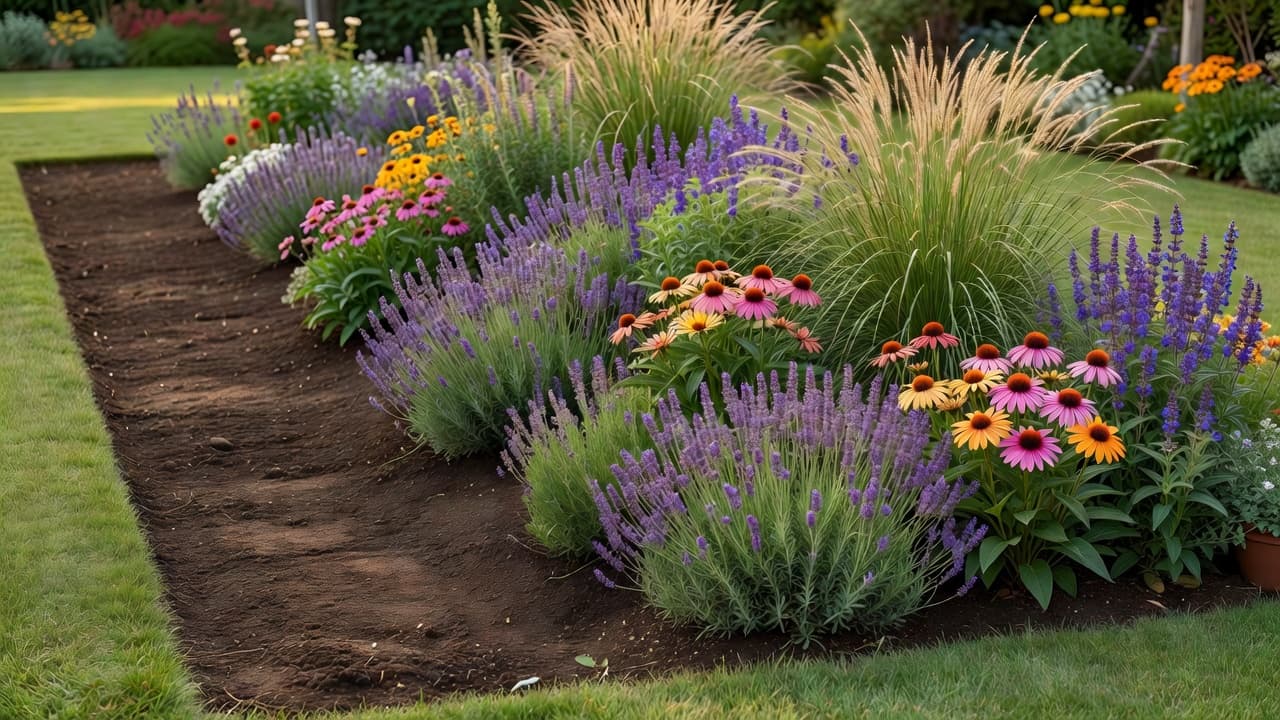
- Photograph the bed. Take one clear, wide photo of the border in daylight — ideally straight on, showing the soil, the edge and what is behind it.
- Choose a style. Pick a direction — cottage, naturalistic, Mediterranean gravel, modern grasses, pollinator-friendly — so the tool knows the mood to aim for.
- Generate the planting. The tool returns a finished, photorealistic border in seconds, with plants arranged by height and a list of what they are.
- Refine and compare. Swap a plant you dislike, ask for more colour or more evergreen structure, or run two or three styles on the same bed side by side.
- Save the plan and shop it. Keep the version you like, note the named plants, and use it as a planting list for yourself or a brief for a landscaper.
The reassuring part is that it works on top of your real bed, so the result maps onto the actual space rather than a generic rectangle. You are not learning software; you are answering a few questions and choosing between pictures.
The anatomy of a great flower bed
AI is only as good as the design rules behind it, and a good flower bed follows a handful of timeless ones. Knowing them helps you judge whether a tool’s result is genuinely good — or just colourful. A well-designed border tends to:
- Layer by height, front to back. Tall structural plants at the back, mounding mid-height plants through the middle, and low, edge-softening plants at the front — the border equivalent of the classic "thriller, filler, spiller" rule used in container planting.
- Plant in drifts, not dots. Groups of three, five or seven of the same plant read as deliberate and calm; one of everything reads as busy. Repetition is what makes a bed feel designed.
- Repeat a few plants down the bed. Threading two or three plants along the whole border ties it together and carries the eye from one end to the other.
- Plan for every season. A good bed has spring bulbs, summer flower, autumn seed heads and winter structure, so it is never bare. Grasses and seed heads earn their keep long after the flowers fade.
- Leave room to grow. Spacing perennials at their mature width looks sparse for a year and perfect by the second — better than cramming and digging half of it out later.
A tool that produces a border obeying these rules is doing real design work. One that gives you a flat wall of single flowers at one height is making a pretty image, not a plantable plan. For the wider principles behind a whole-garden scheme, the AI garden design guide goes deeper, and a quick read on the traditional herbaceous border shows where these ideas come from.
Flower bed plants to try in 2026
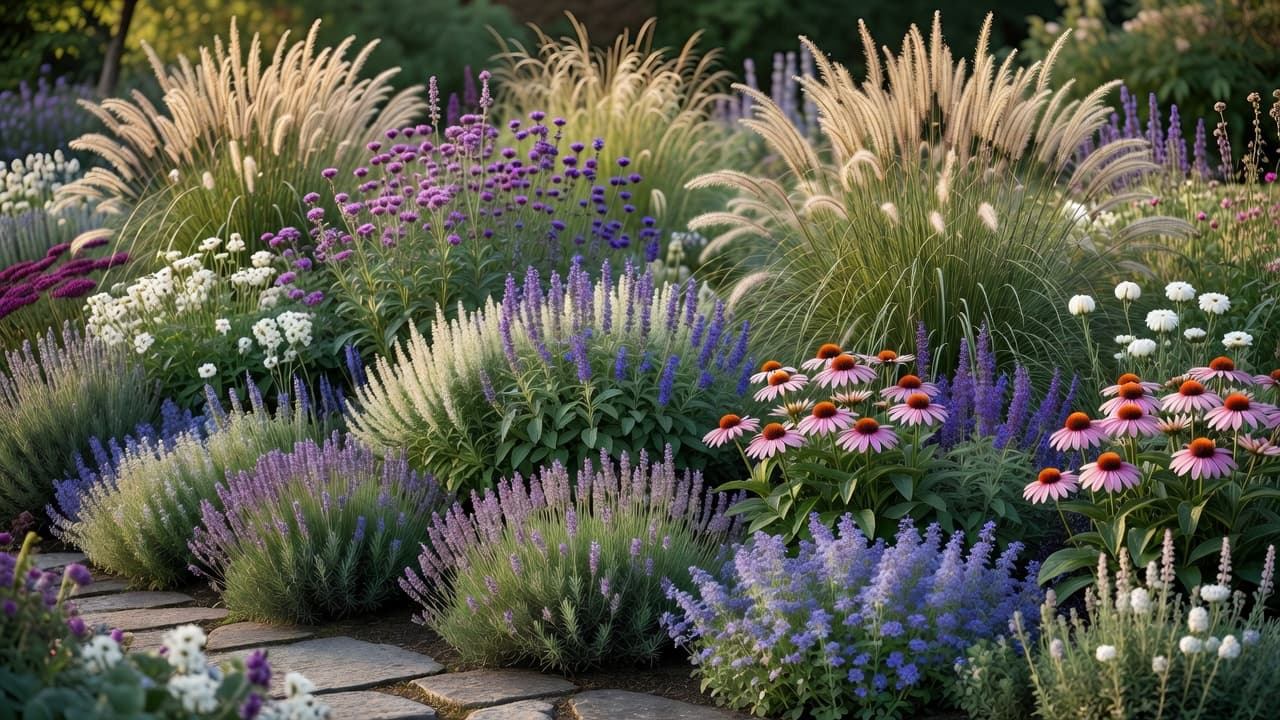
The real value of designing first is that you can test the year’s best ideas on your own bed before committing. In 2026 border planting has moved decisively towards resilience and naturalism: looser, layered schemes that cope with drought and unpredictable weather. Naturalistic, matrix-style planting and ornamental grasses dominated the show gardens at the 2026 RHS Chelsea Flower Show, where designers favoured controlled naturalism — sophisticated, sustainable and drought-aware. Worth trying on your design:
- Drought-tolerant perennials. English lavender, Salvia, coneflower (Echinacea), Geum and catmint (Nepeta) bring colour and pollinators through a hot, dry summer with little watering.
- Ornamental grasses. The signature of 2026 borders — grasses add movement, soften hard edges and hold their structure into winter. One celebrated Chelsea 2026 garden used 21 different grass varieties alone.
- Spring and early-summer spires. Alliums, Camassia, foxgloves (Digitalis), Iris sibirica and Thalictrum give vertical accents and carry the bed before the main summer flush.
- Layered, naturalistic matrix planting. "Curated wildness" — dense, intentional drifts woven through a matrix of grasses — leaves less bare soil, needs less weeding and uses less water than the old immaculate bed.
- Climate-resilient structure. Rosemary, Pittosporum, Cotinus and agapanthus give backbone that copes with warmer, less predictable weather and keeps the bed from looking flat.
You do not have to pick one. Try each idea as a separate version of the same bed, then borrow the parts you like into a single plan. Check any unfamiliar plant on the RHS or Gardeners’ World before you buy, and confirm it suits your zone.
What to look for in an AI flower bed design tool
Not every tool earns a place in your bookmarks. Before you trust one with your border, run through five quick checks — a genuinely useful AI flower bed design tool should pass all of them:
- It works from your own bed. The best tools redesign your real photo, keeping the fence, edge and backdrop recognisable, so the result is yours and not a stock scene.
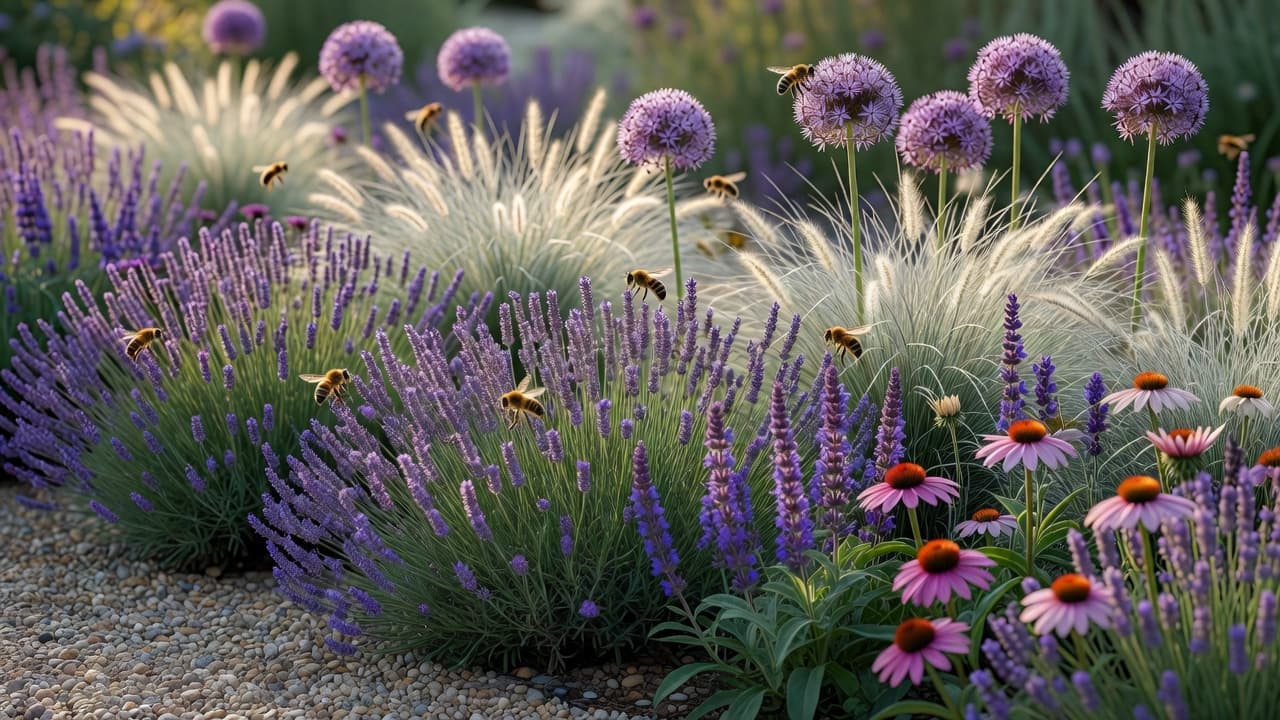
- It names real plants. A strong result names planting you could write on a list — lavender, salvia, coneflower, a named grass — not a vague green haze.
- It layers by height. Look for a border with a clear back, middle and front, not a flat wall of one-height colour.
- It respects where you live. Climate-aware planting is the difference between a pretty picture and a bed that survives your winters in your hardiness zone.
- It offers an honest free tier. You should see clear, un-watermarked results and try more than one style before any paywall.
A tool that passes all five is worth keeping even if you never pay; one that fails two or three is worth closing the tab on, however slick it looked. Our checklist of what to look for in an AI garden design app turns this into a simple tick-box, and our honest guide to free AI garden design apps explains how to tell a real free plan from a teaser.
What a flower bed costs in 2026
The tool itself should cost little or nothing — most good ones give you a real free tier, enough to redesign a bed and try a few styles, with paid plans only for unlimited runs. The build is where the money goes, and a planted border is more affordable than a full garden makeover, which is part of its appeal.
In the United States in 2026, installing a flower bed typically costs about $1,100 to $3,175, with a national average near $2,370 and a wide range — roughly $480 for a small bed up to $5,800 for a large, fully planted one — depending on size and plant choice. Measured by area that works out to about $4.50 to $13.50 per square foot for the bed, with planting flowers adding roughly $15 to $45 per square foot, edging running $0.50 to $10 per linear foot, and grass removal around $0.88 to $1.84 per square foot. Labour for installation is commonly $50 to $110 an hour. Settling the design first is exactly how you avoid paying twice for a change of mind. Our 2026 garden design cost guide breaks the wider numbers down piece by piece.
Climate awareness is the feature that protects that spend. Plants that cannot survive your winter are not a design but a disappointment waiting to happen — and the goalposts are moving. In November 2023 the USDA updated its Plant Hardiness Zone Map for the first time since 2012, using 1991–2020 data from 13,412 weather stations; the new map is about 2.5°F warmer on average, shifting roughly half of the United States into the next warmer half-zone. A tool that weighs your location is doing real work, not decoration.
Where AI stops and your hands begin
An honest guide names the limits. Even the best AI flower bed design tool is a brilliant way to decide what to plant, not a substitute for the work itself. Soil preparation, drainage, the right plant for a damp or shady corner, and the planting and weeding all still want a gardener’s hands and judgement. Treat the planting suggestions as a strong starting point and confirm anything unusual against your own soil and climate before you buy.
Used that way, AI flower bed design is among the most reassuring tools you will reach for this year: it removes the guesswork, shows you the finished bed in advance, and means the first decision — and the first spend — is made with confidence rather than hope. If you are weighing software against hiring a professional, our comparison of AI, a designer and DIY lays out when each makes sense.
Frequently asked questions
What is AI flower bed design?
AI flower bed design uses artificial intelligence to turn a photo of a real garden bed into a finished, photorealistic planting plan — choosing and arranging named plants by height, colour and season so you can see the border in flower before you buy a single plant. FlorAI does this from one photo, in any browser, with a free tier.
Can I design a flower bed for free?
Yes. The honest tools offer a real free tier — a set number of designs each month, enough to redesign your bed and try a few styles. FlorAI has a free plan on the web, iPhone and Android, with paid plans only if you want unlimited designs.
Will it tell me which plants to use?
A good tool names the plants in the design — for example lavender, salvia, coneflower, alliums and ornamental grasses — so you can take the list to a nursery. Always confirm an unfamiliar plant suits your hardiness zone before buying.
Do I need to measure my flower bed first?
Not with a photo-based tool. You upload one wide photo and it works on top of your real bed, so the proportions come from the picture. You only need rough measurements when you shop, to know how many plants to buy.
How much does a flower bed cost to install in 2026?
In the US in 2026, a flower bed typically costs about $1,100 to $3,175 to install (national average near $2,370), or roughly $4.50 to $13.50 per square foot, with planting adding about $15 to $45 per square foot — which is exactly why it pays to settle the design first.
Can AI replace a garden designer for planting?
For choosing plants, colours and a layered layout it gets you most of the way and costs little or nothing. For soil, drainage, tricky corners and the planting itself you still want a gardener or designer — use the tool to decide the bed first, then hand your favourite over.
Last updated: June 2026. Written by the FlorAI garden team.