
Buyer’s guide · 2026
Xeriscape Design Tool: Plan a Drought-Tolerant Garden in 2026
A xeriscape design tool turns one photo of your real yard into a photorealistic, water-wise redesign of that same space — re-planted with drought-tolerant plants, gravel, mulch and smart irrigation in the style you choose — usually in under ten seconds. In 2026, with hotter summers and rising water bills, it is the fastest, cheapest way to see how a thirsty lawn could become a low-water garden before you dig up a single square foot. This guide explains, in plain English, how a xeriscape design tool works, the seven principles of xeriscaping it should respect, which drought-tolerant plants and materials suit your climate this year, the water and money a water-wise garden can save, and what xeriscaping really costs — so your first trip to the nursery is a confident one.
AI Garden Design GuidesPublished June 26, 2026Updated June 26, 202610 min read
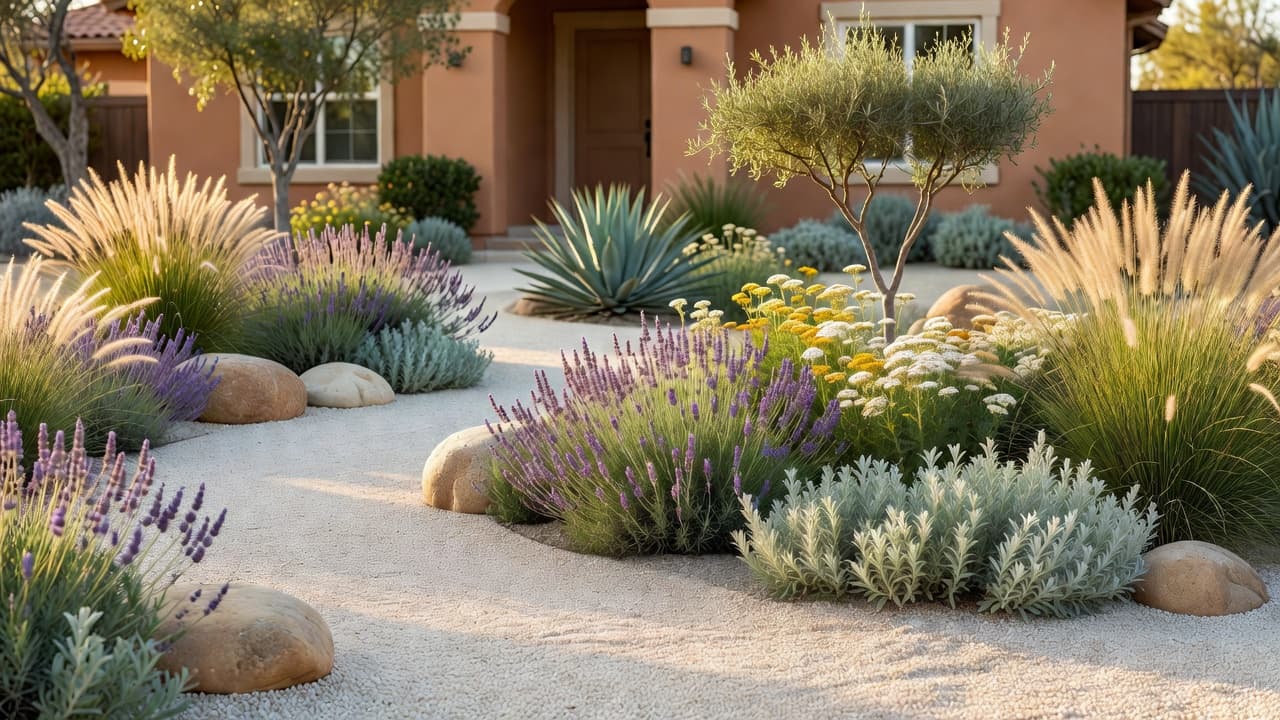
What a xeriscape design tool actually does
The idea is refreshingly simple. You open the tool, take or pick one photo of your front yard, back garden or a thirsty patch of lawn, choose a water-wise style, and a few seconds later you are looking at your own space transformed into a finished, drought-tolerant garden. There is no graph paper and no design training involved. If the whole concept is new to you, our plain-English explainer of AI garden design is the gentlest starting point, and the full AI garden design guide walks through a complete redesign with real before-and-after photos.
The word that matters is your. A weak tool shows you a beautiful desert garden that belongs to someone else; a strong one shows you your yard, looking better and using far less water, so the picture is genuinely useful when you start buying gravel, mulch and plants. FlorAI was built around exactly that, with a free tier, so you can see your own yard reimagined as a water-wise garden before deciding whether it is worth paying for.
Why xeriscape your garden in 2026
Xeriscaping — water-wise landscaping designed to thrive on little irrigation — is no longer a desert-only idea. Outdoor water use accounts for about 30% of household water use nationally, and as much as 60% in dry climates such as the American Southwest, according to the U.S. Environmental Protection Agency. As much as half of that outdoor water is wasted to evaporation, wind and run-off from inefficient watering, and a poorly run irrigation system can waste up to 25,000 gallons a year. A well-designed xeriscape routinely uses 50–75% less water than a conventional lawn in the same climate. A few reasons to settle the design on a photo before you lift any turf:
- Water bills keep climbing. Replacing a thirsty lawn with drought-tolerant planting is one of the few garden changes that pays you back every month for years.
- Rebates are real money. Many water authorities now pay you to remove grass — in 2026 the Southern Nevada Water Authority offers up to $5 per square foot (with a Las Vegas Valley top-up of $2 more), and Southern California programmes pay from $2 per square foot — so seeing the finished design first helps you plan the area to convert.
- Summers are getting hotter. A xeriscape stays handsome through a heatwave or hosepipe ban when a lawn turns brown and bare.
- Less mowing, less work. Gravel, mulch and tough perennials need a fraction of the upkeep of turf — no weekly mow, no constant feeding.
- It is easy to photograph. A front yard is captured in one shot from the kerb, which is ideal raw material for a redesign.
If your project is the front of the house, our guide to the AI front yard design tool covers curb appeal in detail, while the 2026 garden design cost guide sets sensible expectations for the budget.
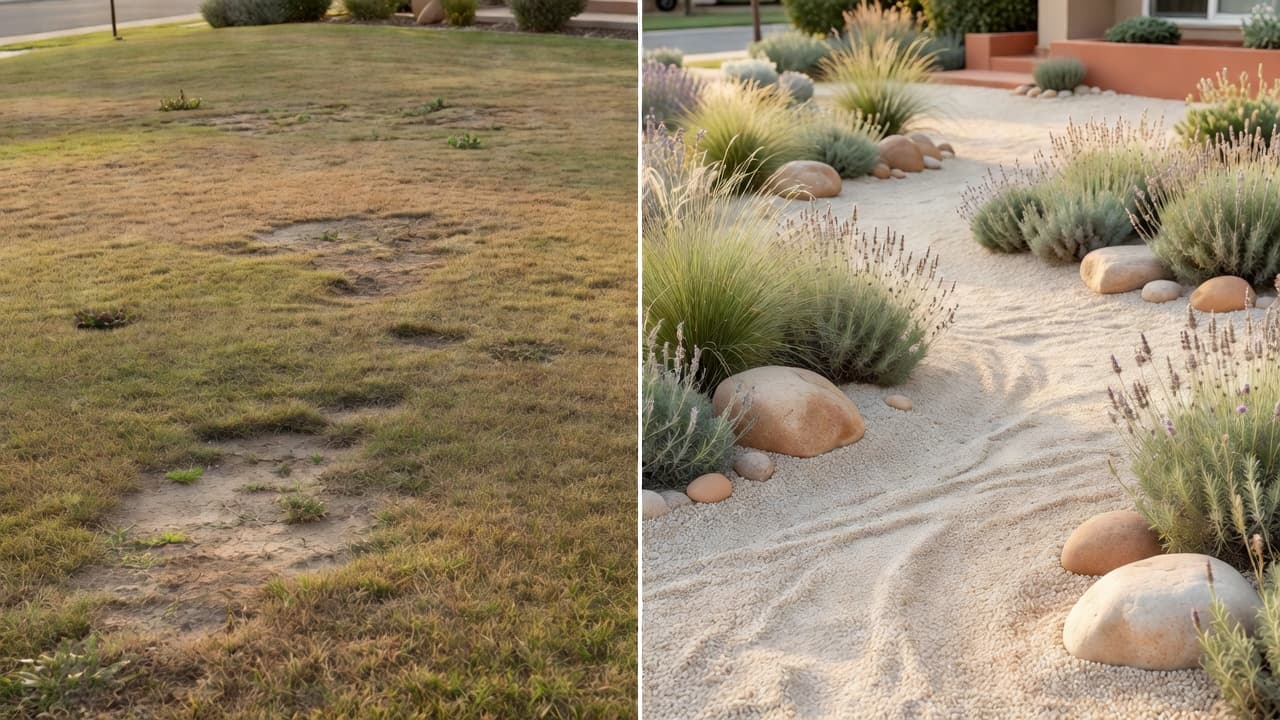
The seven principles of xeriscaping a good tool should respect
The word xeriscape was coined by Denver Water in 1981, and the approach still rests on seven simple principles. A genuinely useful xeriscape design tool quietly works to all of them rather than just scattering gravel over a picture:
- Planning and design. Start with a plan for the whole space — this is exactly what a photo-based redesign gives you in seconds.
- Soil improvement. Amending soil with compost helps it hold the little water a xeriscape receives.
- Appropriate plant selection. Choose drought-tolerant plants suited to your climate and sun, grouped by how much water they want.
- Practical turf. Keep lawn only where it earns its place, and pick low-water grasses or remove it entirely.
- Efficient irrigation. Drip lines and bubblers deliver water to roots with little waste; water early or late, never in the midday heat.
- Mulch. A generous layer of bark, wood chip or gravel locks moisture into the soil and smothers weeds.
- Maintenance. A xeriscape needs far less care than a lawn, but a little seasonal tidying keeps it looking deliberate, not neglected.
Denver Water’s own primer on the principles of xeriscape is a calm, authoritative read if you want the full background, and the EPA’s WaterSense outdoor guidance covers efficient irrigation in depth.
How to design a xeriscape step by step
The first redesign takes about a minute. The process is the same whether you are converting a small front lawn, a tired back garden or one dry, awkward border:
- Take or choose one photo. Stand back so the whole area — lawn, paths, fences and the house wall behind — is in frame, in soft, even daylight.
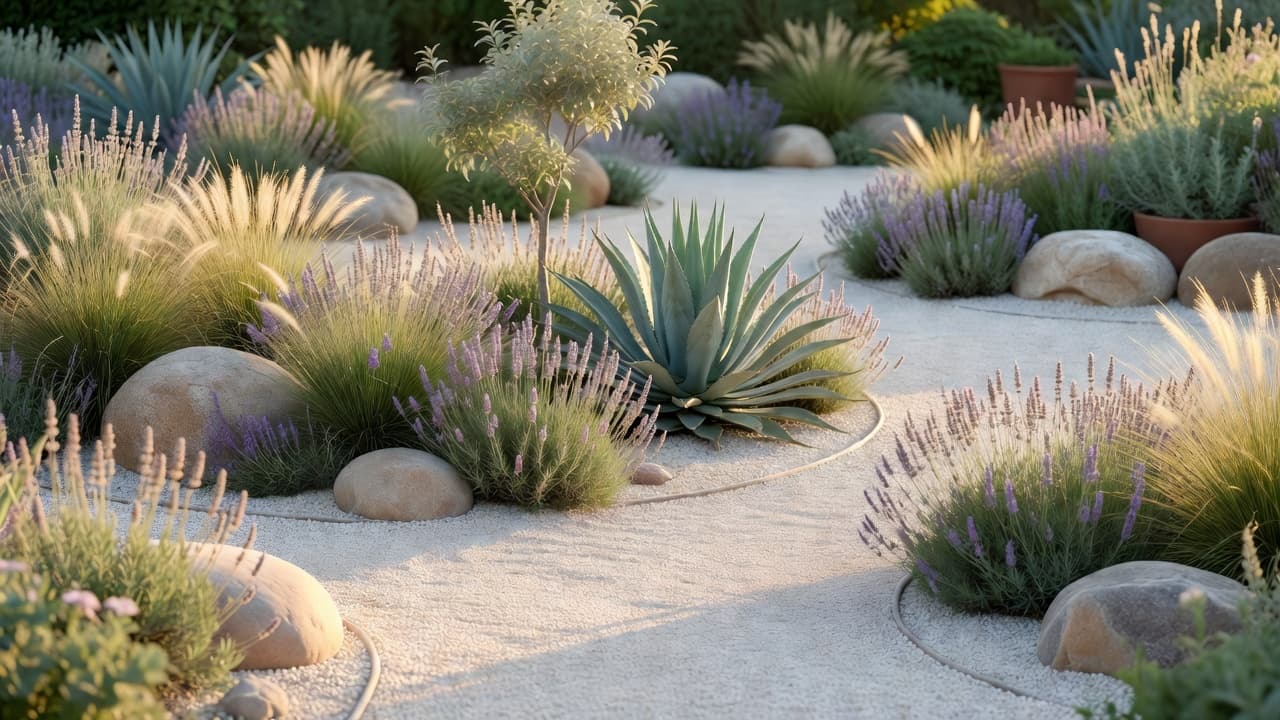
- Pick a water-wise style. Modern desert with boulders and grasses, a Mediterranean gravel garden of lavender and olive, a soft prairie of perennials, or a tidy low-water foundation planting — choose the mood, then try a second for contrast.
- Let the tool redesign it. In a few seconds you will see your own space re-planted with drought-tolerant plants, gravel and mulch in that style, usually with the planting named.
- Refine and try variations. Ask for more gravel and less planting, a dry creek bed, a small ornamental tree for shade, or a gravel path, and compare the options side by side.
- Save and shop. Keep your favourites, line the before and after together, and turn the result into a simple shopping list of plants, mulch, gravel and edging.
Because the tool works from a photo rather than a blank plan, you are always editing your real yard — the actual driveway, fence and house — which is exactly why the output is something you can take to a nursery. Our guide to designing from a photo versus from scratch explains why the photo route is almost always the better place to begin.
What to look for in a xeriscape design tool
Not every tool earns a place on your home screen. Before you trust one with your yard, run through a few quick checks:
- Does it redesign your own photo? Your driveway, fence and house should still be recognisable in the result. If it quietly swaps in a stock desert garden, the picture is useless.
- Does it name real drought-tolerant plants? A good result names plants you could write on a shopping list — lavender, salvia, agave, yarrow — not just a dry-looking haze.
- Does it suggest real materials? Look for gravel, decomposed granite, bark mulch, boulders and edging you could actually order, sized to your space.
- Does it consider where you live? Climate- and zone-aware planting is the difference between a pretty picture and a scheme that survives the heat, cold and rainfall of your hardiness zone.
- Is the free tier real? You should see clear, un-watermarked results and be able to try more than one style before any paywall.
A tool that passes all five is worth keeping even if you never pay; one that fails two or three is worth deleting, however slick it looked. For a deeper version of this test, our checklist of what to look for in an AI garden design app turns it into a simple tick-box, and the 2026 buyer’s guide to AI garden design tools covers the features that separate a useful tool from a gimmick.
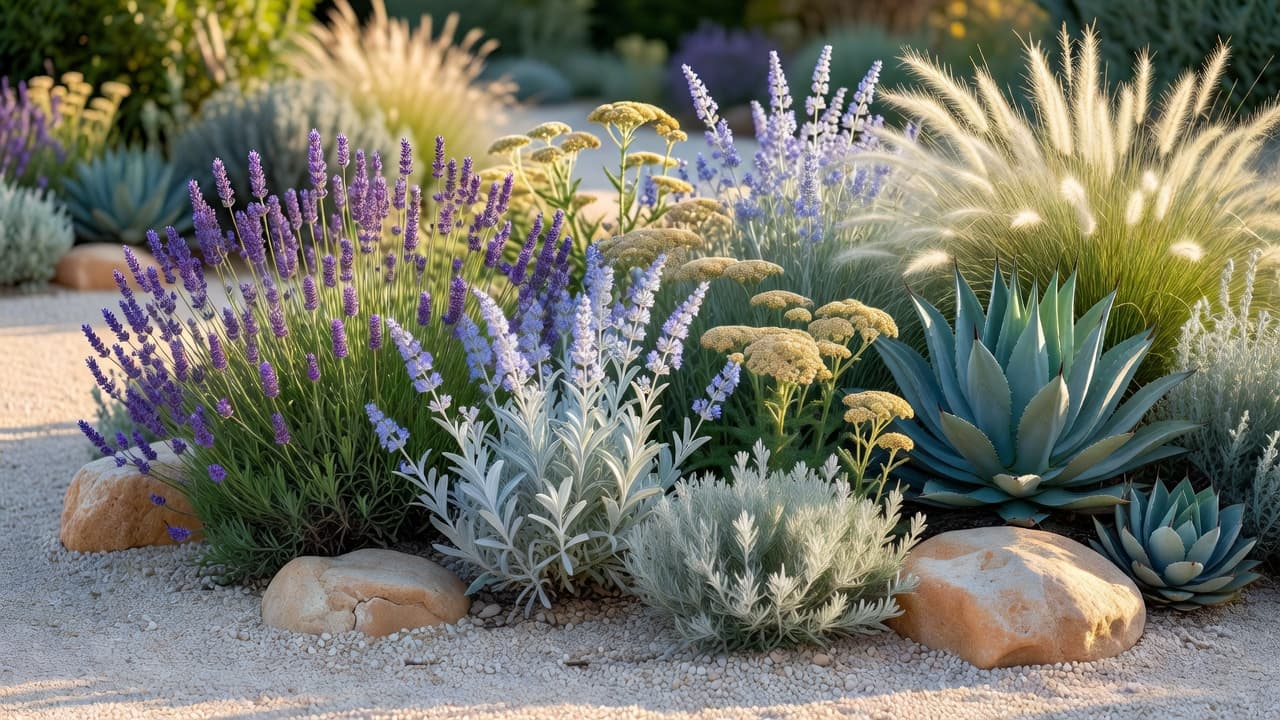
The best drought-tolerant plants to try in 2026
The real value of a xeriscape design tool is that it lets you test the year’s best water-wise plants on your own space before committing. The most reliable drought-tolerant performers across most climates are tough, sun-loving and happy in lean, fast-draining soil. Worth trying on your photo:
- Lavender. Silver foliage and fragrant purple flowers, deer-resistant and loved by pollinators — a Mediterranean classic that thrives on neglect in full sun.
- Russian sage (Perovskia). A cloud of silvery foliage and lavender-blue spires that shrugs off heat and poor soil with almost no watering once established.
- Salvia. Vivid flower spikes that bloom for months and draw bees, butterflies and hummingbirds, perfect for a hot, sunny border.
- Yarrow (Achillea). Flat-topped flowers in yellow, white, pink and red above ferny foliage; tolerates drought and poor soil and feeds beneficial insects.
- Agave and sedum. Sculptural agave makes a bold focal point, while low-growing sedums and houseleeks (Sempervivum) store their own water and carpet gravel beautifully.
- Ornamental grasses. Narrow leaves let the wind pass through; grasses such as Stipa and fescue add movement and structure with no fuss.
You do not have to pick one. Try each idea as a separate redesign of the same photo, then borrow the parts you like into a single plan. One honest warning worth knowing: the most common way these plants die is too much water, not too little — lavender, sedum and agave are far more often lost to root rot from overwatering or poor drainage than to drought, so lean soil and good drainage matter as much as the plant choice. For more water-wise borders, our AI flower bed design tool guide helps you plan the planting, and you can confirm any unfamiliar plant on the Royal Horticultural Society’s advice on drought-resistant planting.
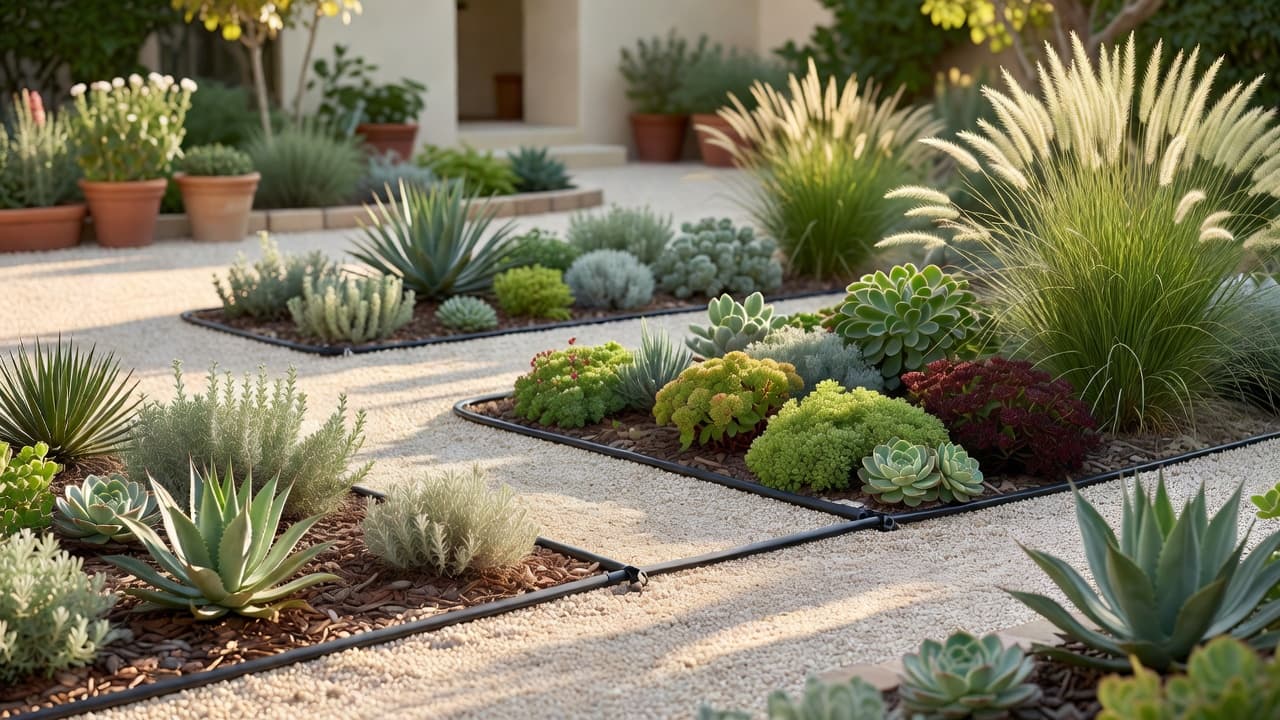
What xeriscaping costs in 2026 — tool vs the build
The tool itself should cost little or nothing. Most good ones give you a real free tier — a set number of designs each month, enough to redesign your yard and try a few styles — with paid plans only if you want unlimited runs. That is usually plenty for a one-off project.
The build costs more than a planted border but far less than you might fear, and it pays you back. In 2026 xeriscaping typically runs $5 to $20 per square foot installed, with a simple DIY scheme of mulch, pea-gravel paths and small plants closer to $4 to $8 per square foot, and professional installation with boulders and stone nearer $10 to $18. The materials themselves are modest — organic mulch is roughly $0.50 to $1.50 per square foot and decorative gravel about $1 to $3 per square foot — so much of the spend is plants and labour. Crucially, turf-removal rebates can claw back a large share: where they are offered, paying you per square foot of lawn removed can offset much of the conversion.
The honest advice is the same as for any outdoor room: spend on what lasts and skip what does not. Put your money into good soil preparation, quality landscape fabric or edging, a simple drip system and a few well-chosen specimen plants; use gravel and self-seeding perennials to fill the rest affordably. Climate awareness is the feature worth paying attention to, because it protects even this spend — plants that cannot survive your winter are a disappointment waiting to happen, and the goalposts are moving. In November 2023 the USDA updated its Plant Hardiness Zone Map for the first time since 2012, using 1991–2020 data; the new map is about 2.5°F warmer on average, shifting roughly half of the United States into the next warmer half-zone. A tool that weighs your location is doing real work, not decoration. The honest order is to explore for free first, settle the look on your own photo, and only then spend — the honest guide to free AI garden design apps explains how to tell a genuine free tier from a teaser.
Where the tool stops and your own judgement begins
An honest guide names the limits. Even the best xeriscape design tool is a brilliant way to decide what you want, not a substitute for the practical checks only you can make. Confirm your soil drains well before planting drought-lovers, check whether your water authority offers a rebate (and its rules) before you remove turf, and match every plant to your own hardiness zone and aspect. Treat the planting suggestions as a strong starting point and confirm anything unusual against your own climate — you can look up any unfamiliar plant on the RHS or read up on water-wise gardening through the EPA’s WaterSense landscaping tips before you buy.
Used that way, a xeriscape design tool is among the most reassuring tools you will reach for this year: it removes the guesswork, shows you the finished water-wise garden in advance, and means your first load of gravel, mulch and plants is the right one rather than a hopeful guess.
Frequently asked questions
What is the best xeriscape design tool?
The best one redesigns your own photo (not a stock desert garden), names real drought-tolerant plants, suggests real materials like gravel and mulch, considers your climate and hardiness zone, and offers an honest free tier. FlorAI meets that bar with a free plan, so you can judge it on your own yard before paying.
Is there a free xeriscape or drought-tolerant garden design app?
Yes. The honest ones offer a real free tier — a set number of designs each month, enough to redesign your yard and try a few water-wise styles. FlorAI has a free plan, with paid plans only if you want unlimited designs.
How much water does xeriscaping save?
A well-designed xeriscape typically uses 50–75% less water than a conventional lawn in the same climate. Since outdoor use is about 30% of household water nationally — and up to 60% in dry regions — replacing thirsty turf with drought-tolerant planting and efficient drip irrigation makes a large, lasting difference.
What are the best drought-tolerant plants for a xeriscape?
Reliable performers include lavender, Russian sage, salvia, yarrow, agave, sedum and houseleeks, and ornamental grasses such as Stipa and fescue. All want full sun and lean, fast-draining soil — and most are killed by overwatering rather than drought, so good drainage matters.
How much does xeriscaping cost in 2026?
Xeriscaping typically costs $5–$20 per square foot installed: a simple DIY scheme is closer to $4–$8, while professional work with boulders and stone runs $10–$18. Mulch is about $0.50–$1.50 and gravel $1–$3 per square foot. Turf-removal rebates, where offered, can offset much of the cost.
Does a xeriscape have to look like a desert?
No. Xeriscaping just means designing for low water use. It can look like a lush Mediterranean gravel garden, a soft flowering prairie, or a tidy modern foundation planting — a xeriscape design tool lets you try several looks on your own yard before you choose.
Last updated: June 2026. Written by the FlorAI garden team.