
North-Facing Gardens · 2026 guide
North Facing Garden Design: A Practical 2026 Guide
North facing garden design works with the light a garden actually gets rather than fighting it: pale hard landscaping and reflective surfaces to lift gloom, a short list of genuinely shade-tolerant plants repeated in blocks, and a layout that keeps the darkest corner for storage rather than seating. A north-facing garden is rarely in total darkness — most get some direct summer sun once the sun climbs high enough to clear the house — but the planting and materials need to suit real shade, not wishful thinking. This guide covers how much light a north-facing garden actually receives, the plants gardening authorities recommend for it, the hard landscaping choices that lighten a dark space, and the mistakes that quietly waste a season of growing.
AI Garden Design GuidesPublished July 25, 2026Updated July 25, 202611 min read
What actually makes a garden "north facing"?
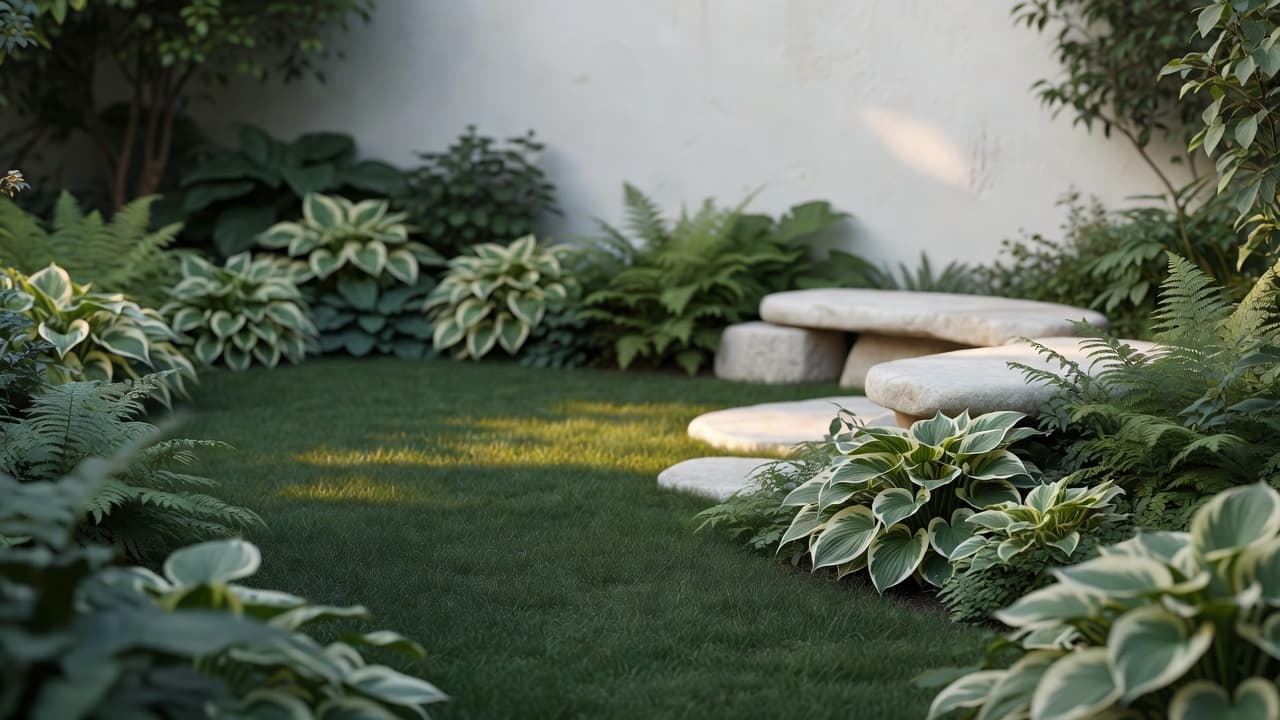
A "north-facing garden" simply means the garden lies on the north side of the house, so the building itself blocks the sun for a large part of the day rather than the garden facing away from the sun entirely. In the northern hemisphere, north-facing gardens get the least direct summer sun of any orientation because the sun tracks across the southern sky — but that is not the same as no sun. In midsummer, when the sun climbs high and swings further round, most north-facing gardens catch a few hours of direct light in the middle of the day, even if mornings and evenings stay in shadow. Understanding that pattern, rather than assuming the whole space is permanently dark, is the real starting point for garden design that suits a north-facing plot.
How much shade does a north-facing garden really get?
The Royal Horticultural Society splits shade into several practical categories, and working out which one applies to different parts of a north-facing garden — rather than treating the whole plot as one uniform level of shade — makes plant choices far more reliable:
- Light shade — open to the sky but screened from direct sun by a wall, fence or nearby trees. Many typical border plants still flower reasonably well here.
- Partial or semi-shade — three to six hours of direct sun a day in midsummer, often the strip furthest from the house on a north-facing plot.
- Moderate shade — two to three hours of direct sun a day; plants here are usually grown for foliage rather than flowers.
- Deep or heavy shade — under dense tree cover or hard against a tall building, with less than two hours of direct sun; only a genuinely shade-tolerant plant list will thrive here.
A typical suburban north-facing garden is rarely one single category end to end — the area right against the house is often the darkest, while the far boundary can edge into partial shade for part of the day. Walking the garden at three or four points across a sunny midsummer day and noting where direct light actually reaches is worth more than any general rule of thumb.
Design principles for a north-facing garden
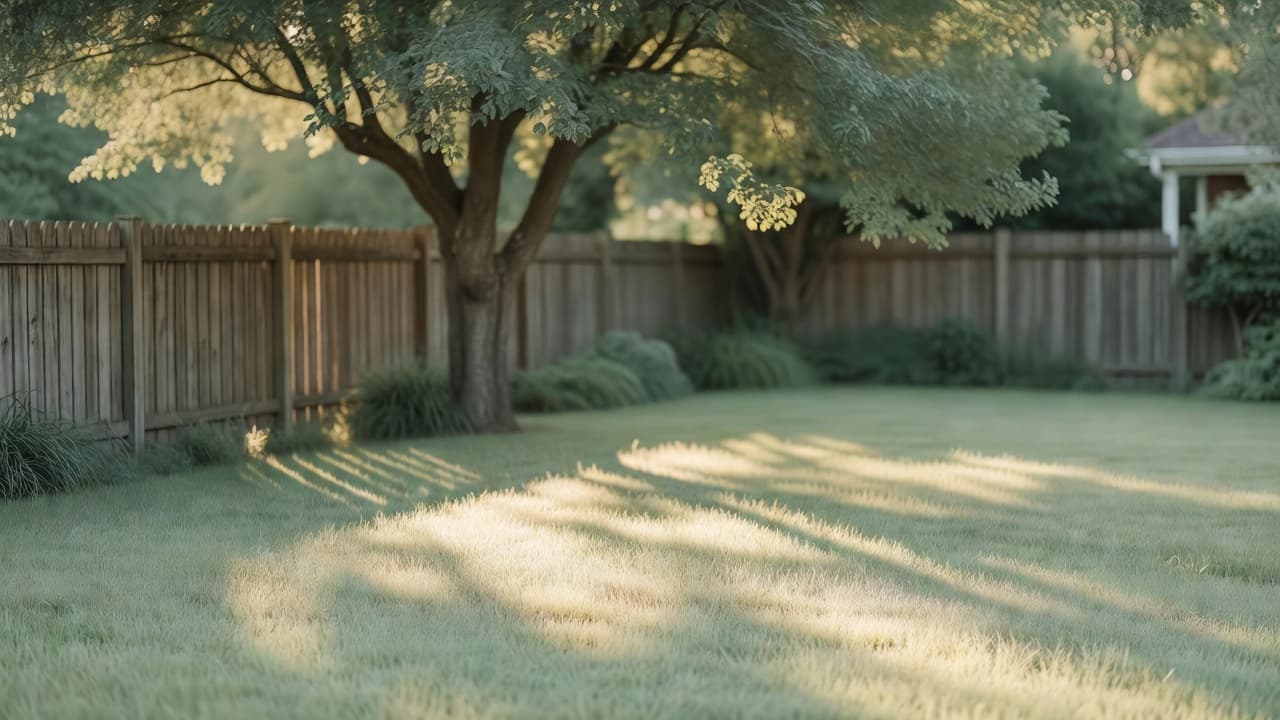
Once the real shade pattern is mapped, a handful of layout decisions do more for how bright and usable a north-facing garden feels than any single plant:
- Put seating where the light actually falls, even if that means a spot in the middle of the garden rather than the patio against the house, which is often the darkest part of a north-facing plot.
- Choose pale hard landscaping — light sandstone, cream porcelain or pale gravel bounce far more ambient light back up into the space than dark slate or grey concrete.
- Paint fences and walls in a pale, warm tone rather than the dark greens and near-blacks that are popular elsewhere; the RHS notes sun-loving plants are traditionally grown in front of white-painted walls specifically to maximise reflected light, and the same trick lifts a shady garden.
- Keep sightlines open near the house and reserve the densest, darkest planting for the boundary furthest away, so the garden reads as brighter from the windows that see it most.
- Use variegated and pale-leaved plants to lift the gloom of a dark corner — a variegated hosta or a silver-leaved brunnera reflects far more light than a plain green equivalent.
These principles apply whatever the garden's size or budget, and they matter more on a north-facing plot than choosing any single "best" plant — a good layout makes a modest plant list look considered, while a poor layout can make even a well-chosen plant list feel like an afterthought. Our colour theory for garden design guide goes further into using pale and reflective tones deliberately.
The best plants for a north-facing garden in 2026
Gardening authorities keep returning to a similar shortlist of genuinely shade-tolerant plants, which is a good sign they actually perform rather than just trend. The RHS list of award-winning plants for shady north walls and Gardeners' World's picks for a north-facing border both lean on the same reliable genera:
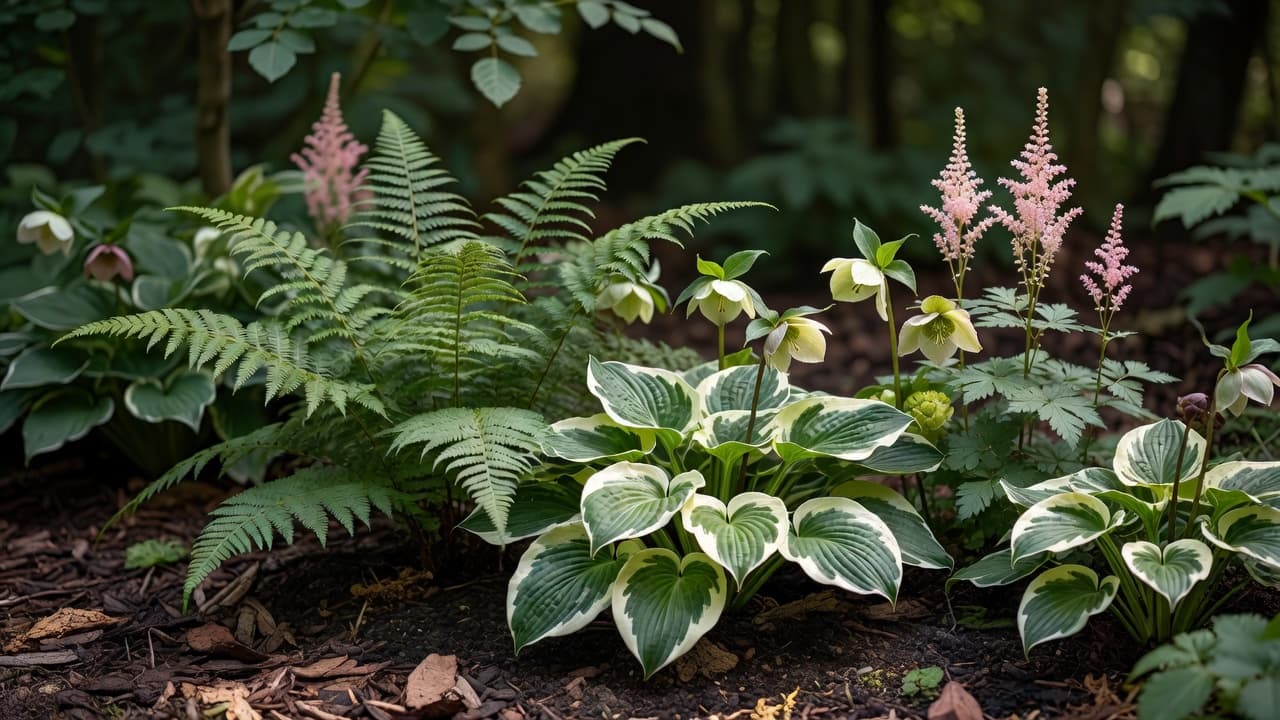
- Hosta — variegated varieties are particularly effective at lifting a dark corner, and their broad leaves suit the "grow broader, thinner leaves" strategy shade-tolerant plants use to capture more light.
- Hellebore (Helleborus) — nodding, cup-shaped flowers from February to April, thriving in the heavier, moisture-retentive soil common in shaded gardens.
- Ferns, especially Dryopteris wallichiana and hart's tongue fern (Asplenium scolopendrium) — reliably tough in deep shade and evergreen through winter.
- Camellia — well suited to a north-facing wall because the flowers open more slowly out of direct sun and last longer as a result.
- Rhododendron and azalea — cope with heavy shade and bring spring colour where few flowering shrubs will perform.
- Hardy geranium (cranesbill) — long-flowering, shade-tolerant ground cover that needs only an occasional cut-back.
- Astilbe — feathery plumes of colour that hold up well in the moist, shaded soil typical of a north-facing bed.
- Azara serrata, Osmanthus delavayi and Itea ilicifolia — three RHS award-winning evergreen shrubs bred and selected specifically for cold, shady north-facing walls.
- Snowdrops and bluebells — spring bulbs that flower and finish before deciduous tree canopies fill in, so they thrive even where summer shade is dense.
Always check a plant against your local hardiness zone before buying, particularly for evergreen shrubs on an exposed wall; the free USDA Plant Hardiness Zone Map is the fastest way to check in the US, and most UK nurseries label stock with an RHS hardiness rating. Our flower bed planning guide covers how to lay these out in blocks rather than buying one of everything.
Hard landscaping and materials that lighten a shady garden
Materials do as much work as planting in a north-facing garden, because they set the baseline amount of light bouncing around the space before a single plant goes in:
- Pale sandstone or cream porcelain paving reflects noticeably more light back up into planting than dark grey or charcoal paving, which absorbs it instead.
- Light-coloured gravel or decomposed granite works well as a path or bed mulch and reflects extra light back up into the surrounding canopy — the RHS specifically recommends pale mulches in light shade for this reason.
- Whitewashed or pale-painted boundary walls and fences maximise reflected light the same way a white-painted wall does for sun-loving plants elsewhere in a garden.
- A well-placed mirror can bounce useful light into a dark corner and visually double a planting bed, though it should never sit in the path of direct sun (where it becomes a fire risk) and needs a secure, weatherproof fixing.
- Decking in a pale timber or composite tone reads brighter underfoot than a dark stain and suits a north-facing patio better than very dark hardwood.
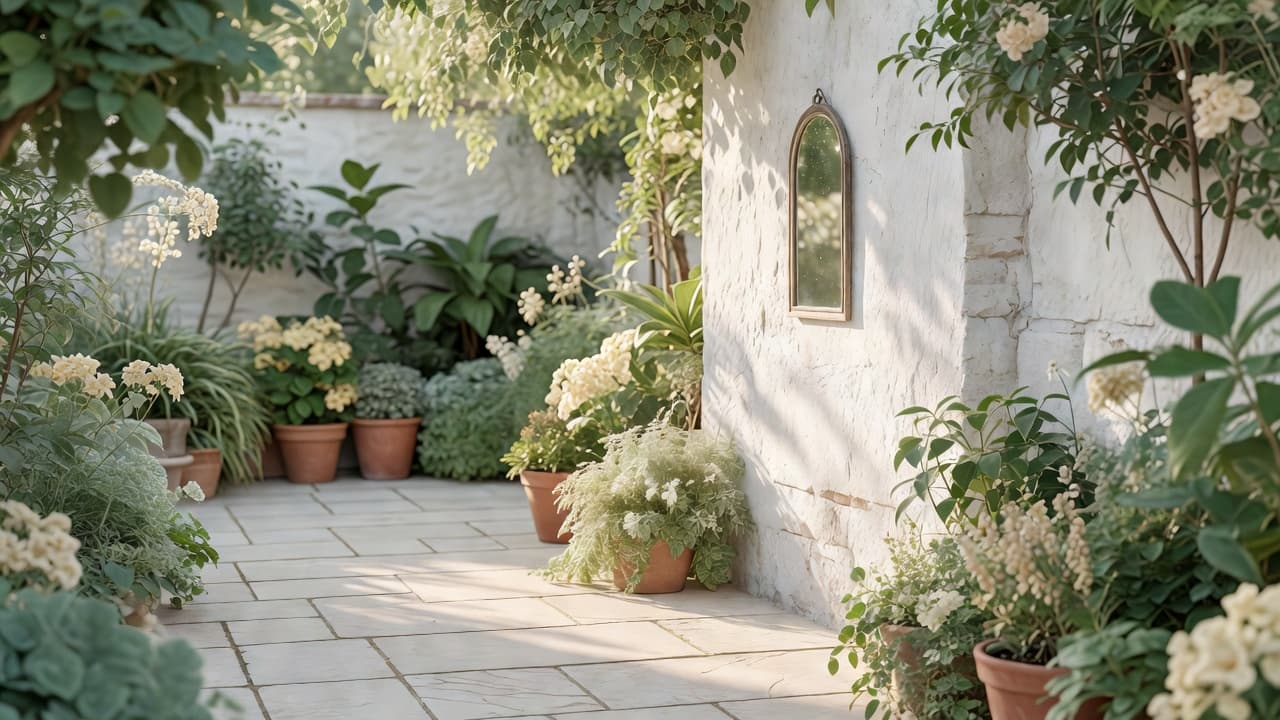
Seeing these material choices applied to an actual photo of a real garden makes the difference much easier to judge than imagining it. FlorAI can generate a photorealistic redesign from a single photo of a shaded space, which is a useful, low-pressure way to compare pale paving against the existing dark patio before buying anything.
Lighting a north-facing garden for evening use
A shaded garden loses useful daylight earlier than a south-facing one, which makes lighting more of a functional decision than a purely decorative one:
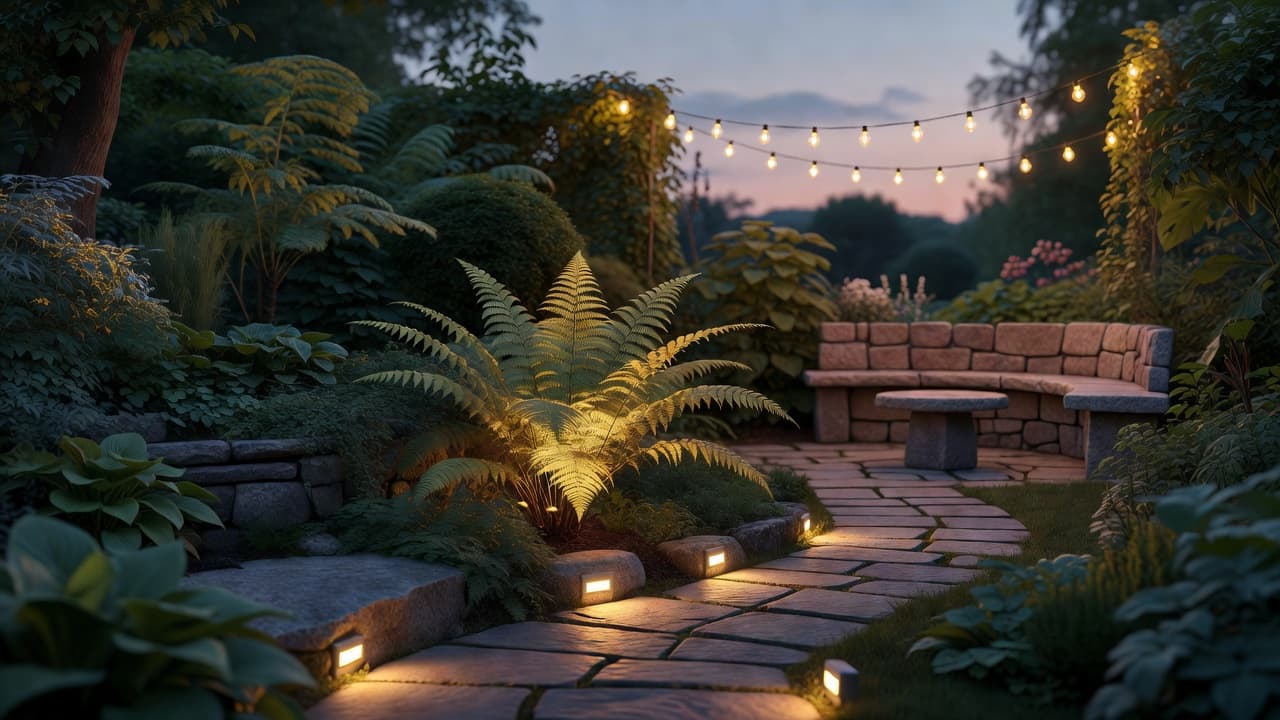
- Warm, low-level path lighting extends usable evening hours without competing with whatever daylight remains.
- Uplighting a single specimen, such as a fern or a multi-stemmed shrub, creates a focal point that reads well even once the rest of the garden has gone properly dark.
- Festoon or string lighting over a seating area adds ambient light exactly where people actually sit in the evening.
- Avoid a single bright overhead light, which flattens a shaded garden's natural depth rather than complementing it.
Our dedicated garden lighting design guide goes further into fixture types, placement and realistic costs for a full evening lighting scheme.
Common mistakes in north-facing garden design
- Planting for a sun the garden does not get — lavender, roses and most Mediterranean planting sulk and eventually fail in genuine shade, however appealing they look in a catalogue.
- Treating the whole garden as one shade level, when the boundary furthest from the house is often measurably brighter than the area against it.
- Choosing dark paving or dark fence stain to look "smart," which quietly removes reflected light the garden badly needs.
- Skipping a soil-moisture check — shade from trees is usually also dry shade because tree roots pull moisture from the soil, while shade from a building tends to stay damper; the two need different plants.
- Over-mirroring a space or placing a mirror where it catches direct sun, which risks a fire hazard rather than the intended soft reflected light.
- Ignoring spring bulbs that flower before a deciduous canopy fills in, missing an easy source of colour in an otherwise shaded bed.
What does a north-facing garden redesign cost in 2026?
A north-facing garden redesign typically costs a similar amount to any other garden of the same size — shade does not usually add cost on its own, though pale natural stone paving can run slightly above the cheapest dark options. As a realistic 2026 baseline, a compact UK project combining pale hard landscaping, a shade-tolerant planting scheme and basic lighting runs roughly £1,500–£5,000, with a small US project in the region of $2,000–$7,000. Our full 2026 garden design cost guide breaks larger projects down further, and the low maintenance garden design guide is worth reading alongside this one, since many of the same mulch and ground-cover principles reduce upkeep in shade too.
Frequently asked questions about north-facing garden design
Is a north-facing garden always in shade?
No. A north-facing garden gets the least direct summer sun of any orientation because the house blocks low morning and evening light, but most still catch a few hours of direct sun in the middle of the day at midsummer, when the sun climbs highest. The exact amount depends on nearby trees, fences and buildings, so it is worth mapping the actual light pattern rather than assuming total darkness.
What plants grow best in a north-facing garden?
Hostas, hellebores, ferns such as Dryopteris wallichiana, camellias, rhododendrons, hardy geraniums and astilbe are reliable choices, alongside RHS award-winning shrubs like Azara serrata, Osmanthus delavayi and Itea ilicifolia for a shaded wall. Spring bulbs such as snowdrops and bluebells also do well since they flower before deciduous canopies fill in.
How can I make a north-facing garden feel brighter?
Pale hard landscaping (light sandstone, cream porcelain, pale gravel), a whitewashed or pale-painted boundary wall, variegated foliage plants, and a carefully placed mirror out of direct sun all bounce more ambient light into the space than dark materials or plain green foliage.
Can I still have a lawn in a north-facing garden?
Yes, though grass thins in heavier shade. A shade-tolerant lawn seed mix, slightly longer mowing height and reduced foot traffic on the darkest section all help; in genuinely deep shade, ground cover planting or gravel usually performs better than grass long-term.
Does a north-facing garden cost more to redesign?
Not usually. Shade itself does not add cost — a compact UK redesign combining pale hard landscaping, shade-tolerant planting and basic lighting typically runs £1,500–£5,000 in 2026. Choosing premium pale natural stone over budget paving is the main cost difference, not the garden's orientation.
Can FlorAI redesign a shaded, north-facing garden?
Yes. FlorAI works from a single photo of any garden, including a shaded north-facing one, and generates a photorealistic redesign with shade-appropriate planting and lighter materials in seconds, so the look can be tested before anything is bought or built.
Last updated: July 2026. Written by the FlorAI garden team.