
Budget Gardens · 2026 guide
Garden Design on a Budget: A Practical 2026 Guide
Garden design on a budget means spending on the few things that genuinely change a garden — a simple hard-landscaping base, well-chosen plants and a clear plan — while growing or sourcing the rest cheaply, in phases, as money allows. In the UK, a compact DIY-led budget garden typically costs £300–£1,500 in materials and plants for 2026; a fuller budget-conscious makeover that mixes some hired labour with DIY planting runs roughly £1,500–£4,500. This guide covers the cheapest hard landscaping options, how to grow plants for free, smart ways to buy the rest, and realistic 2026 budget tiers for a garden redesign that still looks designed.
AI Garden Design GuidesPublished July 24, 2026Updated July 24, 202611 min read
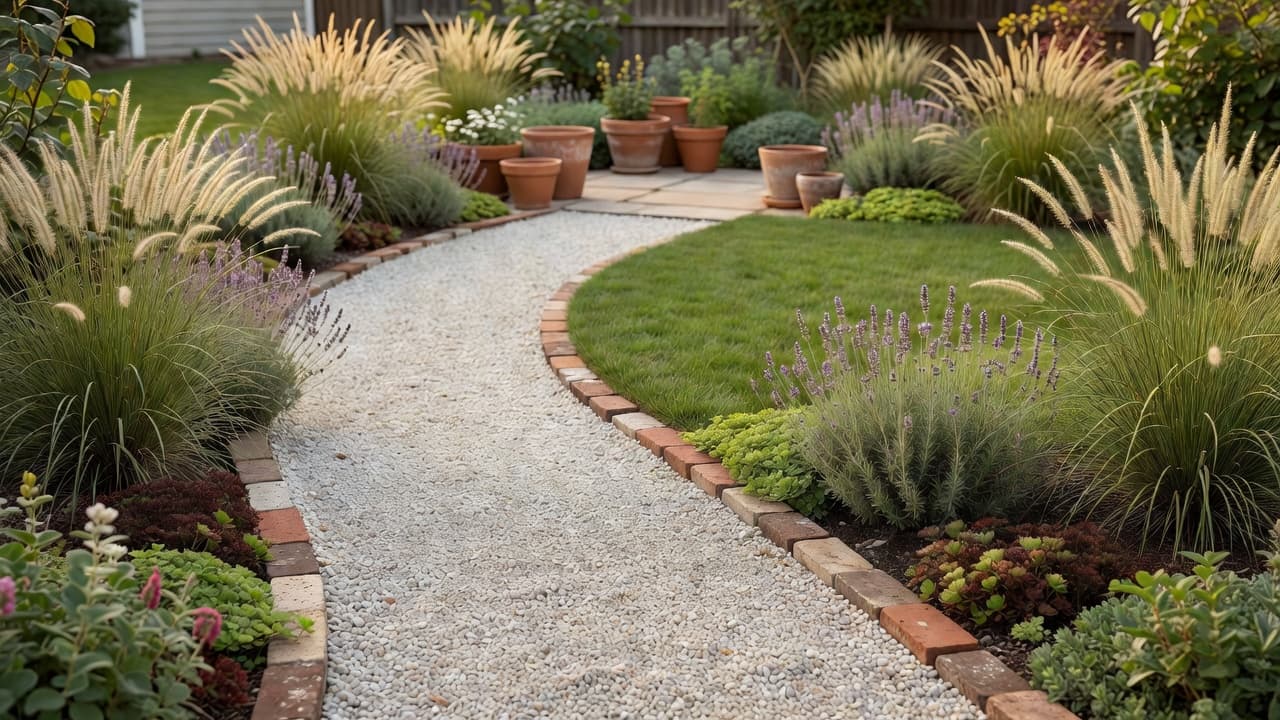
What does garden design on a budget actually mean?
Most budget gardens fail for the same reason expensive ones fail: no plan. Buying plants and materials as the fancy takes you, without deciding on a layout first, is the single most reliable way to overspend and still end up with a garden that does not hang together. Our AI garden design guide covers the wider planning process; the short version for a tight budget is to fix the layout and style first, and only then start buying, growing or scavenging materials against that plan.
- Fix the layout and style before buying anything, even a single plant.
- Spend the real money on hard landscaping and structure — it is the hardest part to change later.
- Grow as many plants as possible for free, from cuttings, division or seed.
- Buy the plants you cannot grow yourself small, not mature.
- Phase the work over one or two seasons instead of building everything at once.
- Reuse or buy secondhand for anything that does not need to be new.
Start with a plan, not a shopping list
A plan does two jobs on a tight budget: it stops you buying the wrong things, and it tells you where to spend the money you do have. A single photo of the space and a chosen style is often enough to see whether a path should run left or right of a tree, or whether a small lawn is worth keeping at all — decisions that are expensive to reverse once gravel is down or a border is planted. Our guide to planning a garden redesign walks through the process step by step. FlorAI can turn one photo of a garden into a photorealistic redesign in seconds, which is a low-pressure way to test a layout before spending anything on it.
- Measure the space roughly and note what has to stay: mature trees, drains, boundaries, existing paving.
- Pick one style and stick to it — mixing looks costs more because nothing repeats or reuses.
- Decide the one or two features worth spending on (a proper path, a small seating area) and plan everything else around them.
- Test the layout against a real photo of the garden before buying materials, using a sketch or an AI garden planner.
The cheapest hard landscaping options
Hard landscaping — paths, patios and the surfaces under everything else — is where a garden budget disappears fastest, so it is worth knowing which options are genuinely cheap rather than just cheap-looking. Our 2026 garden design cost guide breaks down full landscaper pricing by size and style; the figures below are specifically the lower-cost, DIY-friendly end of that range.
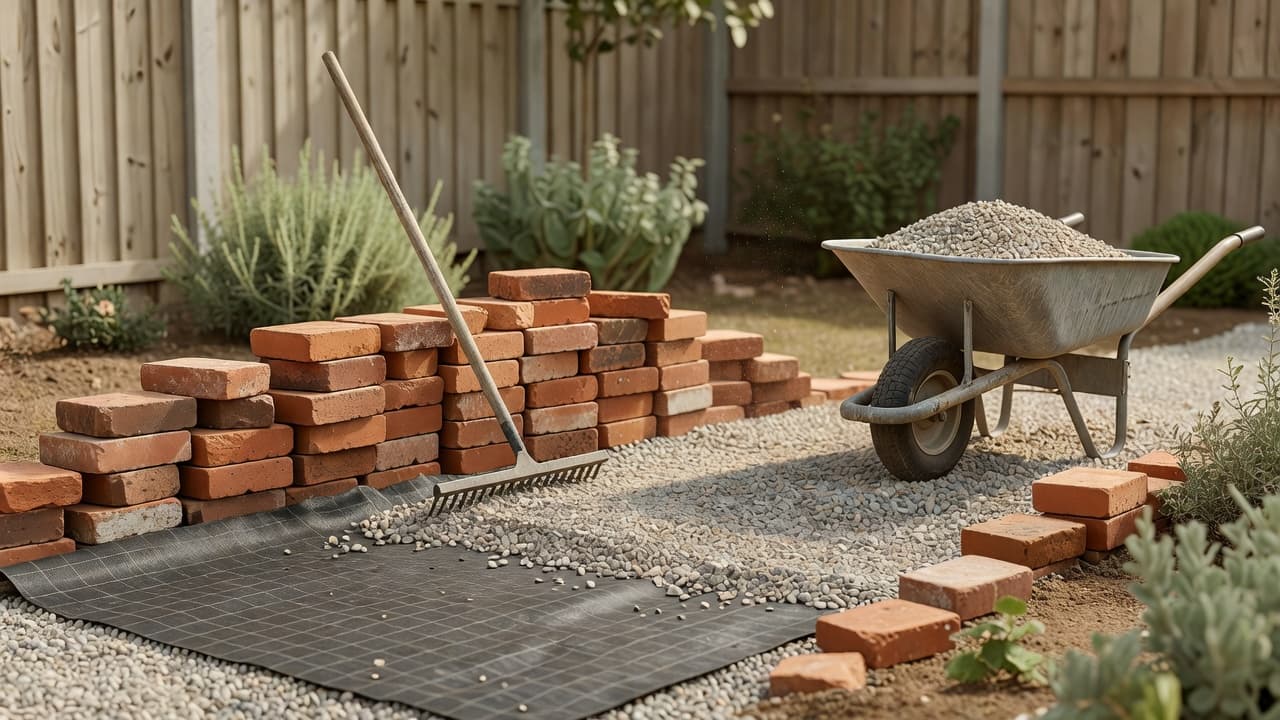
- Gravel over a permeable membrane. Roughly £8–£30 per square metre installed in 2026 depending on depth and edging, and one of the few surfaces most homeowners can lay themselves in a weekend.
- Bark or wood-chip mulch. A few pounds per bag, suppresses weeds and finishes a border instantly while plants are still small — our low maintenance garden design guide covers mulch and ground cover in more depth.
- Reclaimed brick, stone or paving slabs. Reclamation yards and online marketplaces regularly sell perfectly usable paving at a fraction of new prices — the aesthetic is often better than new paving too.
- Simple stepping-stone or gravel paths instead of a fully paved patio, which cuts both material and labour cost while still giving a defined route through the garden.
- A smaller, simply shaped lawn kept instead of removed, which costs nothing beyond ongoing mowing and avoids a hard-landscaping bill entirely.
Grow plants for free
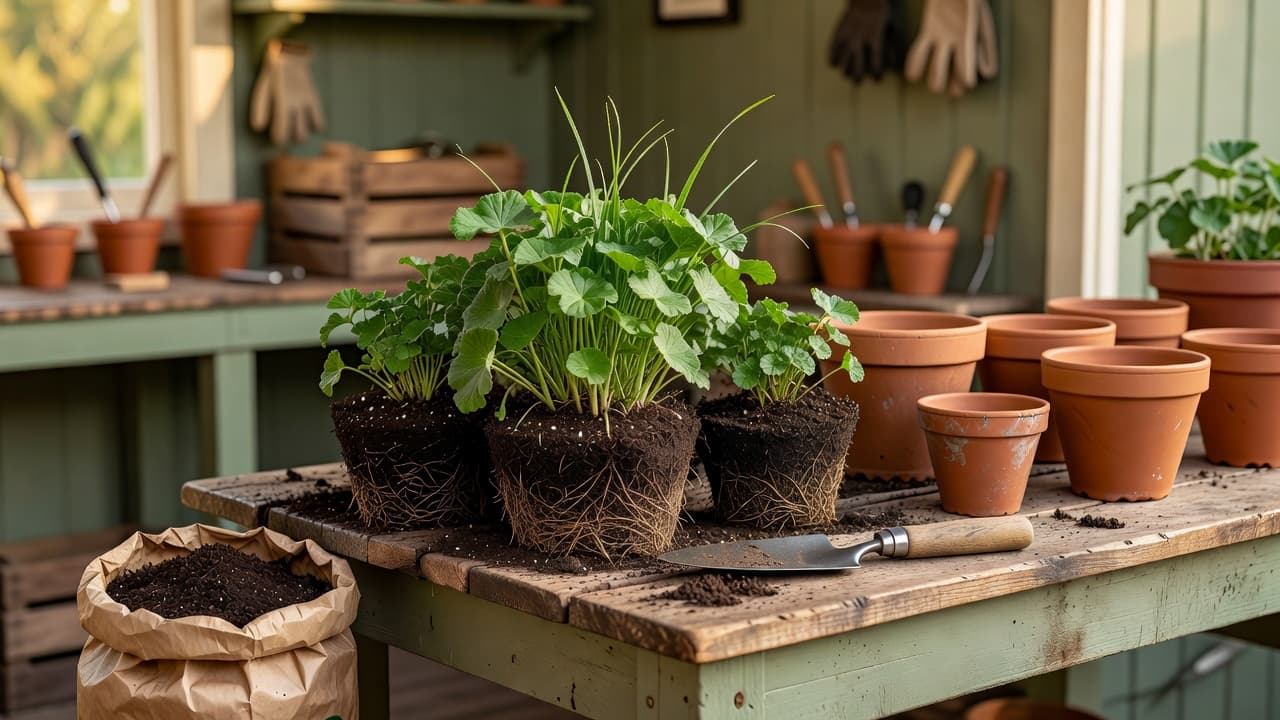
Plants, not hard landscaping, are usually where a budget garden can be built almost entirely for free, because most garden perennials are easy to multiply without buying a single new pot. The RHS guide to plant propagation covers the core techniques in detail; the three that do the most for a budget garden are division, cuttings and seed.
- Division. Perennials that form clumps — hardy geranium, daylily, sedum and most ornamental grasses — can be lifted and split into three or four new plants every few years, usually in spring or autumn.
- Cuttings. Lavender, rosemary, salvia and many shrubs root readily from softwood or semi-ripe cuttings taken from an existing plant, yours or a friend's, for the cost of a pot of compost.
- Seed. Hardy annuals such as cornflower, poppy, cosmos and nasturtium are cheap to raise from seed and fill gaps in a new border in one season while slower perennials establish.
- Plant swaps. Local gardening clubs, allotment groups and community plant swaps are a genuine source of free, locally proven plants — often better suited to your soil than anything bought in.
Buy plants and materials smart
For anything you do buy, the price gap between the cheapest and most expensive route to the same finished look is often larger than people expect. BBC Gardeners' World's budget garden ideas make the same point: reduced end-of-season stock and small starter plants both regrow reliably if the roots are healthy.
- Buy small. A 3-litre shrub costs a fraction of a 7.5-litre pot of the same plant and catches up within a couple of growing seasons, a point our 2026 cost guide covers in more detail for larger projects too.
- Shop end-of-season sales. Perennials that look tired in a garden centre in fading light regrow well the following spring if the root system is healthy — check the roots, not the top growth.
- Check supermarkets, market stalls and discount racks, which regularly carry the same plants as a garden centre at a lower price.
- Buy bulk gravel or mulch in one delivery rather than small bags — a bulk bag typically runs £150–£270 delivered in 2026, working out far cheaper per square metre than buying it in 25kg bags.
- Always check a plant's hardiness for your climate before buying reduced stock — a bargain that does not survive winter is not a saving. The RHS plant database is a fast way to check.
Phase the work to spread the cost
A budget garden does not have to be finished in one season. Splitting the work into phases — hard landscaping first, then planting over the following year or two — spreads the cost and lets plants you have grown yourself catch up before you judge the result. Our AI garden design vs. designer vs. DIY comparison covers where a professional is genuinely worth paying for and where DIY phasing works just as well.
- Fix the layout and get any structural or drainage work done first, since it is disruptive and best not repeated.
- Lay the hard landscaping — path, small patio or gravel bed — in the first phase, even if the budget for planting is not there yet.
- Plant the first season's structure: any shrubs or perennials you are buying small, plus fast annuals from seed to fill the gaps.
- Add divisions, cuttings and swapped plants as they become available over the following year, rather than buying everything at once.
- Reassess after a full growing season — plants establish, and what looked sparse in spring often looks intentional by late summer.
Realistic budget tiers for 2026
Three rough tiers cover most budget garden projects in 2026, depending on how much is DIY and how much is hired.
- Weekend refresh — under £300 / $400. Mulch, a handful of new plants grown from cuttings or divisions, secondhand pots and a pressure-washed existing patio. No new hard landscaping.
- DIY budget makeover — £300–£1,500 / $400–$2,000. A gravel path or bed conversion, reclaimed edging, a mostly propagated or small-pot planting scheme, and a basic drip-irrigation timer.
- Budget-conscious full redesign — £1,500–£4,500 / $2,000–$6,000. Some hired labour for groundwork or paving, phased across one or two seasons, combined with DIY planting to keep the overall spend well below a full landscaper build.
For comparison, a full landscaper-led redesign of a small garden typically starts around £2,500–£8,000, as covered in our 2026 garden design cost guide — the budget tiers above are specifically the DIY-heavy end of that spectrum, not a discounted version of a professional build.
Budget mistakes that quietly cost more later
- Buying mature plants for instant impact, when a plant one-third the price and one-third the size usually catches up within two summers.
- Skipping a plan and buying materials as you go, which leads to mismatched leftovers and repeat trips that cost more than one considered order.
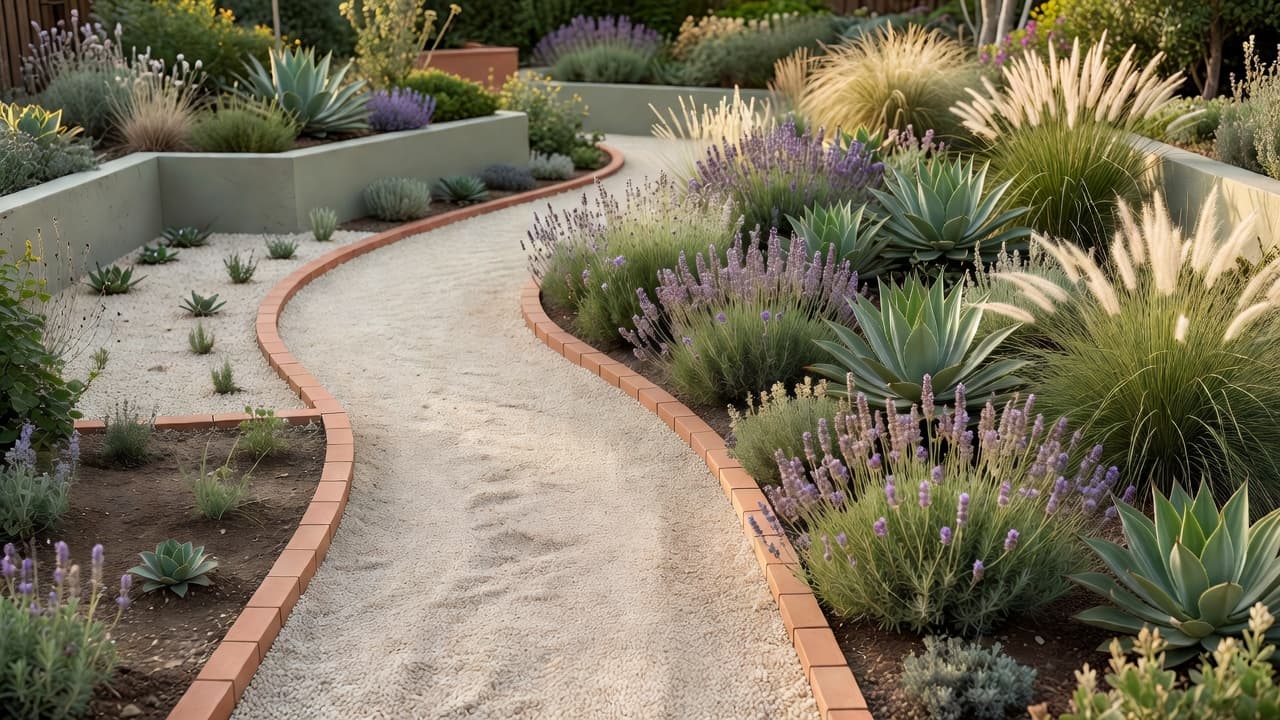
- Choosing the cheapest gravel or membrane without checking it is permeable and weed-suppressing, which means paying again within a year or two.
- Ignoring hardiness and soil type to save money on reduced stock, since a plant that dies over winter was never actually cheap.
- Doing hard landscaping and planting in the wrong order, which usually means digging up new plants to fix drainage or add a path afterwards.
Seeing a layout applied to a real photo of the actual garden makes most of these budget decisions far easier to judge in advance. FlorAI generates a photorealistic redesign from one photo, free to try, which is a low-pressure way to check whether a smaller lawn, a gravel path or a particular planting style will actually work before spending anything on materials or plants.
Frequently asked questions about garden design on a budget
What is the cheapest way to design a garden?
The cheapest route combines a fixed plan, DIY gravel or reclaimed hard landscaping, and plants grown for free from division, cuttings or seed rather than bought mature. Most homeowners can refresh a small garden this way for under £1,500 in 2026.
How much does a budget garden makeover cost in 2026?
A weekend refresh using mulch, divided plants and existing paving can cost under £300 / $400. A fuller DIY budget makeover with new gravel or paving typically runs £300–£1,500 / $400–$2,000, and a budget-conscious redesign mixing some hired labour with DIY planting runs £1,500–£4,500 / $2,000–$6,000.
Can I really get garden plants for free?
Yes. Division, cuttings and seed-raising are all genuine, low-cost ways to multiply plants you or a friend already grow, and the RHS's plant propagation guide covers the techniques step by step. Local plant swaps are another reliable free source.
What is the cheapest hard landscaping option?
Gravel over a permeable membrane is usually the cheapest surface most homeowners can lay themselves, at roughly £8–£30 per square metre installed in 2026. Reclaimed paving and simple stepping-stone paths are the next cheapest options.
Is it cheaper to design a garden myself or hire a designer?
DIY is almost always cheaper in cash terms, typically £300–£3,000 in materials and plants against £4,000 or more for a full landscaper-led redesign, though it costs more of your own time. Our AI garden design vs. designer vs. DIY guide compares where each approach makes sense.
Can AI help design a garden on a budget?
Yes. An AI garden design app like FlorAI turns one photo of a garden into a free, photorealistic redesign, which helps confirm a layout, path or planting style actually works before any money is spent on materials or plants.
Last updated: July 2026. Written by the FlorAI garden team.