
Garden Styles · 2026
Minimalist Garden Design: Principles, Materials and Plants for 2026
Minimalist garden design strips a garden back to a few deliberate elements — clean lines, a restrained material palette and a small number of repeated plants — so the space feels calm rather than cluttered. It favours structure over decoration: gravel or paving laid with confidence, one or two hard materials such as corten steel or natural stone, and planting chosen for form as much as flower. This guide covers the core principles, the materials and plants that make it work in 2026, and the mistakes that turn minimal into empty.
AI Garden Design GuidesPublished July 16, 2026Updated July 16, 20269 min read
What is minimalist garden design?
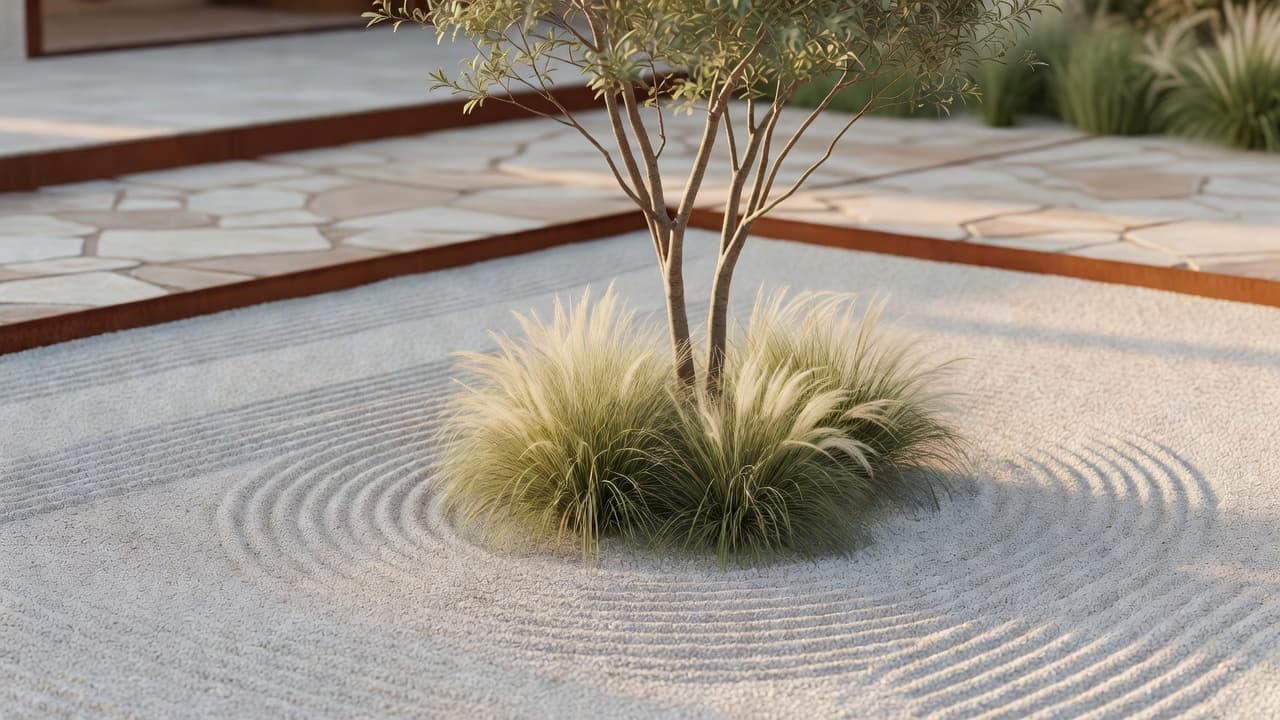
Minimalist garden design borrows its logic from modernist architecture and the wider minimalism design movement: strip a space back to what it needs, and let what remains carry more weight. In a garden that means fewer hard materials, a smaller plant list repeated with confidence, and enough open space — gravel, lawn or paving — for the eye to rest. It sits at the opposite end of the spectrum from a cottage garden, where variety and abundance are the point.
The goal is not a bare or lifeless garden. A well-designed minimalist garden still has movement, texture and seasonal change — it just gets there with five plant species instead of fifty, and one hard-landscaping material instead of four. For the wider principles behind any AI-assisted redesign, our AI garden design guide is a good starting point.
Core principles of minimalist garden design
Every minimalist garden, whatever its style, tends to follow the same handful of rules:
- Restraint over variety. Three to six plant species, repeated with confidence, read as calmer than fifteen used once each.
- Clean lines and geometry. Straight paths, rectilinear beds and crisp edges do more visual work than curves and mixed borders.
- Negative space. Gravel, lawn or paving left empty gives the eye somewhere to rest — it is a deliberate part of the design, not unfinished space.
- One hero material, one accent. Pick a dominant hard-landscaping material and a single contrasting accent, rather than mixing several.
- A deliberate focal point. A single specimen tree, a large stone or a piece of sculpture earns its place instead of competing with a dozen other features.
Materials that make a minimalist garden work
Because a minimalist garden shows off its materials rather than hiding them under planting, material choice matters more here than in almost any other style. RHS guidance on modern and minimal garden design points to natural stone, gravel and considered hard landscaping as the backbone of the look, with planting used sparingly to soften hard edges rather than fill space.
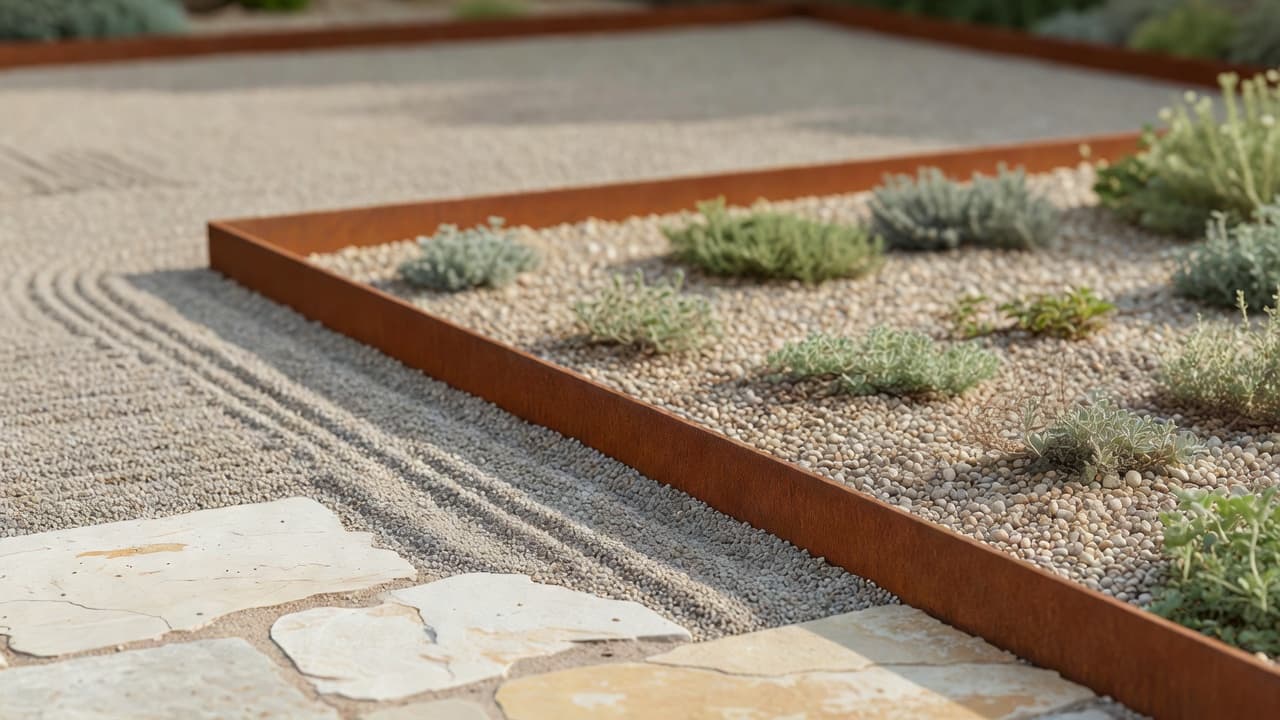
- Corten steel edging. A weathering steel that develops an even rust-coloured patina over a few months, then needs almost no upkeep. Entry-level UK edging starts at roughly £35 per linear metre for a basic 100mm-high strip, rising for taller or thicker sections.
- Gravel. Cheap, permeable and quick to lay, gravel reads as calm when it is one consistent colour and grade rather than mixed decorative stone. It also pairs naturally with drought-tolerant planting — see our xeriscape and drought-tolerant garden design guide.
- Natural stone. Large-format sawn slabs or a single type of paving, laid with minimal joints, feels more considered than a patchwork of leftover materials.
- Timber. Unfinished or lightly stained hardwood decking softens an otherwise hard, cool material palette without breaking the restrained look.
- Poured or exposed-aggregate concrete. A single, continuous surface reduces visual clutter, particularly for paths and thresholds.
Whatever materials you choose, budgeting realistically matters — our 2026 garden redesign cost guide breaks down typical UK price ranges for hard landscaping, planting and full rebuilds.
How to plant a minimalist garden
Minimalist planting is not about using fewer plants for its own sake — it is about choosing plants for form, foliage and structure first, and flower second. A small, repeated palette reads as intentional; a large one reads as busy.
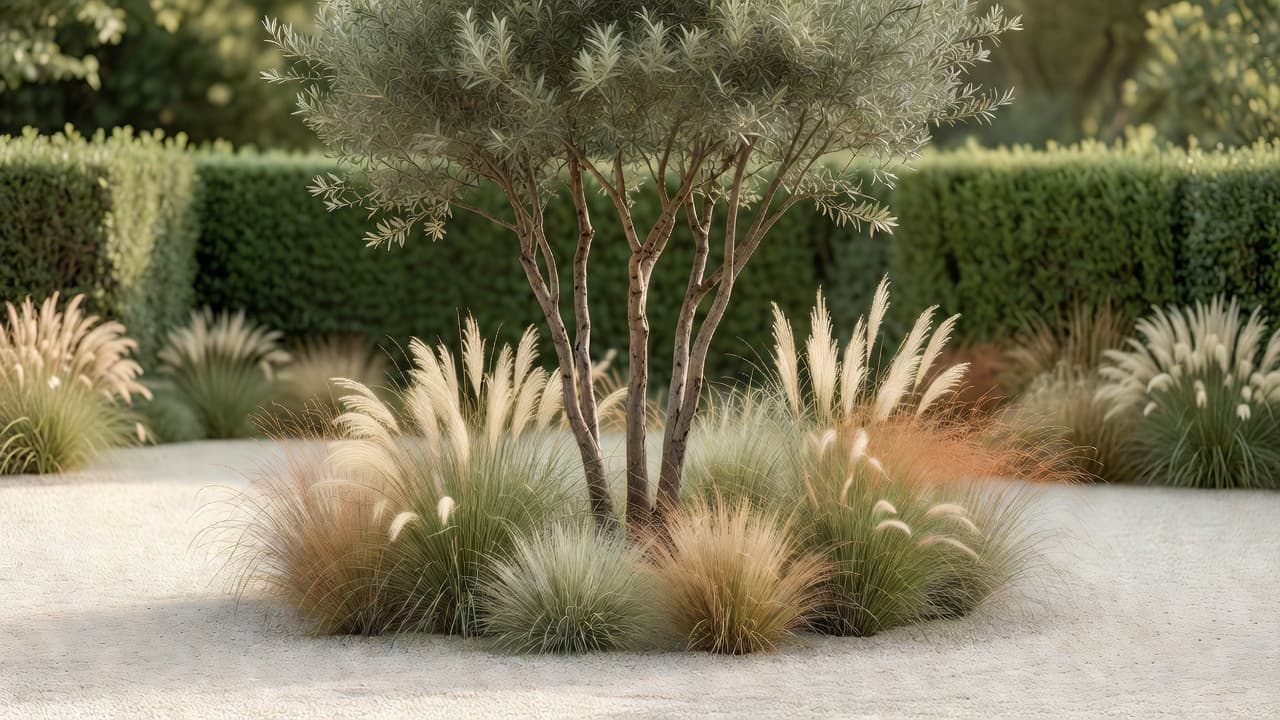
- Ornamental grasses for movement and texture year-round — Miscanthus sinensis for height and Stipa tenuissima for a softer, feathery drift.
- One specimen tree — a multi-stem amelanchier, a Japanese maple in a large container, or a single olive in warmer, sheltered gardens — used as the only focal point in the garden rather than one of several.
- Clipped evergreen structure. Traditional box (Buxus) gives the classic look, but many UK gardens are moving to Ilex crenata for hedging and low clipped shapes because it resists the fungal disease commonly called box blight, which has damaged box hedging badly in recent years — the RHS box alternatives guide compares the options.
- Architectural perennials. Sedum (Hylotelephium), Euphorbia and Verbena bonariensis add structure and late-season interest without breaking a restrained colour palette.
Repeat whatever you choose in blocks or drifts rather than dotting single plants around the garden — repetition is what makes a small plant list feel deliberate rather than sparse.
Minimalist garden design ideas for small spaces
Minimalism scales down unusually well, which is one reason it suits modern plots. A courtyard, side return or balcony often only has room for one hard material, one plant and one focal point anyway — the style and the space size agree with each other. Our small garden design app guide covers the wider layout principles for compact plots, and the outdoor room design ideas guide is useful if you want the space to double as extra seating.
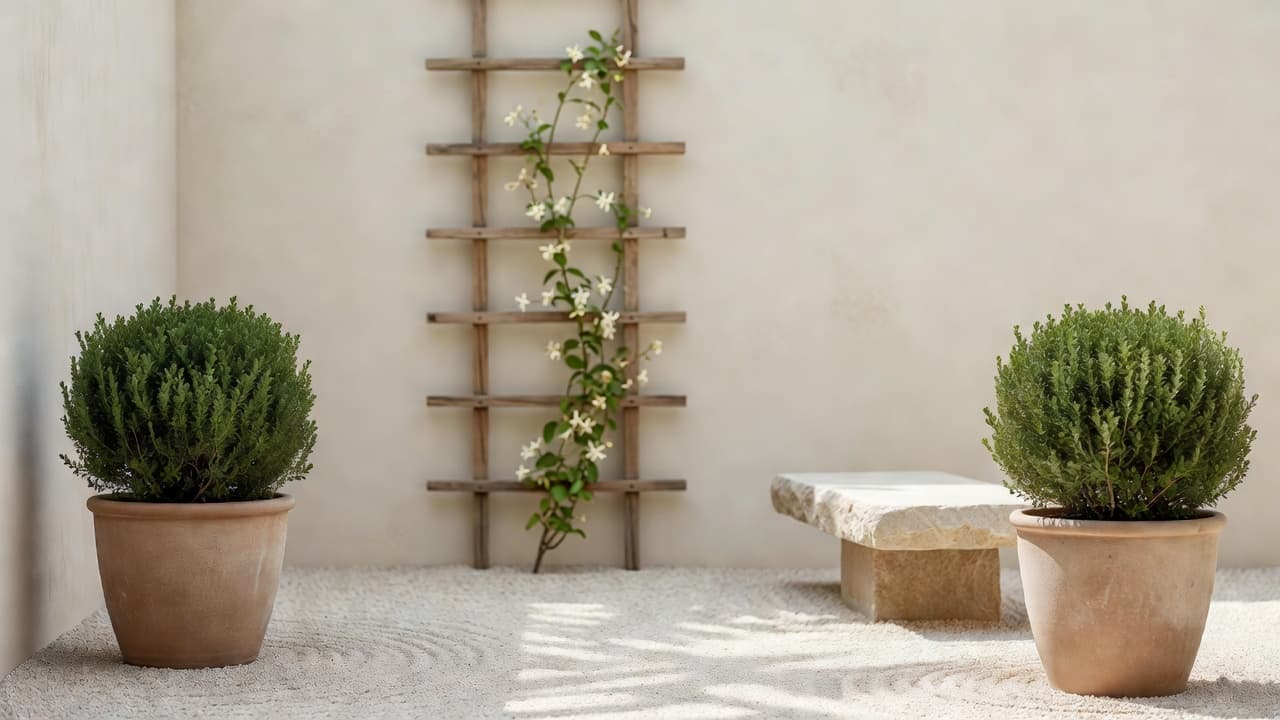
- Courtyards and side returns — one paving material, gravel infill, a single climbing plant on a trellis.
- Front yards — a gravel or paved run replacing a lawn strip, with one repeated shrub either side of the entrance.
- Balconies — matching large planters in one material, one repeated grass or clipped shrub, and nothing else competing for space.
If you want to see how a minimalist layout would actually look on your own patio, courtyard or front yard before buying any materials, FlorAI can generate a photo-realistic minimalist redesign from a single photo of your space in a few seconds — useful for testing a material and planting combination before committing.
Warm minimalism: the 2026 update
The stark, black-and-grey version of minimalism that dominated the last decade is softening. Garden designers report a shift towards what is being called warm minimalism — the same restrained principles, but with sun-bleached timber, honey-toned stone and warmer greys replacing cold black steel and charcoal render. The structure stays the same; only the palette gets gentler. If your minimalist garden feels a little cold or clinical, swapping a black-painted fence for unfinished timber, or a grey gravel for a warmer buff tone, is often enough to fix it without changing the layout at all.
Colour and texture in a minimalist garden
Because a minimalist garden has so few elements, each one carries more visual weight — which makes colour and texture choices more important, not less. Our colour theory for garden design guide covers this in more depth, but the short version for minimalism is to pick two or three neutral tones for hard landscaping and let seasonal foliage provide the only real colour shift through the year. The same restraint that works indoors applies outdoors — see our guide on styling a garden like an interior designer for more on carrying an indoor palette outside.
Texture does the work that pattern would otherwise do: bark, gravel grade, grass seedheads and stone finish all read from a distance in a way that a printed cushion or patterned tile cannot.
Minimalist garden design and Japandi: a related style
If restrained materials and a small plant list appeal but you would also like more warmth and natural asymmetry, it is worth comparing minimalist garden design with Japandi garden design, which blends the same restraint with Japanese and Scandinavian influences. The two styles overlap heavily on materials and plant discipline, and differ mainly in mood — pure minimalism leans cooler and more geometric, Japandi leans warmer and slightly more organic.
Common minimalist garden design mistakes
A handful of mistakes turn a minimalist garden from calm into cold or, worse, unfinished-looking:
- Mixing too many materials. Two well-chosen materials, used with confidence, beat five used sparingly.
- No negative space. If every surface is planted or paved, there is nowhere for the eye to rest, and the garden stops feeling minimal.
- Over-pruning. Clipping everything into tight balls removes the texture and movement that keep a restrained garden from feeling sterile.
- Skipping maintenance. A minimalist garden has fewer places to hide an untidy edge or a patchy lawn — crisp lines need to stay crisp.
- Forgetting a focal point. Without one tree, sculpture or specimen plant to anchor it, a minimalist garden can read as empty rather than intentional.
Frequently asked questions about minimalist garden design
What is minimalist garden design?
Minimalist garden design limits a garden to a small, deliberate set of materials, plant species and shapes, favouring negative space and clean lines over variety, so the whole space reads as calm rather than cluttered.
What plants work best in a minimalist garden?
Ornamental grasses such as Miscanthus and Stipa, a single specimen tree, clipped evergreen structure like Ilex crenata, and a few architectural perennials such as sedum or euphorbia, repeated in blocks rather than scattered.
Is minimalist garden design low maintenance?
Mostly, yes — fewer plant species and simple hard landscaping mean less to manage overall. However, crisp lines and clipped shapes need regular, light upkeep to stay looking deliberate rather than neglected.
What materials are used in minimalist garden design?
Corten steel edging, gravel, natural stone, timber and poured or exposed-aggregate concrete are the most common choices, usually limited to one dominant material and a single accent.
How do I make a small garden feel minimalist?
Pick one hard-landscaping material, one repeated plant, and leave some genuinely empty space rather than filling every corner — small plots often suit minimalism better than large ones because there is less to restrain.
Can AI help me design a minimalist garden?
Yes. An AI garden design app like FlorAI can turn a single photo of your own garden into a photo-realistic minimalist redesign in seconds, which makes it easier to test a material and planting combination before buying anything.
Last updated: July 2026. Written by the FlorAI garden team.