
Garden Styles · 2026
Wabi-Sabi Garden Design: Ideas, Plants and Materials for a Garden That Ages Well
Wabi-sabi garden design is the practice of building a garden around imperfection, natural aging and the passage of time, rather than trying to keep it looking newly installed. It favours moss-covered stone, weathered wood, rusted metal and a small number of characterful plants left to seed, sprawl and show their age, instead of clipped hedges and uniform bedding. The philosophy comes from Japan, where wabi describes rustic simplicity and sabi describes the beauty of natural wear, and together they describe a garden that looks more convincing the longer it has been left alone. This guide covers where the idea comes from, the real materials and plants that define it, and how to lay one out in a real garden, courtyard or balcony.
AI Garden Design GuidesPublished August 28, 2026Updated August 28, 202611 min read
What is wabi-sabi garden design?
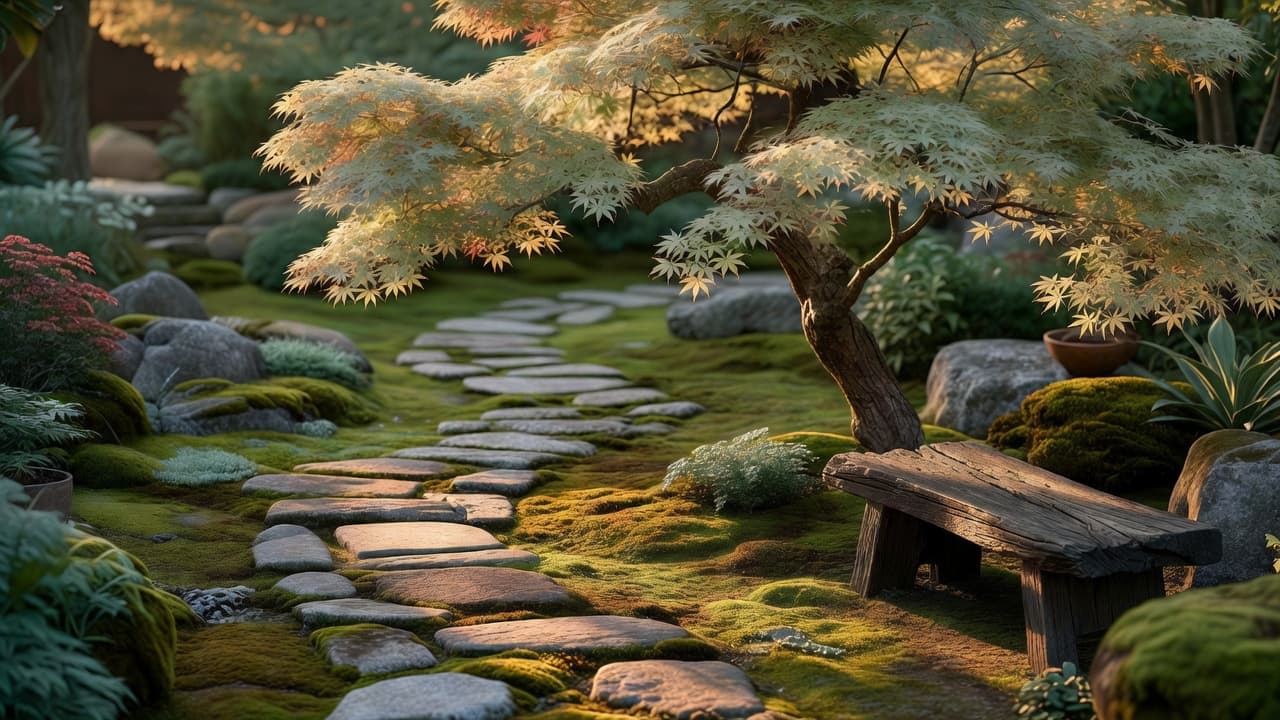
Wabi-sabi garden design treats a garden as something that improves with age rather than something to be kept looking freshly installed. In practice that means letting a stone path develop moss, allowing a metal edge to rust to a warm orange-brown, and choosing plants for how they look through an entire year — including the weeks when a seedhead has gone brown and a leaf has curled — rather than only at their flowering peak. It sits within the wider world of AI garden design as one particular philosophy: less about a fixed look and more about a relationship with time.
If you want to see whether the aesthetic suits a real space before changing anything, an AI garden design app such as FlorAI can generate a photo-realistic wabi-sabi version of an actual garden from a single photo, which is a useful gut-check before any stone gets moved.
Where wabi-sabi comes from: wabi, sabi and mono no aware
Wabi-sabi grew out of Buddhist philosophy in Japan and shaped centuries of Japanese art, from the tea ceremony to pottery to garden design. Wabi originally described the quiet melancholy of rustic simplicity and solitude; sabi described the beauty that comes with age, wear and patina. Together, as Wikipedia's overview of wabi-sabi explains, they describe an aesthetic built on three linked ideas: nothing lasts, nothing is finished, and nothing is perfect. A related term worth knowing is mono no aware — an awareness of the gentle sadness in things passing — which is why a wabi-sabi garden treats a fading flower or a bare winter branch as worth looking at, not something to hide until it is over.
In a garden, that philosophy becomes a working method rather than just a mood. Instead of fighting the moss on paving or repainting a fence every few years, a wabi-sabi garden is planned so those changes read as part of the design from day one, not as maintenance failures.
The core principles of a wabi-sabi garden
- Imperfection over polish — an asymmetric stone, an unevenly pruned branch or a crack in a path is left rather than corrected.
- Impermanence (mujō) — the garden is expected to look different in ten years, and that change is welcomed rather than resisted.
- Natural, honest materials — stone, timber, unglazed ceramic and untreated or slowly rusting metal, chosen because they weather rather than because they resist weathering.
- Restraint — a small number of plants and materials, used with confidence, rather than a wide decorative mix.
- Negative space and quiet — bare gravel, an empty corner of lawn or one unplanted pot are treated as part of the design, giving the eye somewhere to rest.
- Function over ornament — every element, from a worn stepping stone to a weathered bench, is there to be used, not just admired.
Materials that are built to age: stone, rusted metal and reclaimed timber
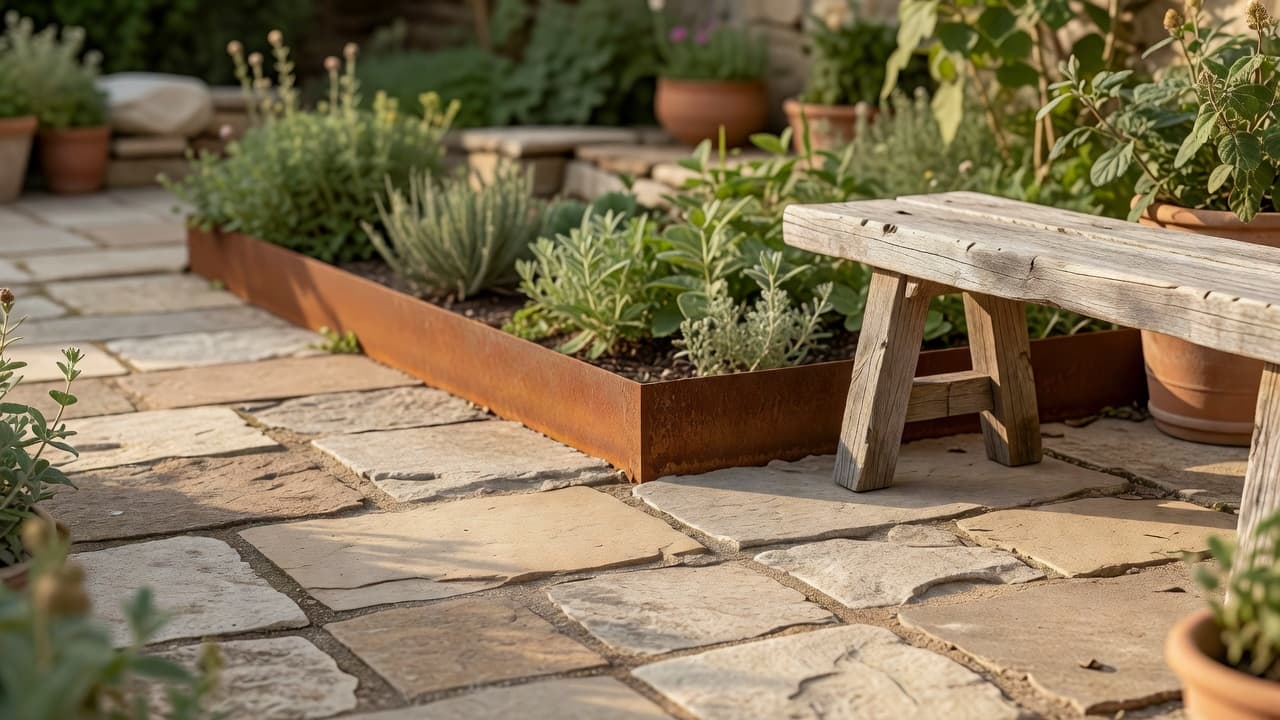
Material choice does most of the work in a wabi-sabi garden, because everything is chosen for how it changes rather than how it starts. Natural, uncut or irregularly cut stone is placed where moss and lichen can slowly colonise it — stones set out of the main foot-traffic line pick up a green patina fastest. Reclaimed or untreated timber is left to silver in the sun rather than being oiled or stained every year, and old tools, gates or containers are repurposed rather than replaced, so their rust and wear become part of the garden's history instead of a problem to fix.
Weathering steel — often called Corten after the trademarked US Steel product, and described in detail on Wikipedia's entry on weathering steel — is a practical modern addition: it forms a stable, rust-coloured surface within a year or two of installation and needs no further finishing, which makes it a reliable way to bring an aged look to a new edge, planter or screen. Copper behaves similarly outdoors, oxidising to a blue-green patina over several years.
- Natural stone paving, laid with visible gaps and irregular joints rather than tight, uniform grouting.
- Reclaimed or air-dried timber, left unfinished so it silvers naturally rather than being restained.
- Weathering (Corten) steel edging or planters, which rust to a stable orange-brown finish within a season or two.
- Unglazed terracotta or stoneware pots, which develop lime staining and moss over a few seasons outdoors.
- Repurposed metal — an old gate, tool or trough — left to rust rather than replaced.
A garden built mostly around stone and gravel, rather than a wider material mix, is really its own sibling style — see our guide to gravel garden design for the specifics of paths, mulches and drainage.
Plants for a wabi-sabi garden: moss, lichen and self-seeders that carry the look
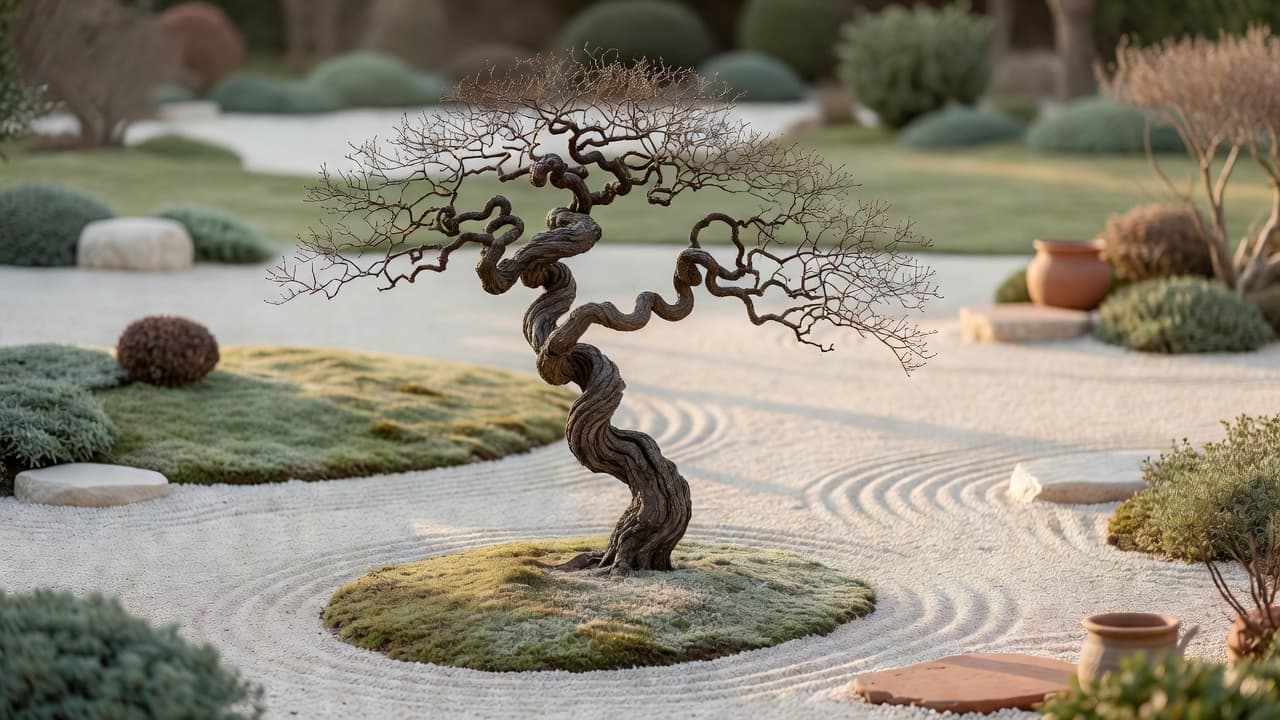
Planting in a wabi-sabi garden favours character over uniformity: species are chosen for bark, seedheads and the way they age, not only for how long they flower. A tree that has been shaped by wind, or that has an asymmetric, leaning trunk, reads as more convincing in this style than a perfectly upright, symmetrical specimen.
- Corylus avellana 'Contorta' (corkscrew hazel) — a slow-growing, multi-stemmed shrub with strongly twisted branches that read as sculpture once the leaves drop in winter; see the RHS growing guide to corkscrew hazel for planting and pruning detail.
- Acer palmatum (Japanese maple), especially an older, informally shaped specimen rather than a young, symmetrical one — valued for bark texture and branch structure once the autumn colour has dropped.
- Ornamental grasses such as Miscanthus or Stipa, left uncut through winter so their seedheads catch frost and low light instead of being tidied away in autumn.
- Self-seeding perennials — Verbena bonariensis, Erigeron karvinskianus, aquilegia — allowed to establish their own informal drifts in gravel and paving cracks rather than being weeded out.
- Moss and lichen, encouraged on shaded stone, timber and paving rather than scrubbed off; see the RHS guide to moss for the damp, shaded, slightly acidic conditions it needs to establish.
- Ferns and hostas in shaded corners, chosen for foliage texture that holds interest long after any flowers are gone.
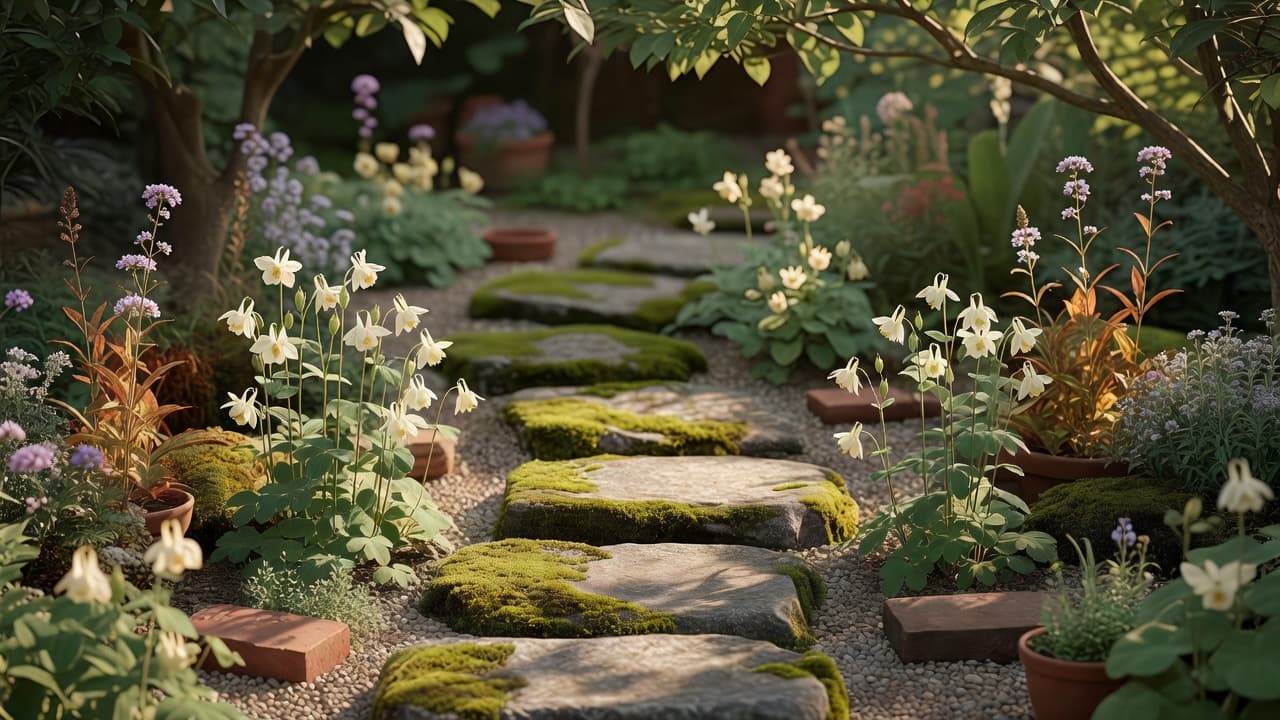
For more on how foliage shape, bark and seedheads combine into a considered planting scheme, our guide to texture and layering in planting design covers the same idea from a different angle.
How to lay out a wabi-sabi garden, step by step
- Start with what is already there. An existing cracked path, a lichen-covered wall or an old, leaning tree is a head start, not a flaw to remove — design around it rather than against it.
- Choose one or two natural materials — stone and timber, or stone and weathering steel — and repeat them throughout, rather than introducing a new material for every feature.
- Set stones and pavers with irregular spacing and slightly uneven joints; a perfectly even grid reads as manufactured rather than aged.
- Plant in odd-numbered, asymmetric groupings, and leave gaps in gravel or paving for self-seeders to fill in over the next few seasons.
- Choose one quiet focal point — a leaning specimen tree, a single weathered boulder, or a still water bowl — rather than several competing features.
- Reduce maintenance deliberately: skip deadheading on some plants, let fallen leaves lie under trees through autumn, and stop scrubbing moss off paving that is not a trip hazard.
If it helps to see this before committing, an app such as FlorAI can turn a photo of a real garden into a wabi-sabi redesign in seconds, so a leaning specimen tree or a weathering steel edge can be checked against the actual space before anything is bought.
Wabi-sabi vs Japandi vs a traditional Japanese garden
The three are related but distinct, and it is easy to blur them. Wabi-sabi is a philosophy — an appreciation of imperfection and impermanence — that can be applied to almost any style of garden, including a cottage border or a pared-back minimalist garden. Japandi garden design is a specific, more curated style that borrows wabi-sabi's restraint and natural materials but blends them with Scandinavian warmth, function and a slightly tidier finish — it is wabi-sabi's more design-led cousin. A traditional Japanese garden, covered in our guide to Japanese garden design, is different again: a set of centuries-old conventions — clipped karikomi hedging, koi ponds, torii gates and precise stone placement — that can include wabi-sabi as one of its underlying values without being interchangeable with it. In short: wabi-sabi is the philosophy, Japandi is one interior-led style built on it, and a traditional Japanese garden is a distinct, older tradition that predates both.
Common wabi-sabi garden mistakes to avoid
- Treating "imperfect" as "neglected" — a wabi-sabi garden still needs edges defined, paths kept safe and invasive self-seeders controlled; the restraint is deliberate, not an excuse to stop maintaining it entirely.
- Mixing too many materials — three natural materials used with restraint reads as considered; six reads as unplanned.
- Forcing symmetry — mirrored planting or a dead-straight path works against the asymmetry the style depends on.
- Painting or sealing everything — stains, sealants and bright paint stop the natural aging process the whole style is built around.
- Confusing wabi-sabi with clutter — broken pots and general disrepair are not the same as intentional patina; each aged element should still be placed with care.

Frequently asked questions about wabi-sabi garden design
What is wabi-sabi garden design?
Wabi-sabi garden design builds a garden around imperfection and natural aging — moss-covered stone, weathered timber, rusted metal and a restrained, self-seeding plant palette — rather than clipped symmetry and uniform bedding, so the garden is designed to look better the longer it is left alone.
What plants suit a wabi-sabi garden?
Corkscrew hazel, Japanese maple, ornamental grasses left uncut through winter, self-seeding perennials such as Verbena bonariensis and aquilegia, and moss or lichen on shaded stone are all common choices, valued for character and seasonal change rather than uniform flowering.
What materials are used in wabi-sabi garden design?
Natural stone, reclaimed or untreated timber, weathering (Corten) steel, unglazed terracotta and repurposed metal objects are all typical — chosen because they age visibly rather than because they resist wear.
Is wabi-sabi the same as Japandi?
No. Wabi-sabi is a philosophy of imperfection and impermanence that can apply to many garden styles. Japandi is one specific, more curated style that borrows wabi-sabi's restraint and blends it with Scandinavian warmth and function.
Does a wabi-sabi garden need less maintenance?
It needs different maintenance rather than none: less deadheading, tidying and repainting, but paths, edges and invasive self-seeders still need managing so the garden reads as intentional rather than neglected.
Can an AI garden design app help plan a wabi-sabi garden?
Yes. An app such as FlorAI can generate a photo-realistic wabi-sabi redesign from a single photo of a real garden, making it easy to test a leaning specimen tree, weathered stone or a Corten steel edge before any material is bought.
Last updated: August 2026. Written by the FlorAI garden team.