
Comparison · 2026
AI Garden Design App vs. AI Photo Editor: Which One Actually Redesigns Your Garden?
A generic AI photo editor can reshuffle a picture of your garden into something pretty in seconds, but it rarely respects your actual fence line, your actual soil, or the plants that can actually survive your climate. A purpose-built AI garden design app, like FlorAI, keeps the real shape of your garden intact and adds planting you could genuinely buy and grow. The difference is not really about style — it is about whether the redesign you fall in love with is one you can actually build. This guide compares both approaches head-to-head, so you know which one deserves the next ten minutes of your time.
AI Garden Design ComparisonsPublished July 21, 2026Updated July 21, 20269 min read
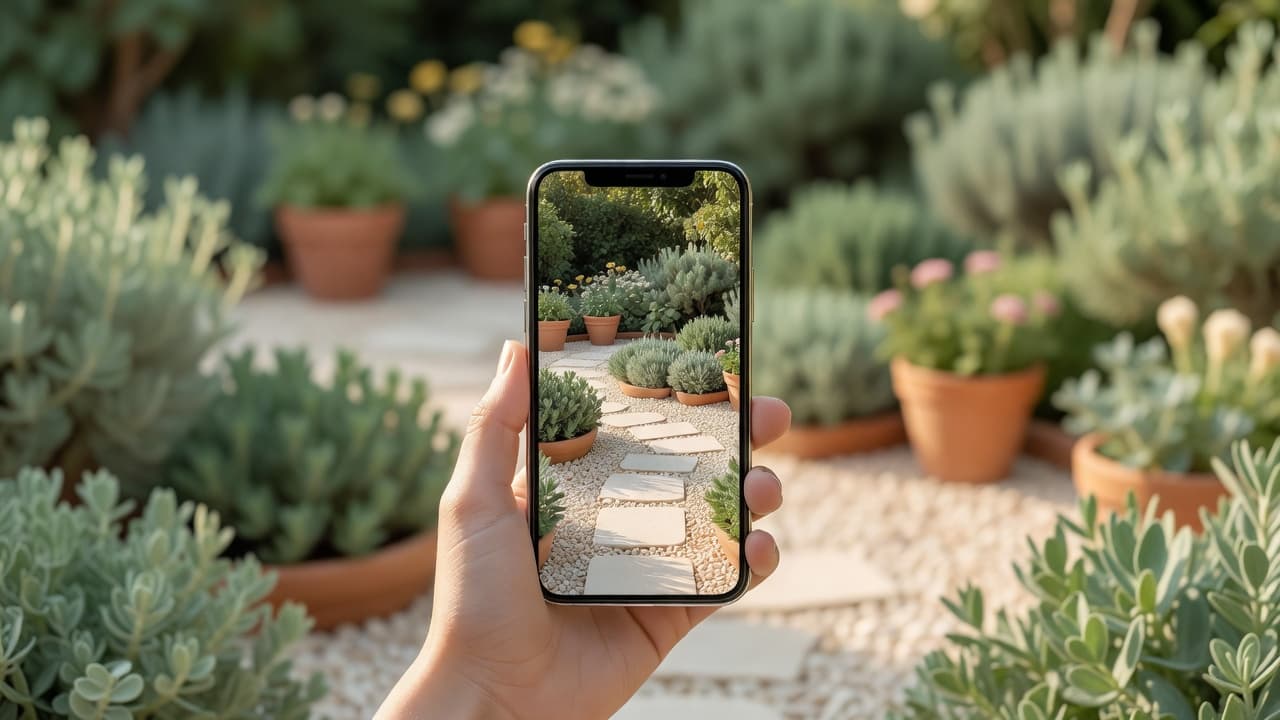
AI garden design app vs photo editor: what is actually different
Both tools can take a photo of your garden and hand back something that looks impressive on a screen. That is exactly why people confuse them. But a photo editor and a garden design app are solving different problems — one is optimised for a striking image, the other for a garden you could realistically plant. Our plain-English guide to what AI garden design actually is is a good primer if the category itself is new to you, and the full AI garden design guide covers a whole redesign from start to finish.
What happens when you run a garden photo through a generic AI photo editor
General-purpose AI image tools are built to generate or transform pictures on almost any subject — portraits, products, landscapes, gardens included. Fed a photo of a garden and a prompt like "redesign this as a cottage garden," they will produce something. The results are often striking, and that is the trap: a beautiful image is not the same thing as a usable plan.
- The layout usually shifts. Fences move, boundaries stretch, and a shed can quietly disappear, because the model is reconstructing the whole scene rather than editing around fixed points.
- Planting is chosen for looks, not location. A generic tool has no idea whether you garden in a cold, wet climate or a hot, dry one, so it will happily paint in plants that would never survive your first frost.
- There is no way to identify what you are looking at. If the result includes a gorgeous flowering shrub, you cannot ask the tool what it is, whether it suits your soil, or where to buy one.
- Consistency is hit or miss. Ask for ten variations and you can get ten different gardens with ten different layouts, which makes it hard to compare options against the same starting point.
What a purpose-built AI garden design app does differently
A tool built specifically for gardens, like FlorAI, is trained on the problem you actually have: a real, fixed outdoor space that needs to look better and still be plantable. That narrower focus is what produces a more useful result.
- Fixed features stay fixed. Your fence, your shed, your patio and your established trees are recognised and kept in place — only the planting, surfaces and furnishing change.
- More than 30 styles — cottage, Mediterranean, Japanese, xeriscape, modern, wildlife-friendly and more — can be tried on the same photo in seconds, so you can compare directly instead of guessing.
- Plant scanning identifies what is already in your garden and suggests sensible companions, turning a pretty picture into an actual shopping list.
- Climate-aware suggestions favour planting realistic for your conditions, rather than whatever looked good in the model's training data.
FlorAI is free to try on iOS, Android and the web, rated 4.8 out of 5 across more than 2,000 reviews, which is a reasonable signal that people who try it keep using it rather than abandoning it after one novelty redesign.
Head-to-head: five things that actually matter
- Layout accuracy. Generic photo editor: layout often shifts or reinterprets the space. AI garden design app: fences, sheds and trees stay exactly where they are.
- Plant realism. Generic photo editor: plants chosen purely for how they look in the image. AI garden design app: planting suggestions weighted toward what can survive your climate.
- Buildability. Generic photo editor: no named plants, no plan, just a picture. AI garden design app: a plant list and style you can actually take to a nursery or a landscaper.
- Speed to compare options. Generic photo editor: each prompt can produce a different, unrelated layout. AI garden design app: the same real layout, tried in a dozen styles in minutes.
- Cost. Generic photo editor: usually part of a broader, general-purpose subscription. AI garden design app: FlorAI has a free tier built specifically for this one job.
None of this means general AI image tools are bad — they are simply built for a different job. For a deeper look at how a garden-specific tool stacks up against other garden apps specifically, see our FlorAI vs other garden design apps comparison.
Why plant and climate accuracy is the deciding factor
The single biggest risk of a non-specialist redesign is falling for a planting scheme that was never going to work. A lavender border looks the same in a render whether you garden in a Mediterranean climate or a damp, shaded courtyard — but only one of those gardens will actually grow lavender well. Real hardiness matters: the USDA Plant Hardiness Zone Map and equivalent regional systems exist precisely because the same plant performs very differently depending on winter minimum temperatures, and a garden-specific AI tool is far more likely to weight its suggestions accordingly than a general image generator with no concept of your postcode.
This is also where a beautiful render either saves you money or costs you money. A planting plan suited to your actual conditions gets you plants that establish and thrive; a planting plan chosen for looks alone gets you a nursery trolley full of plants that fight the site from day one. For real examples of redesigns that held up once planted, our before-and-after gallery is worth a look.
When a quick AI photo edit is genuinely good enough
To be fair to general AI photo tools, they are not always the wrong choice. If you only want a fun, loose mood board — a sense of "would this garden feel more Mediterranean or more woodland?" — a quick AI image edit can spark that conversation in seconds, and nobody is about to dig a border based on it. The moment the goal shifts from inspiration to an actual plan you intend to build, buy plants for, or brief a landscaper with, a purpose-built garden design tool earns its keep.
How to test the difference yourself in five minutes
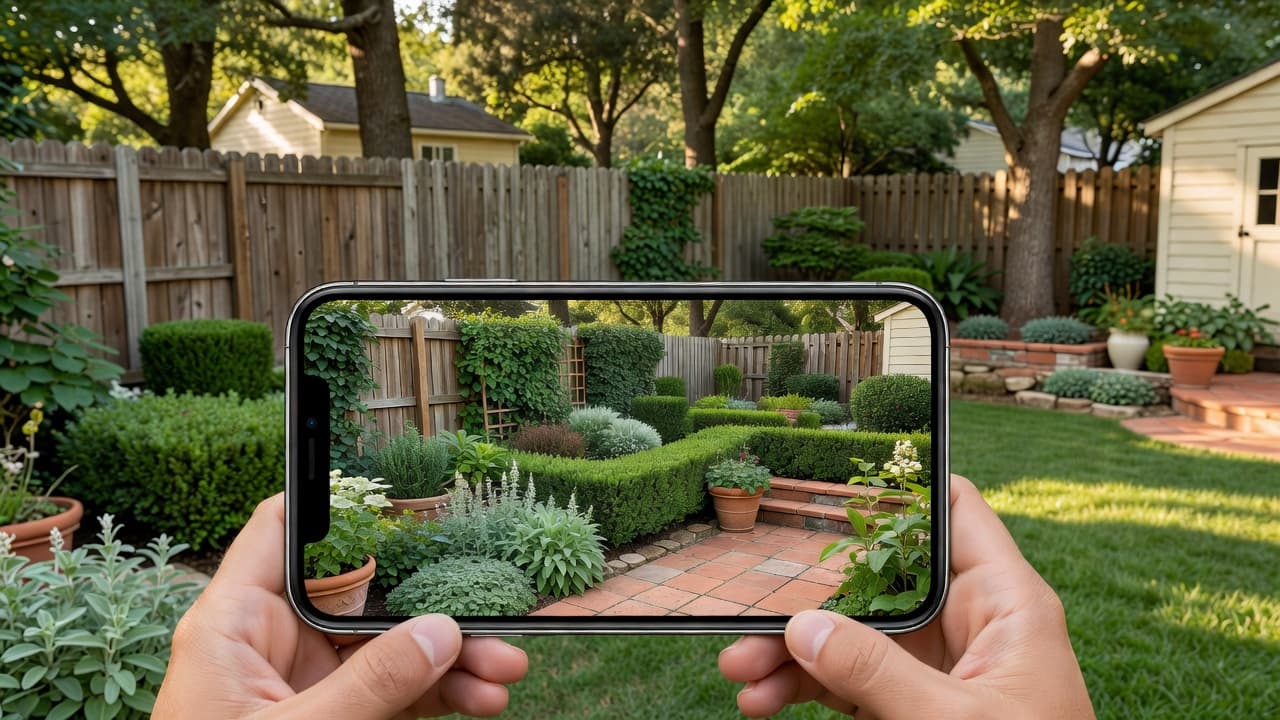
- Take one photo of your garden in daylight, including a fixed feature like a fence, shed or mature tree.
- Run it through a general AI image tool with a simple prompt such as "redesign as a cottage garden" and note what happens to the layout.
- Run the same photo through FlorAI in the same style and compare the two side by side.
- Check three things: is the fence still where it was, are the plants named and climate-appropriate, and could you actually hand either result to a nursery or landscaper?
- Try a plant scan on something already growing in your garden to see how a garden-specific tool goes beyond a single image.
Most people run this test once and immediately understand the gap. A generic tool is genuinely useful for mood and inspiration; a purpose-built AI garden design app is what turns that mood into a garden you can order plants for. If you want a fuller checklist before you commit to any app, see what to look for in an AI garden design app.
Frequently asked questions about AI garden design apps vs photo editors
Can I just use a general AI image generator to redesign my garden?
You can, and it is a fine way to explore mood and style quickly. The trade-off is accuracy: a general AI image tool has no reason to keep your fence, shed or trees in place, and no way to know which plants can survive your climate, so the result is closer to inspiration than a buildable plan.
What makes an AI garden design app more accurate than a photo editor?
A garden design app like FlorAI is trained specifically on garden layouts, so it recognises and preserves fixed features such as fences and mature trees, and it weights planting suggestions toward what actually grows in your climate rather than what simply looks good in a render.
Is FlorAI actually free to try?
Yes. FlorAI has a free plan on iOS, Android and the web, so you can compare it against any other tool on your own garden without paying anything first.
Why does plant scanning matter for garden design?
Plant scanning identifies plants already in your garden and suggests companions that will genuinely work alongside them, turning a nice-looking image into an actual, buyable planting list — something no general photo editor can do.
Will an AI garden design app get the planting right for my climate?
It will weight suggestions toward plants realistic for your conditions far more reliably than a general AI image tool, though it is still worth cross-checking final plant choices against a hardiness zone map or local nursery advice before buying in bulk.
Which should I use first, a photo editor or an AI garden design app?
If you are still deciding on a mood or style, a quick AI photo edit is a fast, low-stakes way to explore ideas. Once you are ready to plan something you could actually build, switch to a purpose-built AI garden design app like FlorAI so the layout and planting stay realistic.
Last updated: July 2026. Written by the FlorAI garden team.