
Buyer’s guide · 2026
Japanese Garden Design App: Plan a Calm Garden in 2026
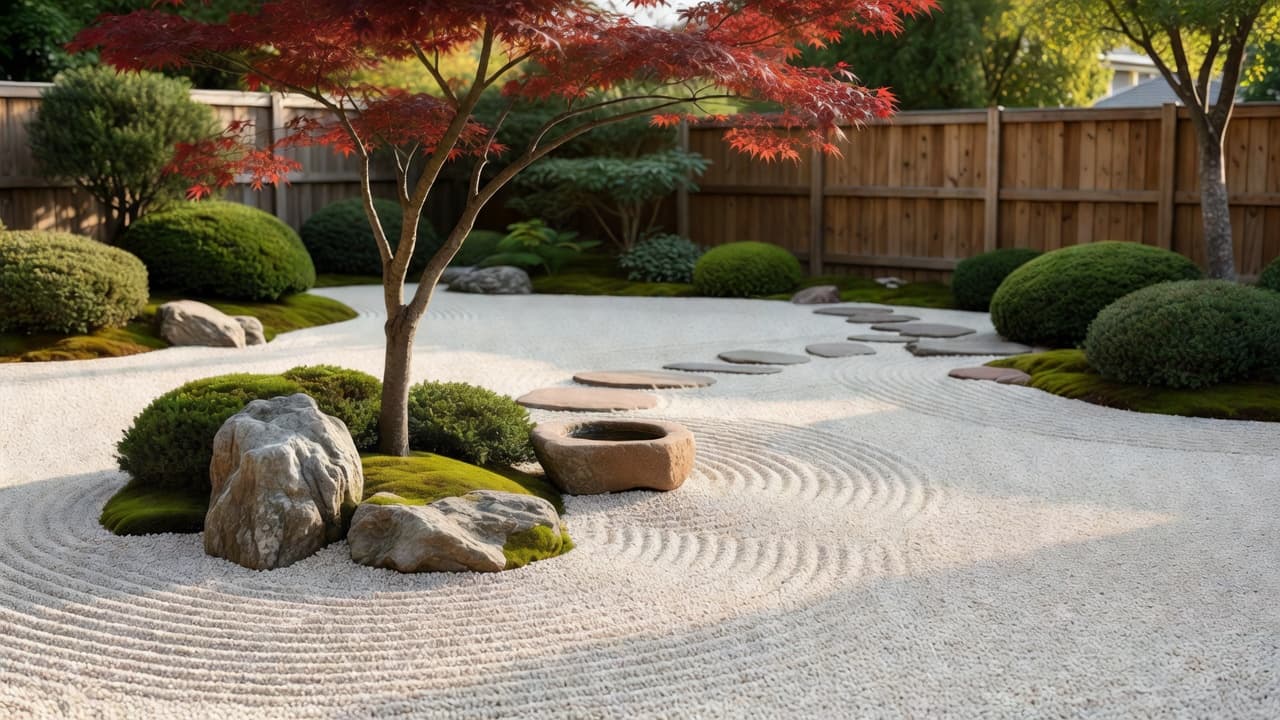
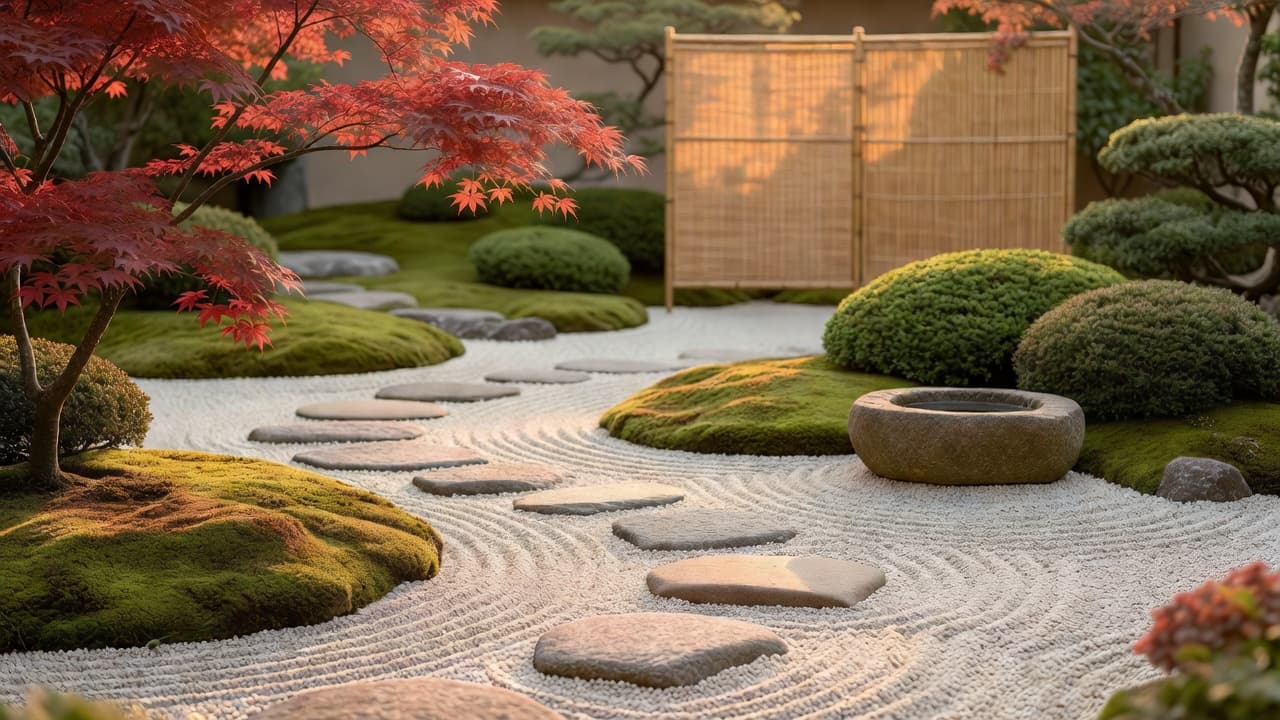
A Japanese garden design app turns one photo of your real garden into a photorealistic, Japanese-style redesign of that same space — calm, asymmetric and restrained, with maples, moss, clipped evergreens, stone and raked gravel arranged the way you choose — usually in under ten seconds. In 2026 it is the fastest, cheapest way to see how a plain lawn or tired corner could become a serene zen garden before you move a single stone. This guide explains, in plain English, how a Japanese garden design app works, the core principles of Japanese garden design it should respect, the best plants and materials to use this year, how to keep the look authentic rather than kitsch, and what a Japanese garden really costs to build — so your first trip to the nursery or stone yard is a confident one.
AI Garden Design GuidesPublished June 28, 2026Updated June 28, 202610 min read
What a Japanese garden design app actually does
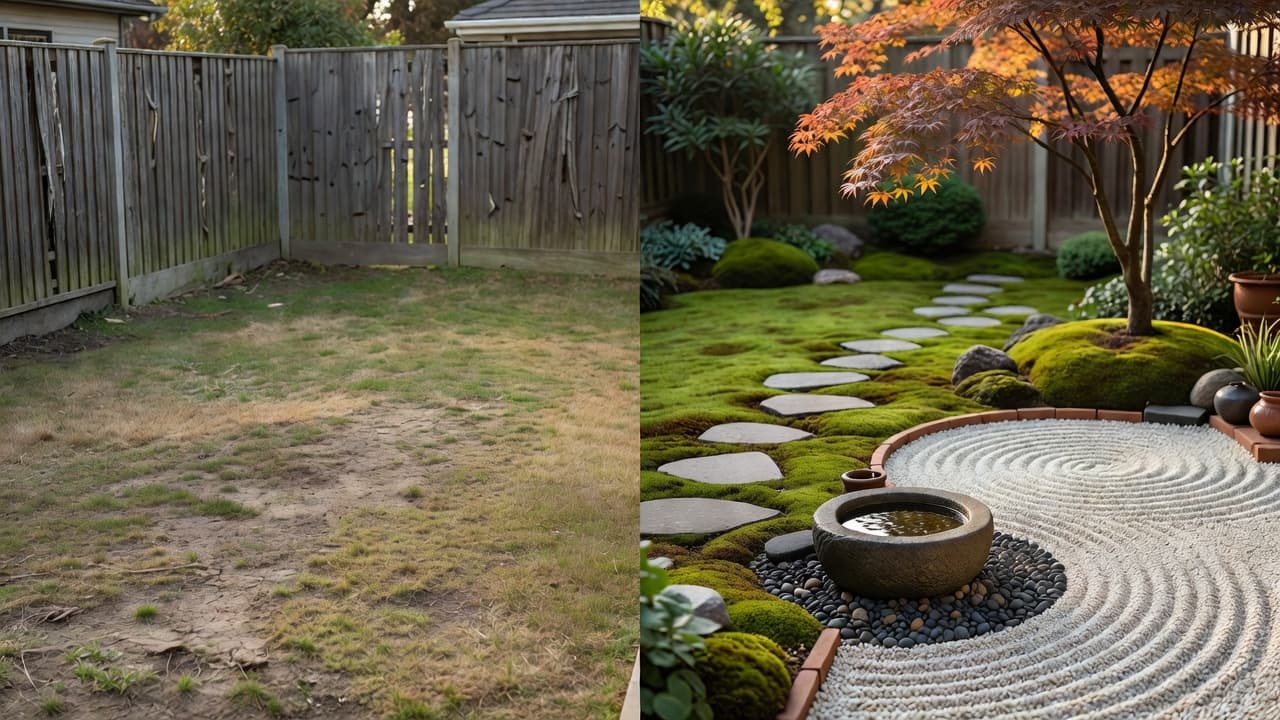
The idea is refreshingly simple. You open the app, take or pick one photo of your back garden, a plain stretch of lawn or an awkward side return, choose a Japanese style, and a few seconds later you are looking at your own space transformed into a calm, considered Japanese garden. There is no graph paper and no design training involved. If the whole concept is new to you, our plain-English explainer of AI garden design is the gentlest starting point, and the full AI garden design guide walks through a complete redesign with real before-and-after photos.
The word that matters is your. A weak app shows you a beautiful Japanese garden that belongs to a temple in Kyoto; a strong one shows you your garden, quietly reordered into the same restraint, so the picture is genuinely useful when you start buying a maple, ordering gravel or pricing stone. FlorAI was built around exactly that, with a free tier, so you can see your own garden reimagined in Japanese style before deciding whether it is worth paying for.
What makes a Japanese garden a Japanese garden
A Japanese garden design app is only as good as its understanding of the style, so it helps to know what you are asking it for. Japanese garden design is one of the oldest continuous landscape traditions in the world: its principles were first written down in the Sakuteiki, an eleventh-century Heian-period manual that is among the earliest gardening texts anywhere. Unlike a flower-led Western border, a Japanese garden is built from restraint, suggestion and a handful of natural materials. Strip away the mystique and the style rests on a few core ideas:
- Asymmetry and naturalism. Nothing is centred, paired or clipped into geometry; the garden imitates idealised nature — a mountain, a shoreline, a forest floor — in miniature, never a formal parterre.
- Ma (meaningful emptiness). The space between objects matters as much as the objects. Open moss, raked gravel and unplanted ground give the eye room to rest, so a few elements feel calm rather than sparse.
- Shakkei (borrowed scenery). A distant tree, rooftop or hill is framed and drawn into the composition, while clutter is screened out, so the garden feels larger and connected to its surroundings.
- Wabi-sabi. A quiet acceptance of age, weathering and imperfection — moss on stone, a lichened lantern, asymmetry — is treasured rather than tidied away.
- Miegakure (hide and reveal). Paths curve and views are partly concealed so the garden unfolds gradually instead of showing everything at once.
A capable app builds to these rather than dropping a red bridge and a stone lantern onto a lawn and calling it Japanese. The Royal Horticultural Society’s overview of Japanese gardens is a calm, authoritative read if you want the full background before you start.
The four classic Japanese garden styles
Part of the value of a Japanese garden design app is letting you try different traditional styles on your own space before committing. Most home gardens borrow from one of four, and a good app lets you preview each:
- Karesansui (dry landscape, the “zen garden”). Raked gravel or sand stands in for water, with carefully placed stones for mountains or islands and almost no planting. Famously low-maintenance and ideal for a small, enclosed or shady courtyard.
- Tsukiyama (hill-and-pond garden). An artificial hill, a pond or stream, stones and trees recreate a miniature natural landscape to be viewed from a fixed point or strolled through.
- Chaniwa / roji (tea garden). A simple, mossy path of stepping stones leading to a tea house, with a water basin (tsukubai) and lantern — understated and deeply wabi-sabi.
- Kaiyū-shiki (strolling garden). A larger circuit garden designed to reveal a sequence of framed scenes as you walk a winding path around a central pond.
For most suburban plots, a karesansui corner or a small tsukiyama-style arrangement is the realistic choice. Try each as a separate redesign of the same photo and see which suits your space, light and budget. Our AI garden design guide covers how to read your garden’s structure before you choose.
The best plants for a Japanese garden in 2026
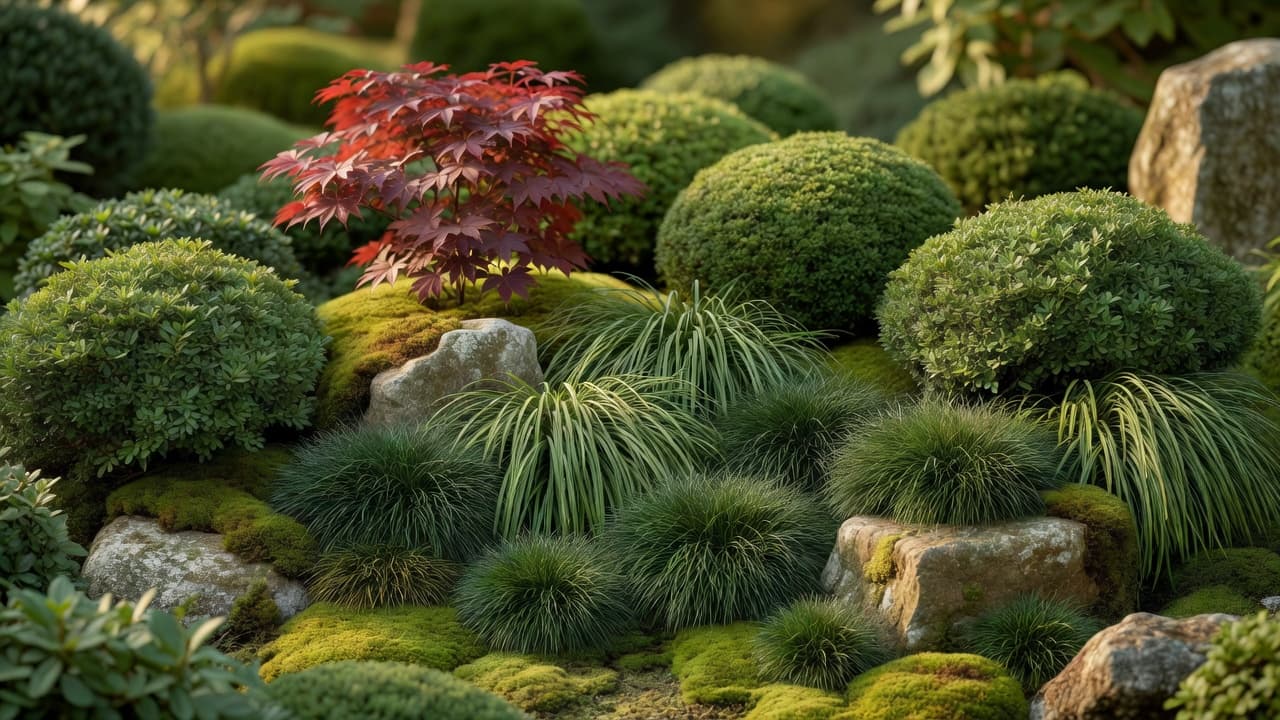
The real value of a Japanese garden design app is that it lets you test the most authentic Japanese plants on your own space before committing. The palette is small, green-led and mostly evergreen, with restrained seasonal moments rather than a riot of colour. Worth trying on your photo:
- Japanese maple (Acer palmatum). The signature tree, prized for delicate leaves and fiery autumn colour. Most cultivars are hardy in USDA zones 5–8 and prefer dappled shade and shelter from harsh wind; ‘Bloodgood’ and the lace-leaf ‘Crimson Queen’ are reliable starting points.
- Pines and clipped evergreens. Japanese black pine (Pinus thunbergii), cloud-pruned, gives the timeless silhouette; Pieris japonica, box and dwarf conifers provide year-round structure.
- Moss and moss substitutes. True moss carpets the famous temple gardens in shade and humidity; where that is impractical, low Ophiopogon (mondo grass) or Soleirolia gives a similar green calm.
- Azaleas and camellias. Evergreen satsuki azaleas (Rhododendron indicum) are clipped into soft mounds, and Camellia japonica adds glossy leaves and quiet early flowers.
- Japanese forest grass (Hakonechloa macra). A graceful, arching grass for softening rock edges and pond margins; bamboo (use clumping Fargesia rather than running types) and ferns complete the layered, woodland feel.
You do not have to pick one. Try each idea as a separate redesign of the same photo, then borrow the parts you like into a single plan. For help arranging planting into a real bed, our AI flower bed design tool guide helps, and you can confirm any unfamiliar plant on the Royal Horticultural Society’s plant finder or BBC Gardeners’ World before you buy. Match every plant to your own USDA zone on the USDA Plant Hardiness Zone Map.
How to design a Japanese garden step by step
The first redesign takes about a minute. The process is the same whether you are reworking a whole back garden, a courtyard or a narrow side return:
- Take or choose one photo. Stand back so the whole area — the ground, any fence or wall, and what lies beyond it — is in frame, in soft, even daylight.
- Pick a Japanese style. A dry karesansui courtyard, a small hill-and-pond arrangement, a mossy tea-garden path, or a contemporary minimalist take — choose the mood, then try a second for contrast.
- Let the app redesign it. In a few seconds you will see your own space reordered in that style, usually with the key elements — maple, stone group, gravel, basin — named.
- Refine and try variations. Ask for a single specimen maple, more open gravel, a stepping-stone path, a bamboo screen or a borrowed-scenery view, and compare the options side by side.
- Save and source. Keep your favourites, line the before and after together, and turn the result into a simple list of plants, stone, gravel and features to price up.
Because the app works from a photo rather than a blank plan, you are always editing your real garden — the actual fence, wall and aspect — which is exactly why the output is something you can take to a nursery or stone yard. Our guide to designing from a photo versus from scratch explains why the photo route is almost always the better place to begin.
Stone, gravel and water: the materials that matter
In a Japanese garden the hard materials carry as much meaning as the plants, and this is where a thoughtful app earns its place, because it can show you the arrangement before you order a tonne of anything. The essential elements are few and natural:
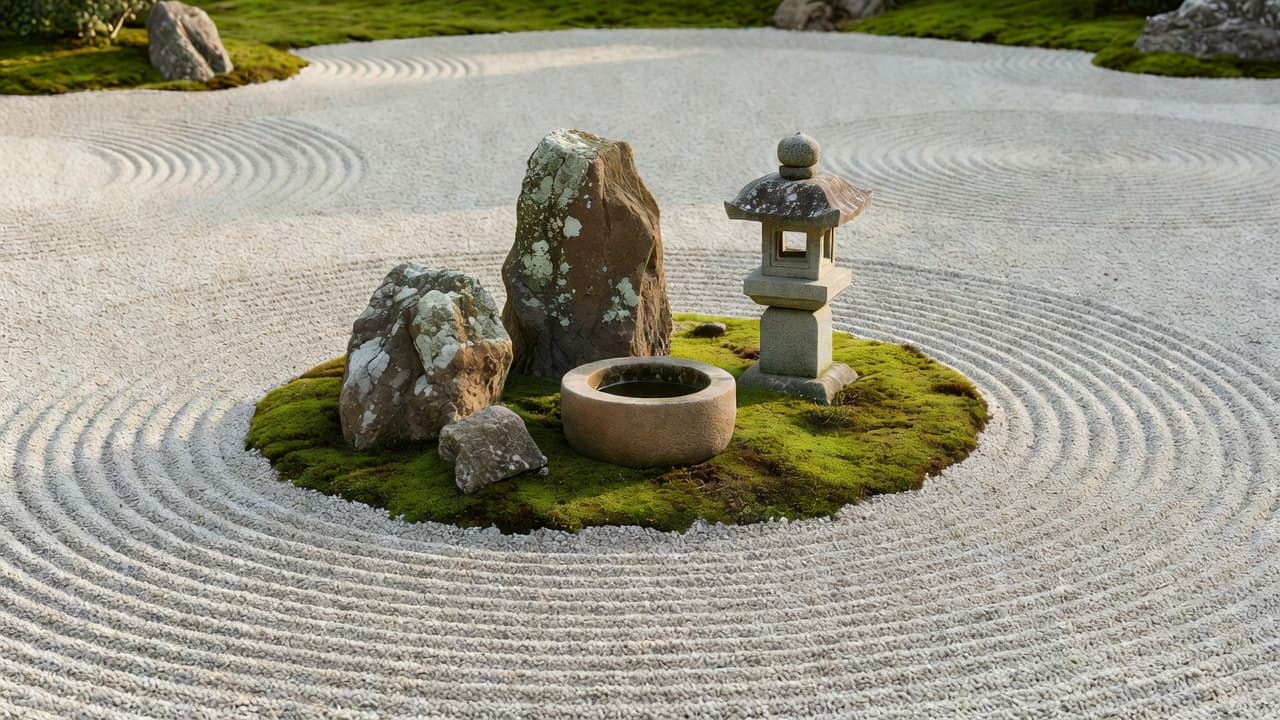
- Stone, placed in odd-numbered groups. Rocks are the bones of the garden, set in asymmetric groups of three, five or seven, with their best face and natural “grain” considered, never in tidy rows.
- Gravel or sand, raked. Pale granite gravel stands in for water in a dry garden; raked patterns suggest ripples and current, and the open expanse is the ma that makes the whole thing breathe.
- Water or its suggestion. A real pond or stream if space allows, or its symbol — a stone water basin (tsukubai), a simple bamboo spout, or gravel standing in for a dry stream.
- Restrained ornament. A single weathered stone lantern (ishidoro), stepping stones (tobi-ishi), and a low bamboo fence or screen — used sparingly, never as a theme-park collection.
The discipline is in subtraction: one good lantern, not five. Seeing the stone groups and gravel applied to your own photo is far easier than picturing them on a plan, which is why a Japanese garden design app helps most at this composition stage. For tying any scheme together, our AI garden design guide covers structure, focal points and balance in depth.
What to look for in a Japanese garden design app
Not every app earns a place on your home screen. Before you trust one with your garden, run through a few quick checks:
- Does it redesign your own photo? Your fence, wall and aspect should still be recognisable in the result. If it quietly swaps in a stock temple garden, the picture is useless.
- Does it understand restraint? A good result shows calm, asymmetry and open space, not a cluttered set of red bridges, lanterns and koi all at once.
- Does it name real Japanese plants? Look for a maple, pine, azalea, moss and grasses you could write on a list — not a vague green blur.
- Does it consider where you live? Climate- and zone-aware planting is the difference between a pretty picture and a maple that survives your winters and summers.
- Is the free tier real? You should see clear, un-watermarked results and be able to try more than one style before any paywall.
An app that passes all five is worth keeping even if you never pay; one that fails two or three is worth deleting, however charming it looked. For a deeper version of this test, our checklist of what to look for in an AI garden design app turns it into a simple tick-box, and the 2026 buyer’s guide to AI garden design tools covers the features that separate a useful app from a gimmick.
What a Japanese garden costs to build in 2026
The app itself should cost little or nothing. Most good ones give you a real free tier — a set number of designs each month, enough to redesign your garden and try a few styles — with paid plans only if you want unlimited runs. That is usually plenty for a one-off project.
The build costs more than a planting-only scheme because stone and gravel are heavy and labour-intensive, but a small karesansui corner stays affordable. A specimen Japanese maple typically runs $150 to $400 for a younger 4–5ft tree and $400 to $1,200 for a larger, characterful specimen, with basic supply-and-plant of one maple landing around $375. Decorative gravel and installed planting beds generally cost $3 to $15 per square foot including light soil prep, and a natural stone water basin or lantern is a one-off feature buy rather than a per-foot cost. Pacific Coast and Northeastern markets tend to run 25–35% higher.
The honest advice is to spend on what lasts and let restraint do the rest. Put your money into one good maple, a few well-chosen stones and quality gravel; you genuinely do not need many plants, which is part of why the style suits a modest budget. Climate awareness is the feature worth paying attention to, because it protects that spend — a maple that scorches in your summer or freezes in your winter is a disappointment waiting to happen, and the goalposts are moving. In November 2023 the USDA updated its Plant Hardiness Zone Map for the first time since 2012, and the new map is about 2.5°F warmer on average, shifting roughly half of the country into the next warmer half-zone. An app that weighs your location is doing real work, not decoration. Explore for free first, settle the look on your own photo, then spend — the honest guide to free AI garden design apps explains how to tell a genuine free tier from a teaser, and the 2026 garden design cost guide sets sensible expectations for the wider budget.
Where the app stops and your own judgement begins
An honest guide names the limits. Even the best Japanese garden design app is a brilliant way to decide what you want, not a substitute for the practical checks only you can make. Japanese gardens depend on craft — placing heavy stones safely, achieving genuine balance, building a proper gravel base — and a serious build can be worth a conversation with a landscaper. Confirm your aspect and soil suit the plants you love; maples want shelter and dappled light, moss wants shade and moisture. Match every plant to your own hardiness zone, and treat the planting suggestions as a strong starting point rather than gospel. If a small or enclosed space is your challenge, our guides to the balcony garden design app and a low-water drought-tolerant garden design tool will help you adapt the look. You can look up any unfamiliar plant on the RHS before you buy.
Used that way, a Japanese garden design app is among the most reassuring tools you will reach for this year: it removes the guesswork, shows you the finished calm garden in advance, and means your first maple, load of gravel and chosen stones are the right ones rather than a hopeful guess.
Frequently asked questions
What is the best Japanese garden design app?
The best one redesigns your own photo (not a stock temple garden), understands restraint and asymmetry, names real Japanese plants like Japanese maple, pine, azalea and moss, considers your climate and hardiness zone, and offers an honest free tier. FlorAI meets that bar with a free plan, so you can judge it on your own garden before paying.
Is there a free app to design a Japanese garden?
Yes. The honest ones offer a real free tier — a set number of designs each month, enough to redesign your garden and try a few Japanese styles. FlorAI has a free plan, with paid plans only if you want unlimited designs.
What plants are used in a Japanese garden?
Classic choices include Japanese maple (Acer palmatum), pines such as Japanese black pine, moss, evergreen azaleas and camellias, Japanese forest grass, mondo grass, clumping bamboo and ferns. The palette is small, mostly evergreen and green-led, with restrained seasonal colour rather than a riot of flowers.
What is a karesansui or zen garden?
Karesansui is the dry-landscape style of Japanese garden: raked gravel or sand stands in for water and carefully placed stones represent mountains or islands, with almost no planting. It is low-maintenance and ideal for a small, enclosed or shady courtyard, which is why it is the most copied Japanese style for home gardens.
How much does a Japanese garden cost to build in 2026?
A specimen Japanese maple typically costs $150–$400 for a younger tree and $400–$1,200 for a larger one, with basic supply-and-plant around $375. Gravel and installed planting beds generally run $3–$15 per square foot, and stone features like a basin or lantern are one-off buys. Pacific Coast and Northeastern prices run 25–35% higher. Because the style needs few plants, a small zen corner can be surprisingly affordable.
Can I have a Japanese garden in a small or shady space?
Yes. The dry karesansui style in particular suits a small, enclosed or shady courtyard beautifully, and shade-and-moisture-loving moss, ferns and maples thrive where many flowers will not. A design app lets you test the look on your exact space and aspect before you commit.
Last updated: June 2026. Written by the FlorAI garden team.