
Planting Design · 2026
Texture and Layering in Planting Design: The Complete 2026 Guide
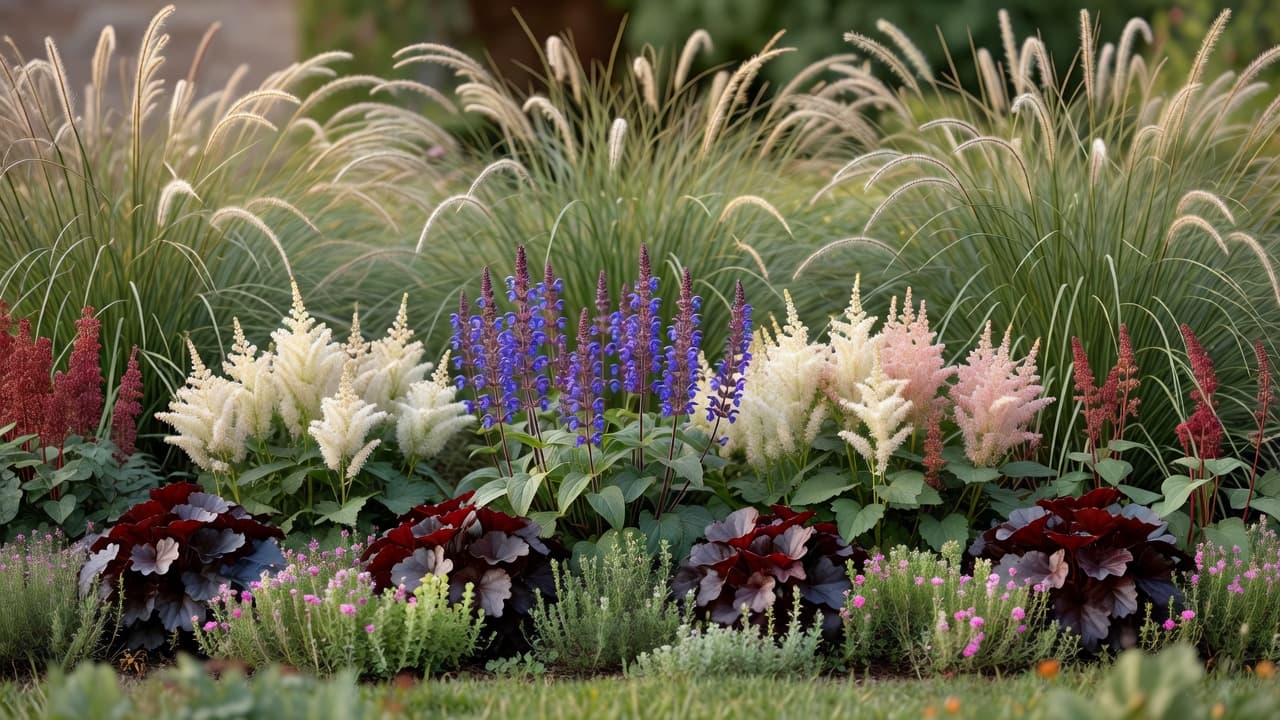
Layering in planting design means arranging plants by height — tall toward the back or centre, low toward the front — while repeating a deliberate mix of coarse, medium and fine foliage textures through every layer, so a border reads as three-dimensional rather than flat. The two moves that matter most: stack at least three height layers, and vary texture within each one rather than relying on height alone. This guide explains the three planting layers in plain English, shows how coarse, medium and fine textures work together, and gives real plant pairings to copy in a border of any size.
AI Garden Design GuidesPublished July 26, 2026Updated July 26, 202610 min read
The one-line answer
Neither idea works well alone. A border layered only by height, with every plant at a similar leaf size, still looks flat from a few metres away. A border with lots of texture but no height structure looks busy and shapeless. Layering and texture solve each other's weak point, which is why designers always talk about them together.
What is layering in planting design?
Layering in planting design is arranging a border in height bands — usually back, middle and front in a border seen from one side, or centre-out to edge in an island bed seen from all sides — so taller plants do not hide shorter ones and the eye reads the space as having depth rather than a single flat plane. It is the planting equivalent of arranging furniture and art at different heights in a room instead of pushing everything against one wall.
The RHS guide to creating a border puts the same idea plainly: group plants so the tallest sit furthest away from the main viewing point, with height stepping down toward the front, and let a few taller "exclamation mark" plants break the rule occasionally so the layering does not look mechanical. For how layering fits alongside the other tools designers use — balance, rhythm, focal points — see our wider guide to interior design principles for the garden.
Texture in planting design: coarse, medium and fine foliage
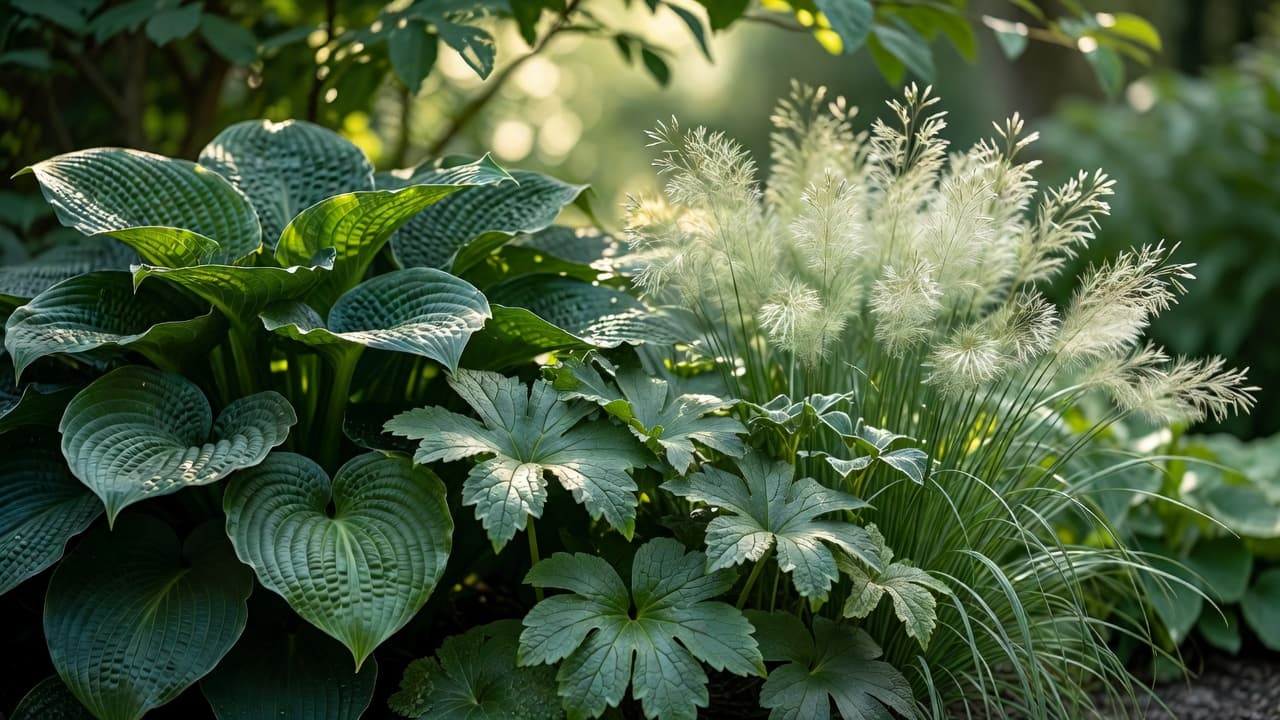
Texture in planting design means the visual size and shape of foliage, not how a leaf actually feels underhand. The RHS guide to coarse and fine foliage groups it into three bands, and almost every planting decision comes down to choosing between them:
- Coarse texture — large, bold leaves that catch the eye and act like a full stop in a border. Real examples: Hosta ‘Sum and Substance’, Bergenia (elephant's ears), Rodgersia, Fatsia japonica and Canna.
- Medium texture — the quiet majority of garden plants, with average-sized, simply shaped leaves that link the coarse and fine plants either side of them. Real examples: Geranium (hardy cranesbill), Alchemilla mollis, Sedum (Hylotelephium) ‘Herbstfreude’ and most box or viburnum hedging.
- Fine texture — small, narrow or feathery foliage that reads as a soft haze from a distance and calms down everything planted next to it. Real examples: Stipa tenuissima (Mexican feather grass), Deschampsia cespitosa, Astilbe, ferns such as Dryopteris filix-mas, and Gypsophila paniculata.
A border built entirely from medium-textured plants is the most common reason an otherwise well-chosen plant list still looks dull once it is in the ground — there is nothing for the eye to land on, and nothing to give it a rest either.
The three planting layers: back, middle and front
In a border viewed mainly from one side — against a fence, wall or hedge — the classic structure is three layers. In an island bed viewed from all sides, the same logic runs from the centre outward instead.
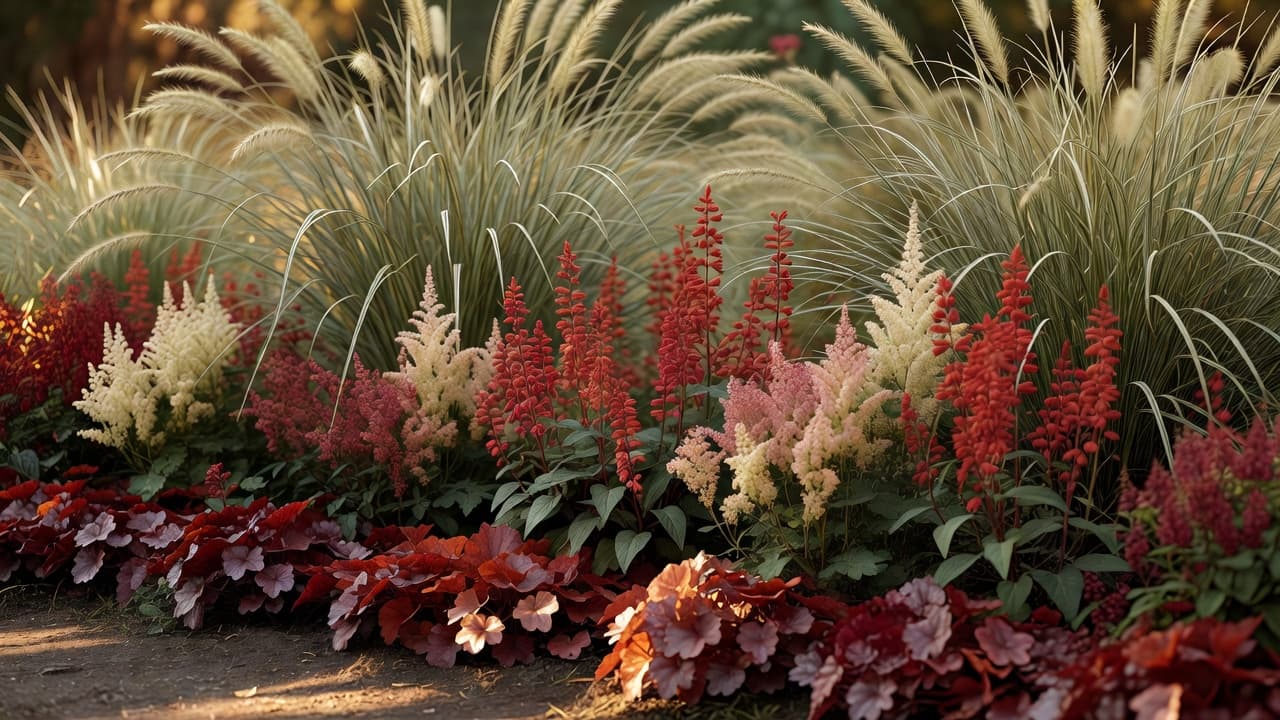
- Back or centre layer (roughly 1.2–2m+) — height and movement. Miscanthus sinensis ‘Morning Light’ or Verbena bonariensis give fine-textured height that sways rather than blocks the view; Delphinium or Verbascum give a coarser, more architectural spike instead.
- Middle layer (roughly 40–90cm) — the workhorse layer, usually the widest range of texture. Salvia nemorosa ‘Caradonna’ and Echinacea purpurea add fine-to-medium flower spikes and daisy forms; Astilbe and Rodgersia bring feathery plumes next to bold, glossy leaves in the same band.
- Front layer (roughly 10–40cm) — the edge that needs to stay tidy and low all season. Heuchera, Sedum (Hylotelephium) ‘Herbstfreude’, Thymus serpyllum (creeping thyme) and fine grasses such as Festuca glauca all hold a neat edge without flopping into a path.
A handful of taller plants pushed forward out of strict height order — the RHS calls these "exclamation marks" — stop the layering looking like a staircase. A single Verbena bonariensis or ornamental allium standing up through a lower layer reads as deliberate, not messy, because its stems are see-through rather than solid.
How to combine height and texture for real depth
Height alone gives a border a silhouette; texture gives it depth from close up and from a distance. The two need to be planned together, because a back layer that is tall but texturally identical to the middle layer collapses visually into one block the moment the flowers finish.
A reliable rule: repeat at least one coarse-textured plant and one fine-textured plant in every height layer, not just once across the whole border. That way, however a visitor's eye moves — up and down the layers, or left to right along the border — it keeps meeting the same kind of contrast, which is what makes a planting plan feel considered rather than assembled from whatever looked good at the garden centre. This is the same repetition principle behind colour theory for garden design — repeating a limited palette, of colour or of texture, reads as intentional; using everything once looks random.
Five layered planting combinations to copy
- Prairie-style layering — fine grasses throughout, with occasional coarse accents: Miscanthus and Deschampsia for movement, Echinacea and Rudbeckia as the coarser flower accents, all in a naturalistic, informal drift.
- Woodland-edge layering — shade-tolerant and built for foliage rather than flower: Rodgersia and Hosta for bold texture, ferns and Astilbe for fine texture beneath a light tree canopy.
- Cottage-style layering — dense and flower-forward but still texturally varied: Delphinium at the back, Geranium and Salvia in the middle, Alchemilla mollis softening every hard edge at the front.
- Architectural/Mediterranean layering — fewer plants, bolder contrast: spiky Phormium or Yucca against fine Stipa tenuissima, with low, silver-leaved Santolina along the front edge.
- Small-border layering — condensed to two layers instead of three where space is tight: one coarse anchor plant such as a single Fatsia japonica, underplanted with fine-textured Heuchera and low Thymus — see our guide to minimalist garden design for more on doing more with fewer plants.
Using texture to make a small garden feel bigger
Texture affects perceived distance in the same way colour does. Coarse-textured plants hold the eye and feel close, so placing them near the house or the main seating area pulls that part of the garden visually forward. Fine-textured plants recede and blur slightly at a distance, so a haze of grasses or ferns at the far boundary of a small garden reads as further away than it measures, borrowing extra depth from a modest plot.
The reverse trick works on a long, narrow garden that feels like a corridor: a bold, coarse-textured planting partway down interrupts the view and breaks the space into rooms, rather than letting the eye run straight to the back fence in one look. Our guide to outdoor room design covers this idea beyond planting, including how paving and structure divide a garden the same way.
Common layering and texture mistakes
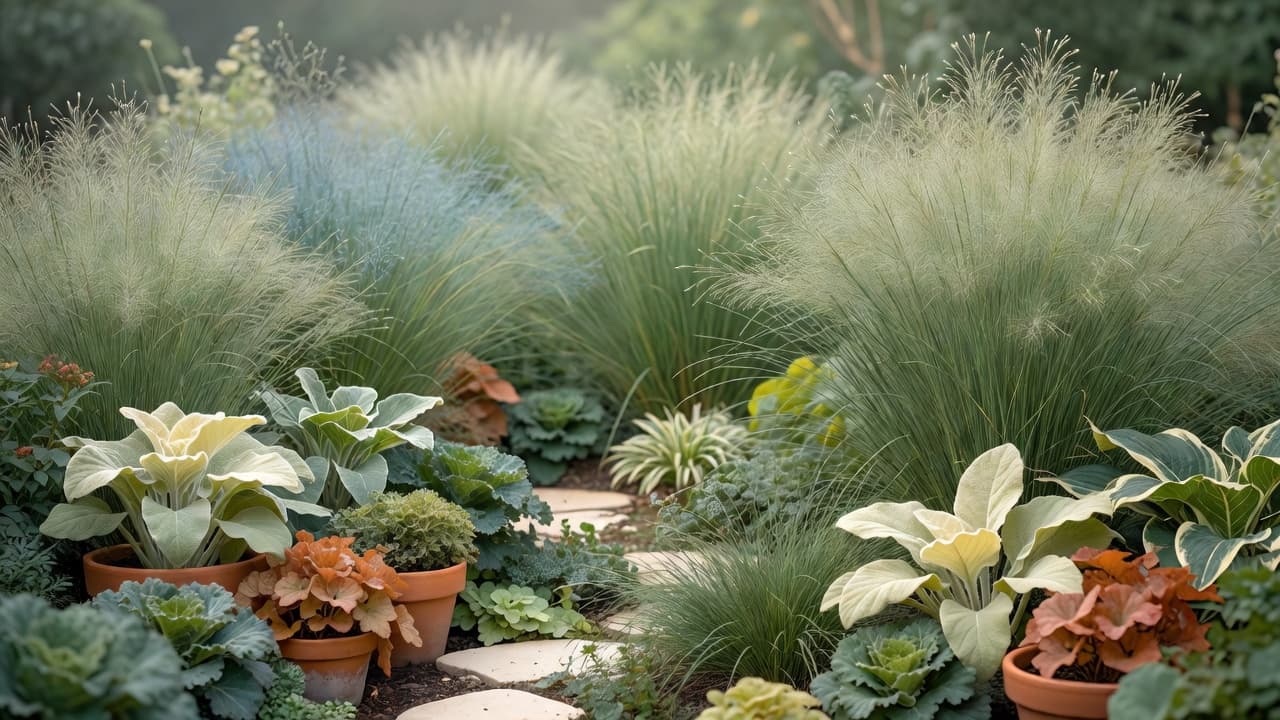
- Sorting purely by height and ignoring texture, so the border looks like a bar chart rather than a considered planting scheme.
- Using medium-textured plants almost exclusively — pleasant individually, forgettable as a group, with nothing bold or fine to give the eye somewhere to land.
- Repeating a texture only once across the whole border instead of through every layer, so the effect reads as accidental rather than deliberate.
- Planting every "exclamation mark" plant at exactly the same height, which recreates the flat line the layering was meant to avoid.
- Forgetting evergreen texture for winter — an entirely herbaceous, texture-led border can vanish completely from October to March without some structural evergreen foliage.
How AI garden design helps you plan layering and texture before you plant
Layering and texture are the hardest planting-design skills to picture on paper, because a plant list on its own does not show how a 1.5m grass will actually sit in front of a fence, or whether two "fine-textured" plants next to each other are different enough to avoid looking flat. Professional designers usually sketch a border in elevation for exactly this reason.
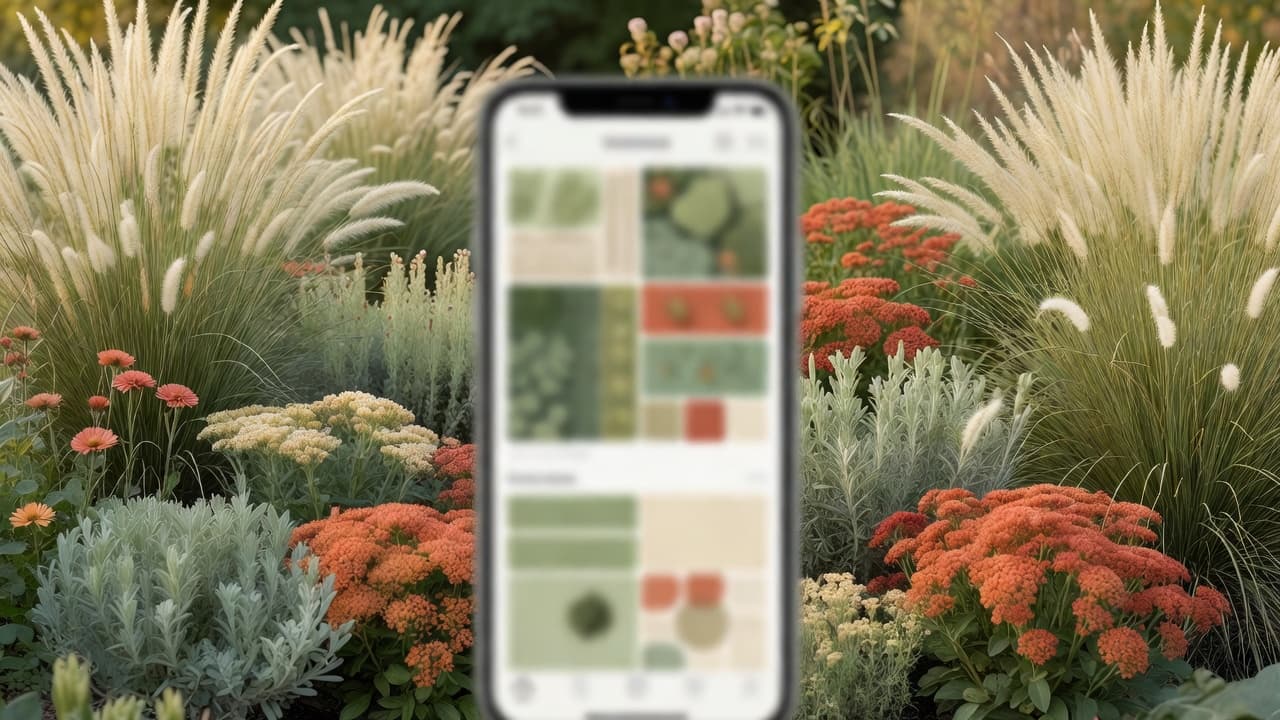
An AI garden design app such as FlorAI shortens that step: upload a photo of your real border or bed, and it can generate a photo-realistic preview showing plant height, form and foliage texture applied to your actual space, so a layering plan can be checked before a single plant is bought. It is the same approach covered in our broader AI garden design guide and our plain-English explainer of what AI garden design is, applied specifically to layering and texture.
If a layering plan also involves new edging, a retaining border or extra paving to separate the layers, it is worth checking realistic costs first in our 2026 garden redesign cost guide before committing to a full replant.
Frequently asked questions about texture and layering in planting design
What does layering mean in planting design?
Layering in planting design means arranging plants in height bands — tall at the back or centre, low at the front — so a border has depth rather than reading as one flat plane, with a few taller plants breaking the strict order to avoid a mechanical, stepped look.
What is texture in planting design?
Texture in planting design is the visual size and shape of foliage, grouped into coarse (large, bold leaves like Hosta or Bergenia), medium (average, simply shaped leaves like Geranium) and fine (small, feathery foliage like grasses, ferns and Astilbe).
How many planting layers should a border have?
Three layers — back, middle and front, or centre-out to edge in an island bed — is the standard structure. Very small or narrow borders can work with two layers, provided each layer still mixes at least one coarse and one fine texture.
Can texture make a small garden look bigger?
Yes. Fine-textured plants such as grasses and ferns visually recede, so placing them at the far boundary of a small garden creates a sense of depth, while bold, coarse-textured plants nearer the house pull that area visually closer.
What plants give the best texture contrast?
Pairing a coarse, large-leaved plant such as Hosta, Bergenia or Rodgersia with a fine-textured plant such as Stipa tenuissima, Astilbe or a fern gives one of the most reliable texture contrasts, with medium-textured plants such as Geranium or Alchemilla mollis used to link the two.
Can an AI garden design app help plan layering and texture?
Yes. An app such as FlorAI can generate a photo-realistic preview of a layered, texture-varied planting plan applied to a photo of your own border, making it far easier to judge height and foliage contrast before buying any plants.
Last updated: July 2026. Written by the FlorAI garden team.