
Perennial Borders · 2026 guide
Garden Design with Perennials: How to Plan a Border That Lasts (2026)
Garden design with perennials works best when structure comes before variety: group plants in three height tiers, space them in odd-numbered drifts rather than single dots, and choose a mix that flowers in succession so the border never has a dead month. This guide covers tiered planting, RHS spacing rules, matching perennials like lavender, hostas and irises to the right light, planning bloom succession through the seasons, and what a real perennial border costs to plant in 2026, so the shape of the bed is settled before a single plant is bought.
AI Garden Design GuidesPublished September 4, 2026Updated September 4, 202610 min read
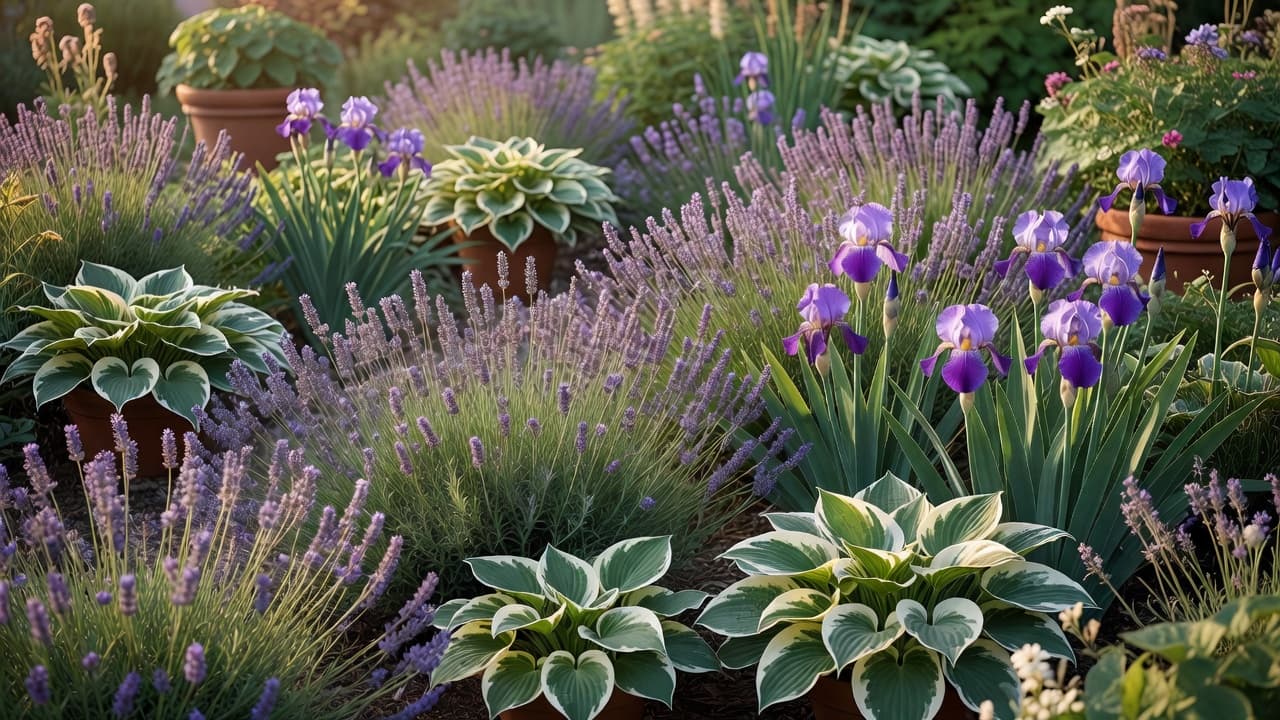
What does garden design with perennials actually involve?
Most perennial borders start the same way: a few plants bought because they looked good at the garden centre that weekend, brought home and dotted around the bed wherever there was a gap. The border looks fine for a month and thin for the rest of the year, because nothing was planned around it. A perennial border that reads as designed rather than assembled comes from deciding the structure — height, spacing, bloom timing — before choosing individual plants. If the idea of planning a border on screen before you dig is new, our plain-English explainer of AI garden design is a gentle place to start, and the AI garden design pillar guide covers the wider process this article sits inside.
Build the border in three height tiers
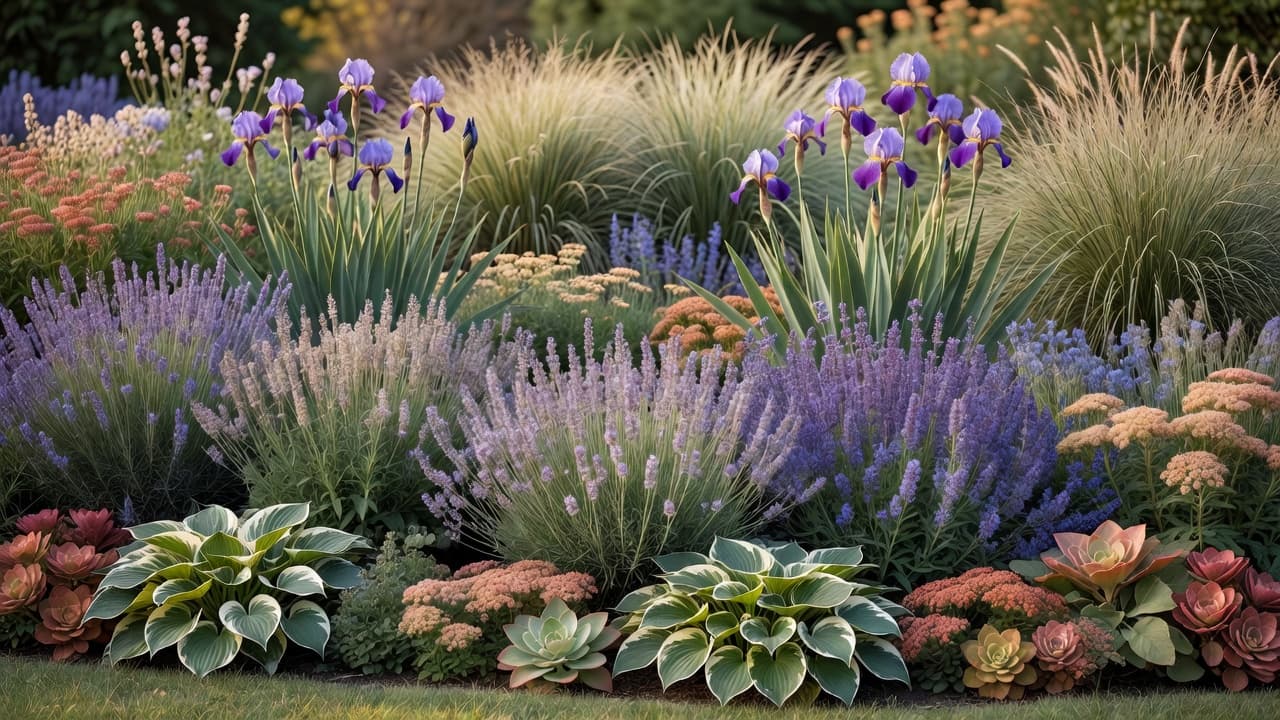
Perennial borders that look established almost always use the same underlying structure: tall plants at the back (or centre, if the bed is viewed from both sides), medium-height plants filling the middle, and low, spreading plants at the front edge. This is not a rigid rule — a few taller plants breaking forward into the middle tier stop a border looking like stepped seating — but it is the scaffolding worth deciding first.
- Back/tall tier (1–1.8m): plants that give a border height and a sense of enclosure — delphiniums, tall irises, ornamental grasses, or a repeat-flowering shrub rose for structure that lasts into winter.
- Middle tier (45–90cm): the workhorse layer that carries most of the flower colour — lavender, salvias, geraniums, catmint, and mid-height irises.
- Front tier (15–40cm): low, often mounding plants that soften the bed edge and hide the bare stems of taller plants behind — hostas in shade, alpine pinks or thrift in sun, and low sedums for a dry front edge.
Deciding the tier before the variety also solves the most common perennial-border mistake: a tall plant accidentally placed in front of a shorter one, blocking it from view for the whole season. For more on combining height, texture and foliage across a border generally, our guide to texture and layering in planting design goes further than this article can.
How far apart to plant perennials
As a general guide, the RHS recommends around five herbaceous perennials per square metre, spaced roughly 30–45cm apart for most mid-sized plants — close enough that neighbouring plants knit together by their second season rather than leaving bare soil. The exact spacing depends on a plant's eventual spread far more than its size in the pot, so check the mature width on the label rather than judging by what fits on planting day.
- Low front-edge perennials (hostas, pinks, thrift): 20–30cm apart.
- Mid-height perennials (lavender, geraniums, salvias, mid-height irises): 30–45cm apart.
- Tall back-tier perennials (delphiniums, tall irises, ornamental grasses): 45–75cm apart, depending on the variety's spread.
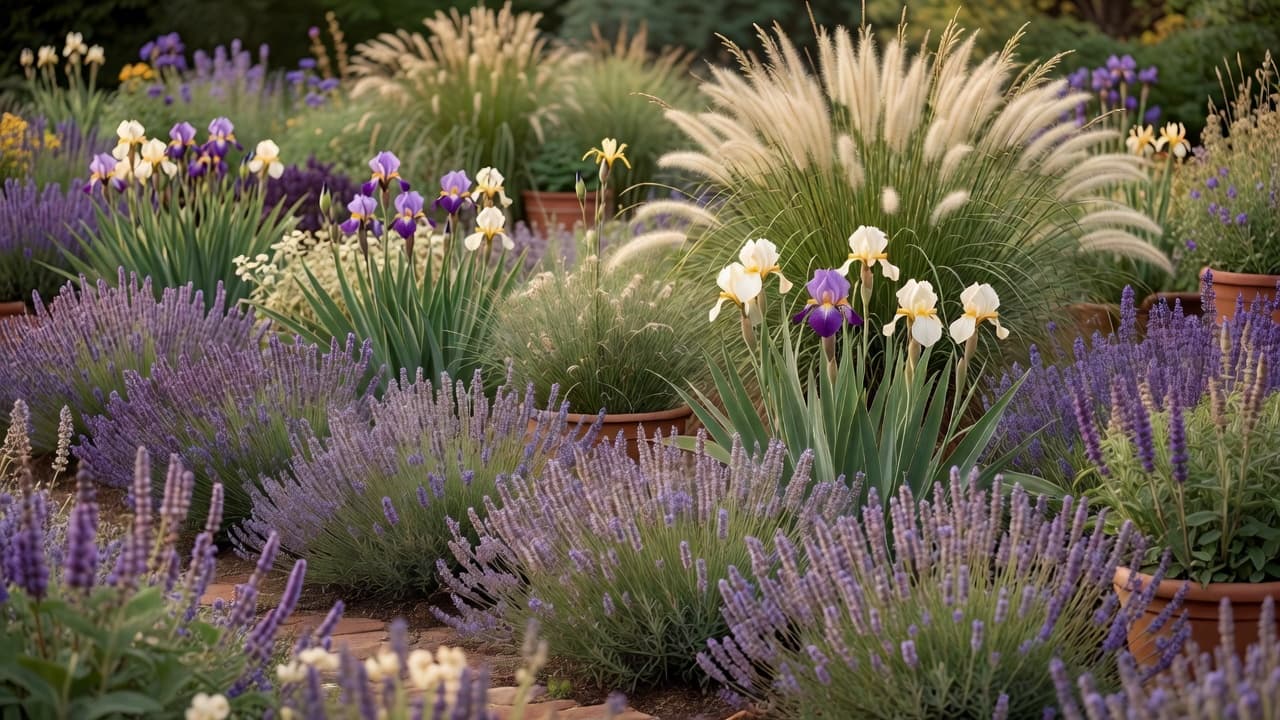
Plant in irregular groups of three, five or seven of the same variety rather than one of each — an odd number reads as a natural drift, where an even number tends to look like a grid. Repeating the same drift shape two or three times along a long border ties the whole bed together, even when the plant mix varies from one drift to the next.
Plan bloom succession so nothing goes flat
The single biggest gap in a first-time perennial border is timing: everything bought in May flowers together in June, then the bed goes quiet for the rest of the year. Planning for three overlapping flowering windows — spring, summer and autumn — keeps a border interesting from March to October rather than for six peak weeks.
- Spring (March–May): hellebores, pulmonaria and early geraniums carry a border before most summer perennials have started, alongside spring bulbs planted through the same bed.
- Early summer (May–July): irises, peonies, lupins and the first flush of hardy geraniums — this is when most perennial borders peak.
- Midsummer (July–August): lavender, salvias, catmint and echinacea keep flowering through the hottest, driest weeks, when spring perennials have usually finished.
- Autumn (September–October): sedums, asters, Japanese anemones and ornamental grasses coming into flower or seed head extend the display right to the first frost.
Choosing at least one reliable performer from each window, then repeating it in drifts across the border, does more for year-round interest than doubling the total number of plants. Our guide to colour theory for garden design covers planning a colour scheme across these overlapping seasons in more depth.
Match perennials to the light your border actually gets
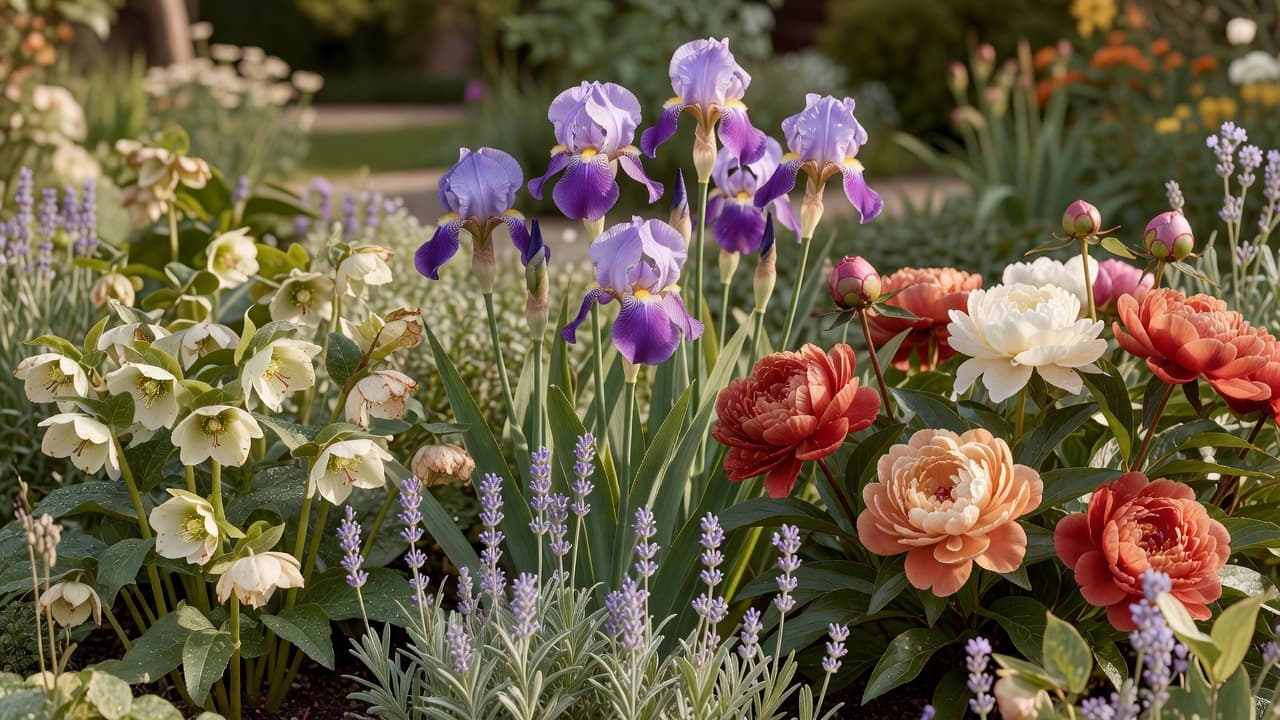
Lavender, hostas and irises are three of the most searched perennials for border design, and each one signals a different light condition — pairing the right plant with the right spot avoids the single most common cause of a disappointing perennial border.
- Lavender needs full sun and sharp drainage; it sulks and rots in damp shade, so it belongs at the front or middle of a south- or west-facing border, never under a tree canopy.
- Hostas do the opposite job, thriving in partial or full shade where sun-loving perennials struggle, and their bold, architectural foliage carries a shaded border even between flowering periods. Slug and snail damage is the main risk — thicker-leaved varieties resist it better than thin-leaved ones.
- Irises vary by type: bearded irises want full sun and good drainage much like lavender, while Siberian and Japanese irises tolerate damper soil and light shade, so check the type before placing one.
Observing a bed through a full day before planting — where the sun falls at 9am, midday and 5pm — is worth more than any planting guide, since a "sunny border" that gets four hours of morning sun and deep afternoon shade from next door's tree needs part-shade plants, not full-sun ones.
See the border on your own garden before you buy
Tiered structure, spacing and light conditions are all far cheaper to get wrong on a screen than in the ground — a planting scheme that reads well on paper can turn out too tall for the window it sits under, or planned for sun a fence now blocks. FlorAI takes one photo of the bed you are planning and shows a perennial border — lavender, hostas, irises or any mix you choose — laid out on your own real space, so you can check the height, spacing and colour scheme before a single plant is bought. It runs free on the web, iPhone and Android. If the perennial border is one part of a larger project, our guide to AI flower bed design covers the wider planning tools, and how to plan a garden redesign walks through sequencing a project like this alongside everything else in the garden.
What a perennial border costs to plant in 2026
Perennials are one of the more affordable ways to fill a border, especially bought small and given a season or two to bulk up. In the UK, small perennials in 9cm pots typically run from around £5 to £9 each at garden centres, with larger, more mature plants in 2–3 litre pots costing roughly £8 to £15. In the US, potted perennials at a garden centre commonly cost $8 to $20 each, while bare-root divisions and plants from local plant sales or swaps can run as little as $2 to $6.
Buying fewer, larger drifts of a smaller number of varieties — rather than one of many different plants — stretches a budget further and looks more intentional once established, since repetition is doing the design work rather than variety. Dividing perennials every three to five years, standard practice for irises and many border perennials, also means a well-planned border becomes a source of free plants for filling gaps or starting a new bed. Our guide to garden design on a budget covers more ways to stretch a planting budget further, and our piece on garden design with roses covers building a mixed border where roses take the structural role instead.
Frequently asked questions
How do you plan a perennial garden design?
Start with structure, not plant names: decide a tall back tier, a mid-height middle tier and a low front tier, space plants in odd-numbered drifts of three, five or seven, and choose at least one reliable performer for spring, early summer, midsummer and autumn so the border flowers in succession rather than all at once.
How far apart should perennials be planted?
As a general guide, aim for around five herbaceous perennials per square metre. Low front-edge plants go 20–30cm apart, mid-height perennials like lavender and geraniums 30–45cm apart, and tall back-tier perennials 45–75cm apart, depending on the variety's mature spread.
Do lavender, hostas and irises grow well together?
Not in the same spot — lavender wants full sun and sharp drainage, hostas prefer partial or full shade, and irises vary by type (bearded irises want sun like lavender; Siberian and Japanese irises tolerate more moisture and shade). They work well in the same garden design if each is placed according to its own light and soil needs rather than grouped together regardless of conditions.
How do you keep a perennial border flowering all season?
Plan for overlapping bloom windows rather than one big flush: hellebores and early geraniums for spring, irises and peonies for early summer, lavender and salvias for midsummer, and sedums, asters and grasses for autumn. Repeating at least one plant from each window in drifts across the border keeps it interesting from spring to the first frost.
How much does it cost to plant a perennial border?
Small perennials in 9cm pots typically cost £5–£9 in the UK or $8–$20 in the US, with bare-root divisions and plant-sale finds costing less. Buying fewer varieties in larger, repeated drifts stretches a budget further than one of many different plants, and most perennials can be divided for free after three to five years.
Can perennial borders work in a small garden?
Yes. The same tiered, drift-based approach scales down — a small bed can use two or three height tiers instead of three, and a handful of repeated drifts of two or three varieties reads as designed even in a couple of square metres.
Last updated: September 2026. Written by the FlorAI garden team.