
Garden Styling Tips · 2026
Garden Styling: How to Style Your Garden Like an Interior Designer (2026)
Garden styling is the finishing layer that comes after the design is right — the textiles, lighting, accessories and small groupings that make a garden feel curated rather than simply planted. It borrows directly from how a stylist finishes a room before it is photographed: edit down to what earns its place, repeat one colour or material thread, layer textures and light, and group accessories in odd numbers. This guide walks through the exact moves a stylist would make in your garden this weekend, mostly using things you already own.
AI Garden Design GuidesPublished July 6, 2026Updated July 6, 202610 min read
The one-line answer
None of this requires a redesign. A garden with the right paths, planting and proportions can still look unfinished if nothing has been styled on top of it — and a modest garden can look considered and expensive once it has.
What is garden styling, and how is it different from garden design?
Garden design decides the structure — where the patio, path, planting beds and boundaries go, and how balance, scale and focal points work together within the wider garden design process. That is the architecture. Garden styling is what happens once the structure is settled: the cushions, pots, colour thread, lighting and small groupings that make a space feel finished rather than merely planted. The RHS’s guidance on garden design covers those structural decisions; styling is the layer most homeowners can do themselves, in an afternoon, without touching the hard landscaping.
If the structure itself is wrong — the patio is too small, there is no clear focal point, or the paths do not go where people actually walk — styling alone will not fix it. An AI garden design app such as FlorAI can test structural changes from a single photo before you touch a spade; styling is the cheaper, faster layer you add once that structure is right.
Start with a styling edit: take three things away before you add anything
Professional stylists edit before they decorate. A photographed room looks calm partly because a stylist has already removed everything that does not earn its place — and a garden benefits from exactly the same pass.
- Mismatched pots collected over several seasons — keep the best two or three shapes and colours, and retire the rest.
- Anything broken, faded or leggy: a cracked terracotta pot, a sun-bleached cushion, or a shrub that needs cutting back.
- Hoses, bins, tools and chargers left in view — a woven basket or a slatted screen hides them in seconds.
- Decor that does not connect to anything else nearby — a single ornament with no repeated colour or shape elsewhere in the garden.
Do this pass before buying a single new thing. Most gardens already own most of what a stylist would use — it is simply scattered rather than edited.
Pick one colour or material thread and repeat it everywhere
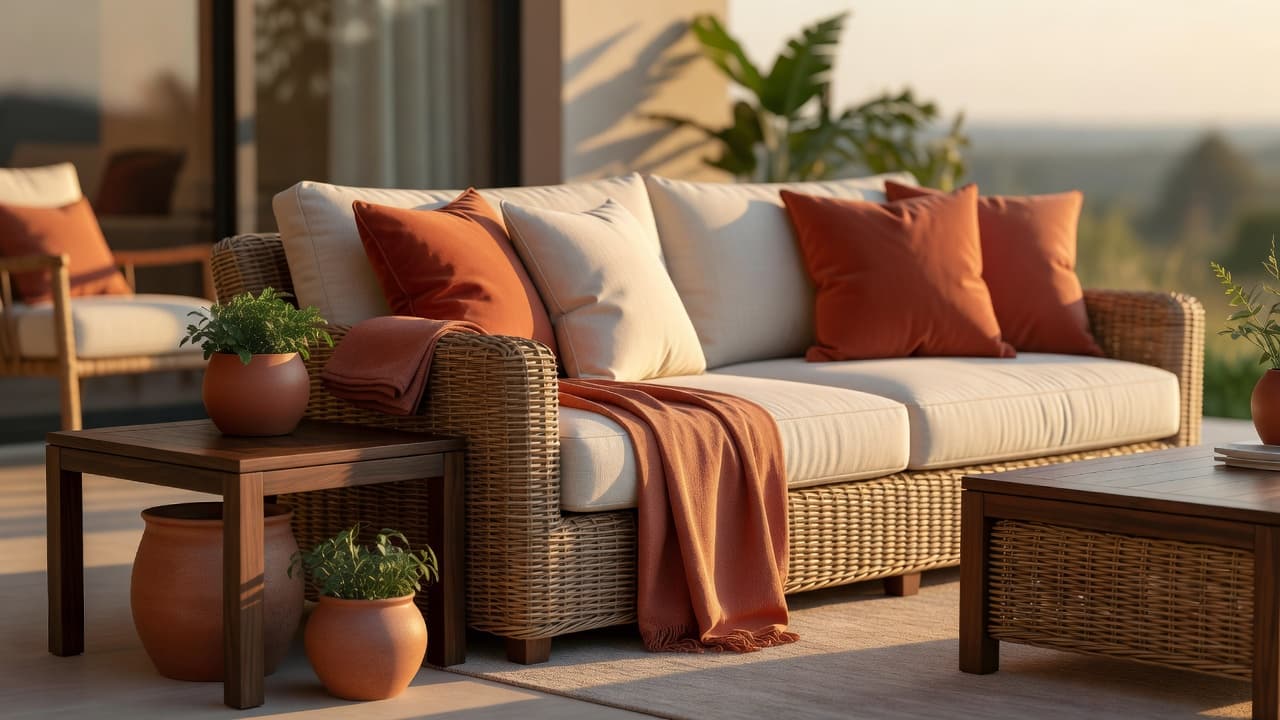
The fastest way to make a garden look designed rather than accumulated is to choose one colour or material and repeat it at least three times. A stylist calls this a “thread” — it is the reason a magazine garden photograph feels considered even when the planting itself is simple.
- Terracotta — repeated in two or three pots of different sizes, a cushion piping, and a single lantern.
- Sage or olive green — a bench cushion, a woven throw and one large glazed pot in the same tone.
- Black or bronze metal — matching hardware on furniture, a lantern frame and plant stand legs.
- Natural rope or rattan — a woven chair, a rope-handled basket and a jute doormat.
One thread, repeated three times, reads as intentional. The same three colours used once each, with nothing repeated, reads as random — even if the individual pieces are just as good.
Layer textures and textiles the way you would indoors
Bring the same layering instinct outdoors that furnishes a living room. Gardeners’ World recommends choosing furniture and accessories in genuinely weatherproof materials that do not look purpose-built for a garden centre — the closer a piece looks to something you would use indoors, the more the space reads as a real room rather than a yard.
- Define the seating area first — a change of paving, decking or an outdoor rug reads as a “floor” the way it would indoors, the same trick used to zone an outdoor room.
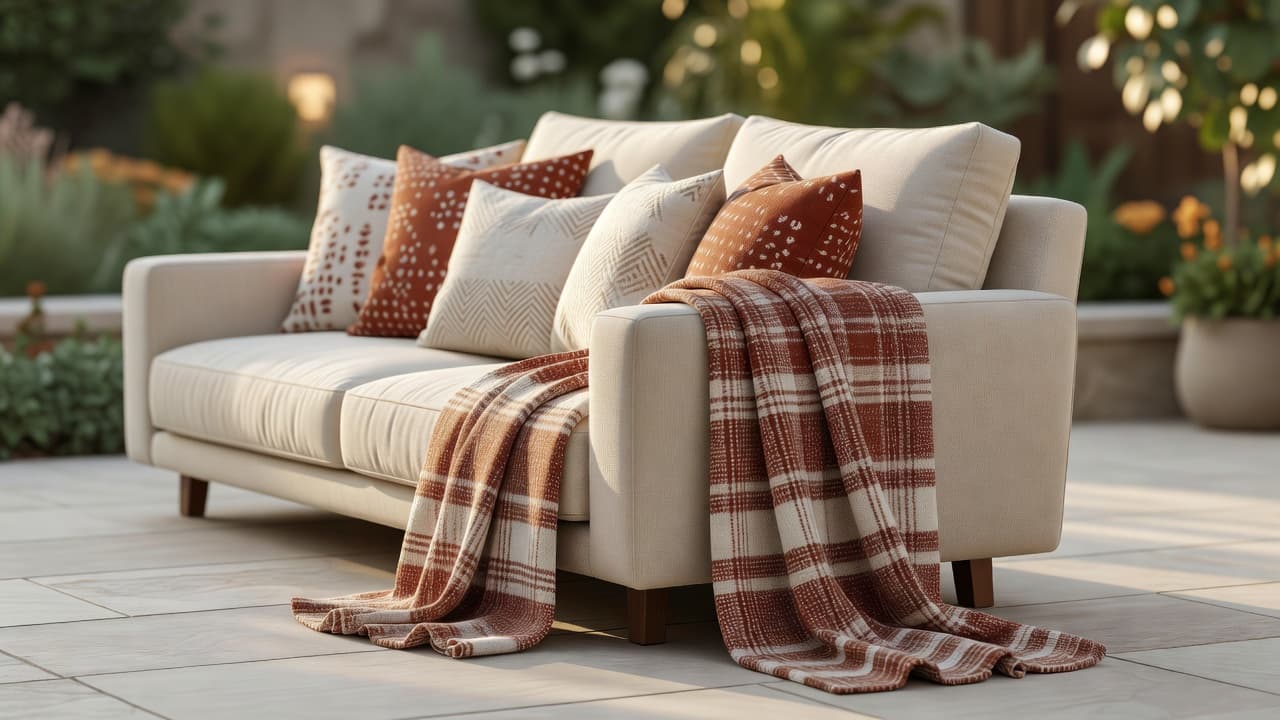
- Layer two or three coordinating cushion patterns rather than one flat colour on every seat.
- Add one throw or blanket over a chair arm, folded rather than draped flat, exactly as a stylist would style a sofa.
- Use a low table or a stump as an anchor in the middle of the seating group — every indoor living room has one, and most gardens skip it.
Style in odd-numbered groupings, not matching pairs
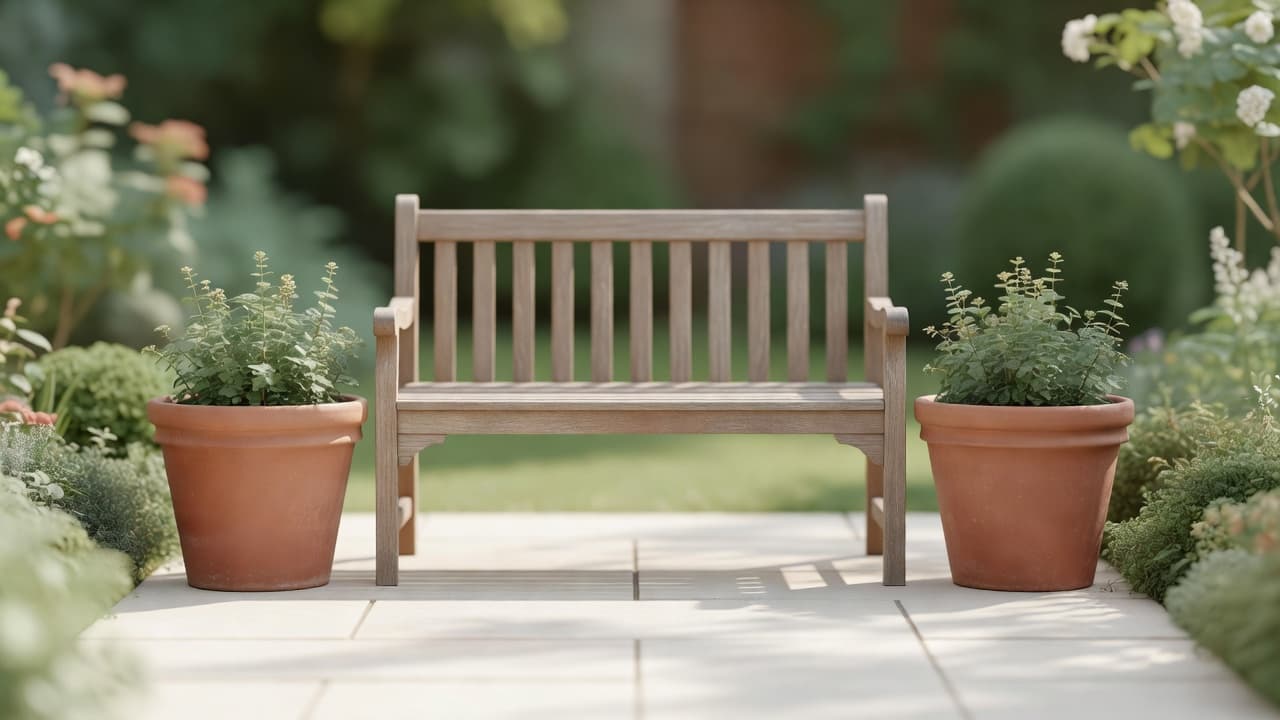
A stylist almost never arranges accessories in twos. Odd numbers — three, five, seven — read as a considered grouping; even numbers read as a matching set, which looks tidier but far less designed.
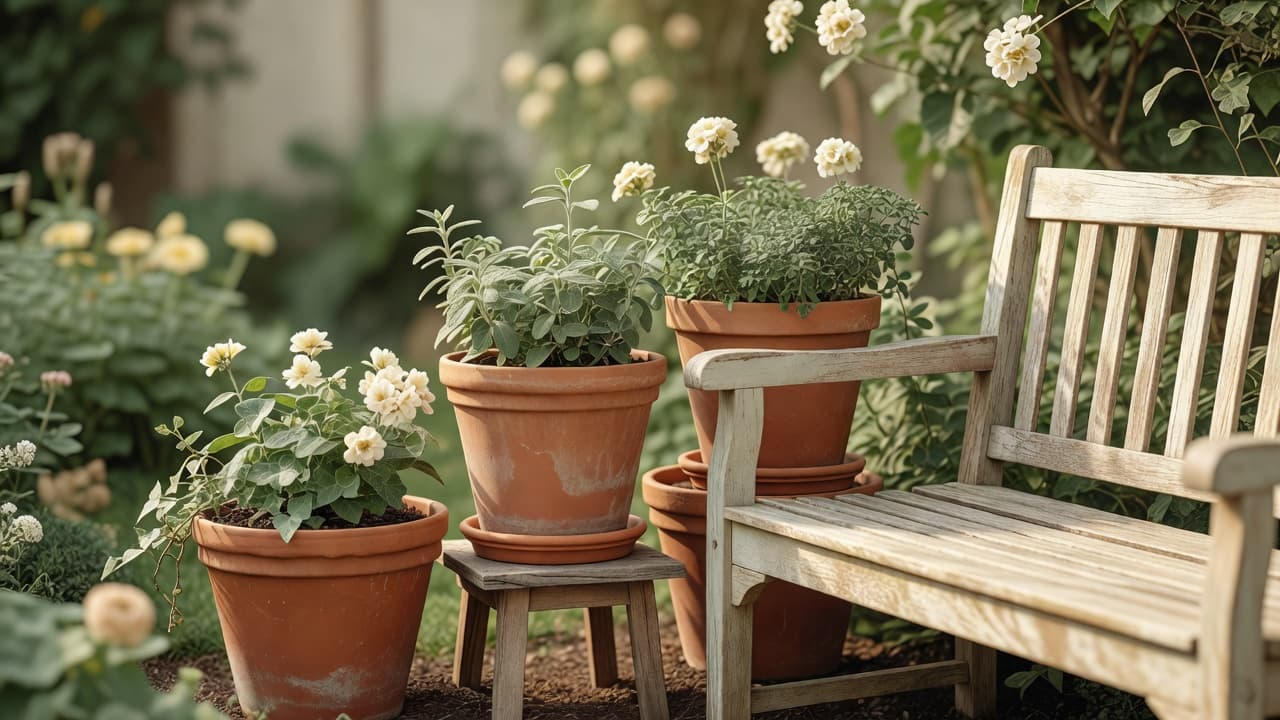
- Group pots in threes or fives, varying the height with an upturned crate or a low plant stand under the shortest one.
- Vary the scale within the group — one large pot, one medium, one small — rather than three of the same size.
- Place the grouping at a genuine pause point: a doorway, the corner of a patio, or beside a bench, not spaced evenly along a wall.
- Leave a visible gap around the grouping. A vignette needs breathing room on at least two sides to read as deliberate rather than crowded.
Light your garden in layers, not with one fixture
A single floodlight makes a garden feel like a car park after dark; a living room never relies on one light source, and a styled garden should not either. Gardeners’ World recommends layering outdoor lighting — pendants or festoon lights overhead, a portable lamp or lantern at table height, and low pathway or wall lights near ground level — the same three-tier approach used indoors.
- Overhead: festoon or string lights strung above a seating area, or a weatherproof pendant.
- Table height: a battery lantern or portable lamp that can move between the dining table and a side table.
- Ground level: solar path lights or low wall lights that mark edges without glaring into anyone’s eyes.
- Stick to warm white bulbs, roughly 2,700–3,000K, throughout — mixing warm and cool white light is the fastest way to make layered lighting look unplanned.
Refresh the styling with the seasons, not the whole garden
Structure and planting change slowly; styling can change every season for very little money, which is what keeps a garden feeling current without a redesign.
- Spring — pale or pastel cushions, and spring bulbs grouped in pots by the door.
- Summer — the boldest accent colour of the year, lightweight textiles, and citrus or Mediterranean-toned accessories.
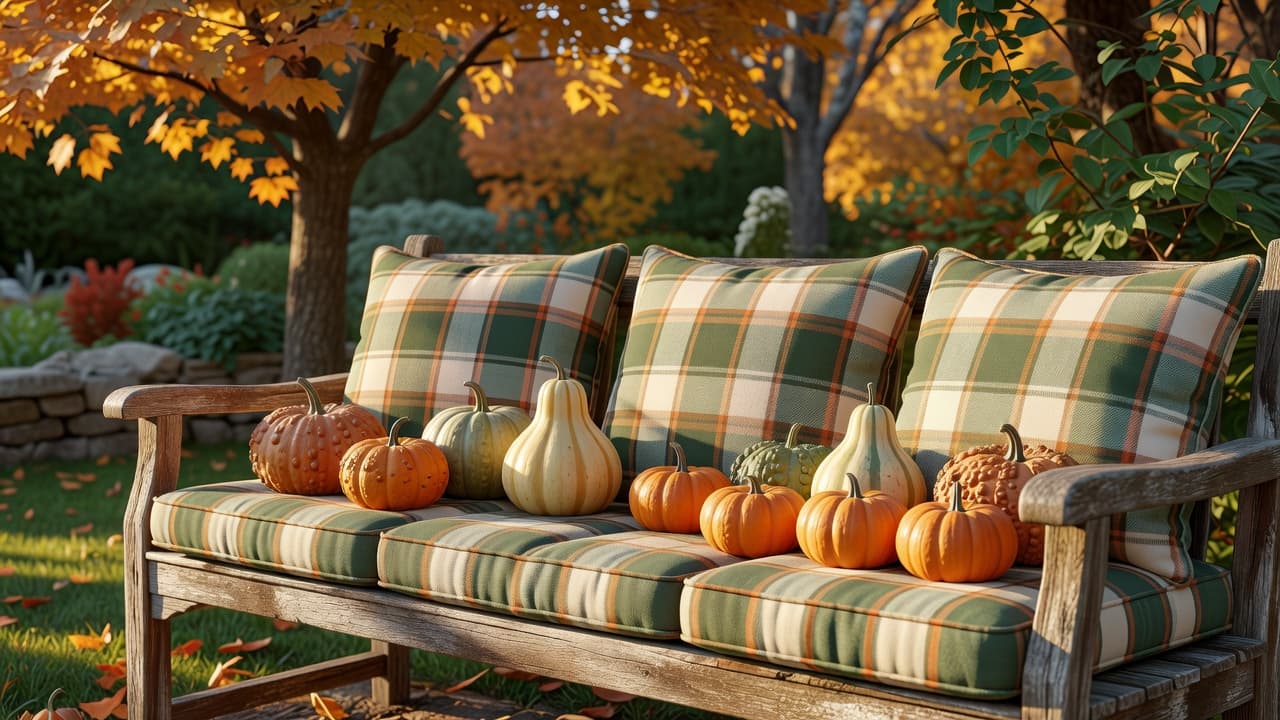
- Autumn — warmer plaid or check textiles, and a grouped vignette of pumpkins or ornamental gourds instead of flowering pots.
- Winter — an evergreen wreath, a single string of warm lights left up, and textiles swapped for heavier weatherproof fabrics.
Five styling mistakes that give away an unstyled garden
- Too many colours or patterns competing at once — pick one thread and repeat it instead of using every colour you like.
- A matching furniture set with nothing personal added — mix in one occasional chair or side table that breaks the set.
- One harsh light source instead of layered lighting at three heights.
- Pots arranged in identical pairs, evenly spaced — it reads as maintenance, not styling.
- Never checking the view from indoors — the kitchen or living room window is the angle guests actually see most, and it is the easiest one to forget.
If it helps to see a fix before spending anything, an AI garden design app like FlorAI can generate a preview of a new colour thread, furniture layout or lighting plan from a single photo of your own garden, so a mistake like these is easy to catch before you buy.
Putting it together this weekend
Start with the edit, then add one colour thread, then layer textiles and lighting — in that order, and in one weekend if the structure is already right. If the bigger structural questions are still open, our 2026 garden redesign cost guide is a useful next stop, and real before-and-after examples show how much a styling pass alone can change a space. For the ideas that sit one level up from styling — balance, rhythm, focal points — see our guide to interior design principles for the garden, and for the philosophy behind bringing the outdoors and indoors closer together, biophilic design is worth a read.
Frequently asked questions about garden styling
What is the difference between garden design and garden styling?
Garden design decides the structure — paths, patios, planting beds and proportions. Garden styling is the finishing layer added afterwards: colour threads, textiles, lighting and small accessory groupings that make an already-designed garden feel considered rather than simply planted.
How do I style my garden like an interior designer?
Edit out anything mismatched, broken or faded first, then pick one colour or material thread and repeat it at least three times, layer in textiles and lighting at different heights, and group accessories in odd numbers rather than pairs.
What is the “rule of three” in garden styling?
It is the habit of grouping accessories — pots, lanterns, cushions — in odd numbers such as three or five rather than pairs. Odd-numbered groupings with varied height and scale read as a considered vignette; even-numbered, evenly spaced pairs read as a matching set.
Do I need matching garden furniture to style a garden well?
No — 2026 styling trends actually favour the opposite: a sofa paired with one or two occasional chairs that do not match, rather than a uniform set. One repeated colour or material thread ties mismatched pieces together more effectively than a matching set does.
How often should I restyle my garden?
Structure and planting can stay the same for years, but textiles, cushion colours and small vignettes can change every season for very little money — a practical way to keep a garden feeling current without a redesign.
Can an app like FlorAI help with garden styling?
Yes. FlorAI can generate a preview of a new colour thread, furniture layout or lighting plan from a single photo of your own garden, which makes it easier to test a styling idea before spending money on cushions, pots or lighting.
Last updated: July 2026. Written by the FlorAI garden team.