
Garden Styles · 2026
Scandinavian Garden Design: Ideas, Plants and Materials for a Calm Nordic Garden
Scandinavian garden design uses a small palette of hardy native plants, pale natural timber, stone and gravel to build a calm, low-maintenance outdoor space that works in every season. It borrows the Nordic ideas of lagom ("just right"), hygge (cosiness) and friluftsliv (a love of being outdoors) rather than any one fixed plant list, which is why the style translates so well from a full Swedish backyard to a small balcony. This guide covers the real plants, materials and layout principles that define Scandinavian garden design in 2026, plus how it compares to the related Japandi look.
AI Garden Design GuidesPublished August 16, 2026Updated August 16, 202611 min read
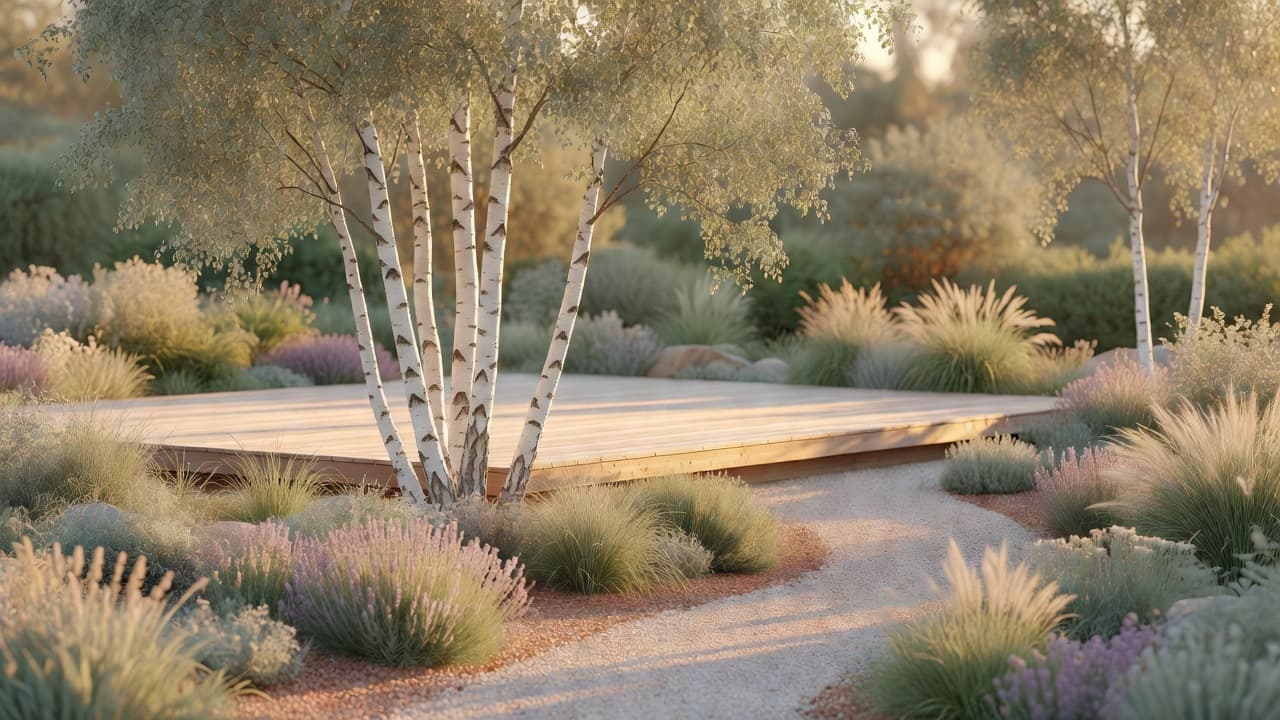
What is Scandinavian garden design?
The look grew out of the same design tradition as Scandinavian interiors — light, natural materials, few ornaments, and nothing kept purely for decoration. Outdoors, that translates into a garden built from a handful of hardy plants repeated with confidence, pale wood and stone instead of bright hard landscaping, and a layout that works as well on a wet October evening as it does in June. You can preview the look on your own garden before changing anything using an AI garden design app like FlorAI, which redraws a photo of your real garden in the style you choose. For a broader look at how interior-design thinking applies outdoors, see our interior design principles for your garden guide.
The palette works regardless of climate, because the real job of a Nordic garden is to look good through a long, grey winter. Anything that earns a place has to contribute structure, bark, evergreen form or a strong outline — not just a few weeks of flower colour. That same discipline is what makes the style so adaptable far beyond Scandinavia.
The core principles of Scandinavian garden design
- Lagom — "just right." Not minimalist for its own sake and not overplanted; each plant and material earns its place.
- Hygge — cosiness. Warm lighting, textured textiles and sheltered seating make the garden usable after dark, not just decorative in daylight.
- Friluftsliv — open-air living. The Nordic habit of spending time outdoors in all weather shapes the layout: shelter, firm paths and year-round seating matter more than a single summer flower show.
- Natural, honest materials. Pale timber, natural stone and gravel instead of painted concrete or bright composite decking.
- A restrained, hardy plant palette. Native and near-native species repeated confidently rather than a wide mixed border.
- Function in every season. A well-designed Scandinavian garden looks intentional in bare midwinter, not just in full bloom.
For the full picture of how AI garden design works across every style, see our AI garden design guide.
Which plants suit a Scandinavian garden?
Scandinavian garden design leans on plants that are genuinely native or naturalised across the Nordic countries and cope well with cold winters, wind and short growing seasons — which also happens to make them low-maintenance almost everywhere else. The RHS plant database is a reliable way to check a species’ hardiness and site needs before you plant.
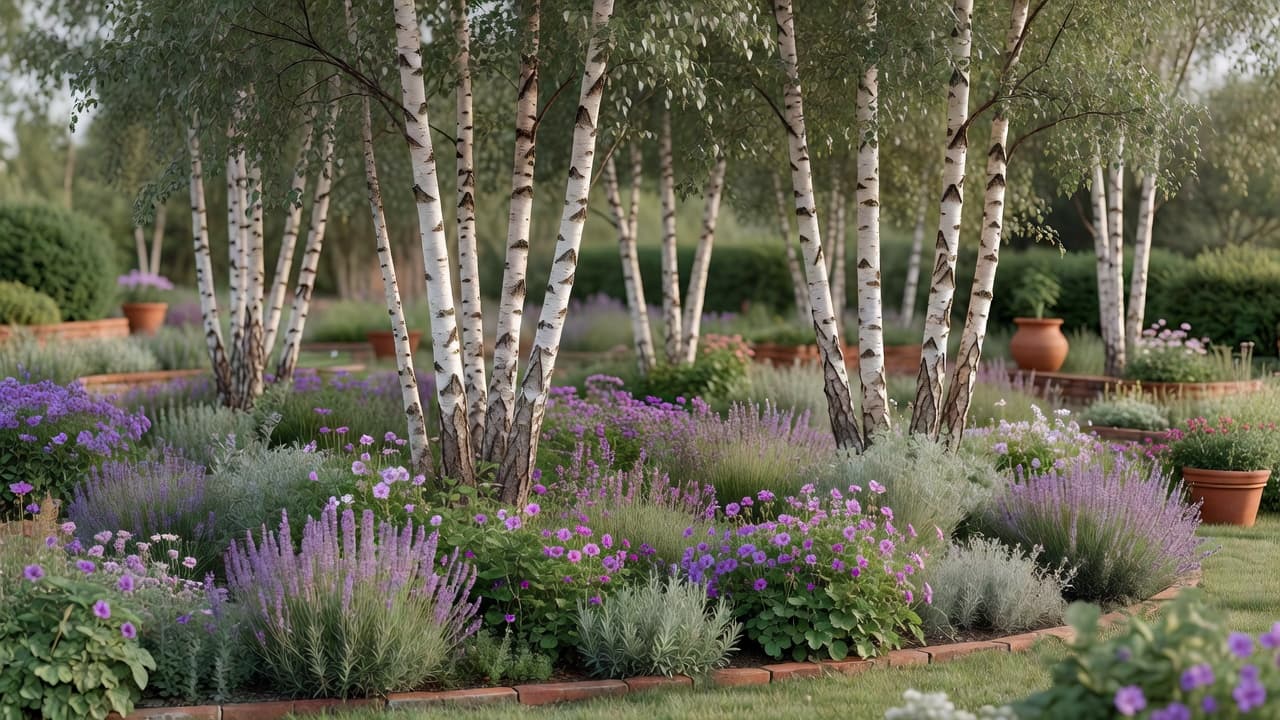
- Structural trees — silver birch (Betula pendula), often grown as a multistem clump for its white bark and light canopy; Scots pine (Pinus sylvestris); Norway spruce (Picea abies); and alder (Alnus glutinosa) on damper soil.
- Scented shrubs — lilac (Syringa vulgaris), lavender and rosemary near paths and doorways, where the scent is brushed against rather than just looked at.
- Hardy perennials — astrantia, sedum, hardy geraniums, lupins, foxgloves, hostas and astilbe for shade, all reliably cold-tolerant and low-water once established.
- Ground cover and spring interest — lily of the valley (Convallaria majalis) under trees, and species tulips or crocus naturalised in grass for a brief, unfussy spring show.
- Edible touches — an apple tree is a genuinely traditional choice in Nordic gardens, doubling as blossom in spring and fruit in autumn.
Most of these plants are widely available from general nurseries outside Scandinavia too, since their hardiness covers a wide range of climates; the USDA hardiness zone map is a useful way to check a plant’s suitability for your site before planting somewhere exposed.
Materials and the Scandinavian colour palette
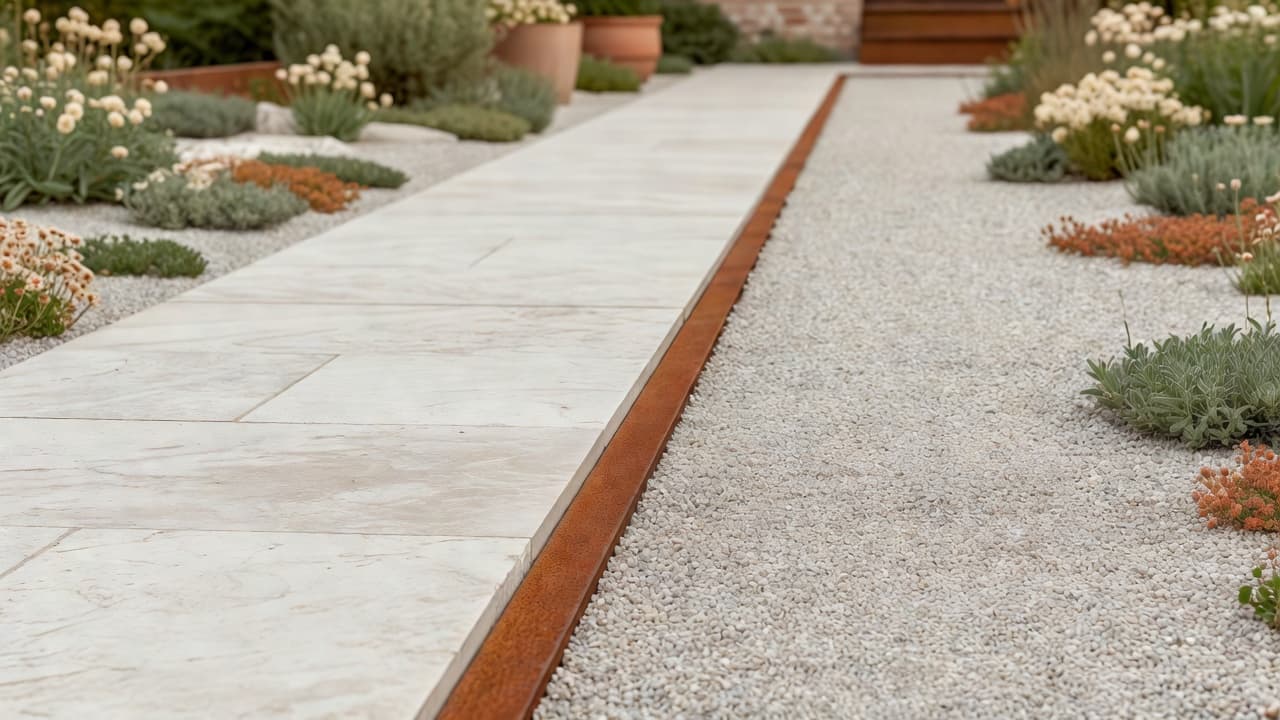
Hard landscaping does most of the work of making a garden feel Scandinavian, because the plant list alone is already close to what many gardens grow. The material palette stays deliberately narrow and pale.
- Timber — pale, untreated or lightly oiled softwood decking and stepping stones, left to weather naturally rather than stained a strong colour.
- Stone — limestone or sandstone paving and edging, chosen for its light, slightly uneven tone rather than a uniform manufactured finish.
- Gravel — a low-cost, free-draining path and seating-area surface that also softens footsteps, popular for its practicality as much as its look.
- Corten steel — rust-finished steel edging between gravel and planting beds, a detail that also turns up in Japandi and modern garden design.
- Black-stained timber — a small outbuilding, shed or fence stained in the traditional Nordic black or "Falu red" reads as authentically Scandinavian and gives the pale planting somewhere to stand out against.
- Colour palette — whites, greys and warm earthy browns throughout, so the plants and natural materials do the visual work rather than paint or ornament.
Hygge and friluftsliv: designing for year-round outdoor living
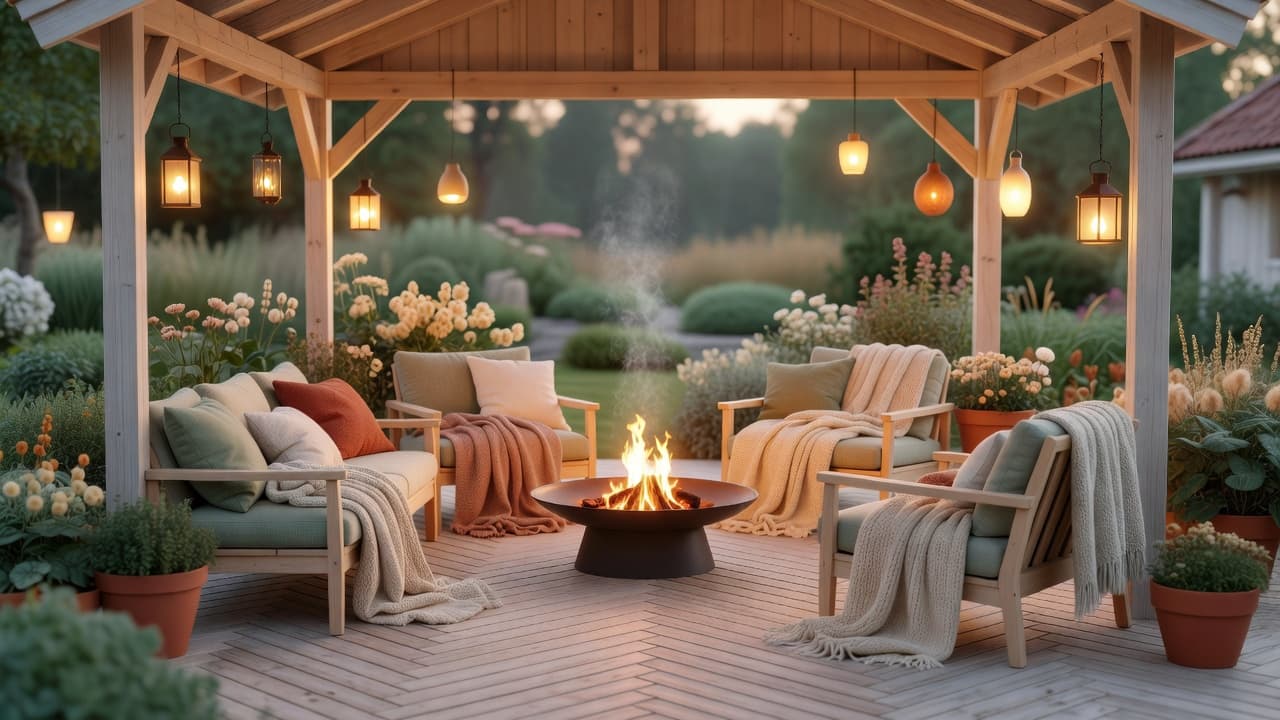
A Scandinavian garden is designed to be used in November as much as June, which is where hygge earns its place in the layout. Warm, low, layered lighting — rather than one bright floodlight — a sheltered seating corner out of the prevailing wind, a fire pit or chiminea, and thick outdoor textiles turn a plant-focused garden into a place people actually sit in after dark. Our garden lighting design ideas guide has more on layering warm light through a garden without it feeling like a car park.
Scandinavian garden ideas for small spaces and balconies
A Scandinavian garden does not need much space to read as Scandinavian — the same discipline that works on a large plot works just as well on a balcony or courtyard.
- Group three or five matching pale terracotta or timber planters instead of many mismatched pots — repetition, not variety, is what reads as Scandinavian.
- Use a single multistem birch or amelanchier in a large planter as the one structural "tree" a balcony can support.
- Lay cedar or larch stepping stones or decking tiles over an existing concrete balcony floor for an instant material change.
- Keep the plant list to lavender, sedum and a hardy grass such as Deschampsia so a small space still reads as restrained rather than crowded.
- Add one warm light source — a lantern or festoon lights — so the space still feels hygge after sunset.
- If you want to see how a Scandinavian palette would look on your own balcony or small backyard before buying anything, an AI garden design app such as FlorAI can generate a redesign from a single photo of the real space.
Turning lawn into a wildflower meadow, the Scandinavian way
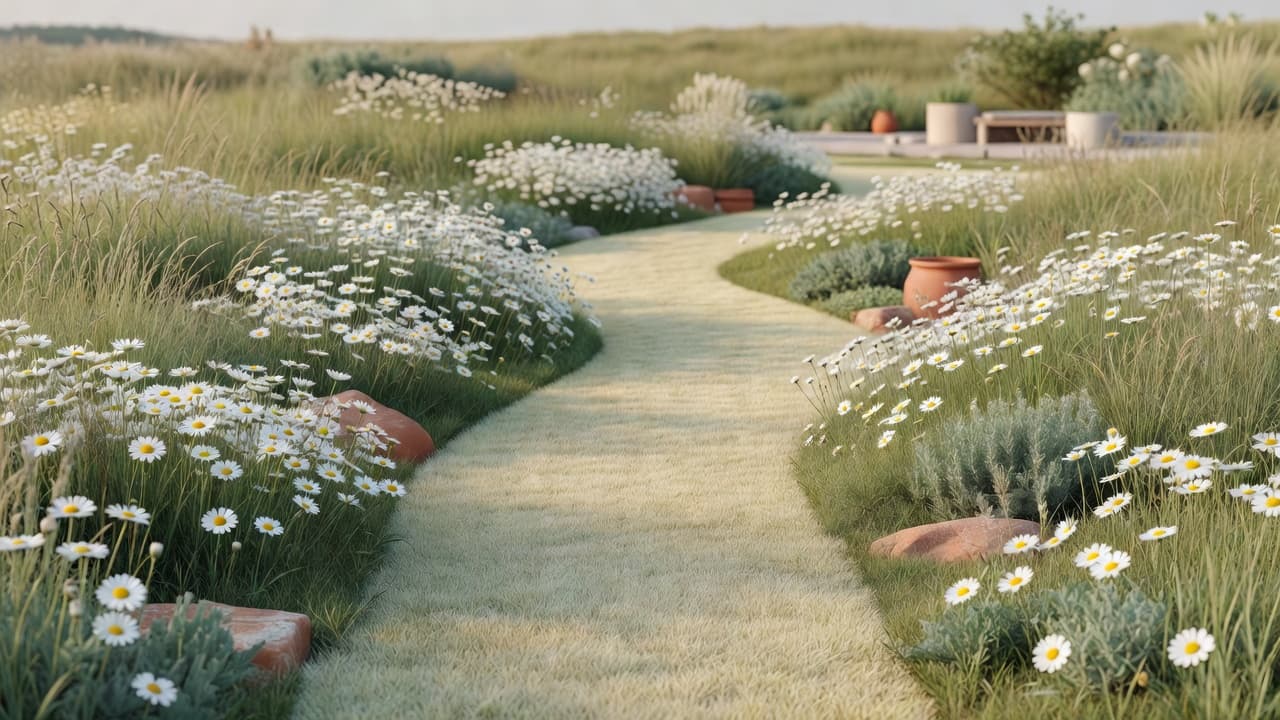
Converting part of a lawn into a native wildflower meadow is one of the most popular Scandinavian-influenced moves in 2026 gardens — closer to how a Nordic meadow is left to its own devices than to a manicured English lawn. Leaving a strip or a full area unmown from late spring lets ox-eye daisy, knapweed, yarrow and other native meadow flowers establish; cutting it once in late summer and removing the clippings keeps the soil low in nutrients, which favours flowers over coarse grass — a method explained well by BBC Gardeners’ World’s wildflower meadow guide. It is also one of the lowest-maintenance choices in this guide: less mowing, not more work. Our low-maintenance garden design ideas guide has more ways to cut down on regular upkeep without losing the planted look.
Scandinavian garden design vs. Japandi: what’s the difference?
The two styles share real ground — pale natural materials, restraint, and a dislike of clutter — which is why they are often confused. The difference is in what each borrows from outside Scandinavia. Japandi deliberately fuses Nordic simplicity with Japanese ideas such as asymmetry and wabi-sabi, and leans on gravel, charred timber and a very tight plant list. Pure Scandinavian garden design stays closer to a real Nordic backyard: slightly more planting, a working lawn or meadow, and practical touches like a fire pit or a black-stained shed rather than a single ornamental accent. If you like the calm, pared-back feel but want to compare the two side by side, our Japandi garden design guide covers the Japanese-influenced version in detail.
Frequently asked questions about Scandinavian garden design
What is Scandinavian garden design?
Scandinavian garden design is an outdoor style built on hardy native plants, pale natural materials such as timber and stone, and the Nordic ideas of lagom, hygge and friluftsliv, producing a calm garden that works in every season rather than just in summer.
What plants are used in Scandinavian garden design?
Common choices include silver birch, Scots pine, Norway spruce and alder for structure; lilac, lavender and rosemary for scent; and hardy perennials such as astrantia, sedum, hardy geraniums, lupins and foxgloves. All are genuinely native or naturalised across the Nordic countries and cope well with cold winters.
What materials define a Scandinavian garden?
Pale, untreated timber, natural limestone or sandstone paving, gravel paths, corten steel edging and, often, a small black-stained outbuilding or fence. The colour palette stays to whites, greys and earthy browns.
What is the difference between Scandinavian and Japandi garden design?
Both use pale natural materials and restraint, but Japandi deliberately blends in Japanese ideas such as asymmetry and wabi-sabi with a very tight plant list, while Scandinavian garden design stays closer to a real Nordic backyard, with slightly fuller planting and practical touches like a working lawn, meadow strip or fire pit.
Can Scandinavian garden design work in a small space or on a balcony?
Yes. The style is built on repetition rather than volume — a few matching planters, one structural tree such as a multistem birch, and a restrained plant list of lavender, sedum and a hardy grass translate easily to a balcony or courtyard.
Is Scandinavian garden design low maintenance?
Generally yes, because the plant list favours hardy, native and near-native species that need little water or feeding once established, and features like a wildflower meadow strip need less regular work than a mown lawn. An AI garden design app such as FlorAI is a free way to preview the look on your own garden before buying any plants or materials.
Last updated: August 2026. Written by the FlorAI garden team.