
Buyer’s guide · 2026
The Best Garden Design App for Beginners (2026 Guide)
The best garden design app for a beginner is the one that gives you a finished picture before it asks you for anything. If an app opens with a blank grid and a request for boundary measurements, it was built for people who already know what they are doing. This guide explains what beginners genuinely need from a garden design app, the five things that make most people give up, and how to get your first usable design in about a minute.
AI Garden Design GuidesPublished August 22, 2026Updated August 22, 20269 min read
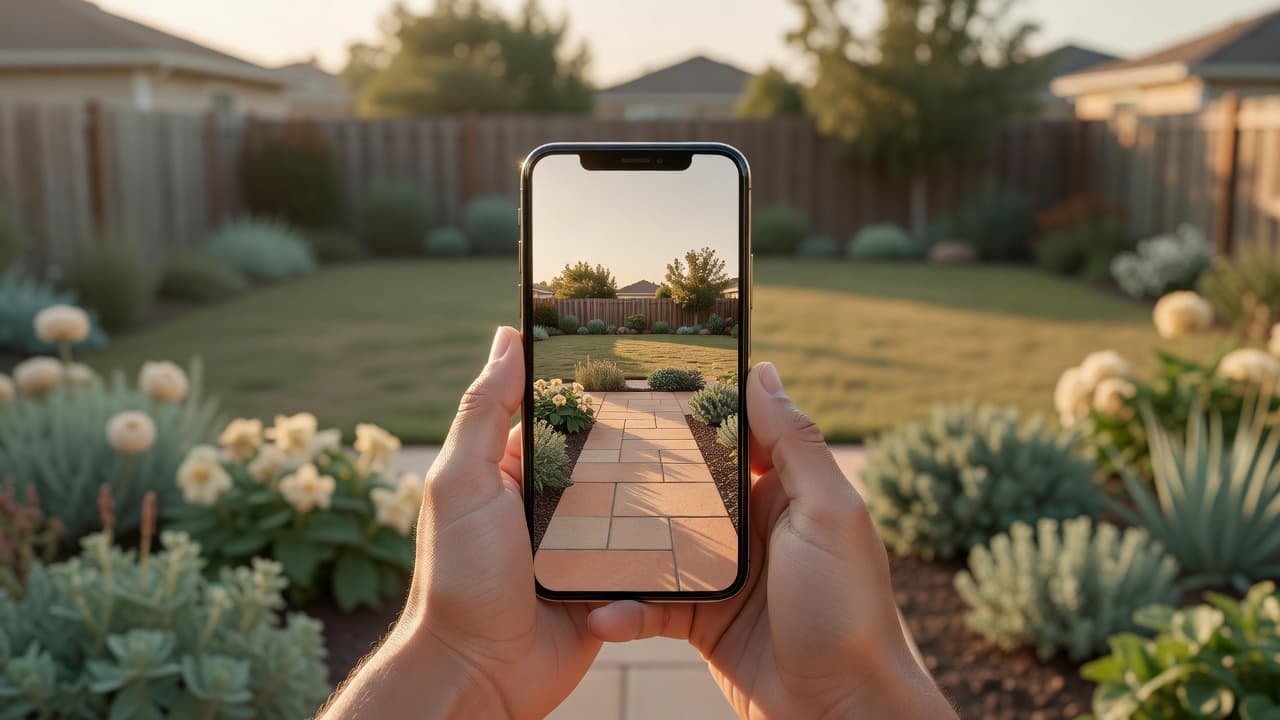
The short answer
Everything else — plant databases, cost estimates, seasonal views — is a bonus. If the first five minutes are frustrating, none of the bonuses matter, because you will not come back.
Why most garden design apps are wrong for beginners
Most garden design software was built for the person doing this professionally, or at least repeatedly. That software is genuinely good, and it asks a reasonable price for its power: you must first build a model of your garden. Measure the boundaries. Draw the plot. Mark the house, the shed, the manhole cover. Set the scale. Only then can you start placing beds.
For someone redesigning one garden, once, that is an enormous amount of work before the first interesting moment. It is the reason so many people download a garden planner on a Saturday morning and never open it again.
A photo-first app inverts the order. The interesting moment comes first, and the work — if you decide the project is worth it — comes later, usually handled by whoever builds the thing. If you want the longer comparison, we wrote one on garden design software versus an app.
The five things that make beginners give up
In roughly the order they cause damage:
- Measuring. Nobody enjoys standing in the rain with a tape measure to satisfy software. If an app requires accurate dimensions before it will show you anything, it has already lost most beginners.
- Drawing. Dragging boundary lines to match an irregular plot is fiddly on a phone and genuinely hard on a garden that is not a rectangle.
- Plant knowledge. A plant library of 8,000 species is not a feature if you cannot name five of them. Beginners need a scheme, not a catalogue.
- Abstract output. A plan view full of coloured circles does not tell an inexperienced eye whether the garden will feel nice. You experience a garden standing in it, not hovering above it.
- Slow iteration. If trying a second idea costs twenty minutes, you will try two ideas. If it costs ten seconds, you will try fifteen — and the fifteenth is usually much better than the second.
Notice that four of the five are about effort spent before you learn anything. That is the real test of a beginner app.
What a beginner actually needs
Strip it back and the list is short:
- A result before a commitment. Something useful should appear before you create an account or enter a card.
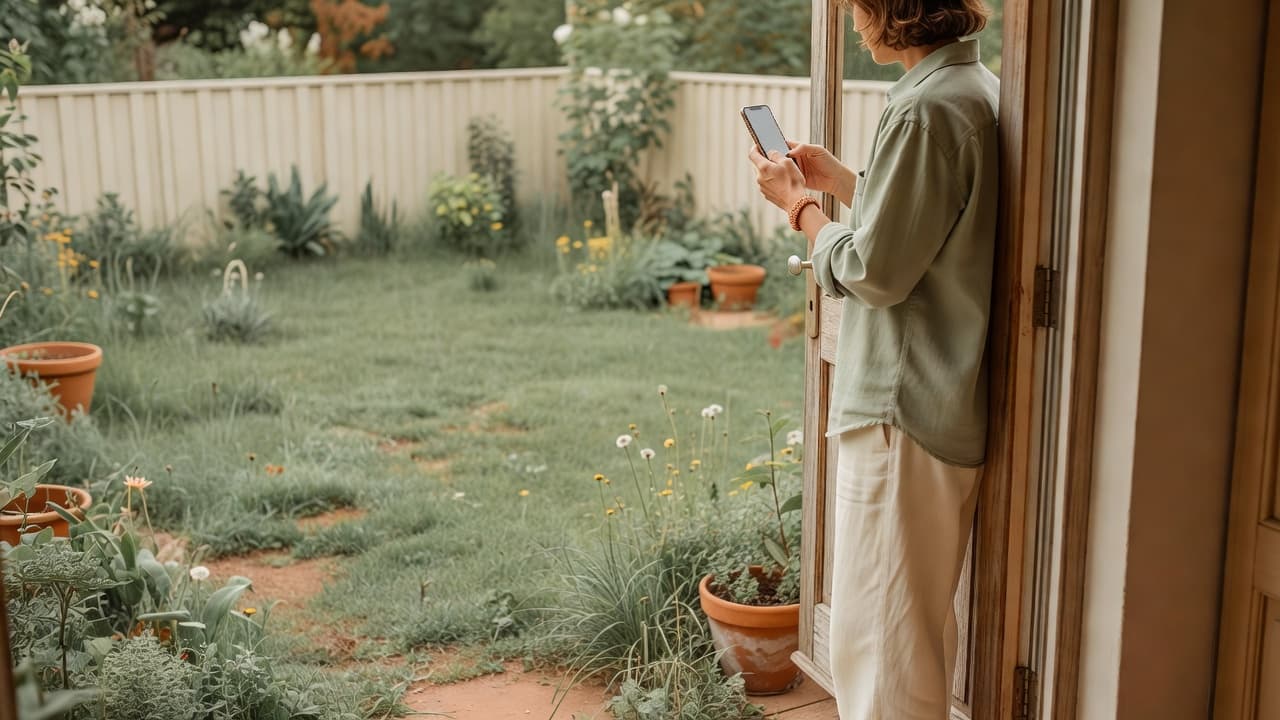
- Your real garden, not a stock one. The design has to keep your fence line, your house wall and your proportions, or you cannot act on it.
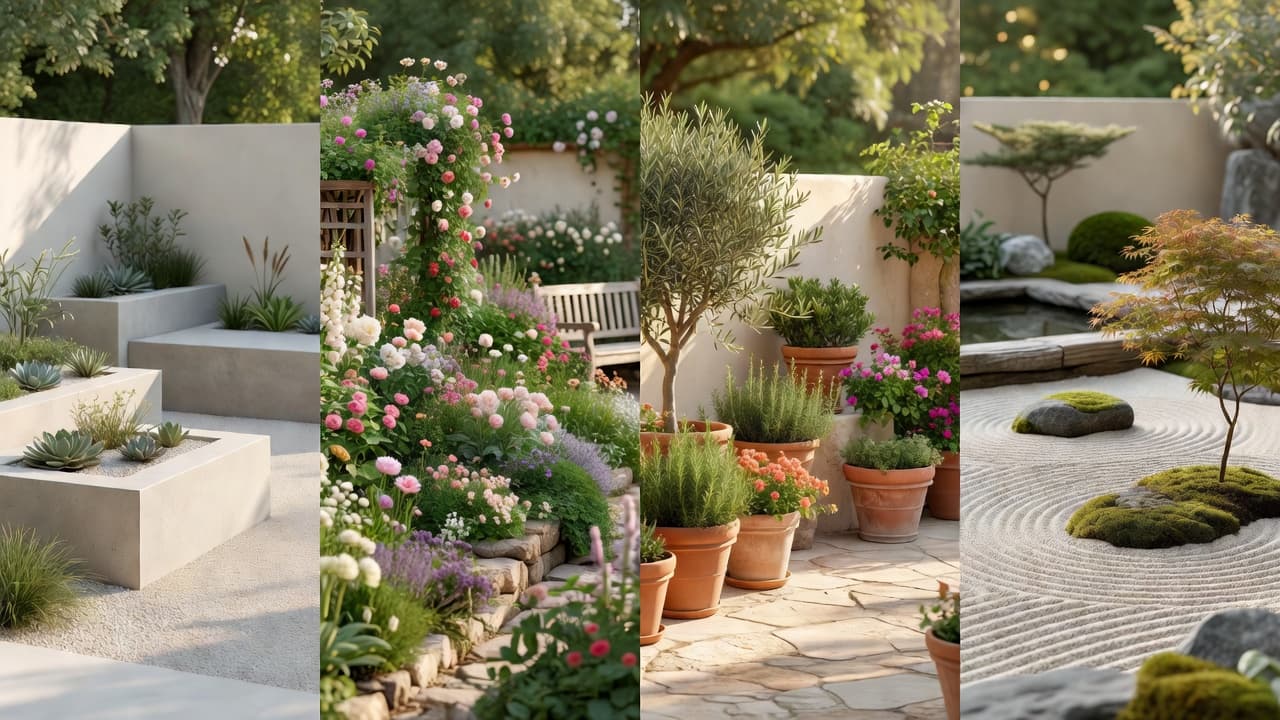
- Styles, not species. Choosing between modern, cottage, Mediterranean and Japanese is a decision anyone can make. Choosing between cultivars is not.
- Cheap mistakes. Regenerating should be instant and free enough that you explore rather than commit early.
- An exit into the real world. A picture you can hand to a landscaper, or a plant list you can take to a nursery.
FlorAI was built around exactly that list — three free designs a day, no card required, working from a single photograph of the garden you already have.
Your first garden design, step by step
- Wait for flat light. An overcast day, or morning before the sun is harsh. Hard shadows confuse the result more than anything else.
- Stand where you normally look at the garden. Usually the back door or a window. Take one landscape photo that shows the boundaries.
- Pick a style you like the sound of. Do not overthink it — you are going to try several.
- Generate, then look at what surprised you. The useful information is rarely the whole design; it is the one element you did not expect and now want.
- Change one thing and go again. Different style, or the same style with the seating somewhere else.
- Keep the two you would actually live with and compare them side by side the next day, when the novelty has worn off.
That last step matters more than it sounds. Almost every design looks brilliant for ten minutes. The one still convincing on Sunday is the one to build.
What it costs to start
Beginners should not pay to find out whether they like a tool. The sensible pattern in 2026 is a permanent free tier rather than a timed trial that bills you automatically.
- Free: FlorAI gives three full-quality designs every day, with no credit card. Free results carry a small watermark.
- Paid: $33.99 a year on web and Android, $39.99 through the App Store, which removes the daily limit and the watermark.
- A landscape designer: typically four figures for a concept and planting plan, and several weeks.
Those are not really competing purchases. The app helps you decide what you want; a designer or contractor makes it real. Our 2026 cost breakdown goes through the numbers properly, and the pricing page lists every plan.
Where a beginner app stops being enough
Being honest about this is more useful than pretending otherwise. A photo-first app produces a concept image, not a construction drawing. It does not know how water moves across your site, how deep your frost line is, or whether that retaining wall needs engineering.
So the moment your project involves changing levels, building structures, drainage, or anything a neighbour might object to, you want a professional. The good news is that arriving with a clear picture makes that conversation dramatically shorter, and usually cheaper, because you are not paying an expert hourly rate to help you decide your own taste.
It is also worth checking any plant you fall for against your own climate. The USDA Plant Hardiness Zone map takes a minute, and the RHS plant pages are a reliable second opinion on whether something will actually thrive where you live.
A note on ambition
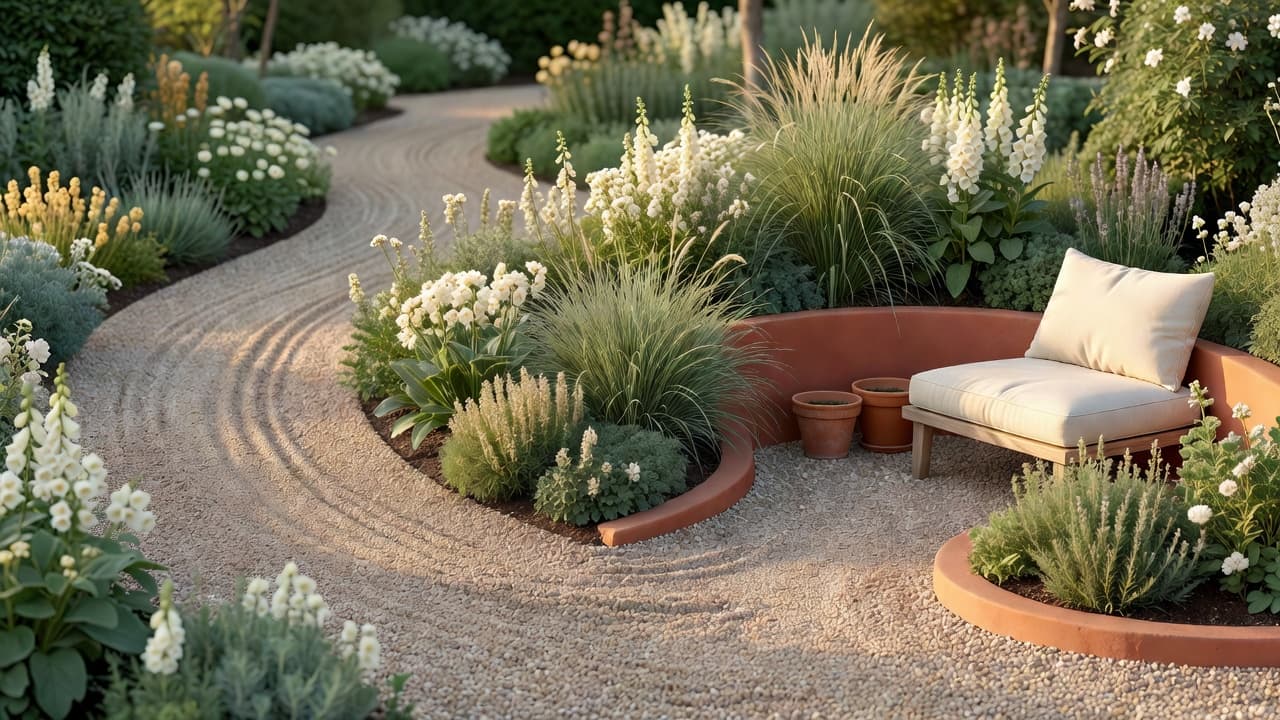
The most common beginner mistake is not a bad plant choice. It is doing too much. A first garden that consists of one generous path, one well-planted border and one comfortable place to sit will beat a complicated garden almost every time, and it will still look intentional in five years.
If you want somewhere gentle to start on the ideas rather than the tools, our guide to garden design ideas for beginners covers the principles, and low-maintenance garden design is worth reading before you commit to anything that needs weekly attention.
Frequently asked questions
What is the best garden design app for a complete beginner?
One that works from a photograph rather than a drawing. If the first screen asks for measurements or a blank canvas, it was designed for professionals. FlorAI takes one photo and returns a finished design in about ten seconds, free for three designs a day.
Do I need to measure my garden first?
Not for a photo-first app. You will need measurements eventually if you build hard landscaping, but you do not need them to decide what you want the garden to look like.
Do I need to know anything about plants?
No. You choose a style and the app handles the planting language — structure, layering, repetition. FlorAI can also identify plants from a photo, which is a good way to learn what is already growing in your garden.
Is there a genuinely free garden design app?
Yes. FlorAI includes three designs per day permanently, with no credit card and no trial countdown. Free designs carry a small watermark and are otherwise full quality.
Can I show the results to a landscaper?
Yes, and it is one of the most useful things you can do with them. Treat the image as a visual brief. A contractor will still produce their own measured drawings for levels, drainage and materials.
Will it work on a small or awkward garden?
Small courtyards, narrow side returns, sloped plots and shaded north-facing gardens are all supported, and the design works around the constraint rather than ignoring it.
Last updated: August 2026. Written by the FlorAI garden team.