
Nature-led design · 2026 guide
Biophilic Design: Bringing the Outside In (2026 Guide)
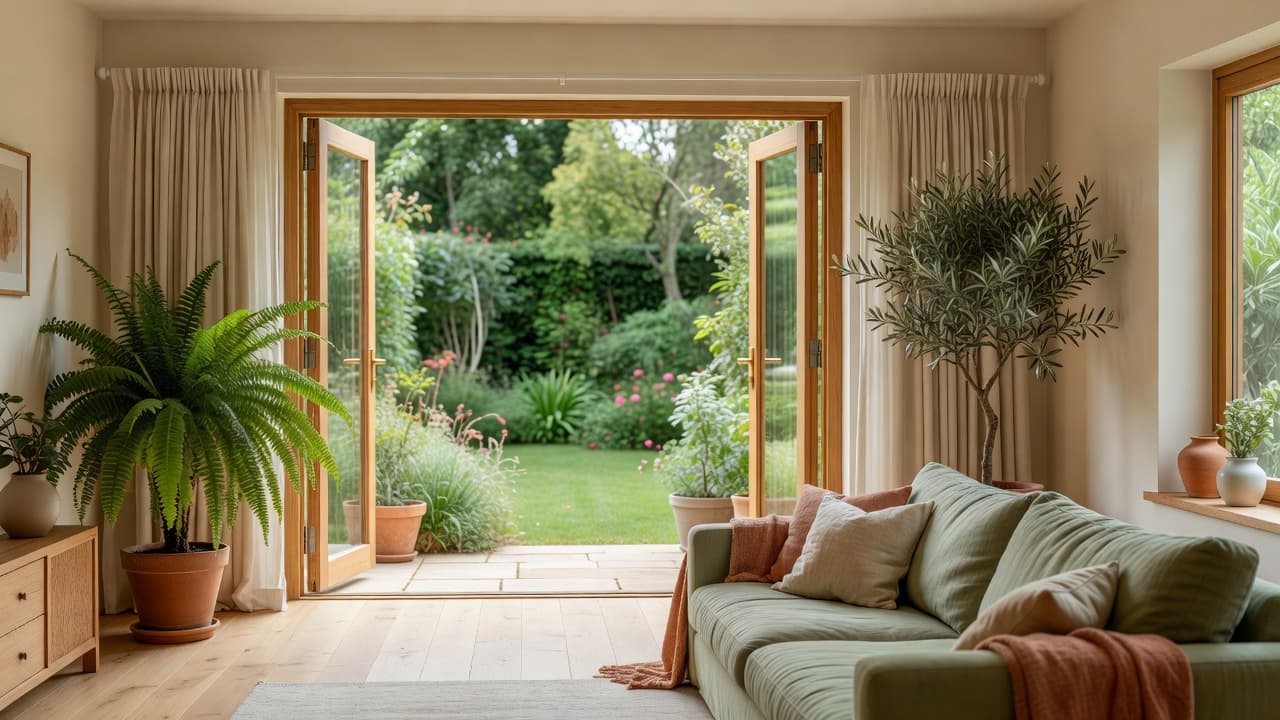
Biophilic design is the practice of shaping a home around our built-in need for nature — natural light, fresh air, plants, water and honest materials like wood and stone — so a house feels calmer the moment you walk in. It is backed by real research, not just a trend: hospital patients with a view of trees recover faster, and a handful of plants in a bare garden can lower stress as much as a course of mindfulness sessions. This guide explains what biophilic design really means, the six elements behind it, and practical, budget-aware ways to bring the outside in — starting with the garden just outside your window.
AI Garden Design GuidesPublished July 3, 2026Updated July 3, 202611 min read
The one-line answer
It is not a colour palette or a passing trend. It is a design framework, backed by decades of research, for why some rooms — and some gardens — feel instantly restorative while others, however expensive, feel flat.
What is biophilic design, in plain English?
The word comes from "biophilia" — literally, love of life — a term the biologist E. O. Wilson popularised to describe humans’ innate pull towards nature and living systems. Biophilic design takes that idea and turns it into a practical design discipline: instead of decorating a room and hoping it feels good, you deliberately build in daylight, greenery, natural materials, water and views out, because these are the conditions humans evolved to feel safe and well in.
Crucially, biophilic design is not only about houseplants. A room with forty plastic plants and no daylight is not biophilic; a small, well-lit reading nook next to a single olive tree and a window onto the garden often is. The goal is a genuine connection to nature, not a decorative gesture towards it.
Why biophilic design actually works
This is one of the better-evidenced ideas in interior and garden design, which is part of why it keeps returning as a serious trend rather than fading like most. Three findings anchor the field:
- In a widely cited 1984 study, patients recovering from surgery in rooms with a view of trees left hospital sooner and needed less pain medication than patients facing a brick wall — one of the founding pieces of evidence for biophilic design as a discipline, not just a preference.
- RHS research led by Dr Lauriane Chalmin-Pui found that filling a bare front garden with a handful of plants reduced residents' stress by roughly as much as attending eight mindfulness sessions — a striking result for such a small change.
- Urban forestry researcher Cecil Konijnendijk proposed the 3-30-300 rule: everyone should be able to see three trees from home, live in a neighbourhood with 30% tree canopy, and be within 300 metres of a park or green space — a benchmark now used by planners specifically because visible greenery measurably improves wellbeing.
None of this means every room needs a jungle. It means the nervous system responds, in measurable ways, to daylight, greenery and a view of something alive — which is exactly what biophilic design tries to supply on purpose.
The six elements of biophilic design
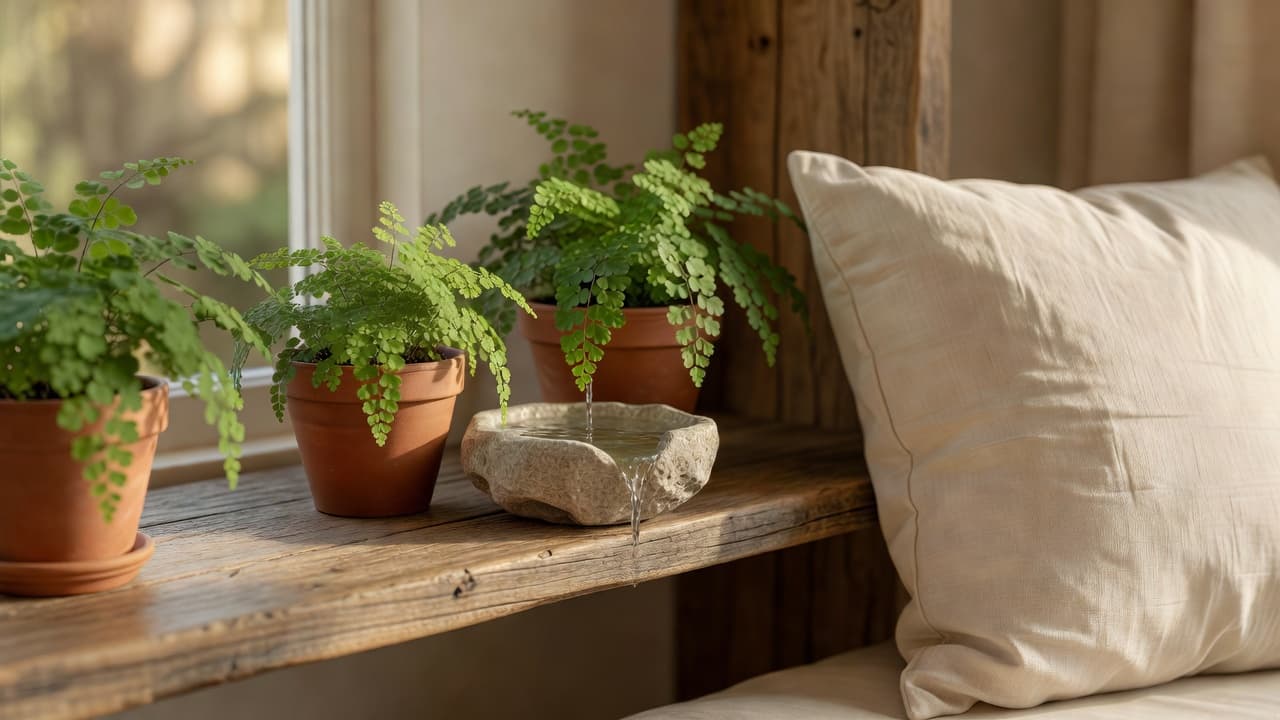
Yale professor Stephen Kellert formalised biophilic design into a framework of six elements and dozens of supporting attributes. Translated into plain, practical terms for a home, they are:
- Light. Natural daylight that changes through the day, rather than flat, constant artificial light — unobstructed windows, sheer rather than blackout curtains in daytime rooms, and mirrors placed to bounce daylight deeper into a space.
- Air. Real ventilation and a breeze you can feel, not just an air-conditioning unit — openable windows, a door left ajar to a garden, or a ceiling fan that moves air rather than just cooling it.
- Water. The sound or sight of water, even in miniature — a small tabletop water bowl, a birdbath outside a window, or a proper garden pond if space allows.
- Vegetation. Real, living plants chosen for the light available, not decoration for its own sake — a single well-placed Boston fern or snake plant (Sansevieria) does more than a shelf of artificial greenery.
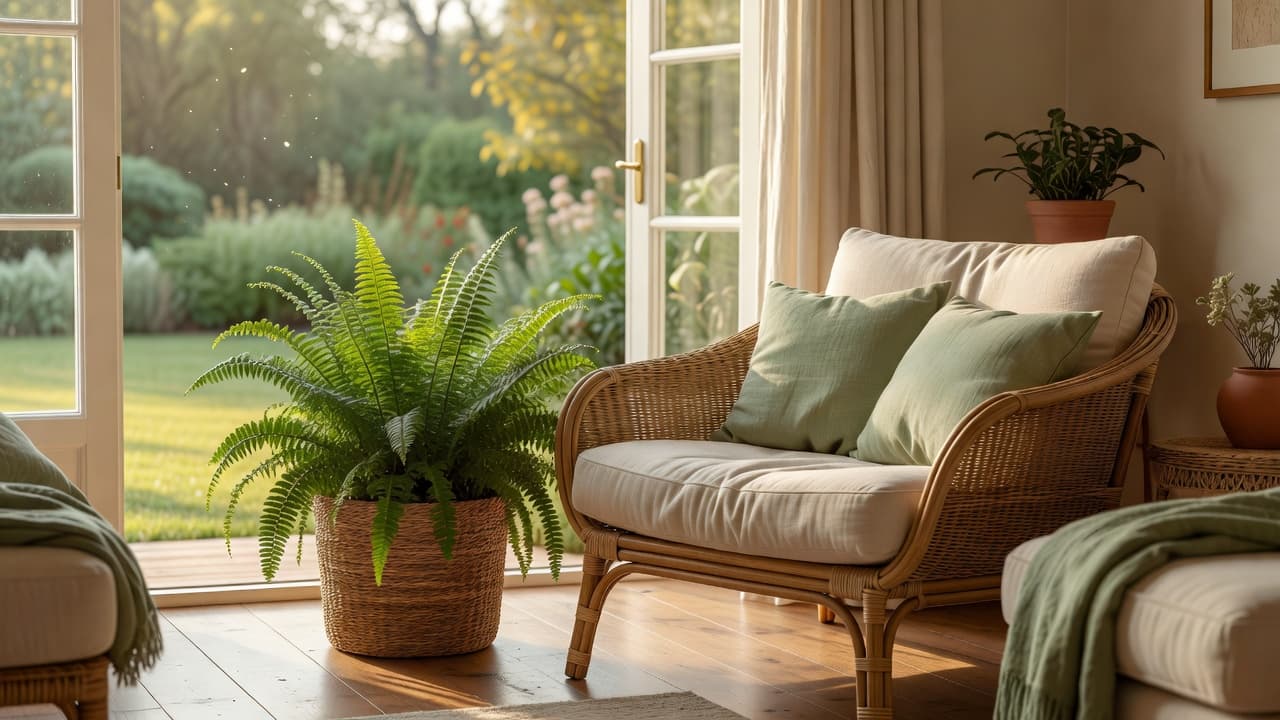
- Natural materials and forms. Wood, stone, linen, wool and clay in place of purely synthetic finishes, plus organic, curved shapes rather than only hard right angles — a rounded rattan chair beside a straight-edged sofa, for instance.
- Prospect and refuge. A clear view outward from a spot that also feels sheltered and safe — a window seat, a reading chair with its back to a solid wall but a view of the garden, or a covered porch looking onto open lawn.
Bringing the outside in, room by room
You do not need to renovate to apply biophilic design. Most of it is about what you already have, arranged with intention:
- Living room — pull seating to face the garden window rather than only the television; add one large architectural plant such as a fiddle-leaf fig or bird of paradise where it gets bright, indirect light.
- Kitchen — a windowsill of herbs (basil, mint, rosemary) gives scent, touch and a genuine living connection, not just decoration, right at the sink.
- Bedroom — keep artificial light warm and dimmable in the evening, and choose linen or cotton bedding over synthetic fabrics, since natural fibres breathe and age in a way that reads as calmer.
- Home office — position the desk so you can see outside without glare on a screen; a low-maintenance pothos or peace lily tolerates most desk lighting.
- Bathroom — a fern or orchid thrives in the humidity, and natural stone tiles or a wood bath tray add texture that plastic fittings cannot.
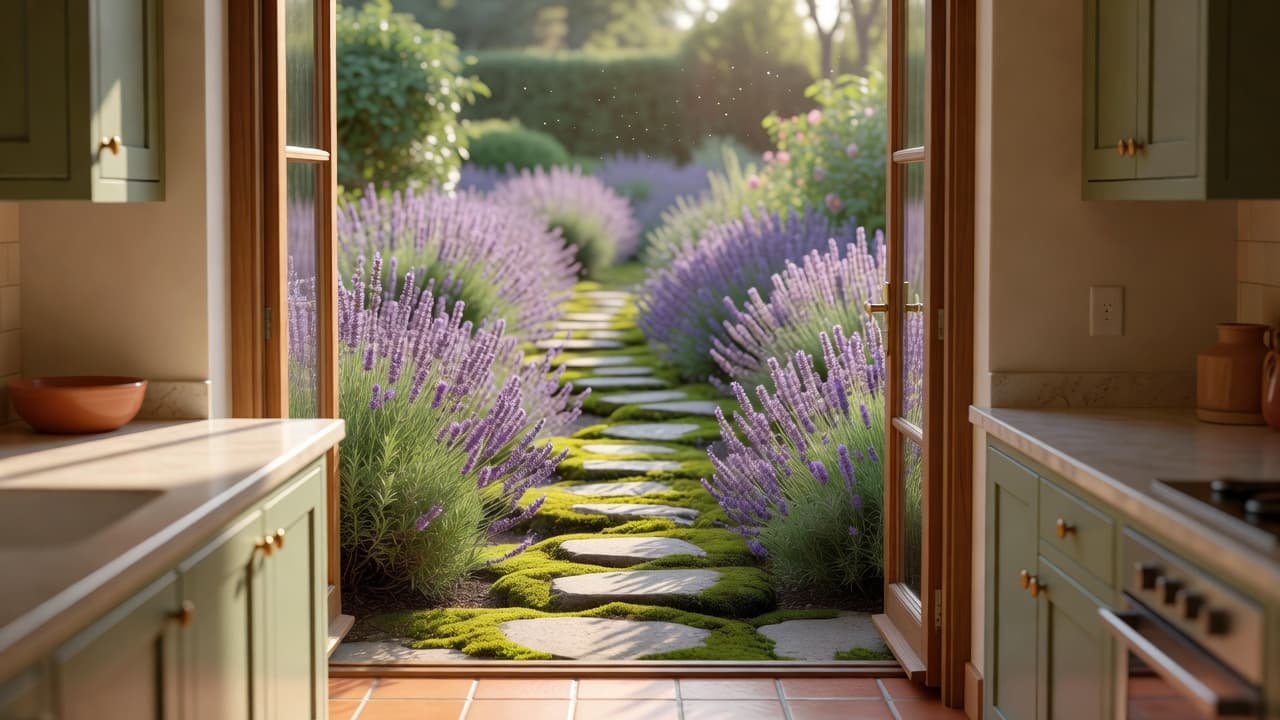
- Hallways and thresholds — the transition between rooms, and especially between the house and the garden, is where biophilic design earns its keep; keep sightlines open rather than blocked by furniture or heavy curtains.
Your garden is the original biophilic space
It is worth remembering that the garden itself is the most complete biophilic space most people already own — real daylight, real air, real plants and often real water, with none of it needing to be simulated indoors. The strongest biophilic homes treat the garden as an extra room rather than a separate space, using the same interior design principles — balance, scale, rhythm and colour outdoors as in, and keeping a clear sightline from the kitchen or living room straight through to a garden focal point.
If your garden itself feels bare or uninviting, that is usually the highest-leverage place to start, since even a modest planting scheme has been shown to measurably lower stress. Our plain-English guide to what AI garden design actually is covers how a single photo of your own garden can be turned into a finished, planted design in seconds, and the wider AI garden design guide shows real before-and-after examples of gardens redesigned around exactly these biophilic principles — more planting, softer paths, a clearer view from the house.
How much does biophilic design cost?
Biophilic design scales from free to genuinely expensive, which is part of its appeal — the underlying principles work at every budget:
- Free to low cost — rearranging furniture to face a window, opening curtains fully during the day, adding one or two houseplants (from a few pounds each for a small pothos or spider plant), and decluttering a windowsill so daylight reaches further into the room.
- Modest budget (£50–£300) — a proper reading chair positioned for a garden view, a small tabletop water feature, herb pots for a kitchen windowsill, or swapping a synthetic rug for a wool or jute one.
- Bigger projects (£300–£2,000+) — bifold or French doors to open a living room directly onto the garden, a small wildlife pond, or a modest living wall, which typically runs from around £100 to £350 per square metre for a standard installation and considerably more for a fire-rated, irrigated system.
- The garden itself — often the best value of all, since replanting a border or softening a patio costs a fraction of an indoor renovation and delivers the same daylight, air and greenery benefits at source. Our 2026 garden redesign cost guide breaks down real numbers for a full garden project.
Common biophilic design mistakes to avoid
A few honest pitfalls worth knowing before you start:
- Buying plants that cannot survive the light you have. A shaded hallway will kill a succulent within weeks; choose species suited to the actual light, such as a pothos or ZZ plant for low light.
- Treating it as decoration rather than function. A single dusty plastic plant in a corner is not biophilic design; a clean sightline, real daylight and one well-tended living plant does more.
- Forgetting maintenance. Water features need cleaning, plants need feeding, and a living wall needs irrigation — budget the ongoing care, not just the installation.
- Ignoring the garden side of the threshold. Biophilic design that stops at the back door misses the largest, cheapest source of nature most homes have.
Frequently asked questions about biophilic design
What is biophilic design in simple terms?
Biophilic design is designing a home or garden around people’s built-in need for nature — daylight, plants, water, fresh air and natural materials — so the space feels calmer and healthier rather than purely decorative.
What are the six principles of biophilic design?
Light, air, water, vegetation, natural materials and forms, and prospect and refuge (a clear view out from a spot that also feels sheltered). This framework comes from Yale professor Stephen Kellert's work on biophilic design.
Does biophilic design really improve wellbeing, or is it just a trend?
The evidence is genuinely strong: hospital patients with a view of trees have been shown to recover faster than those facing a wall, and RHS research found a handful of plants in a bare garden reduced stress by roughly as much as eight mindfulness sessions.
How do I start biophilic design on a small budget?
Start free: turn seating to face a window, open the curtains fully in the day, and add one or two easy houseplants such as a pothos or spider plant. These cost little and address the same daylight and greenery principles as a full renovation.
Can biophilic design work in a garden, not just indoors?
Yes — the garden is usually the most complete biophilic space a home already has. An AI garden design app like FlorAI can show a more planted, biophilic version of your own garden from one photo, which is a fast way to see the idea applied before changing anything.
What plants are easiest for biophilic interior design?
Pothos, snake plant (Sansevieria), ZZ plant and peace lily all tolerate average indoor light and low maintenance, making them a reliable starting point before investing in anything more demanding.
Last updated: July 2026. Written by the FlorAI garden team.