
Buyer’s guide · 2026
AI Rooftop Garden Design: Plan Your Roof Terrace in 2026
An AI rooftop garden design app turns one photo of your real roof terrace into a photorealistic redesign of that same space — planters, seating and planting chosen for the wind, sun and weight limits of a rooftop — usually in under ten seconds. In 2026 it is the fastest, cheapest way to see how a bare rooftop could become a finished outdoor room before a structural engineer, a waterproofer or a single planter is booked. This guide explains, in plain English, how an AI rooftop garden design app works, what separates a genuinely useful one from a gimmick, the load limits and lightweight materials that make a rooftop garden safe, which wind- and drought-tolerant plants suit a roof this year, and what the whole project really costs in 2026.
AI Garden Design GuidesPublished August 2, 2026Updated August 2, 202612 min read
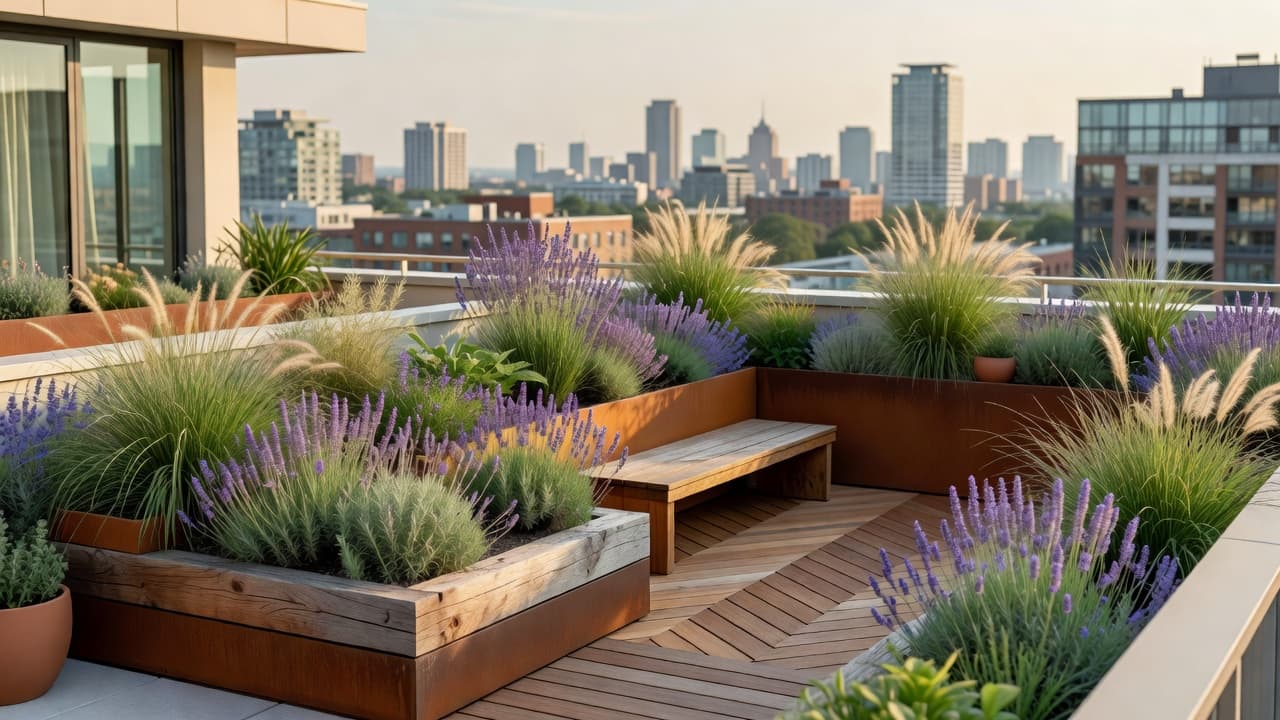
What an AI rooftop garden design app actually does
The idea is simple: you open the app, take or choose one photo of your rooftop, pick a style, and a few seconds later you see your own flat, empty roof transformed into a finished terrace. There is no CAD software and no design training required. If the whole concept is new to you, our plain-English explainer of AI garden design is the gentlest starting point, and the full AI garden design guide walks through a complete redesign with real before-and-after photos.
The part that matters is that the redesign is your actual roof — the parapet, the vents, the view — not a generic stock terrace. FlorAI was built around exactly that, with a free tier, so you can see your own rooftop reimagined before deciding whether it is worth paying for or building at all.
Why design your rooftop before you build anything
A rooftop is the most consequential outdoor space you can get wrong, because every mistake happens above other people's heads. Seeing the finished layout on a photo first, before any engineer visit or delivery, is how you avoid an expensive redo. A few reasons to settle the design early:
- Structure is a hard limit, not a suggestion. Unlike a garden at ground level, a rooftop has a maximum weight it can carry — the design has to work within that number, not around it.
- Conditions are extreme. A roof is windier, sunnier and dries out faster than a garden at ground level, so planting choices that work in a backyard often fail on a roof.
- Access is expensive. Every bag of soil and every planter usually has to go up a stair, a lift or a hoist, so a wrong-sized purchase is a costly one to correct.
- Permits and building rules apply. Many buildings require sign-off from a structural engineer, a body corporate or a landlord before anything permanent goes up — a clear picture makes that conversation easier.
- It is easy to photograph. A rooftop is usually captured well in one or two wide shots, which is ideal raw material for an AI redesign.
If your project sits alongside other outdoor spaces, our guides to the AI patio design app and the balcony garden design app cover smaller, related spaces, while the 2026 garden design cost guide sets sensible budget expectations.
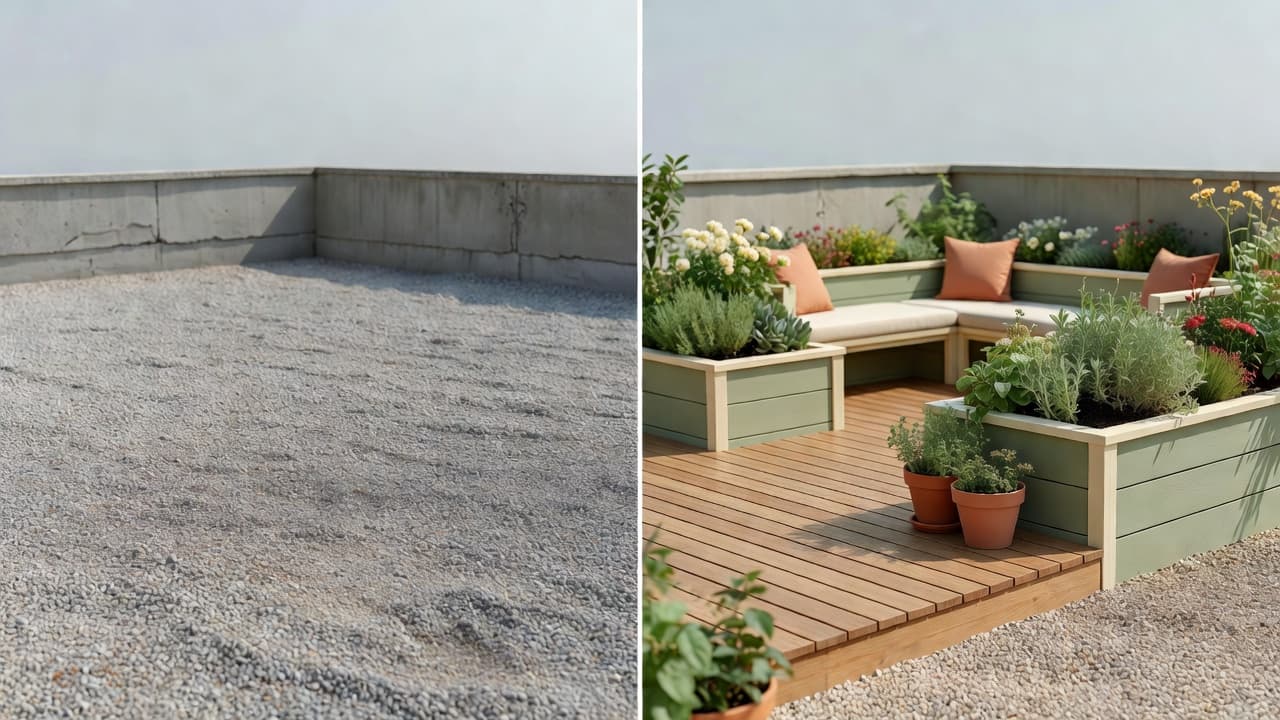
How to design your rooftop step by step
The first redesign takes about a minute. The process is the same whether you have a small city roof terrace, a wide penthouse deck or a shared rooftop amenity space:
- Take or choose one or two photos. Stand at the access door or a corner and capture the whole roof — parapet, vents, existing ballast and the view — in soft, even daylight.
- Pick a style. Mediterranean gravel and herbs, modern minimalist decking, lush green-roof planting or a low-maintenance evergreen scheme — try more than one to compare.
- Let the app redesign it. In a few seconds you see your own roof replanted, decked and furnished in that style, usually with the planting and materials named.
- Refine and try variations. Ask for raised beds instead of loose pots, a pergola for wind shelter, a smaller seating area, or denser screening for privacy.
- Save and take it to a professional. Turn your favourite result into a simple brief for a structural engineer and a waterproofing contractor before anything is bought or installed.
Because the app works from a real photo rather than a blank plan, you are always editing your actual roof — the real parapet height, the real vents and the real view — which is exactly why the result is something a contractor can quote from. Our guide to designing from a photo versus from scratch explains why the photo route is almost always the better place to begin.
What to look for in an AI rooftop garden design app
A rooftop project has more at stake than a flower bed, so it is worth being selective about the app you trust with it. Before you rely on one, check:
- Does it redesign your own photo? Your parapet, vents and skyline should still be recognisable in the result — a generic stock rooftop is not useful.
- Does it suggest real, lightweight materials? Look for named modular trays, fabric grow bags or raised timber beds you could actually order, not a vague green blur.
- Does it name real, wind-tolerant plants? A good result names species you could write on a shopping list — sedums, ornamental grasses, Mediterranean herbs — not just green haze.
- Is it honest about structural limits? A trustworthy app treats itself as a starting point for a conversation with a structural engineer, never as a substitute for one.
- Is the free tier real? You should see clear, un-watermarked results and be able to try more than one style before any paywall.
An app that passes all five is worth keeping even before you spend a cent; one that fails two or three is worth deleting, however polished it looks. For a deeper version of this test, our checklist of what to look for in an AI garden design app turns it into a simple tick-box, and the 2026 buyer’s guide to AI garden design tools covers the features that separate a useful app from a gimmick.
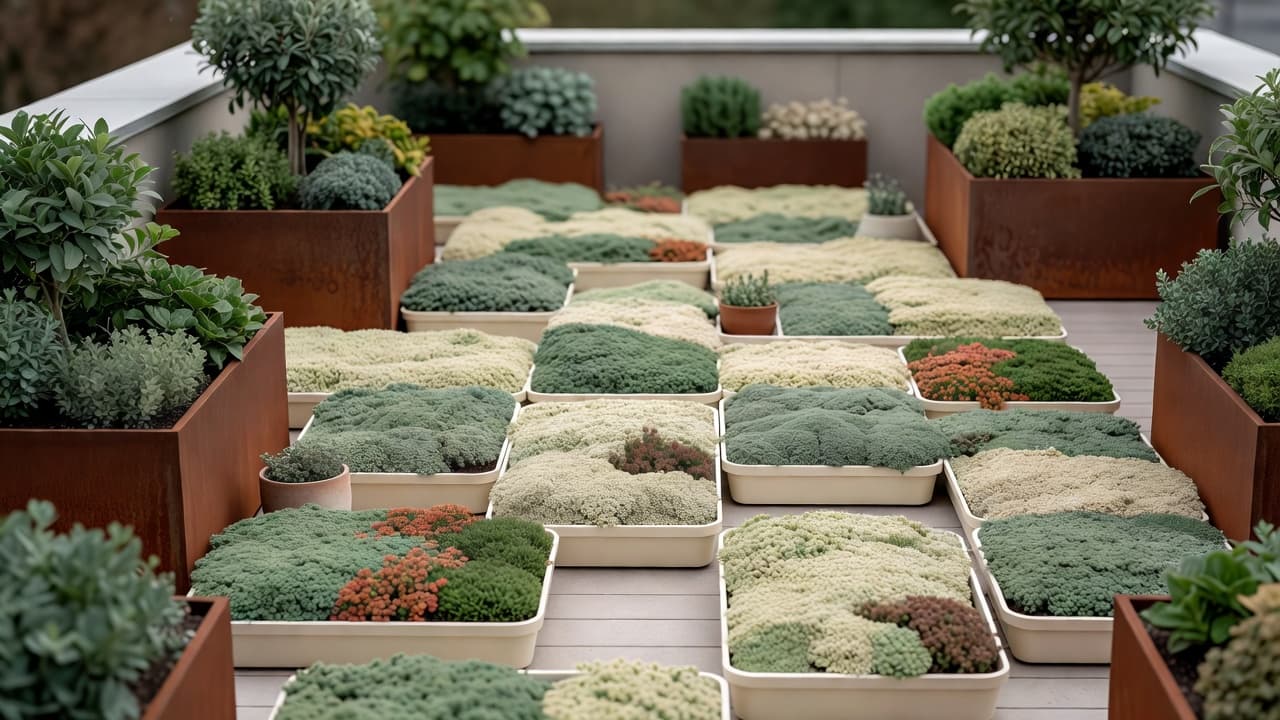
The one thing a rooftop adds that a garden doesn’t: structural weight
A rooftop garden has a constraint a ground-level garden never faces: everything you add is carried entirely by the building beneath it. Most residential and commercial flat roofs are engineered for a live load of roughly 25 to 50 pounds per square foot (about 120–245 kg/m²), but the real figure depends entirely on the building's age, construction and original design — it is never safe to assume a number. A qualified structural engineer assessment typically costs $300 to $600, or around $100 to $220 per hour, and it is the one expense on this project that is never optional.
The growing medium itself is the biggest weight variable you control. Lightweight, engineered rooftop growing media typically weighs 15 to 35 pounds per square foot when fully saturated, while modular planting tray systems can be as light as 5 to 20 pounds per square foot depending on spacing and depth. A few habits keep a rooftop garden comfortably within its limits:
- Get the engineer's number first. Confirm the live load your specific roof can carry before choosing a single planter — this decides everything else.
- Choose lightweight media and containers. Mixing perlite or vermiculite into potting mix cuts weight by roughly 20 to 30% compared with standard garden soil, and fabric grow bags weigh 80 to 90% less empty than ceramic or terracotta pots of the same size.
- Concentrate the heaviest elements over load-bearing walls or columns, and keep the lightest planting spread across the open deck rather than clustered in one corner.
- Budget for waterproofing. A proper build includes a waterproof membrane, a root barrier and a drainage layer beneath any growing medium — membrane installation typically runs $4 to $12 per square foot, or roughly $6,000 to $18,000 for a full membrane replacement on a modest roof.
- Never skip the paperwork. Confirm building consent, insurance and any body-corporate or landlord approval before ordering materials.
This is exactly where seeing the design first pays off: an AI rooftop garden design app lets you picture a lush, generous roof terrace and then work backwards with lightweight trays and raised beds, rather than falling in love with a look that a structural engineer later has to veto. For general guidance on exposed, elevated planting, the Royal Horticultural Society's advice on balconies and roof gardens is a calm, authoritative read.
Rooftop plants and ideas to try in 2026
The real value of an AI rooftop garden design app is testing this year's best ideas on your own space before committing a single dollar. A rooftop is windier, sunnier and drier than a garden at ground level, so the winning plants are the toughest ones available. Worth trying on your photo:
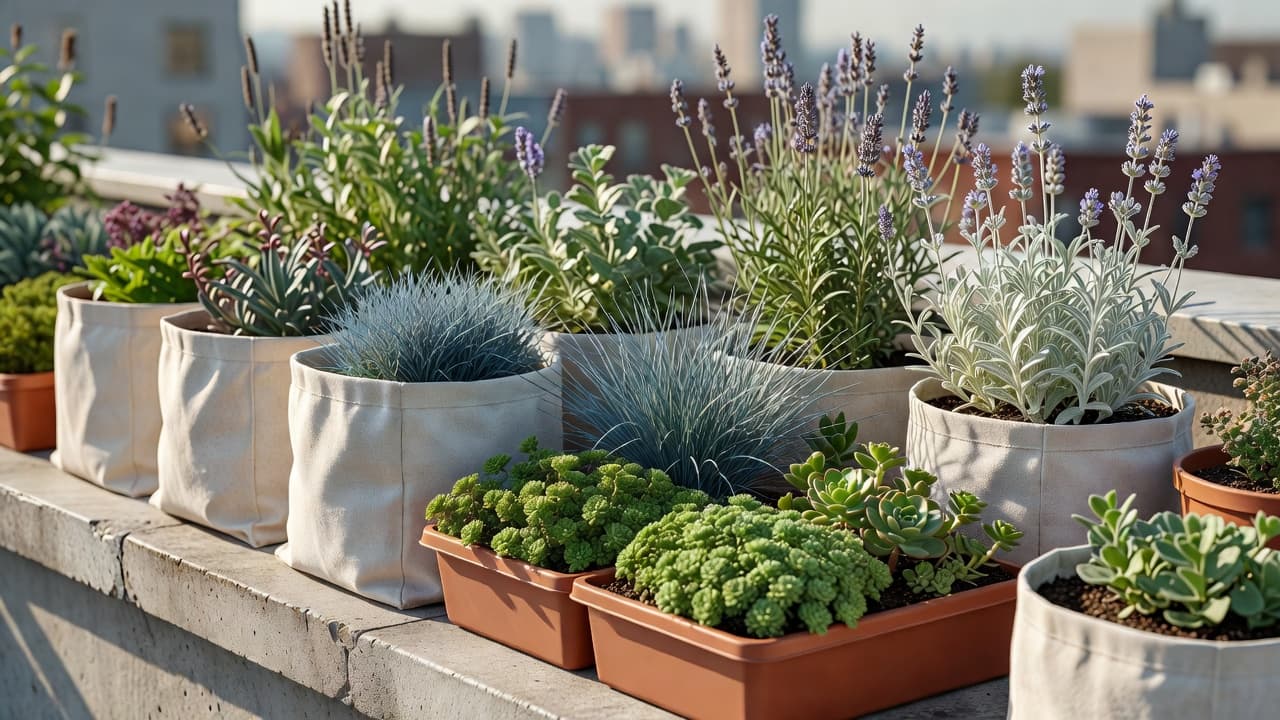
- Sedums and succulents. They store water in their leaves, root in very shallow, lightweight medium and are the standard choice for extensive green roofs because they survive where little else will.
- Wind-stable ornamental grasses. Narrow leaves let wind pass through rather than tearing — Festuca glauca (blue fescue) gives compact silvery-blue mounds, while Panicum virgatum (switchgrass) is upright, native and notably wind-stable.
- Drought-tolerant Mediterranean herbs. Lavender and rosemary thrive in the fast-draining, sun-baked, breezy conditions of a rooftop and earn their keep in the kitchen too.
- Perovskia atriplicifolia (Russian sage). A tough sub-shrub with silvery foliage and lavender-blue summer flowers that is drought-proof and genuinely happy in baking sun and wind.
- Echinacea purpurea (coneflower). A native, drought-tolerant perennial that attracts pollinators and blooms from June into September.
- Raised-bed edibles. Cherry tomatoes, salad leaves and herbs crop well in deep, lightweight raised beds, and a pergola or trellis adds wind shelter while freeing up the deck.
You do not have to choose one direction. Try each idea as a separate redesign of the same photo, then borrow the elements you like into a single plan. As summers grow hotter, schemes built around sedums, grasses and Mediterranean herbs stay handsome through a dry spell with minimal watering. For more tough, exposed-site plant choices, the BBC's Gardeners' World list of tough container plants is a reliable starting point.
What a rooftop garden costs in 2026 — app vs the build
The app itself should cost little or nothing. Most good ones give you a genuine free tier — enough designs to redesign your rooftop and compare a few styles — with paid plans only if you want unlimited runs.
The build is where a rooftop garden separates from a backyard one. A basic, extensive green-roof system — shallow, sedum-based, minimal access — typically runs $10 to $16 per square foot. A fuller, walkable intensive rooftop garden with raised beds, decking and seating typically runs $25 to $50 or more per square foot, and a complete rooftop deck build, including structure and finishes, can run $35 to $120 per square foot depending on access, materials and design. On top of that, budget the waterproofing membrane ($4–$12 per square foot, or $6,000–$18,000 for a full replacement) and the structural engineer assessment ($300–$600) as fixed costs that come before a single plant is bought.
The honest advice is the same as for any outdoor room: spend on what protects the investment and keep the rest simple. Waterproofing, structural sign-off and lightweight growing media are not places to cut corners; furniture and finishing touches can be added gradually. Climate awareness matters here too, and the goalposts are moving — in November 2023 the USDA updated its Plant Hardiness Zone Map for the first time since 2012, using 1991–2020 data; the new map is about 2.5°F warmer on average, shifting roughly half of the United States into the next warmer half-zone. An app that accounts for your location is doing real work, not decoration. The sensible order is to explore for free first, settle the look and the layout on your own photo, and only then bring in professionals to quote — our honest guide to free AI garden design apps explains how to tell a genuine free tier from a teaser.
Where the app stops and your own judgement begins
An honest guide names the limits. Even the best AI rooftop garden design app is a brilliant way to decide what you want, not a substitute for the professional checks a rooftop demands. A structural engineer must confirm your roof's load limit before anything permanent is installed, a qualified contractor should handle waterproofing and drainage, and your building consent, insurance and any body-corporate or landlord approval need to be sorted before materials arrive. Never block a fire escape, plant heavy species near the roof edge, or let furniture become a hazard in high wind. Treat every planting suggestion as a strong starting point and confirm anything unfamiliar against your own hardiness zone — the RHS plant database is a reliable, free reference.
Used that way, an AI rooftop garden design app is one of the most reassuring tools you will reach for on a project like this: it removes the guesswork from the look, gives you a real brief to hand a professional, and means the roof you eventually build is one you already know you love.

Frequently asked questions
What is the best AI rooftop garden design app?
The best one redesigns your own photo (not a stock rooftop), suggests real lightweight materials, names real wind-tolerant plants, is honest that a structural engineer must confirm your load limit, and offers a real free tier. FlorAI meets that bar with a free plan, so you can judge it on your own rooftop before paying.
Is there a free rooftop garden design app?
Yes. The honest ones offer a real free tier — enough designs to redesign your rooftop and try a few styles before any paywall. FlorAI has a free plan, with paid plans only if you want unlimited designs.
How much weight can a rooftop hold?
Most residential and commercial flat roofs are engineered for a live load of roughly 25 to 50 pounds per square foot, but the true figure depends entirely on the building's age and construction. A structural engineer assessment, typically $300–$600, is the only reliable way to know your number before adding any garden weight.
What are the best plants for a rooftop garden?
Tough, wind- and drought-tolerant plants do best: sedums and succulents, ornamental grasses such as blue fescue and switchgrass, Mediterranean herbs like lavender and rosemary, Russian sage (Perovskia atriplicifolia) and coneflower (Echinacea purpurea). Raised beds also grow cherry tomatoes, salad leaves and herbs well.
How much does a rooftop garden cost in 2026?
A basic, shallow green-roof system typically runs $10–$16 per square foot; a fuller, walkable rooftop garden with raised beds and decking runs $25–$50+ per square foot. Add a waterproofing membrane ($4–$12 per square foot) and a structural engineer assessment ($300–$600) as fixed costs before planting.
Do I need a structural engineer for a rooftop garden?
Yes, always. A rooftop garden adds real, sustained weight to a structure that was not necessarily designed to carry it. A qualified structural engineer must confirm your roof's safe load limit before any planters, soil or decking are installed.
Last updated: August 2026. Written by the FlorAI garden team.