
Buyer’s guide · 2026
Small Garden Design App: Make a Tiny Space Feel Bigger (2026)
A small garden design app turns one photo of your tiny garden into a photorealistic, finished redesign of that same space — usually in under ten seconds — so you can see how a cramped courtyard, narrow side return or pocket-sized backyard could feel calm, usable and twice its real size before you buy a single plant. In 2026 it is the fastest, cheapest way to test the layout tricks that actually make small gardens work: a diagonal line, one focal point, a tightly edited planting palette and clever use of every vertical surface. This guide explains, in plain English, what a small garden design app does, the seven design moves that make a small space feel bigger, the best compact plants to try this year, how to use the app step by step, and what a small garden redesign really costs.
AI Garden Design GuidesPublished June 29, 2026Updated June 29, 20269 min read
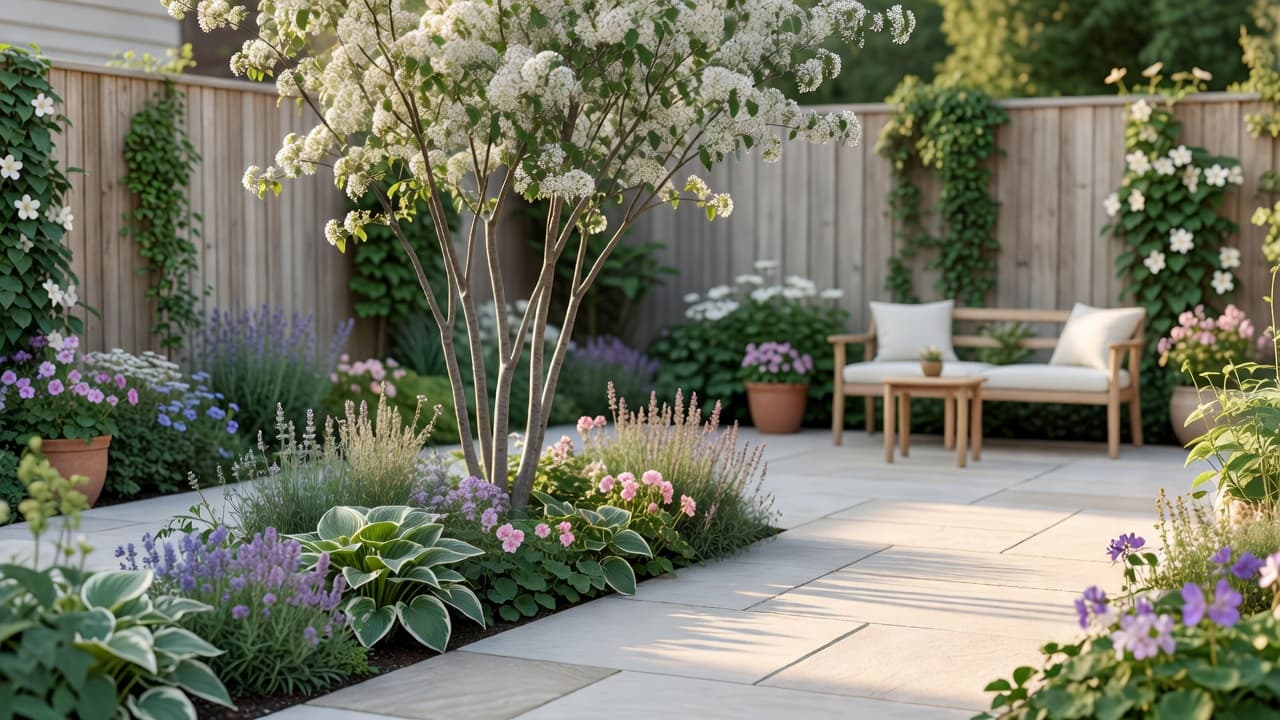
What a small garden design app actually does
The idea is refreshingly simple. You open the app, take or choose one photo of your small garden, pick a style, and a few seconds later you are looking at your own space transformed into a finished design — the fence, the back wall and any tree you love kept exactly where they are, with new planting, paving and a seating corner laid over the top. There is no graph paper and no design training involved. If the whole concept is new to you, our plain-English explainer of AI garden design is the gentlest starting point, and the full AI garden design guide walks through a complete redesign with real before-and-after photos.
Small gardens are where this matters most. When a space is only a few metres across, every decision is visible and a single mistake — an over-large table, a fussy path, one plant too many — can swallow the whole plot. Being able to test a layout on a true picture of your garden, rather than guessing, is the difference between a confident first trip to the nursery and an expensive one. FlorAI was built around exactly that, with a free tier, so you can see your own small garden reimagined before deciding whether it is worth paying for.
Why small gardens are the hardest to design
It is a quiet myth that a small garden is an easy garden. The opposite is usually true. A large plot forgives mistakes because there is room to hide them; a small one shows everything at once. The most common problems in a tiny garden are predictable:
- Everything is in one view. You see the whole garden from the back door, so there is no reveal, no surprise and nowhere to rest the eye.
- Scale gets out of hand. Furniture and pots bought for an average garden feel enormous in a small one and eat the floor.
- Too many ideas. A long wish list of plants and features turns a calm courtyard into a cluttered one, which reads as smaller, not larger.
- Hard boundaries dominate. Close fences and walls press in, especially if they are bare, dark or mismatched.
A small garden design app helps because it lets you see those mistakes before you make them. You can try a smaller table, a single tree instead of three, or a paler fence in seconds, and watch the space open up — or close in — on screen. That fast, low-stakes feedback loop is the real value, and it is why testing on a photo of your own plot beats scrolling generic small garden design ideas that were never your garden in the first place.
Seven design tricks that make a small garden feel bigger
Professional designers lean on a small, reliable set of moves to make tight spaces feel generous. A good small garden design app should respect every one of them — and you can test each as a separate redesign of the same photo to see which suits your plot:
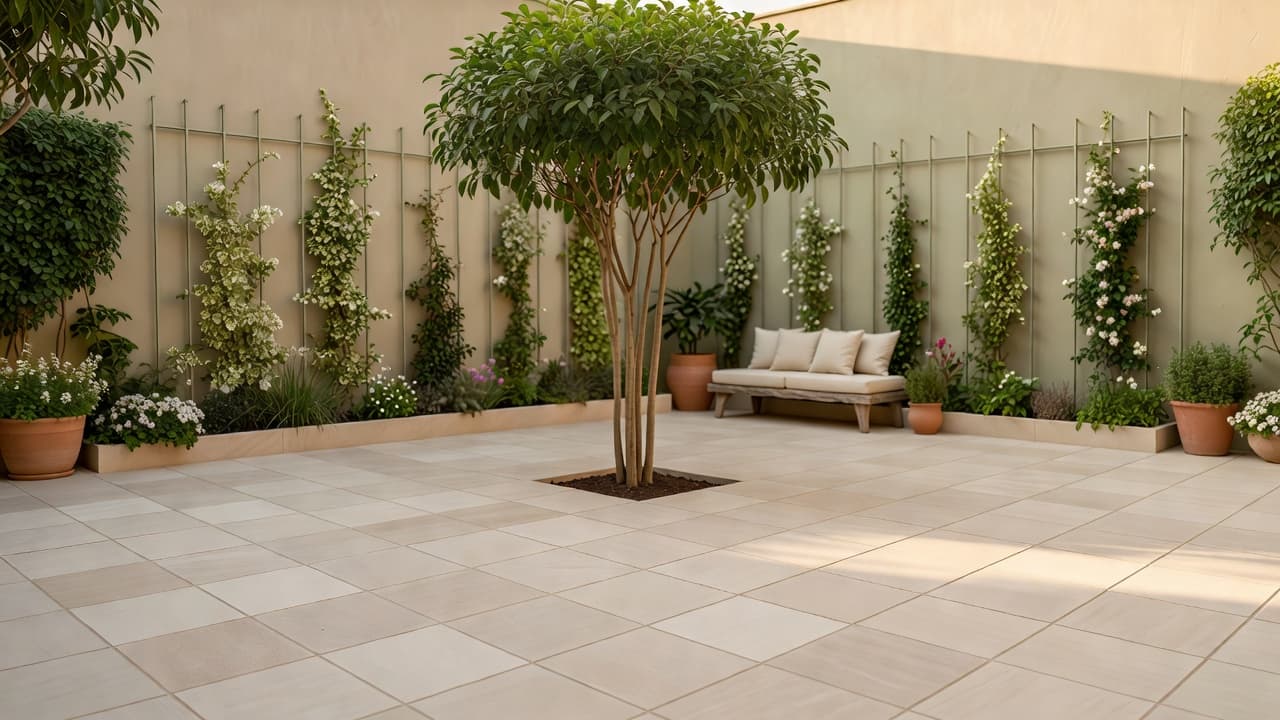
- Lead the eye diagonally. Laying paving, a path or the main lawn shape on a 45-degree diagonal stretches the longest available line across the plot, which the eye reads as more distance. A square garden set on the diagonal almost always feels larger than the same garden set square.
- Use large paving units, not small ones. Counter-intuitively, big format slabs (around 600 × 900mm) make a small space look bigger because there are fewer joints to chop up the floor. Lots of little setts or busy patterns do the opposite.
- Grow upwards. Vertical planting — climbers on wires, wall-mounted troughs, a slim trellis of jasmine or clematis — adds greenery and a sense of height without stealing any floor. In a small garden the walls are as valuable as the ground.
- Bounce light with a mirror. A weatherproof mirror set behind a trellis or an arch on a rear wall doubles the apparent depth and throws light into dark corners. Angle it so it reflects planting, not a doorway, for the most convincing effect.
- Choose one focal point. A single multi-stem tree, a simple water bowl or one good pot gives the eye somewhere to land. One focal point per small garden is plenty; two compete and the space shrinks.
- Edit the planting palette hard. Repeating five to ten plants, rather than buying one of forty different things, reads as calm and deliberate — the look of a designed garden. A tight palette is also far easier to maintain.
- Zone even the tiniest plot. Splitting a small garden into two simple “rooms” — say a paved sitting corner and a green planted end — makes you walk through it, which makes it feel bigger than one space seen all at once.
None of these tricks costs much to try in an app, which is the point. For more ideas on arranging a calm, layered border within these zones, our AI flower bed design tool guide is a useful next read, and the Royal Horticultural Society’s small garden inspiration pages are a calm, free, authoritative companion.
The best plants for a small garden in 2026
In a small garden, every plant has to earn its place by working hard across more than one season. The real value of a small garden design app is that it lets you test these compact, multi-season plants on your own space before committing. A dependable small garden palette for 2026:
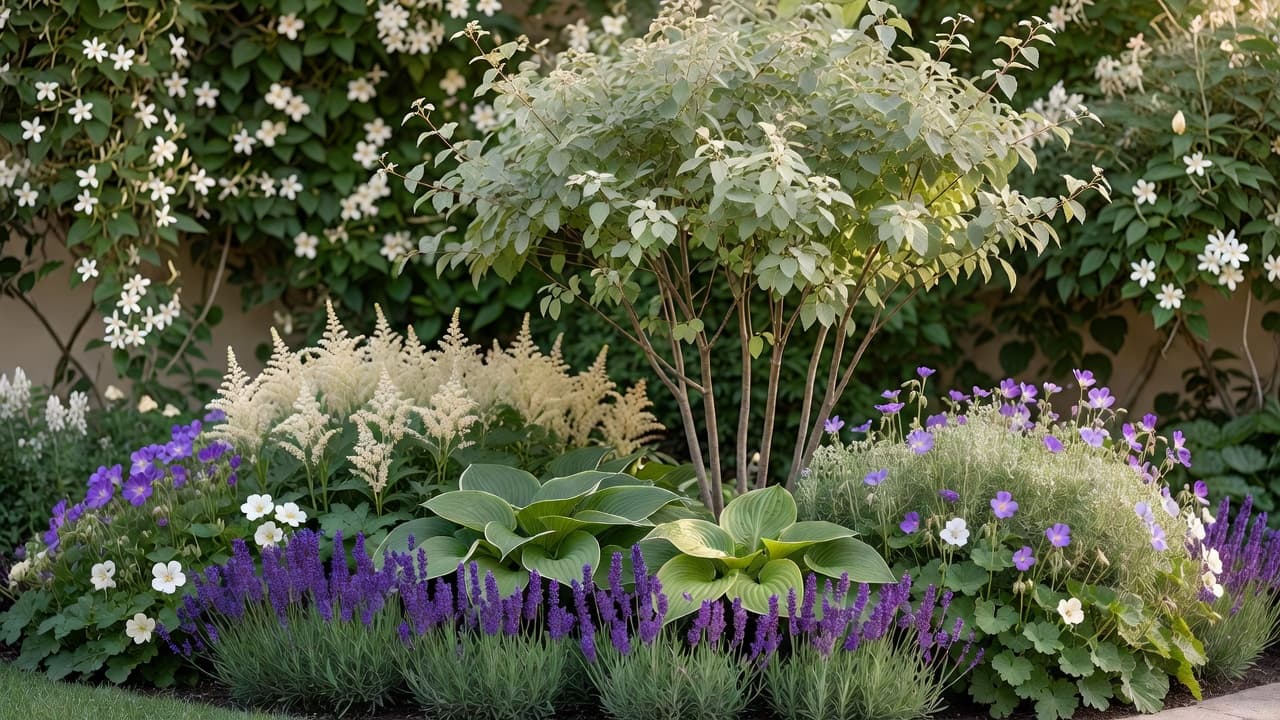
- Amelanchier (snowy mespilus). Widely considered the perfect small-garden tree: clouds of white spring blossom, edible berries loved by birds, and fiery autumn colour, all on a light, compact frame. Amelanchier lamarckii as a multi-stem makes a graceful single focal point.
- Japanese maple (Acer palmatum). Slow-growing, shrub-like and often only 1–2m (3¼–6½ft) after many years, so it suits the smallest garden or a large pot. Grown for its delicate leaves and intense autumn tones.
- Lavender (Lavandula angustifolia ‘Hidcote’). A fragrant, pollinator-friendly evergreen that makes a neat 60cm (2ft) low hedge or edging in full sun — structure and scent without bulk.
- Compact astilbe (Astilbe simplicifolia). Feathery summer plumes on a tidy plant rarely more than 60cm (24in) tall — ideal for a shady, damp corner or a container.
- Hardy geraniums and hostas. Reliable, weed-smothering ground cover that fills the lower layer of a small border; hostas in particular thrive in the shade thrown by close walls and fences.
- Climbers for the walls. Star jasmine, clematis and a well-behaved climbing rose green up vertical space, scent the garden and never touch the floor.
Aim for a layered look — one small tree, a few structural shrubs, a repeating wave of perennials and a climber or two — rather than one of everything. You can confirm any unfamiliar plant on the Royal Horticultural Society’s plant finder or BBC Gardeners’ World list of trees for small gardens, and check it will thrive in your USDA hardiness zone before you buy.
How to use a small garden design app, step by step
The first redesign takes about a minute. The process is the same whether you are working on a courtyard, a balcony, a side return or a small back garden:
- Take or choose one photo. Stand at the back door or the spot you look at the garden from most, and frame the whole space — boundaries, floor and the wall behind — in soft, even daylight.
- Pick a style. Modern, cottage, Mediterranean, Japanese or low-maintenance. Small gardens especially suit calm, pared-back styles, but try a few.
- Generate the redesign. In a few seconds you get a photorealistic version of your own small garden, with the boundaries and any kept tree intact.
- Test one trick at a time. Try the diagonal layout, then a single tree, then climbers on the walls — comparing redesigns side by side teaches you what your specific space wants.
- Save your favourites and make a short list. Use the picture you love as a plan when you shop for plants, paving and one good pot.
If your small space is specifically a balcony or a paved patio, we have dedicated walk-throughs in our balcony garden design app and AI patio design app guides. For redesigning a small garden entirely in your browser, the virtual garden design tool guide covers the desktop route.
What a small garden redesign costs in 2026
One of the quiet advantages of a small garden is that the build is genuinely affordable — and seeing the design first stops you wasting money on the wrong things. Rough 2026 guide figures:
- The design picture itself: free to try in a small garden design app, with paid plans for unlimited redesigns typically £6–£25 per month.
- Planting a small garden yourself: often a few hundred pounds for plants, compost and a tree, especially if you buy smaller specimens and let them grow.
- A small paved or built element: a compact patio, raised bed or a few square metres of new paving usually runs into the low thousands if a professional lays it.
- A full designed-and-built small garden: several thousand pounds and up, depending on materials and access — but far less than the same work on a large plot.
Because a small garden uses so little material, the smart order is to lock the design first, then spend. Our 2026 garden redesign cost guide walks through the real numbers in detail so you can budget with confidence.
Frequently asked questions about small garden design apps
What is the best small garden design app in 2026?
The best small garden design app is one that redesigns a photo of your real space rather than showing generic inspiration, keeps your boundaries and existing trees, works on your phone, and offers a free tier so you can test it on your own garden first. FlorAI was built specifically for outdoor spaces with all of these, and is free to try on iOS, Android and the web.
Can an app really make a small garden look bigger?
An app cannot change your garden’s actual size, but it can show you the layout choices that make a small garden feel bigger — a diagonal line, large paving units, vertical planting, a single focal point and a tight planting palette — on a true picture of your own space, so you choose the version that opens it up before you build.
How small a garden can it design?
Any outdoor space you can photograph in daylight, down to a 2m² balcony or a narrow side return. Small courtyards, paved patios, front gardens and pocket backyards are exactly where a small garden design app earns its keep.
Do I need to measure my small garden first?
No. A small garden design app works from a single photo and keeps the shape of your real space, so you do not need to measure, draw a plan or know any plant names to get a finished design. Measurements only matter later, when you are buying paving or furniture.
What are the best plants for a small garden?
Choose compact, multi-season plants: a multi-stem amelanchier or Japanese maple as a single tree, lavender for low structure, compact astilbe and hostas for shade, hardy geraniums for ground cover, and climbers such as jasmine or clematis to green the walls without using floor space.
How much does it cost to redesign a small garden?
The design picture is usually free or under £25 per month. Planting a small garden yourself often costs a few hundred pounds, while a fully designed-and-built small garden runs into the low thousands — much less than the same work on a large plot. See our 2026 cost guide for detail.
Last updated: June 2026. Written by the FlorAI garden team. Every small garden idea in this guide has been tested on real gardens before being included.