
Small Gardens · 2026 guide
Small Backyard Design Ideas That Actually Work in 2026
The best small backyard design ideas all do the same three things: unify the space around one path instead of scattering separate zones, grow upward on fences and walls once the ground runs out, and repeat a short plant list instead of collecting one of everything. None of it needs more square footage — a well-planned 20 m² backyard can look and feel bigger than a badly laid-out 60 m² one. This guide walks through each idea in order, with real plant names, materials and 2026 costs.
AI Garden Design GuidesPublished July 29, 2026Updated July 29, 20269 min read
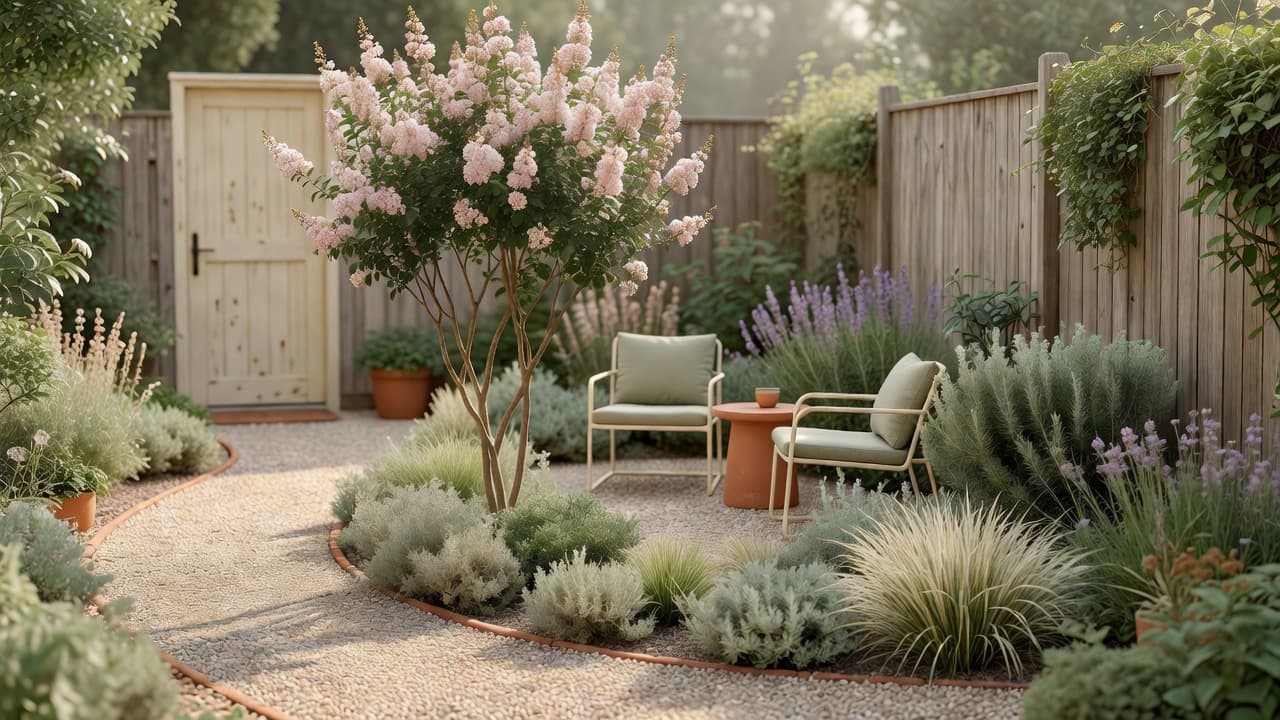
Small backyard design ideas that make the biggest difference
None of the ideas below need extra square footage. They are about using the space you already have with more intention — the same principle a landscape designer would apply to a 20 m² yard as to a 200 m² one, just scaled down. See our AI garden design guide for that broader picture; FlorAI can also show you how any of these ideas would actually look in your own backyard once you have a rough plan in mind.
Unify the space around one path, not three separate zones
The single biggest mistake in a small backyard design is splitting the space into a patio here, a shed there and a lawn in between, each fighting for attention. BBC Gardeners’ World’s core design tips recommend picking one route through the garden and letting everything else — planting, seating, storage — sit around it, so the eye reads one connected space rather than several small ones.
- A path set on a diagonal, or with one gentle bend, reads as longer than the same length laid in a straight line to the boundary.
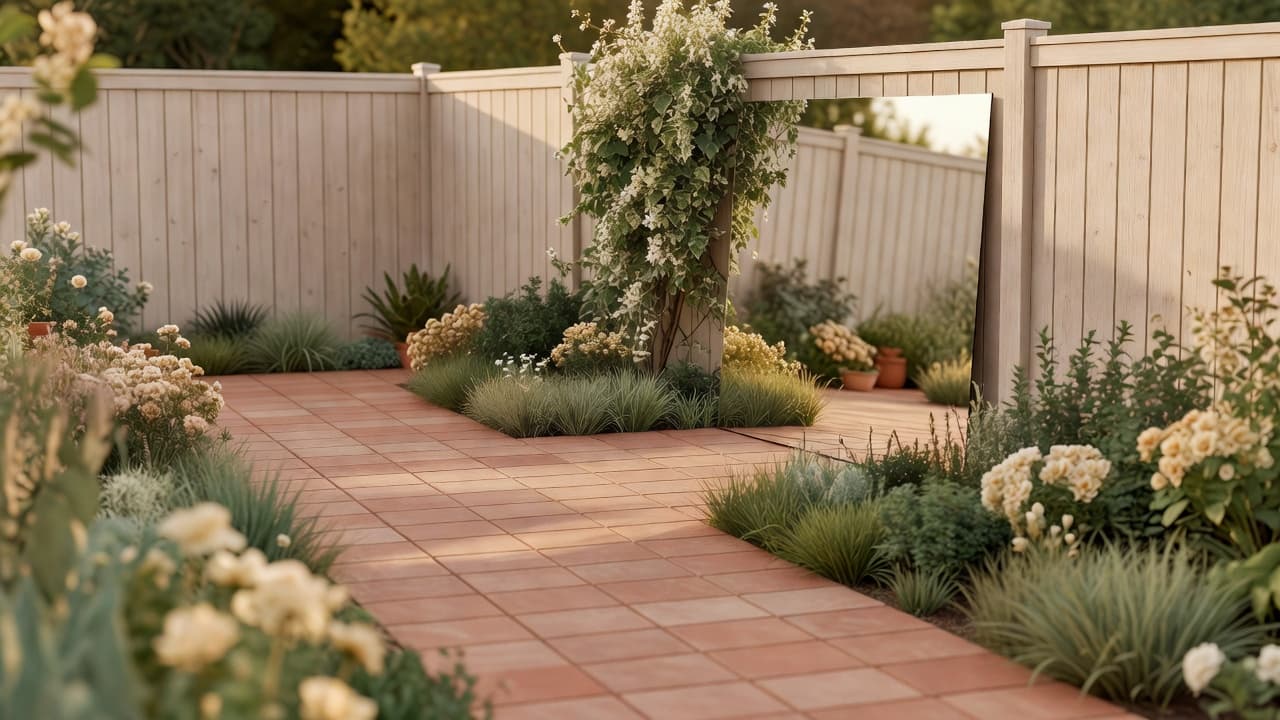
- Smaller units of paving — brick pavers or compact terracotta-style tiles — make a small backyard look bigger than the same area laid with a few oversized slabs, because more joints suggest more distance.
- Stepping stones set into gravel or a low groundcover cost far less than a full patio and still define a clear route.
- Keep the path width consistent from the back door to the far end — a path that narrows partway along makes the far end of the garden feel like an afterthought.
Grow vertical before you run out of ground
Once the path and one seating area are fixed, most of a small backyard’s usable area is actually vertical, not horizontal. The RHS guide to planting design for small spaces puts it plainly: think in all directions — up, along, around and through — rather than only across the ground.
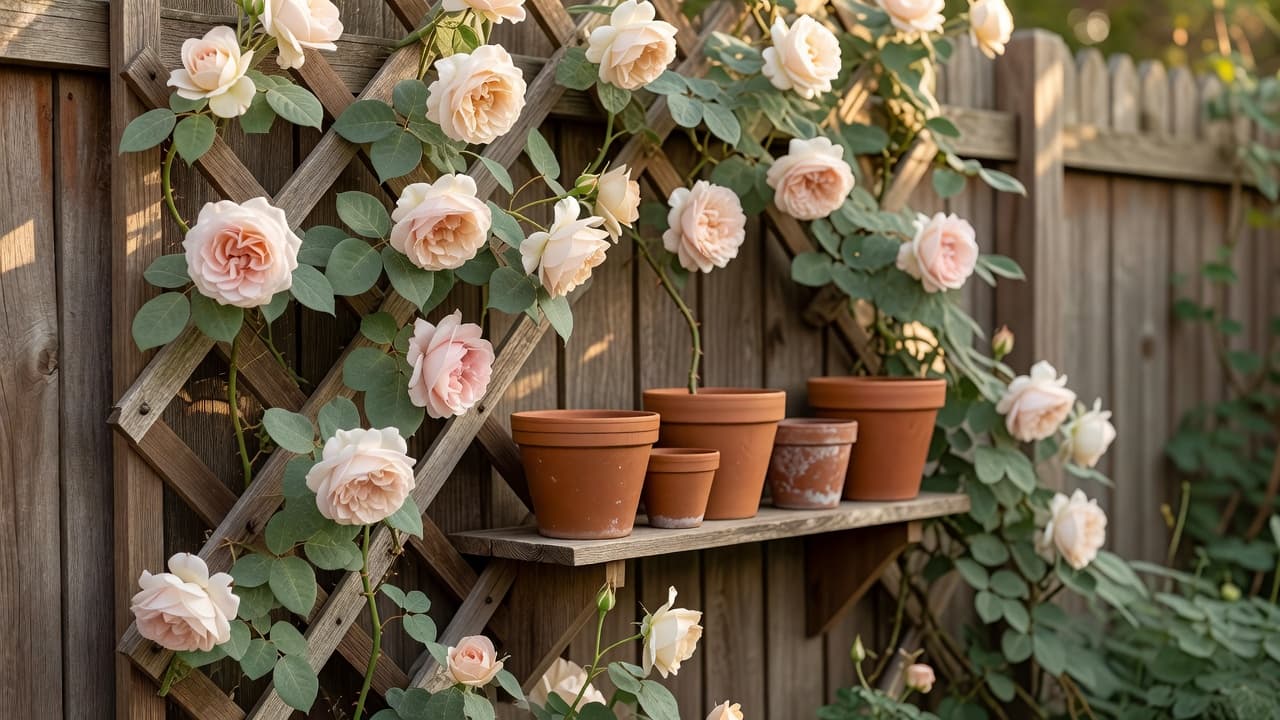
- Train climbers such as roses, wisteria or honeysuckle up a fence or trellis, which the RHS lists among the most reliable plants for covering vertical surfaces in a small garden.
- Espalier a fruit tree flat against a sunny fence — an apple or pear trained this way can produce a real crop from a strip barely 30cm deep.
- Add shelving or staging against one wall to display pots at different heights, turning a flat vertical surface into a small, layered display rather than empty fence panels.
- Use the biggest pot that will fit for any climber or trained plant — this is a long-term investment, since a cramped root run limits how well it establishes.
- Fill gaps between paving with tough groundcover such as thyme or Erigeron, which tolerate poor soil, good drainage and occasional foot traffic.
Choose one small tree to anchor the whole design
A small backyard rarely has room for more than a single tree, so it is worth choosing carefully. The tree should earn its place across more than one season, since it will be the one fixed, permanent feature the rest of the design works around.
- Amelanchier lamarckii (snowy mespilus) — white spring blossom, dark berries by midsummer and reliable orange-red autumn colour, which is why Gardeners’ World recommends it specifically for small gardens that need more than one season of interest.
- Multi-stem Magnolia grandiflora ‘Little Gem’ — a compact, naturally slow-growing cultivar that stays garden-sized without heavy pruning, and a multi-stem form spreads the same vigour across several trunks instead of one fast-growing leader.
- Field maple (Acer campestre) trained as a single or multi-stem specimen — tolerant of most soils and small enough to keep in check with an annual prune.
- Position the tree slightly off-centre rather than dead in the middle — an asymmetric layout reads as more considered and leaves a clear sightline through the rest of the garden.
Whatever you choose, buy it small. A 1m specimen tree costs a fraction of a mature one and, in most soils, closes most of the size gap within three or four growing seasons.
Trick the eye: diagonals, pale boundaries and a well-placed mirror
A handful of design tricks widen the apparent size of a small backyard without changing a single measurement. Layer as many of these as suit your garden — they compound.
- Paint or stain fences and walls in a pale, warm neutral. Pale boundaries reflect more light and make a small backyard read as brighter and more open than the same space enclosed in dark fencing.
- Lay decking boards or paving joints on the diagonal rather than parallel to the boundary — the eye follows the strongest lines in a space, and a 45-degree run pulls the gaze further than a straight one.
- Hang a weatherproof mirror at the end of a path or against a fence panel, partly obscured by planting so it reads as a window rather than an obvious mirror. Placed well, it doubles the apparent depth of a border or path.
- Borrow the view beyond the boundary — a neighbour’s mature tree or a distant rooftop reads as part of your own garden if nothing in the foreground draws a hard visual stop, so keep the far boundary planting a little lower and looser than the rest.
Scale down materials and furniture to match the space
Oversized materials are one of the fastest ways to make a small backyard feel smaller, because a large-format slab or a full-size dining set makes the boundary feel closer by comparison. If you are also weighing up which app to use for a space this size, our small garden design app guide covers what actually matters at this scale.
- Use smaller-format paving. Larger slabs read as fewer, bigger objects and can make a compact patio feel like a leftover corner rather than a destination, while smaller units create rhythm underfoot.
- Choose one bistro set or a single bench over a full outdoor dining suite — a small backyard usually has room for one genuinely comfortable seating spot, not several half-used ones.
- Pick one large, well-planted pot over a cluster of small ones at the door or path edge — a single strong statement reads as more intentional than several competing containers.
- Fold, stack or wall-mount whatever is not in daily use. Storage that lives on the ground eats into the one resource a small backyard cannot spare.
Repeat a few plants instead of collecting one of everything
A border filled with one of every plant that caught your eye at the garden centre almost always looks busier and smaller than the same border planted with a short, repeated list. Our guide to layering in planting design covers the principle in more depth; in a small backyard it matters even more, because there is less space to absorb visual noise.
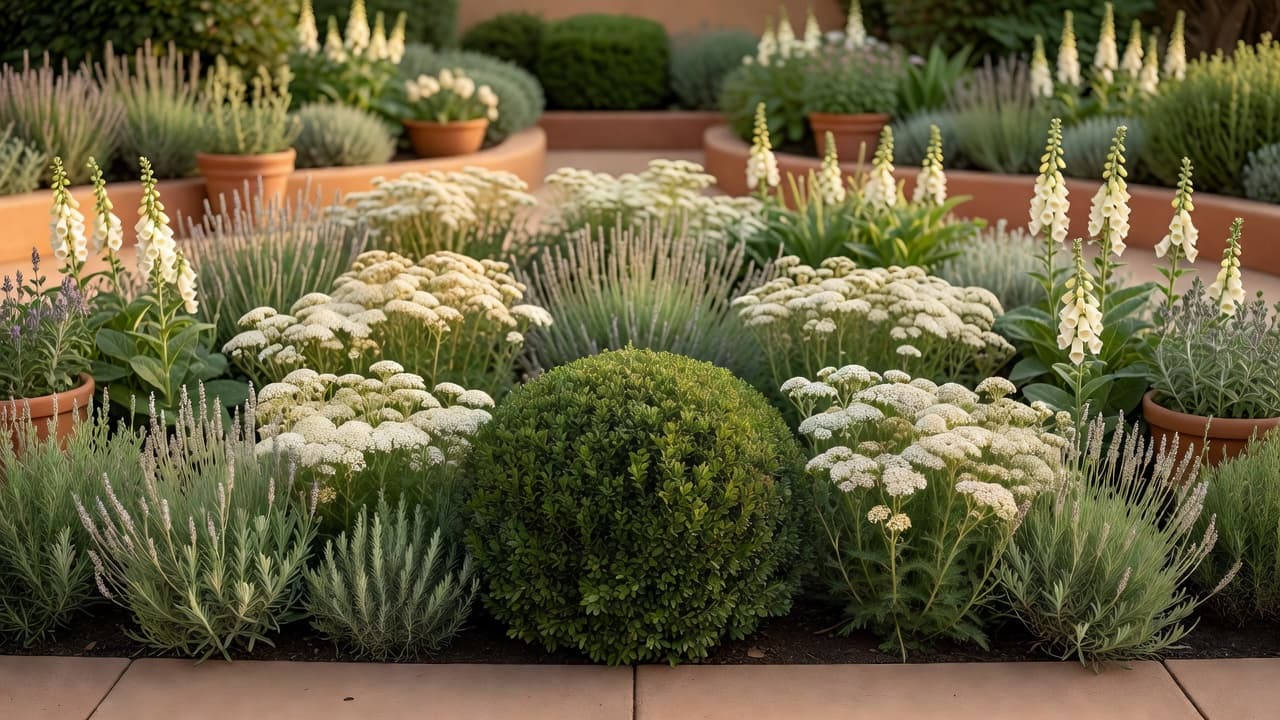
- Choose three to five plants for the whole garden and repeat each in blocks of three or more, rather than a dozen single specimens.
- Add one evergreen structural plant — a clipped box ball, a dwarf pine or a compact holly — to give the border a fixed anchor through winter when everything else has died back.
- Plant something scented directly beside the path or the seating spot. Scent is more noticeable in a small, enclosed garden than in a large open one, so lavender, jasmine or a repeat-flowering rose earns its place close to where you actually sit.
- Keep planting height low near the house and let it rise towards the boundary — this keeps sightlines open from indoors while still giving the far fence some vertical cover.
This same repeat-and-restrain approach also keeps ongoing maintenance lighter, which our low maintenance garden design guide covers if upkeep is the bigger concern than layout.
What does a small backyard redesign cost in 2026?
Small backyard projects benefit from being genuinely small in scope, which keeps costs well below a full garden rebuild. Our 2026 garden design cost guide breaks down full landscaper pricing by size; the headline figures for a small garden are:
- Full landscaper-built small garden (under 50 m²): roughly £2,500 – £8,000 / $3,000 – $10,000, often needing only one or two trades.
- DIY using AI garden design plus your own labour: roughly £300 – £3,000 / $400 – $4,000 in materials and plants, since a small backyard needs far less of everything.
- Bulk gravel or mulch for paths and borders typically runs £150 – £270 delivered per bulk bag in 2026 — one bag comfortably covers a small backyard’s worth of path and edging.
- A 1m specimen tree costs a fraction of the same tree at full maturity, and, per our garden design on a budget guide, most perennials for repeat planting can be grown for free from division or cuttings.
The planning stage costs nothing extra either way — an AI garden design app shows the finished layout before you commit to any of the above, so the redesign can be tried, adjusted and tried again for free.
See your small backyard design before you dig
A small backyard is easy to picture badly and hard to picture well, because every choice — the path line, the tree position, the fence colour — affects everything else in a space this size. FlorAI can generate a photo-realistic redesign of your actual backyard from a single photo, keeping your real fence, shed and boundary in place and showing how a single path, one focal tree and a repeated planting scheme would actually look before any digging starts.
This is particularly useful for a small backyard, because the margin for a layout that does not work is much smaller than in a large garden — seeing the finished look in a photo of your own space removes most of the guesswork before you spend anything.
Frequently asked questions about small backyard design
What is the single best small backyard design idea?
Unify the space around one path instead of splitting it into separate zones. Everything else — planting, seating, a focal tree — reads calmer and larger once there is one clear route through the garden rather than several competing areas.
How can I make my small backyard look bigger without extra space?
Diagonal paving or decking, a pale-painted boundary, a well-placed mirror partly hidden by planting, and repeating a short plant list instead of collecting one of everything all widen the apparent size of a small backyard without adding a single square metre.
What is the best small tree for a small backyard?
Amelanchier lamarckii and a multi-stem ‘Little Gem’ magnolia are both compact enough for a small backyard while offering more than one season of interest — spring blossom, summer or autumn colour, and a manageable mature size.
How much does a small backyard redesign cost in 2026?
A full landscaper-built small garden under 50 m² typically costs £2,500 – £8,000 ($3,000 – $10,000) in 2026. A DIY redesign using an AI garden design app for planning and your own labour for the build usually runs £300 – £3,000 ($400 – $4,000).
Do I need a professional for a small backyard redesign?
For most small backyards, no — a clear path, one small tree and a short repeated plant list are all within reach of a confident DIY gardener. A professional is worth calling in for sloped sites, retaining walls or serious drainage, regardless of garden size.
Can an AI garden design app help plan a small backyard?
Yes. FlorAI can generate a photo-realistic redesign of a small backyard from a single photo, which is especially useful at this scale, since there is little room to absorb a layout choice that does not work once it is built.
Last updated: July 2026. Written by the FlorAI garden team.