
Buyer’s guide · 2026
AI Container Garden Design: Plan Every Pot in 2026
AI container garden design uses one photo of your patio, steps, balcony or doorway to generate a photorealistic redesign of that same space — new pots, planting and groupings in a style you choose — usually in under ten seconds. In 2026 it is the fastest way to test a container scheme before you buy a single pot, because you are always looking at your own paving, railing or wall rather than a generic stock photo. This guide explains how AI container garden design works, how to choose the right pot for the right plant, which combinations are worth trying this year, and what a real container garden costs to build.
AI Garden Design GuidesPublished August 29, 2026Updated August 29, 202611 min read
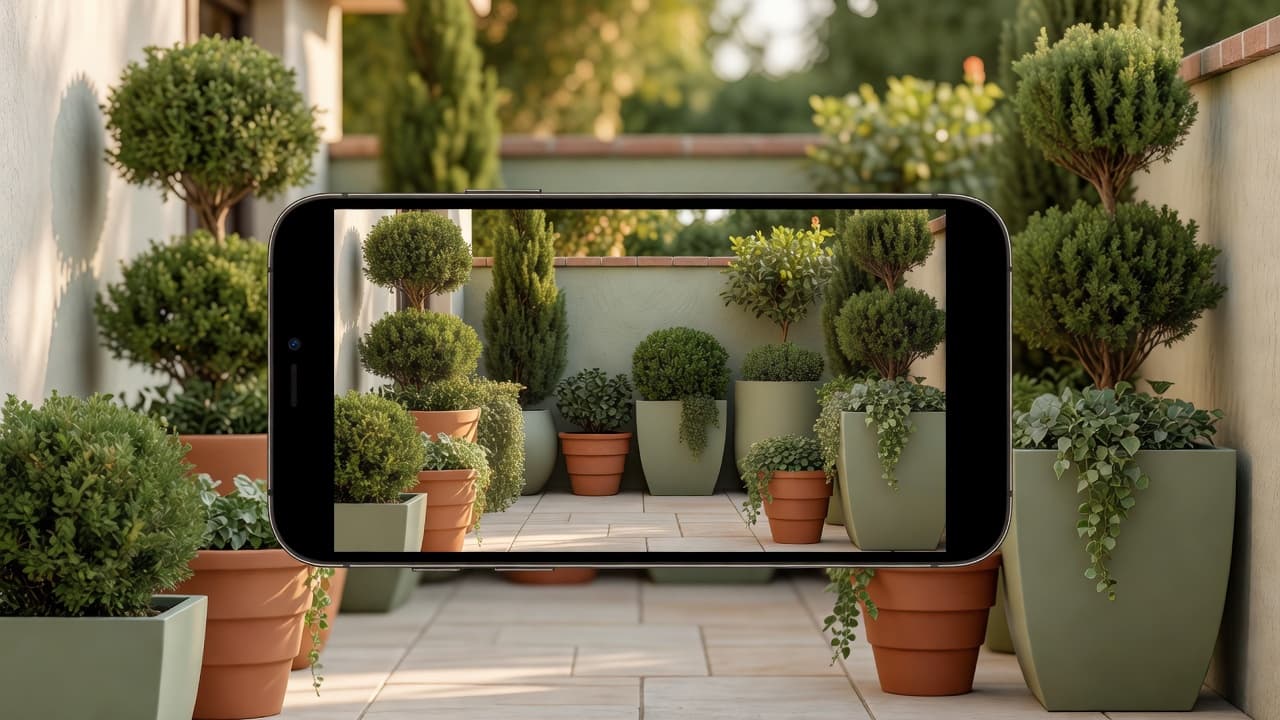
What AI container garden design actually does
The idea is straightforward. You open the app, take or choose one photo of the space you want to fill with pots, pick a style, and a few seconds later you are looking at your own steps, patio or balcony corner restyled with new containers and planting. There is no plan to draw and no training required. If the whole idea of AI garden design is new to you, our plain-English explainer is the gentlest starting point, and the full AI garden design guide walks through a complete redesign with real before-and-after photos.
The detail that matters is that it stays your space. A weak tool shows you a beautiful arrangement of pots that belongs to someone else; a strong one keeps your actual steps, wall and paving in the picture, so the result is something you can genuinely shop from. FlorAI was built around exactly that, with a free tier, so you can see your own containers reimagined before deciding whether it is worth paying for.
Why design your containers before you buy pots
A container garden is really a set of small, deliberate decisions — every plant, pot and grouping is chosen on purpose, with no natural spread to hide a mismatch. That makes it the easiest kind of garden to get wrong on the first try, and one of the cheapest to fix on a screen instead of a patio. A few reasons to settle the look on a photo first:
- Pots are not cheap to guess with. A single large statement planter or an established shrub can cost real money — a wrong colour, size or style is an expensive lesson.
- Scale is easy to misjudge from a catalogue photo. A pot that looks generous online can look tiny against your actual door or oversized on a narrow step — seeing it against your own space removes the guesswork.
- Containers work anywhere. Patios, balconies, driveways, roof terraces, entryways and paved courtyards all take pots with zero digging, which is exactly why renters and new gardeners lean on them.
- The look changes with the seasons. Spring bulbs, summer bedding and winter evergreen structure are three different pictures in the same pots — a redesign tool lets you preview each swap before you buy.
- Grouping matters as much as planting. Three mismatched pots dotted around a patio read as clutter; the same three pots grouped and matched in material read as a design — worth testing before committing.
If your containers are part of a smaller space overall, our guides to the small garden design app and the AI balcony garden design app cover the layout questions that come with limited square footage, while the 2026 garden design cost guide sets sensible expectations for the wider budget.
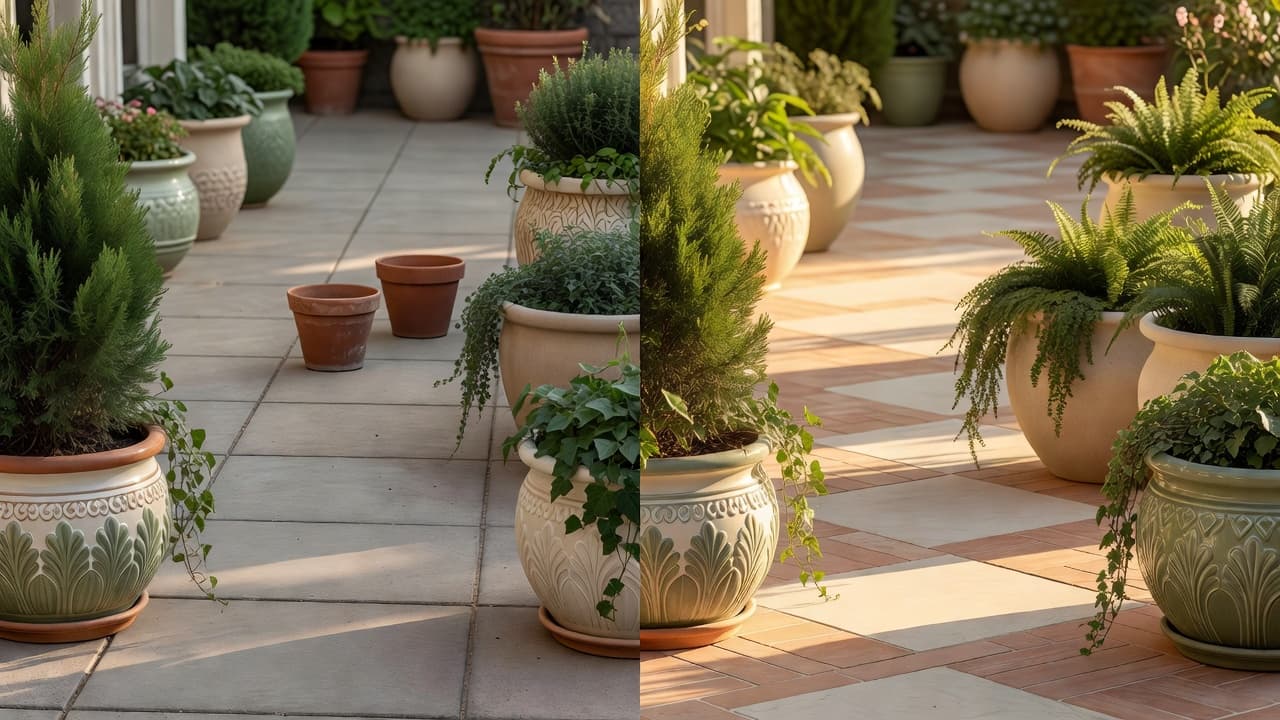
How AI container garden design works, step by step
The first redesign takes about a minute, whether you are filling one doorstep, a run of patio steps, or an entire courtyard with pots:
- Take or choose one photo. Stand back far enough to capture the whole area — paving, walls, steps and any existing pots — in soft, even daylight.
- Pick a style. Mediterranean terracotta, cool Japandi greenery, cottage-style abundance or a clipped, architectural look — choose the mood, then try a second style for contrast.
- Let the app redesign it. In a few seconds you will see your own space filled with new containers and planting in that style, usually with the plants and pot types named.
- Refine and try variations. Ask for one oversized statement planter instead of several small pots, a self-watering option, more evergreen structure, or an edible mix, and compare results side by side.
- Save and shop. Keep your favourites, line the before and after up together, and turn the result into a simple shopping list of pots, potting mix and plants.
Because the app works from a photo of your real space rather than a blank plan, the pot sizes, colours and plant combinations you settle on are ones that genuinely fit your steps, your wall and your light — which is exactly why the result travels well to a garden centre. Our guide to designing from a photo versus from scratch explains why the photo route is almost always the better place to begin.
What to look for in a container garden planner app
Not every app deserves a place on your home screen. Before you trust one with your patio or doorstep, run through a few checks:
- Does it redesign your own photo? Your paving, walls and steps should still be recognisable in the result — if it quietly swaps in a stock courtyard, the picture is not useful.
- Does it suggest real, buyable pot sizes and materials? Look for specific container types — large glazed jars, fibreglass cubes, fabric grow bags — not a vague cluster of greenery.
- Does it name real plants suited to pots, not just borders? A good result names plants you could put on a shopping list, and ideally flags which ones actually thrive long-term in a container rather than the open ground.
- Does it consider your climate and light? Aspect- and hardiness-aware planting is the difference between a pretty picture and a scheme that survives your winter.
- Is the free tier real? You should see clear, un-watermarked results and be able to try more than one style before any paywall.
An app that passes all five is worth keeping even if you never pay for it; one that fails two or three is worth deleting, however polished it looks. For a fuller version of this test, our checklist of what to look for in an AI garden design app turns it into a simple tick-box, and the 2026 buyer’s guide to AI garden design tools covers the features that separate a useful app from a gimmick.
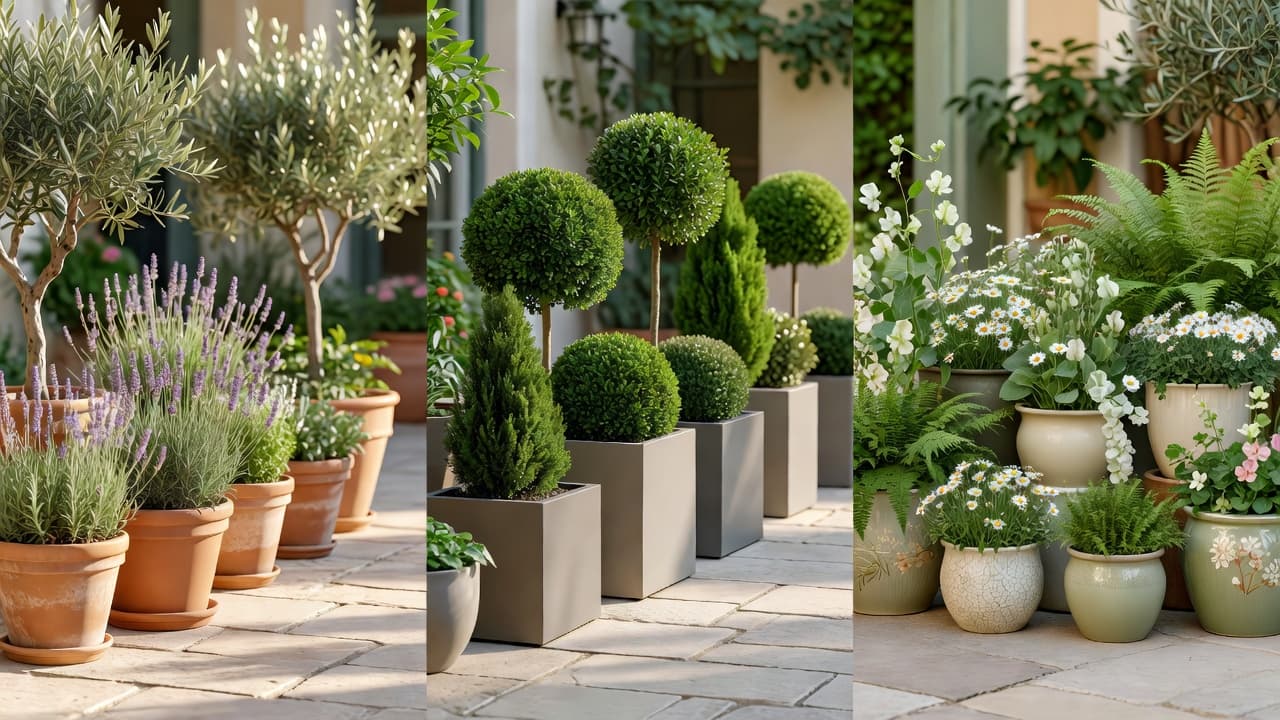
Choosing the right pot: material, size and drainage
The pot matters almost as much as the plant. A few materials come up again and again once you start comparing options, and each suits a different job:
- Terracotta. The classic look — porous, so it lets soil breathe, but heavy and, unless labelled frost-proof, prone to cracking in a hard freeze if it stays outdoors and wet all winter.
- Glazed ceramic. Holds moisture longer than raw terracotta and comes in strong colour, but is heavier still and equally worth checking for frost-resistance in a cold climate.
- Resin and fibreglass. Lightweight, weatherproof and often moulded to mimic stone, lead or metal at a fraction of the weight — a common choice for balconies, roof terraces and anywhere weight is limited.
- Fabric grow bags. Breathable, inexpensive and popular for vegetables and annuals; they air-prune roots rather than letting them circle the pot, though they dry out faster and need more frequent watering.
- Galvanised metal or zinc troughs. A modern, architectural look, but metal conducts heat, so use a liner or leave an air gap in full sun to protect roots from cooking.
Whatever the material, drainage holes are non-negotiable — a pot without them turns into a bucket the first time it rains hard. Match the pot to the plant's eventual root system rather than its current nursery size, sizing up by around 2–4 inches (5–10cm) in diameter each time you repot, and fill with a dedicated potting mix rather than garden soil, which compacts in a container and drains poorly. The Royal Horticultural Society's guide to growing plants in containers is a reliable, plain-English reference for getting this right.
Thriller, filler, spiller — and the 2026 look
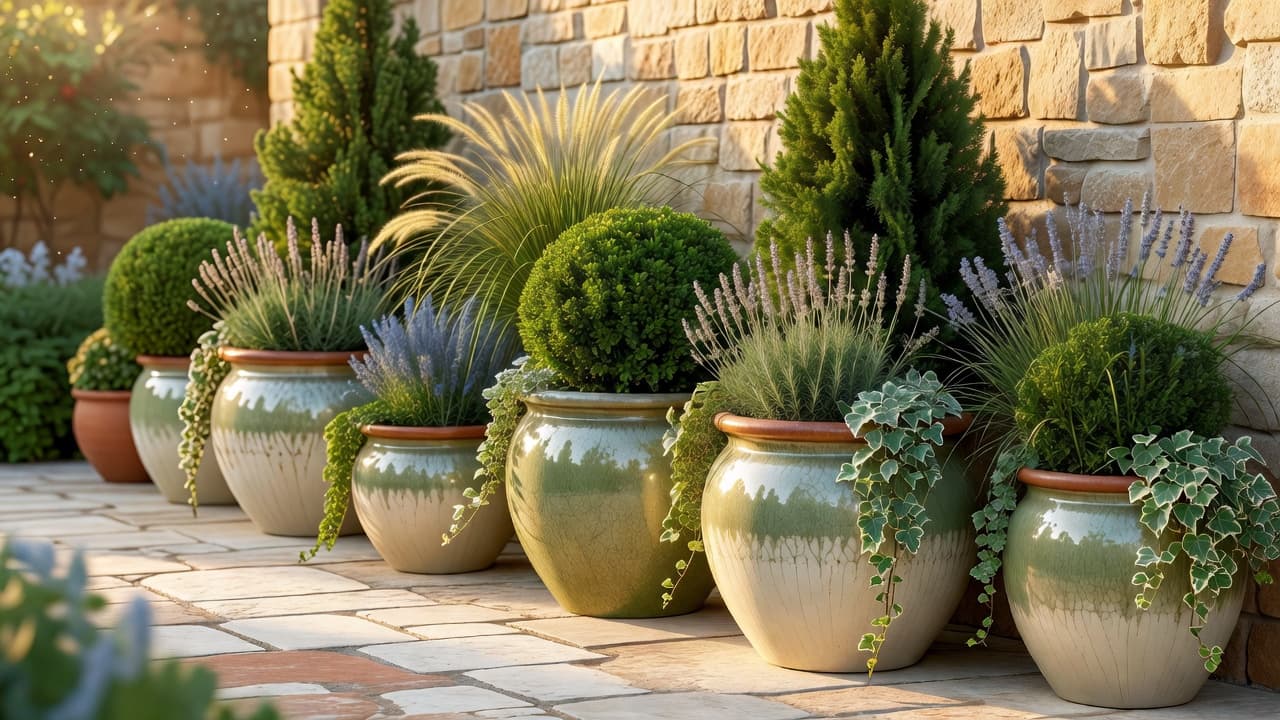
If you only learn one container design formula, make it this one: a tall thriller plant for height and drama in the centre or back of the pot, medium filler plants filling out the middle, and a trailing spiller plant to soften the rim and cascade over the edge. It is a decades-old rule of thumb precisely because it works in almost any style, from a single glazed jar to a long run of matching troughs.
The container look for 2026 leans away from a scatter of small, mismatched pots and towards one or two oversized statement planters, or several matched pots of the same material grouped together — a look that reads as intentional and architectural rather than accidental. Alongside that, simpler single-species pots — one striking shrub or grass per container rather than a mixed planting — are having a moment, precisely because they are easier to keep looking good all year with far less deadheading and replanting.
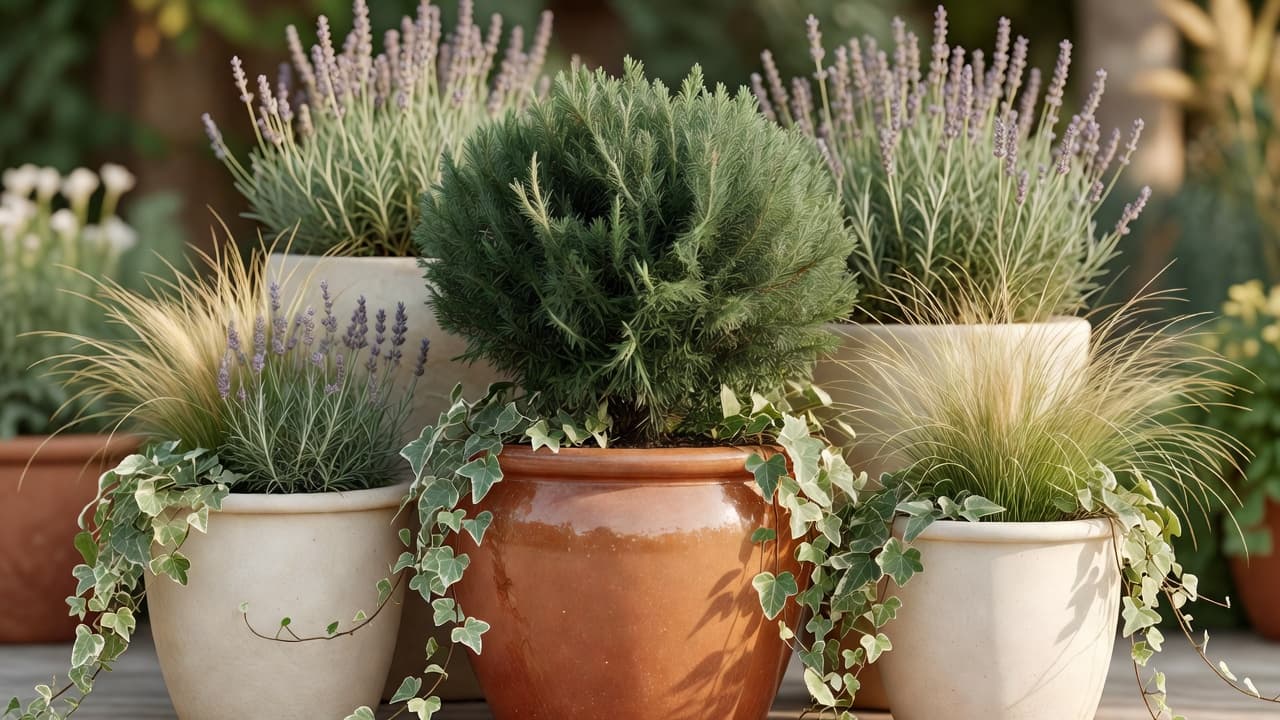
Best container plants and combinations to try in 2026
The real value of an AI container garden design app is testing the year's best combinations on your own photo before you commit. Worth trying:
- Evergreen structure that holds all year. Compact box alternatives such as Ilex crenata or Euonymus, along with phormiums and cordylines, anchor a scheme through winter when everything else has died back.
- Drought-tough Mediterranean planting. Lavender, rosemary and fine grasses such as Stipa tenuissima thrive in the fast-draining conditions a pot creates and need little watering once established.
- Long-season, award-recognised choices. The RHS Award of Garden Merit list of perennials for containers is a dependable shortlist if you want a pot that still looks good in its third year, not just its first month.
- Trailing spillers. Trailing lobelia, ivy and nasturtiums soften hard edges and hide the rim of a pot within a season.
- Edible pots. Dwarf tomato varieties, salad leaves, strawberries and even trained fruit trees on dwarfing rootstock can crop well in a large container — edible gardening remains a top goal for container growers across age groups this year.
- A seasonal bulb layer. A "bulb lasagne" — several layers of spring bulbs planted at different depths in the same pot — gives weeks of colour from a single container before the summer planting takes over.
You do not have to commit to one look. Try each idea as a separate redesign of the same photo, then combine the parts you like most into a single scheme before you buy.
What a container garden costs in 2026 — app vs the pots
The app itself should cost little or nothing. Most good ones offer a genuine free tier — enough designs each month to redesign your space and compare a few styles — with a paid plan only needed for unlimited use.
The containers and planting are where the real spend happens, and the range is wide by design. A basic plastic or terracotta pot can cost only a few dollars, while a large resin or fibreglass statement planter more typically runs $60 to $200 depending on size and finish, and a genuinely oversized architectural piece can run higher still. Dedicated potting mix — never garden soil — typically costs around $3.50 to $8.50 per cubic foot bag depending on brand and quality, and is one of the few places worth spending on the better product, since it drains and feeds far better than a budget mix. A self-watering reservoir insert or planter, which stores water below the root zone and lets it wick up as needed, is a worthwhile add for anywhere you cannot check daily, and typically adds a modest premium over an equivalent non-reservoir pot.
The honest order is the same as for any outdoor room: spend on what lasts — quality potting mix, one or two well-made pots, a handful of good plants — and use cheaper or recycled containers for the rest. Climate awareness protects even a small spend, since a beautiful pot that cannot survive your winter outdoors is a disappointment waiting to happen; if you are unsure which plants are reliably hardy where you live, our guide to AI plant selection for climate zones explains how to check before you buy. Explore for free first, settle the look on your own photo, and only then spend — the honest guide to free AI garden design apps explains how to tell a genuine free tier from a teaser.
Where the app stops and your own judgement begins
An honest guide names the limits. Even the best container garden planner app is a brilliant way to decide what you want, not a substitute for the practical checks only you can make. If your containers sit on a balcony or roof terrace, check the weight limit first — our balcony garden design guide covers the load a structure can safely carry. Confirm any unfamiliar plant's hardiness for your own climate before buying, and remember that potted plants dry out faster than anything in open ground, so a watering plan matters as much as the design itself — the RHS guide to growing plants in containers and the University of Maryland Extension's notes on self-watering containers are both worth a read before your first big planting session.
Used that way, an AI container garden design app is one of the most reassuring tools you will reach for this year: it removes the guesswork, shows you the finished scheme in advance, and means your first trip to the garden centre is a confident one rather than a hopeful guess.
Frequently asked questions
What is the best AI container garden design app?
The best one redesigns your own photo rather than a stock image, suggests real, buyable pot sizes and materials, names plants suited to containers specifically, factors in your climate and light, and offers a genuine free tier. FlorAI meets that bar with a free plan, so you can judge it on your own patio before paying.
Is there a free container garden design app?
Yes. The honest ones offer a real free tier — enough designs each month to redesign your space and try a few styles. FlorAI has a free plan, with paid plans only needed for unlimited designs.
Can I use regular garden soil in pots?
It is best avoided. Garden soil compacts in a container, drains poorly and can introduce pests or weed seed. A dedicated potting mix is lighter, better draining and formulated for the confined space and watering pattern of gardening in pots.
What are the best plants for a container garden in 2026?
A mix of compact evergreens such as Ilex crenata or phormium for year-round structure, drought-tough Mediterranean plants like lavender and ornamental grasses, RHS Award of Garden Merit perennials for long-season colour, and trailing plants such as ivy or trailing lobelia to soften the rim. Dwarf vegetables and strawberries also crop well in large pots.
How does AI container garden design work?
You take or upload one photo of your patio, steps or doorway, choose a style, and the app returns a photorealistic redesign of that same space in seconds — pots, planting and groupings — usually with the containers and plants named so you can shop from it.
How much does a container garden cost in 2026?
A basic pot costs only a few dollars, while a large resin or fibreglass statement planter typically runs $60–$200. Dedicated potting mix costs roughly $3.50–$8.50 per cubic foot bag. A handful of well-chosen pots and plants can furnish a patio for well under $200; a fuller scheme with several large statement planters can run several hundred dollars.
Last updated: August 2026. Written by the FlorAI garden team.