
Rose Gardens · 2026 guide
Garden Design with Roses: How to Lay Out a Rose Garden (2026)
Garden design with roses works best when the layout comes before the flowers: match the rose type — shrub, climbing, rambling or floribunda — to your space, give each plant room for its full mature width, and build a mixed border of companion planting around it rather than a bed of roses on their own. This guide walks through spacing, companion plants, formal and cottage layouts, colour and scent planning, and what a real rose garden costs to start in 2026, so the shape of the border is settled before a single bare-root rose arrives.
AI Garden Design GuidesPublished September 3, 2026Updated September 3, 202610 min read
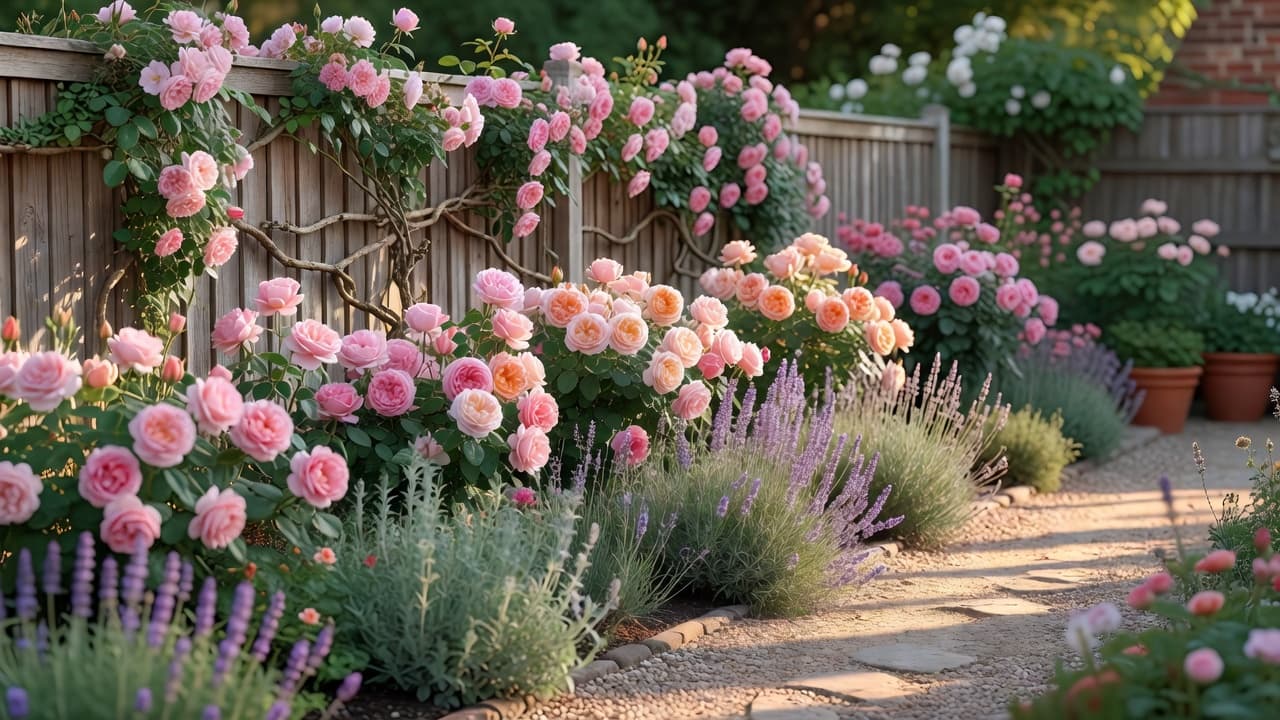
What does garden design with roses actually involve?
Roses are usually bought first and planned for afterwards, which is exactly backwards. A rose planted where it will crowd its neighbours in three years, or dropped into bare soil with nothing to carry the border once it finishes flowering, ends up looking thin for most of the year even if the roses themselves are healthy. Getting the design right first — the type of rose, the spacing, what grows around it — is what turns a few rose bushes into a genuine rose garden. If the whole idea of planning a border before you plant is new, our plain-English explainer of AI garden design is a gentle place to start, and the AI garden design pillar guide covers the wider process this article sits inside.
Choose the right rose type for your layout
Rose classification sounds technical, but in practice it is just a shortcut for "how much space and structure does this plant need." Picking the type before the variety saves a lot of redesigning later.
- Shrub roses. Rounded, repeat-flowering bushes from about 60cm to 1.5m tall — the most flexible type for a mixed border, and the easiest to underplant.
- Climbing roses. Long, fairly stiff stems trained flat against a wall, fence or pergola on horizontal wires; repeat-flowering varieties bloom far more freely once trained sideways rather than left to grow straight up.
- Rambling roses. More vigorous than climbers, usually flowering once in early summer in a single spectacular flush; the right choice for growing into an old tree, over a large pergola or along a boundary fence where a climber would be too small.
- Floribunda and hybrid tea roses. The classic "bedding rose" — upright, repeat-flowering, bred for large or clustered blooms — well suited to a formal block or a cutting border rather than a naturalistic one.
- Groundcover and patio roses. Low, spreading or compact plants from 30–60cm, useful for the front of a border, a large container, or covering bare soil under taller shrub roses.
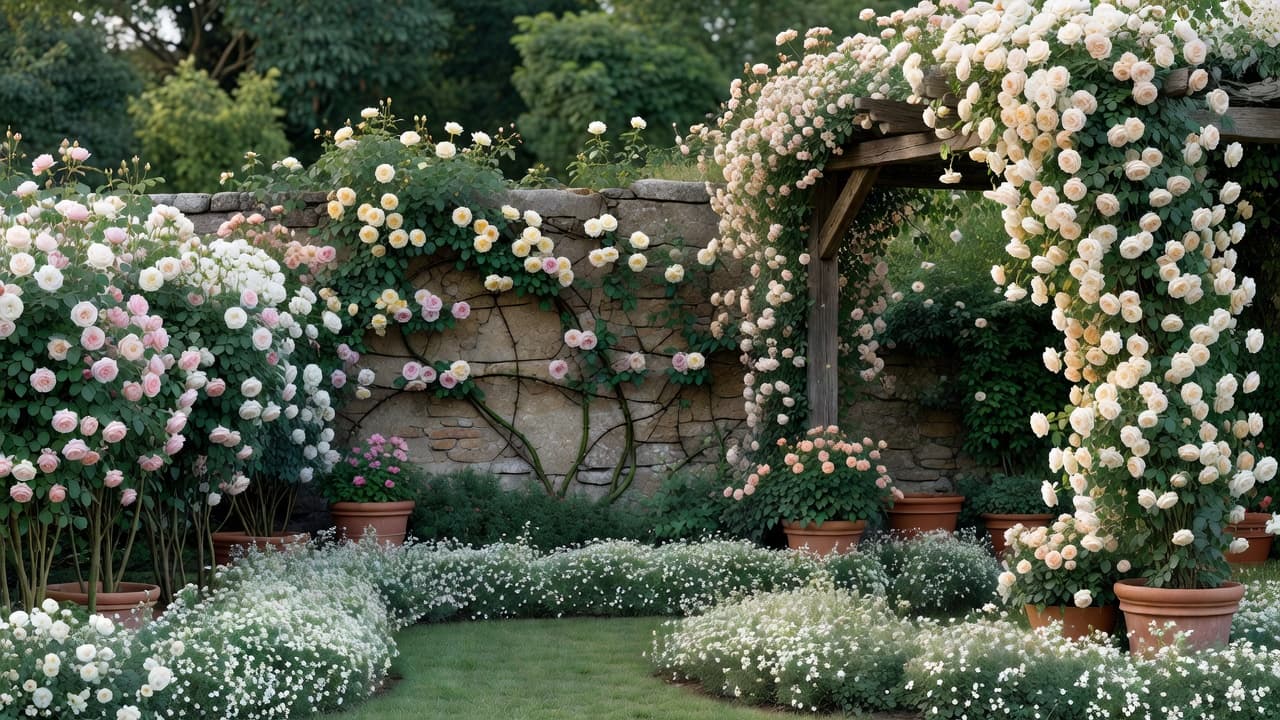
How much space to give each rose
Roses are usually sold as a single bare stem or a small pot, which makes it tempting to plant them close together for instant impact. Space for the plant it will become in three to five years, not the plant in front of you today — as a rough rule, let each rose's mature spread overlap its neighbour's by around a third to a half, so the border fills in rather than leaving gaps or fighting for light. The RHS planting guide for roses is a reliable reference for exact figures by type.
- Groundcover and patio roses: 45–60cm apart.
- Floribunda and hybrid tea (bedding) roses: 45–75cm apart, depending on the variety's spread.
- Shrub roses: 75cm–1.2m apart for smaller varieties, up to 1.5m for large, wide-spreading ones.
- Climbing roses: 1.2–1.5m apart along a wall or fence, trained on horizontal wires roughly 30–40cm apart.
- Rambling roses: 3–5m of clear space, since a vigorous rambler can eventually cover 6m or more of wall, tree or pergola.
Sun matters as much as spacing. Most roses want at least four hours of direct sun a day and flower far more freely with six or more, along with reasonable air movement around the plant — a cramped, still corner is exactly where black spot and powdery mildew take hold. The RHS growing guide for roses covers site and soil preparation in more depth.
Build a border around the roses, not just a bed of them
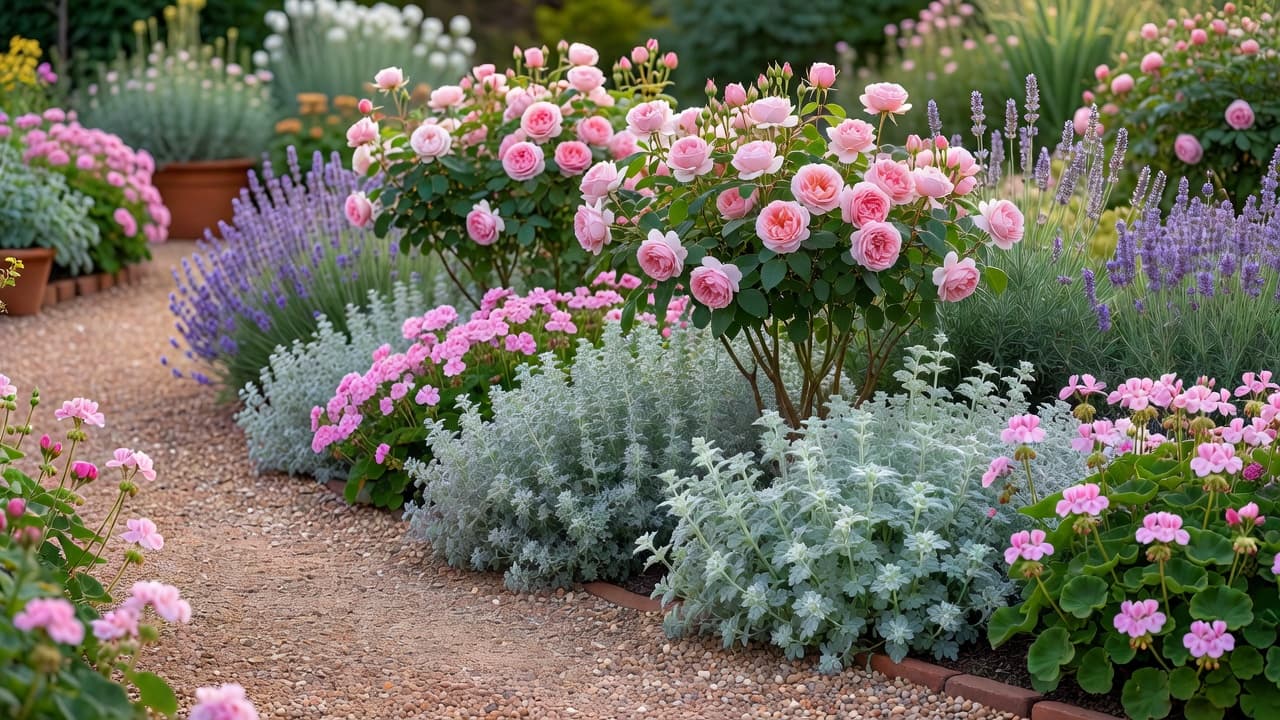
A bed of roses alone looks bare from autumn to late spring and often bare-legged even in summer, since most roses carry their flowers well above a base of thin, woody stems. Companion planting solves both problems: low, mounding plants hide the bare stems and keep weeds from establishing, while the mix of foliage and flower extends the border's interest well beyond the rose flowering season. Planted in front of or behind the roses rather than crowded between them, companions also make it far easier to reach a plant for deadheading or pruning without stepping on the bed.
- Catmint (Nepeta) — a classic edge for a rose border; its long flowering season and soft grey-green foliage carry the bed when the roses are between flushes.
- Lavender — shares roses' love of full sun and good drainage, and its structure holds a border together through winter.
- Hardy geraniums (cranesbill) — low, spreading groundcover that suppresses weeds around the base of a shrub rose without competing for the same root depth.
- Alliums — their spherical flowerheads rise clear of the rose foliage in early summer, just before most roses reach their first flush.
- Lady's mantle (Alchemilla mollis) — soft chartreuse flowers and leaves that hold raindrops, a gentle edging plant that self-seeds lightly without becoming a nuisance.
- Dianthus or cottage pinks — a low, fragrant edge that works especially well along the front of a formal rose bed.
A low, clipped hedge — box, or a box alternative where blight is a concern — along the front of a bed is a traditional way to hide bare rose stems and give a border structure in winter, and it pairs naturally with the more structured layouts below. For more on building layers of height and texture into a border generally, our guide to texture and layering in planting design goes into more depth than this article can.
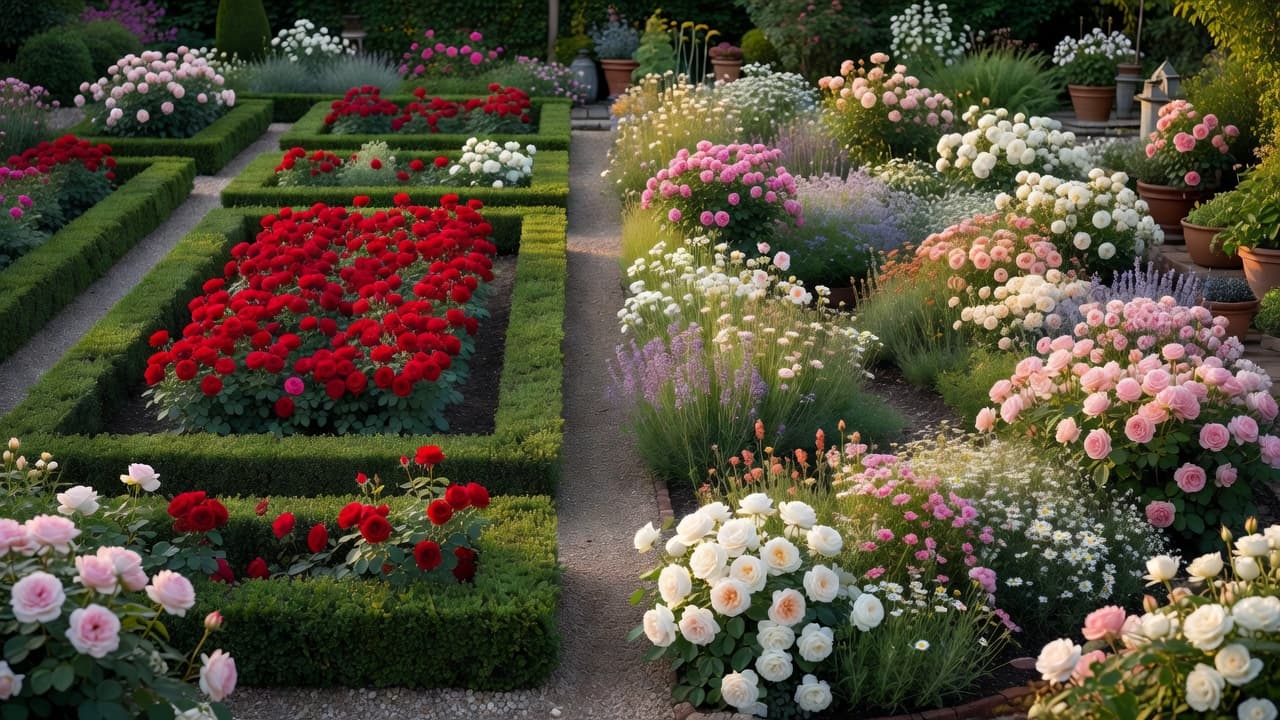
Formal parterre or relaxed cottage border: two classic layouts
Almost every rose garden design leans towards one of two families, and it is worth deciding which one before you order plants, since the spacing and rose choices differ.
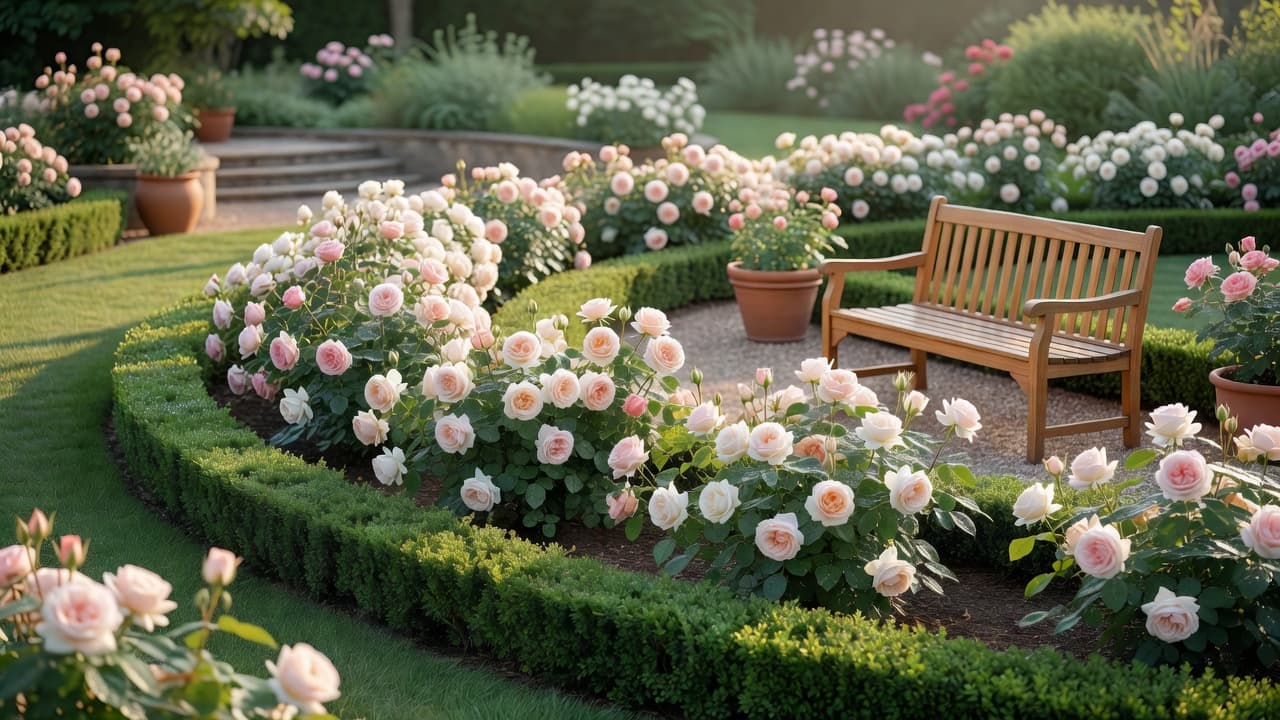
- Formal rose garden. Geometric beds — squares, circles or a cross-axis parterre — usually edged in clipped low hedging, each bed planted with a single variety of floribunda or hybrid tea rose in a block rather than mixed. Symmetry and repetition do the design work; paths are straight and beds are often raised slightly for a crisp edge. This layout suits a smaller, sunnier plot where the roses themselves are the main event.
- Cottage-style rose border. An informal, flowing mixed border where shrub and climbing roses are woven through perennials and self-seeders rather than kept apart. Curved edges, varied heights and a looser colour scheme give a relaxed, established look much faster than a formal layout, and it hides an imperfect boundary or awkward shape better than a straight-edged bed. Our guide to cottage garden design goes further into the wider planting style this layout borrows from.
Most gardens are better served by picking one style and committing, rather than mixing formal blocks with cottage drifts in the same sightline — the two read as unplanned rather than eclectic when they sit side by side.
Plan the colour and scent before you plant
Roses are sold by flower colour more than almost any other garden plant, which makes it easy to end up with a border of unrelated pinks, oranges and reds that fight rather than flow. Grouping colour in blocks of three to five plants of the same variety reads as intentional from a distance in a way that one-of-each never does; repeating that same variety at intervals along a border ties a long bed together even when the companion planting varies. Fragrance is worth planning as deliberately as colour — scent carries best on still, warm air, so the most fragrant roses earn their place nearest a seating area, a path people brush past, or a window left open in summer, rather than at the far end of the garden where nobody stands close enough to notice. For a fuller framework on choosing and combining colour across a border, see our guide to colour theory for garden design.
See the layout on your own garden before you dig
Spacing, rose type and layout style are all decisions that are far cheaper to get wrong on a screen than in the ground — a border that looked right on paper can turn out too narrow, too shaded, or wrong for the house once it is actually planted. FlorAI takes one photo of the bed or fence line you are considering and shows a formal or cottage-style rose border laid out on your own real space, so you can compare the two before committing to either. It runs free on the web, iPhone and Android. If the rose border is one part of a larger project, our guide to AI flower bed design covers the wider planning tools, and how to plan a garden redesign walks through sequencing a project like this alongside everything else in the garden.
What a rose garden costs to start in 2026
Roses are one of the better-value structural plants in a garden, since a well-chosen shrub or climbing rose keeps performing for a decade or more rather than needing replacing each season. Bare-root roses, sold and planted while dormant in late autumn and winter, are the cheapest way to buy in quantity — UK prices for a standard bare-root shrub rose typically run from around £15 to £25, with potted roses bought in leaf costing more for the convenience of planting any time of year. In the US, an own-root or grafted bare-root rose from a specialist grower commonly runs $30 to $65 depending on the variety, with well-known older varieties usually at the lower end of that range. Add a stake and ties for a standard or climbing rose, and a season's worth of balanced feed, and the ongoing cost of a rose border is modest compared with most other structural planting.
A professionally designed and planted rose border costs considerably more once labour, soil preparation and companion planting are included — a fully installed ornamental bed in the US in 2026 typically runs about $4.50 to $13.50 per square foot, similar to other detailed planting schemes. Designing the layout yourself and buying bare-root roses in the dormant season is by far the cheapest route to a genuine rose garden; our guide to garden design on a budget covers more ways to stretch a planting budget further.
Frequently asked questions
What is the best layout for garden design with roses?
There is no single best layout — a formal parterre of clipped hedging and single-variety blocks suits a smaller, sunny, symmetrical plot, while an informal cottage-style border with shrub and climbing roses mixed among perennials suits an irregular shape or a more relaxed style. Picking one and committing to it matters more than which one you choose.
How far apart should roses be planted?
It depends on the type: groundcover and patio roses 45–60cm apart, floribunda and hybrid tea roses 45–75cm, shrub roses 75cm–1.5m, and climbing roses 1.2–1.5m apart along a wall or fence. Space for the plant's mature width, not how it looks at planting time.
What plants go well with roses in a border?
Catmint, lavender, hardy geraniums, alliums, lady's mantle and dianthus are classic rose companions. Planted in front of or behind the roses rather than crowded between them, they hide bare stems, suppress weeds and extend the border's interest beyond the rose flowering season.
How much sun do roses need for a garden design to work?
Most roses need at least four hours of direct sun a day and flower far more freely with six or more. Good air movement around the plant matters almost as much as sun, since a cramped, still spot encourages black spot and powdery mildew.
How much does it cost to design and plant a rose garden?
A bare-root shrub rose typically costs £15–£25 in the UK or $30–$65 in the US, planted while dormant in late autumn or winter. A professionally designed and installed bed costs considerably more, roughly $4.50–$13.50 per square foot in the US in 2026 once labour and companion planting are included.
Can you fit roses into a small garden?
Yes. Patio and groundcover roses suit a small bed or large container, and a single well-chosen climbing rose trained against a fence or wall adds height and flowers without using any ground space at all.
Last updated: September 2026. Written by the FlorAI garden team.