
Family Gardens · 2026 guide
Family Friendly Garden Design: A Practical 2026 Guide
Family friendly garden design means splitting a garden into a play zone and a relaxing zone with clear sightlines between them, choosing durable lawns or safety surfacing for the play area, and picking plants that are robust and non-toxic rather than just decorative. It is not about ripping everything out for a lawn and a trampoline — a well-zoned family garden can still feel grown-up and considered. This guide covers how to zone a garden for play and relaxing, which lawns and play surfacing actually hold up, which plants to choose and which to avoid, pond and water safety, designing for different ages, and real 2026 costs.
AI Garden Design GuidesPublished July 27, 2026Updated July 27, 202610 min read
What is family friendly garden design?
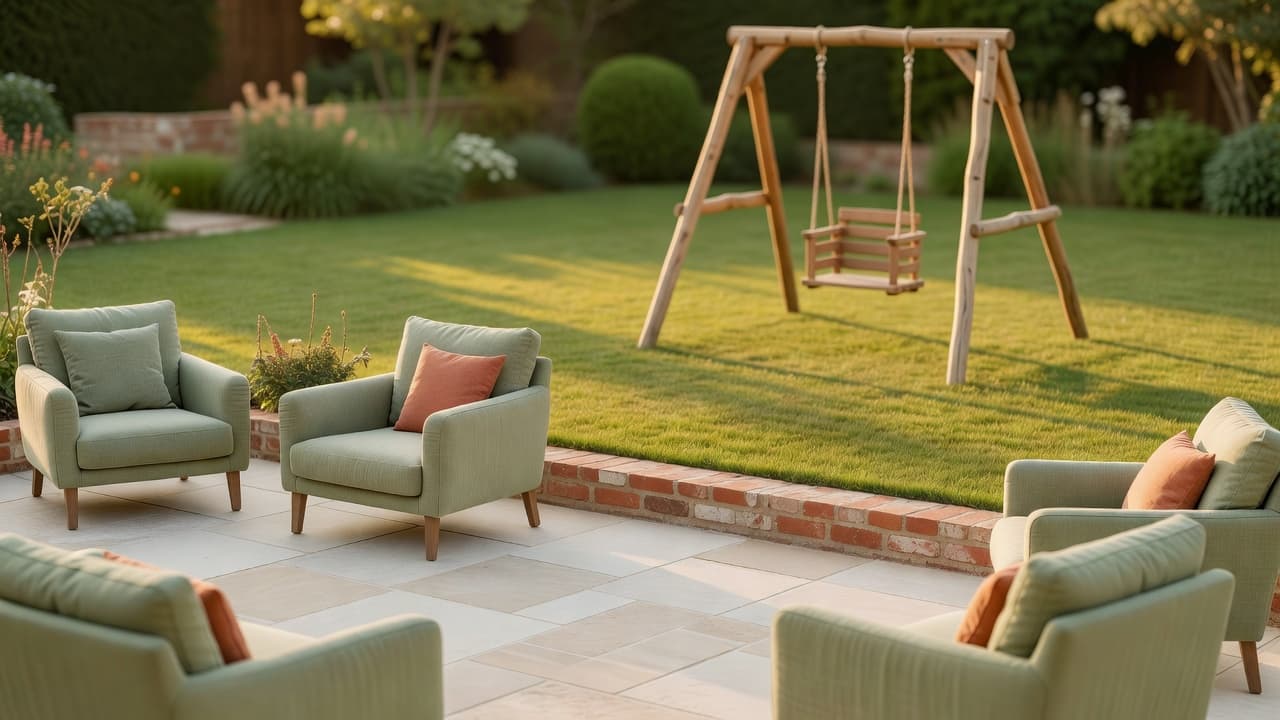
The goal is a garden that works for a four-year-old, a fourteen-year-old and the adults watching both, at the same time, without any one group's needs taking over the whole space. That usually comes down to three things: zoning, so play and relaxing do not collide; durable surfaces, so a lawn or patio can take genuine daily use; and plant and water choices that are safe by default rather than by constant supervision. Our AI garden design guide covers the broader layout principles this approach builds on.
How do you zone a garden so play and relaxing don't collide?
A family garden works best when it reads as several rooms rather than one open space with a trampoline dropped in the middle. A few zoning habits make the biggest difference:
- Keep the play zone in sight of the kitchen or the main seating area, so supervision does not mean standing in the garden the whole time.
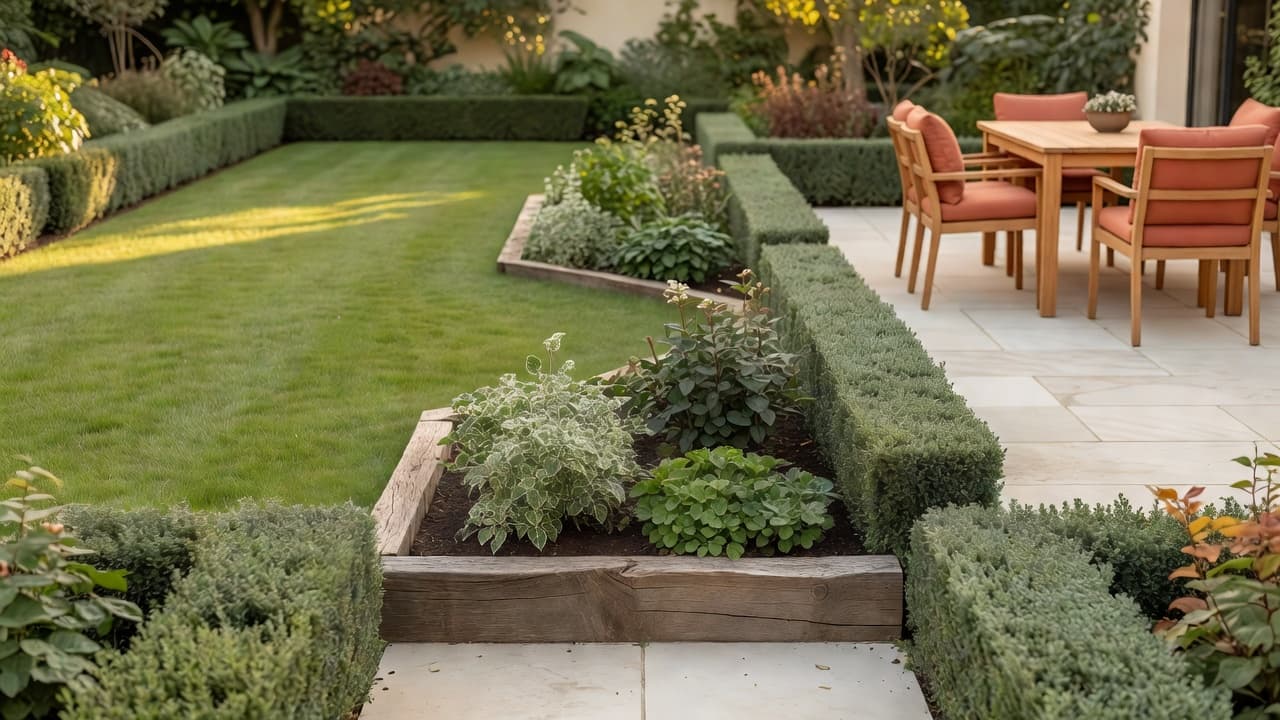
- Use raised beds, low box hedging or a change of surface as a soft divider between the play area and the adult terrace, rather than a hard fence that blocks sightlines — a bed around 40cm high also doubles as informal seating for adults watching children play.
- Put the play area away from the barbecue, hot tub or any water feature, so a ball rolling toward a swing does not also roll toward a hazard.
- Keep a clear, direct path from the back door to the play area so mud, sand or wet swimwear do not have to cross the patio.
- Reserve one corner as an adult-only retreat — even a small bench behind planting — so the whole garden does not have to be "on duty" all the time.
What's the best lawn and play surfacing for a family garden?
Ordinary ornamental lawn seed thins out fast under daily football and bike traffic. A genuinely family-friendly lawn either uses a tougher seed mix or swaps grass for surfacing built for repeated impact:
- Perennial ryegrass mixes recover from wear far better than fine ornamental lawn seed and are the standard choice for a lawn that doubles as a play area.
- Artificial turf removes muddy patches and mowing entirely, at a higher upfront cost, and suits smaller gardens or households that want a year-round green lawn regardless of weather.
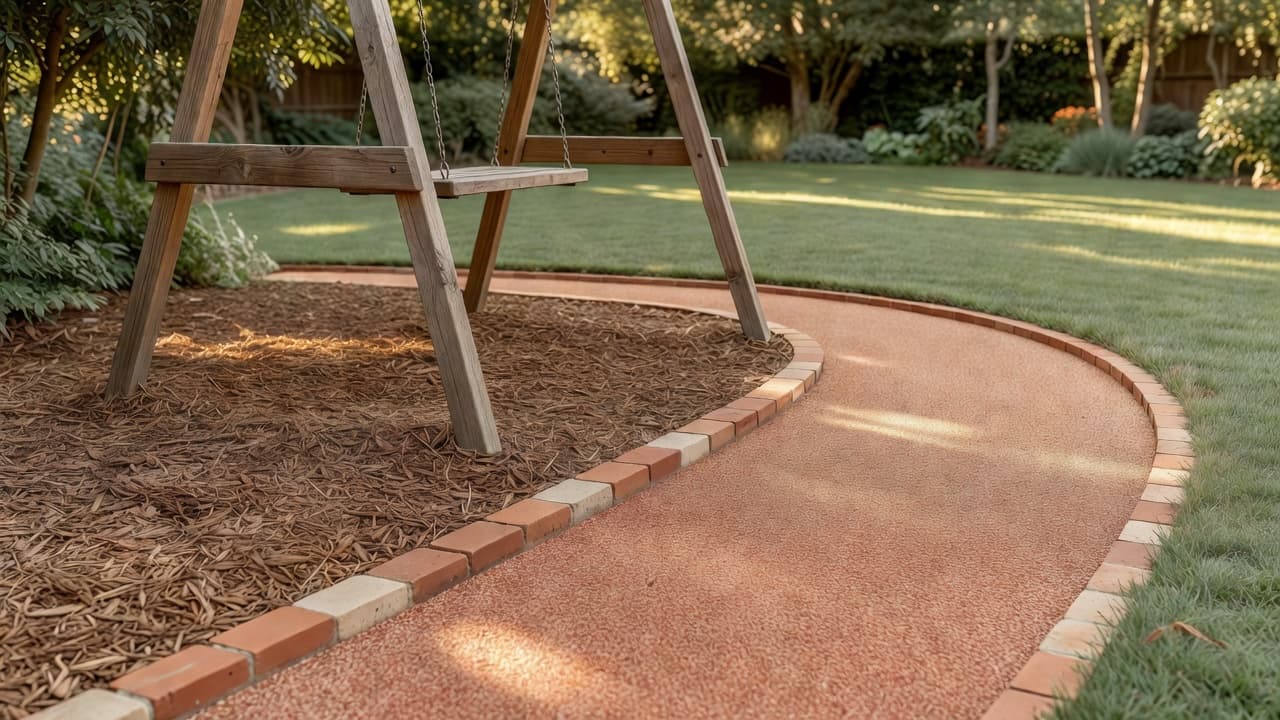
- Bark chippings or rubber mulch under a swing, slide or climbing frame absorb falls far better than grass or paving, and are the standard low-cost safety surface for home play equipment.
- Poured rubber or rubber tile surfacing costs more but stays level and mud-free under heavy daily use, and is common under trampolines and climbing equipment.
- A sunken, in-ground trampoline set flush with the lawn removes the fall-from-height risk of a framed trampoline and is far less visually intrusive; UK installation typically runs roughly £800–£1,500 including the trampoline itself.
How much safety surfacing does play equipment actually need?
Residential playsets are built to voluntary standards such as ASTM F1148 in the US, and the same fall-protection principles apply whatever standard a manufacturer follows. The US Consumer Product Safety Commission's Public Playground Safety Handbook, written primarily for public playgrounds but widely used as a benchmark for home equipment, gives concrete numbers:
- Keep a fall zone of at least 6 feet (about 1.8m) in every direction around the perimeter of any climbing frame, slide or swing set.
- Extend the fall zone for swings in front of and behind the seat by a distance equal to roughly twice the height of the pivot point from the ground.
- Use at least 9 inches (23cm) of uncompacted loose-fill surfacing — bark, wood chips or sand — for equipment with a fall height up to 7 feet, or around 6 inches (15cm) of rubber mulch for the same fall height.
- Check high-wear spots regularly, especially under swings and at slide exits, where loose-fill material displaces fastest and needs topping up.
Which plants suit a family garden — and which should you avoid?
A family garden benefits from plants that invite touching, smelling and picking, and from a firm list of plants kept well away from where children play. The Royal Horticultural Society's picks for a child-friendly garden lean on robust, sensory and edible plants:
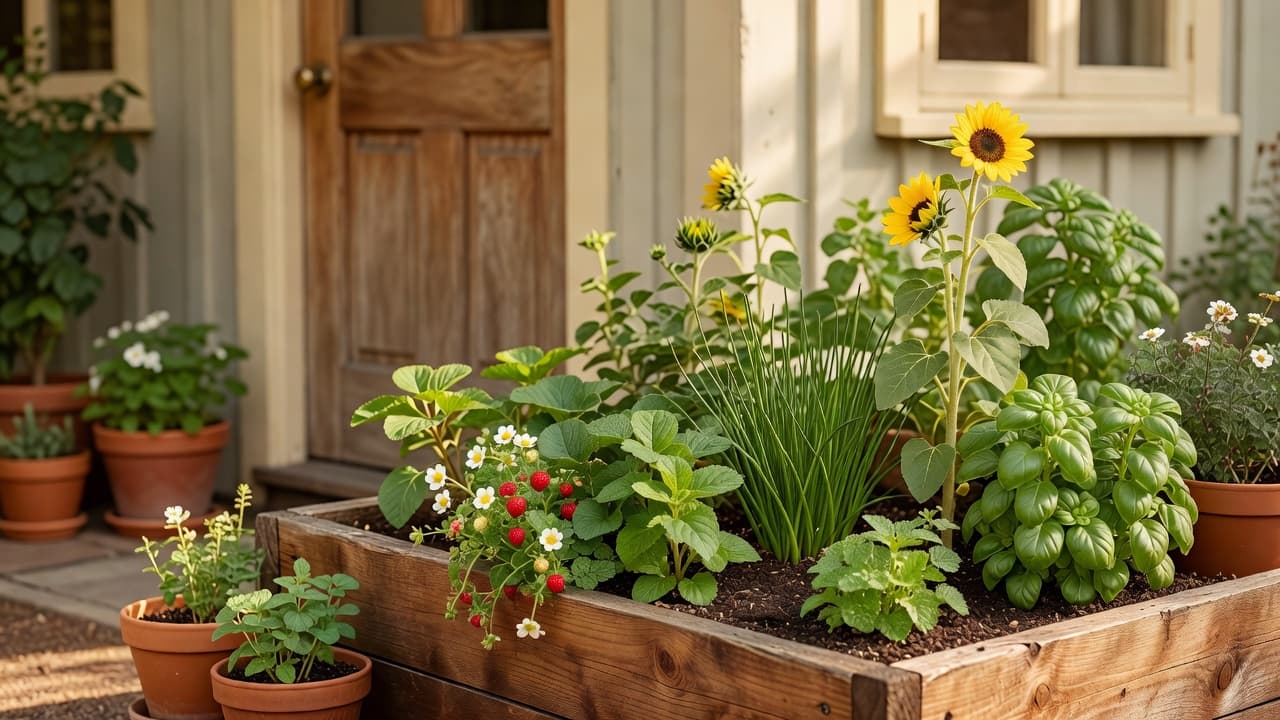
- Strawberries — children enjoy searching the leaves for ripe fruit, and the plant tolerates being picked at.
- Mint (Mentha) — tough enough to survive constant handling, releasing a strong scent when the leaves are rubbed; try peppermint or pineapple mint for variety.
- Sunflowers — fast, dramatic growth that gives children a visible result within weeks.
- Nasturtium and calendula — easy-to-grow, edible flowers that tolerate poor soil and rough handling.
- Lamb's ear and woolly thyme — soft, tactile foliage that rewards touching without any risk.
- Chives, basil and parsley — robust culinary herbs that suit a raised bed near the kitchen door; our vegetable garden planner guide covers laying out an edible bed like this.
Alongside that list, a small number of common garden plants are genuinely dangerous and worth removing or fencing off entirely where young children play. The RHS maintains a checklist of potentially harmful plants, and the highest-risk garden regulars include:
- Monkshood (Aconitum napellus) — one of the UK's most poisonous garden plants; even skin contact warrants gloves.
- Laburnum — every part is toxic, and the seed pods resemble edible pea pods, which makes it a particular risk near play areas.
- Foxglove (Digitalis) — a garden favourite that is toxic if eaten, despite its cottage-garden charm.
- Yew (Taxus baccata) — the berries' flesh is not toxic but the seed inside is, and the foliage is poisonous to both children and pets.
- Cherry laurel (Prunus laurocerasus) — leaves and seeds release cyanide compounds when crushed or chewed.
- Euphorbia species — the milky sap burns skin and is especially dangerous if it reaches the eyes.
- Bluebells — attractive and native, but every part causes illness if eaten.
Is a garden pond safe with young children around?
Open water is the single biggest hazard in a family garden, and the numbers back that up starkly: garden ponds are involved in more than half of all toddler drownings in the UK, according to the drowning-prevention charity RoSPA, which records around five under-six deaths a year in garden ponds alone. A pond does not need to be removed, but it does need one of three treatments while children are young:
- Fence it properly — RoSPA recommends fencing at least 1.1m high with vertical bars no more than 100mm apart (or steel mesh with a 25mm aperture), fitted with a self-closing, lockable gate.
- Cover it with a rigid metal grille rather than flimsy netting or chicken wire, which a toddler can push through.
- Keep accessible water no deeper than 30cm, with any deeper section set back from the edge and screened by planting or a barrier.
- Fill it in or drain it temporarily if very young children are frequent visitors, reinstating it once they are older — the safest option is often the simplest one for a few years.
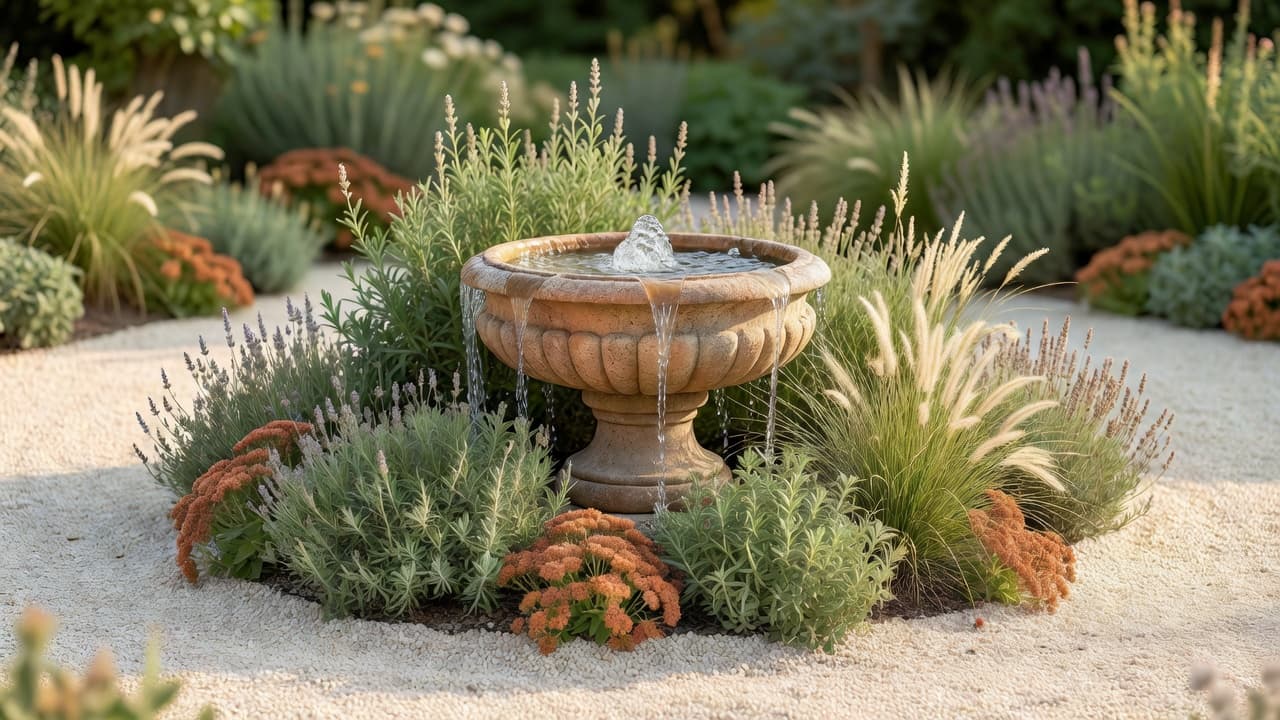
A bubbling urn, rill or wall-mounted spout gives the sound and movement of water with no standing depth for a toddler to fall into, and is a genuinely safer choice than an open pond while children are small.
How do you design a garden that grows with your kids?
A family garden built for toddlers looks different from one built for teenagers, and the best designs plan for that shift rather than rebuilding from scratch every few years. For toddlers, an enclosed lawn, a sandpit within sight of the kitchen window and soft, low sensory planting matter most. Primary-age children want space for a trampoline, a den-building corner with hardy shrubs, and somewhere to ride a bike in a loop. Teenagers tend to want a hangout zone of their own — a hammock, a firepit, a bench seating area with power for outdoor speakers — that reads as separate from a young child's play space. Building in flexibility early pays off: a gravel or paved base under a swing set can later become a hot tub base or a teen seating area, and raised beds on a simple layout can be replanted without reworking the hard landscaping underneath. Our low maintenance garden design guide covers planting choices that keep pace with a busy family household as it changes.
What does a family friendly garden redesign cost in 2026?
Costs vary widely with how much hard landscaping and safety surfacing a project needs, but a realistic 2026 baseline for a compact UK family garden — a durable lawn or artificial turf, a divided play zone, safety surfacing under equipment, basic fencing and family-friendly planting — runs roughly £2,000–£7,000, with a similar US project in the region of $2,500–$9,000. A sunken trampoline adds around £800–£1,500 / $1,000–$2,000, and pond fencing or conversion to a fountain feature is usually a few hundred pounds or dollars rather than a major expense. Our full 2026 garden design cost guide breaks larger projects down further.
Frequently asked questions about family friendly garden design
What makes a garden design "family friendly"?
Family friendly garden design zones a supervised play area, a durable lawn or safety surface, and an adult seating area within clear sight of each other, and uses robust, non-toxic planting with safe boundaries around any water feature, rather than treating the whole garden as one undivided space.
What plants should I avoid in a garden with children?
The RHS lists monkshood, laburnum, foxglove, yew, cherry laurel and euphorbia species among the highest-risk common garden plants, along with bluebells, which cause illness if eaten. Check any existing planting against the RHS checklist of potentially harmful plants before children start playing unsupervised.
Is a garden pond safe with young children around?
Not without action. Garden ponds are involved in more than half of UK toddler drownings, so RoSPA recommends fencing at least 1.1m high with a self-closing gate, covering the pond with a rigid grille, keeping accessible depth under 30cm, or filling it in temporarily while children are young.
How much fall surfacing does a swing set or trampoline need?
US safety guidance calls for a fall zone of at least 6 feet around play equipment, with roughly 9 inches of uncompacted bark or wood chip surfacing, or 6 inches of rubber mulch, for equipment with up to a 7-foot fall height. A sunken, in-ground trampoline removes most of the fall-from-height risk of a framed model.
What's the best lawn for a family garden?
A perennial ryegrass seed mix recovers from daily wear far better than fine ornamental lawn seed. Artificial turf is a higher-cost alternative that removes mud and mowing entirely, and suits smaller family gardens especially well.
Can FlorAI redesign my garden for a family?
Yes. FlorAI generates a photorealistic redesign from a single photo of any garden, including a zoned family layout with a durable lawn, a defined play area and family-friendly planting, so the design can be tested before anything is bought or built.
Last updated: July 2026. Written by the FlorAI garden team.