
Garden Styles · 2026
Garden Design Styles: 9 Types Compared and How to Find Yours
A garden design style is a consistent set of choices — plant palette, materials, shapes and mood — repeated throughout a space so it reads as one coherent design rather than a collection of unrelated ideas. The main garden design styles in 2026 are cottage, minimalist, Japandi, zen/Japanese, Mediterranean, coastal, Scandinavian, boho and wabi-sabi. This guide compares all nine side by side and gives you a quick way to work out which one actually fits your house, climate and how you use the garden.
AI Garden Design GuidesPublished September 8, 2026Updated September 8, 202610 min read
What is a garden design style?
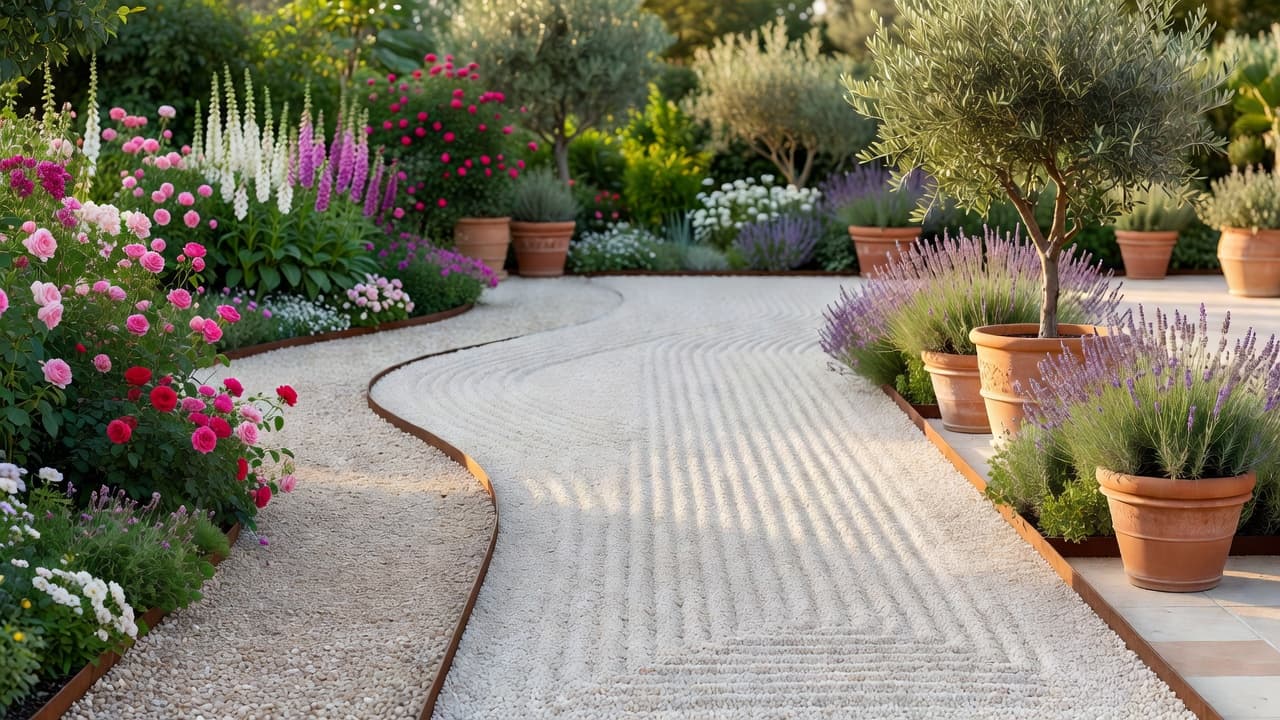
Most gardens that feel unsatisfying are not badly built — they simply mix signals from several styles at once: a rustic gravel path next to a sharp glass balustrade, or billowing cottage planting around a set of stark black outdoor furniture. Picking one garden design style, and letting it inform the plant list, the materials and even the furniture, is usually the fastest route from "fine" to "considered." Our wider AI garden design guide covers the broader planning process; this guide focuses specifically on choosing and combining styles.
Style is not the same as layout. You can build a formal, symmetrical layout and plant it in a cottage style, or build an informal, curved layout and furnish it in a minimalist style. What we cover below are the plant, material and mood choices — the layer that sits on top of the layout and gives a garden its personality.
How to find your garden style
Rather than starting from a Pinterest board, work backwards from three practical questions. Most people land on a clear style after answering all three honestly:
- How much time do you want to spend maintaining it? Cottage and boho styles reward regular hands-on tending; minimalist, Scandinavian and zen styles are built to need less.
- What does your house and climate already suggest? A stucco Mediterranean-climate house leans naturally towards Mediterranean planting; a coastal plot with salt wind and sandy soil will fight anything too lush; a period cottage suits informal planting more than sharp minimalism.
- What mood do you want to feel when you step outside? Abundant and romantic (cottage, boho), calm and orderly (minimalist, Scandinavian, zen), sun-warmed and relaxed (Mediterranean, coastal), or quietly imperfect (wabi-sabi).
If two styles still feel equally right, that is normal — Japandi and wabi-sabi share roots, as do Mediterranean and boho. The comparison table below groups styles by how they answer those same three questions, so it doubles as an informal garden style quiz.

Nine garden design styles compared
Here is a working definition of each major garden design style, what it needs to succeed, and where to read the full guide.
- Cottage garden. Densely planted, informal borders in a wide colour range — roses, foxgloves, delphiniums — with curved paths and reclaimed materials. Needs the most regular maintenance of any style on this list, but forgives an uneven layout better than any other.
- Minimalist garden. A small, repeated plant palette, one dominant hard material such as corten steel or gravel, clean lines and deliberate negative space. Low on plant variety, demanding on material quality and edge discipline.
- Japandi garden. A blend of Japanese restraint and Scandinavian warmth — pale timber, clipped evergreens, a muted natural palette. Sits between minimalism and zen, warmer than either.
- Zen / Japanese-influenced garden. Raked gravel (karesansui), moss, rock groupings and asymmetric balance, built around contemplation rather than display. Works in very small spaces, including a single courtyard corner.
- Mediterranean garden. Terracotta, gravel, olive and citrus trees, lavender and rosemary, built for heat and low water. Reads best against stucco, render or stone rather than brick.
- Coastal garden. Salt- and wind-tolerant planting such as grasses and sea holly, weathered timber and rope details, a relaxed rather than manicured finish. The style most dictated by climate rather than taste.
- Scandinavian garden. Pale wood decking, simple geometric shapes, hardy perennials and grasses chosen to look good even in winter silhouette. Prioritises year-round structure over peak-summer flowering.
- Boho garden. Layered textures, rattan and macramé furnishings, container planting and string lighting, mixing patterns confidently. The most forgiving style for renters and small courtyards.
- Wabi-sabi garden. Weathered, imperfect materials — cracked pots, unclipped moss, natural stone left rough — celebrating age and asymmetry rather than hiding it. The opposite instinct to a manicured lawn.
According to RHS garden design guidance, the strongest gardens commit to a small number of these decisions early and repeat them consistently, rather than trying to include a little of everything.
Matching hard landscaping to your style
Hard landscaping — paving, edging, walling, decking — carries a style as much as planting does, and it is far more expensive to redo, so it is worth getting right first.
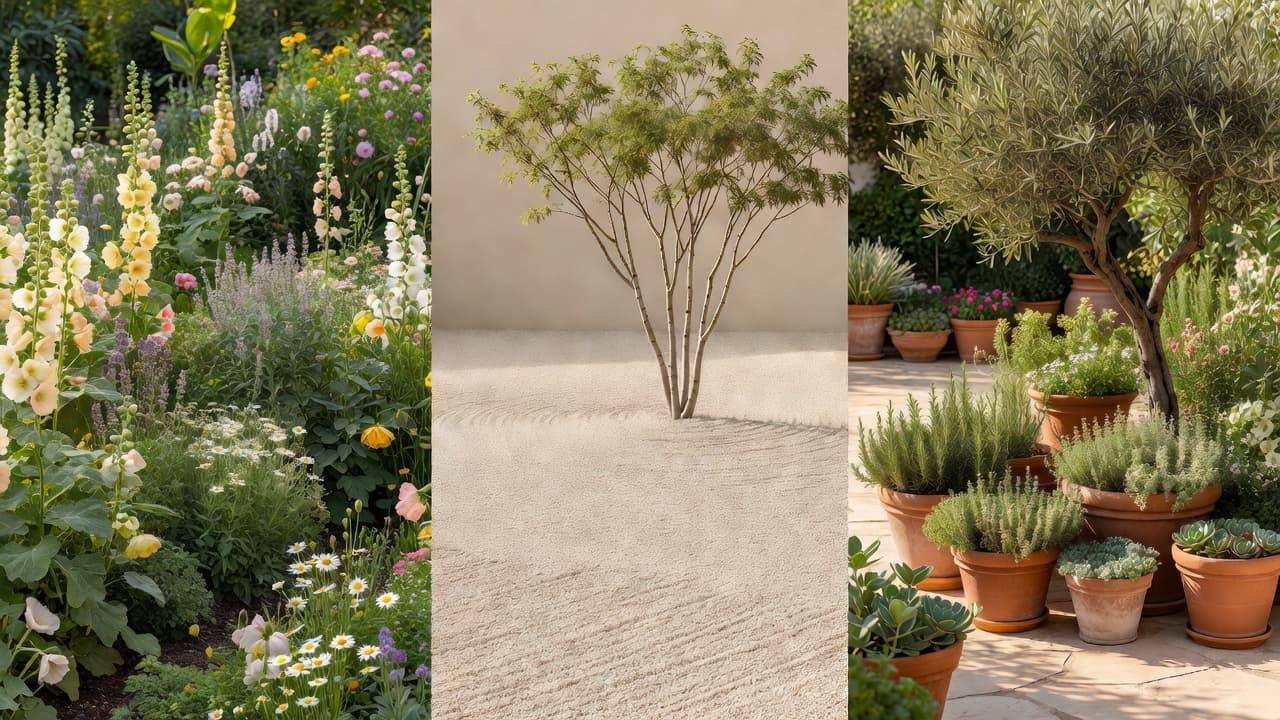
- Cottage and boho favour reclaimed brick, gravel and timber, with imperfect, hand-laid edges.
- Minimalist and Scandinavian favour a single consistent material — large-format paving, corten steel, pale decking — laid with crisp, even joints.
- Zen and Japandi favour raked gravel, natural unworked stone and timber decking with visible grain.
- Mediterranean and coastal favour terracotta, limewash render, natural stone and weathered softwood or rope detailing.
- Wabi-sabi deliberately reuses aged, cracked or reclaimed materials rather than buying new ones.
If budget is the main constraint rather than style, our 2026 garden redesign cost guide breaks down typical price ranges for hard landscaping, planting and full rebuilds by scope.
Mistakes that blur a garden style
- Mixing more than two styles. A cottage border, a minimalist patio and boho furniture in the same small garden reads as indecision, not eclecticism.
- Choosing plants before materials. Materials are harder and more expensive to change; settle the hard landscaping first, then choose planting that suits it.
- Ignoring the house. A garden style that fights the architecture of the house behind it — sharp minimalism against a soft period cottage, for example — rarely feels resolved, even when each half is done well.
- Copying a photo from a different climate. A Mediterranean-style planting list built for a hot, dry climate will struggle and need constant replacing in a cool, wet one — adapt the palette to your own conditions rather than importing it wholesale.
- Changing the whole garden at once with no way to preview it. Committing to hard landscaping and a full plant list on paper alone is the most expensive way to discover a style does not suit the space.
Testing a garden design style before you commit
Because hard landscaping is expensive to undo, it is worth seeing a style on your own garden — not a showroom or a stock photo — before ordering materials. FlorAI turns a single photo of your own backyard, front yard or patio into a photo-realistic redesign in a chosen style in seconds, so you can compare a cottage version against a minimalist or Mediterranean one on the exact same space before spending anything. If you are weighing up a full redesign against smaller changes, our guide to planning a garden redesign covers the wider process, and if you already know you want to work with a professional afterwards, sharing your garden design with a landscaper explains how to hand over a plan cleanly.
Frequently asked questions about garden design styles
What are the main garden design styles?
The main garden design styles in 2026 are cottage, minimalist, Japandi, zen/Japanese, Mediterranean, coastal, Scandinavian, boho and wabi-sabi. Each combines a distinct plant palette, hard-landscaping material and mood, repeated consistently across the space.
How do I know what my garden style is?
Answer three questions honestly: how much maintenance time you want to give it, what your house and climate naturally suit, and what mood you want to feel outside. Abundant and hands-on points to cottage or boho; calm and low-maintenance points to minimalist, Scandinavian or zen; sun-warmed and relaxed points to Mediterranean or coastal.
Can I mix two garden design styles?
Two closely related styles usually blend well — Japandi already combines Japanese and Scandinavian influences, and Mediterranean pairs naturally with boho. Mixing more than two, or combining styles that contradict each other in maintenance and material, tends to read as unresolved rather than eclectic.
Which garden design style is lowest maintenance?
Minimalist and Scandinavian styles are generally the lowest maintenance, since they use a small, repeated plant list and durable hard materials rather than a wide range of plants needing individual care.
Which garden style suits a small garden or courtyard?
Zen, minimalist and Japandi styles scale down particularly well, since each is built around a small number of deliberate elements rather than variety, which suits a courtyard, side return or balcony better than a style that needs space to breathe, like cottage.
Can AI show me my garden in different design styles?
Yes. An AI garden design app like FlorAI can generate a photo-realistic redesign of your own garden in a chosen style from a single photo, which makes it easier to compare styles side by side on your actual space before committing to materials or planting.
Last updated: September 2026. Written by the FlorAI garden team.