
How-to · 2026
Raised Bed Garden Design Ideas for 2026
Good raised bed garden design starts with three decisions made before any timber is cut: the shape and layout of the beds, the material they are built from, and the height that suits how you actually garden. Get those right and a raised bed garden is easier on your back, better for the soil, and tidier to look at than growing straight in the ground. In 2026 the choice of materials has widened well beyond timber sleepers — galvanised and corten steel, brick, concrete block and reclaimed stone are all common — and the smartest way to choose between layouts is to see your own garden redrawn with each one before you commit. This guide covers the shapes worth considering, what each material really costs, how tall a bed should be for comfort and accessibility, and how to mix edible and ornamental planting in the same beds.
AI Garden Design GuidesPublished July 31, 2026Updated July 31, 202610 min read
What is raised bed garden design?
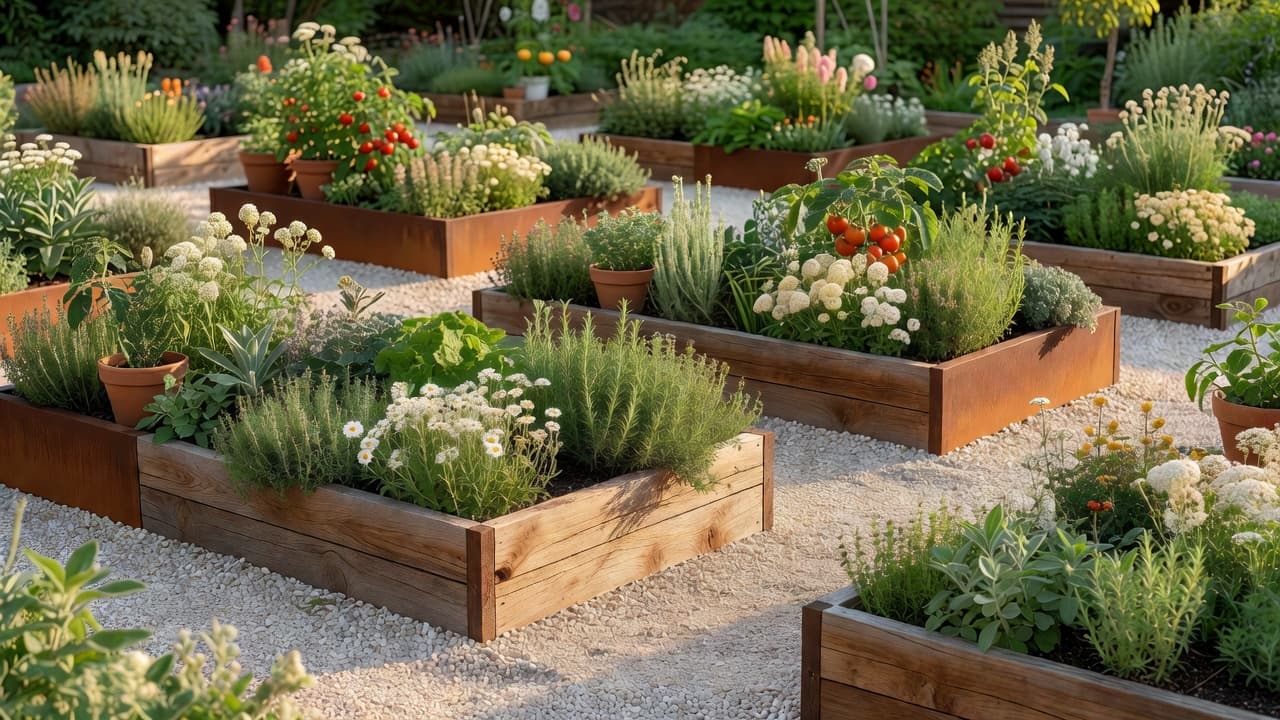
A raised bed is simply a contained area of soil built above the surrounding ground level, held in place by an edge of timber, metal, brick or stone. The design part is everything that decides whether that bed is a pleasure to use or a mistake you live with for a decade: how wide it is, how it sits against the paths and the rest of the garden, what it is made from, and how tall it stands. Done well, a raised bed garden reads as a considered outdoor room rather than a row of boxes. If you are still deciding whether raised beds suit your space at all, our complete AI garden design guide covers the wider decisions, and the how to plan a garden redesign guide walks through the planning steps for a full garden.
The fastest way to compare layouts is to see them on your own garden rather than a stock photo. FlorAI reads a single photo of your space and generates photorealistic versions of it with different raised bed layouts and materials in place, so you can judge a corten steel run of beds against a timber one on the actual fence, path and light you have, before spending anything on materials.
Why choose raised beds over growing in open ground?
Raised beds solve several problems at once, which is why they have become the default for new kitchen gardens and many ornamental borders too:
- Better soil, faster. You fill the bed with good soil and compost from day one, instead of fighting years of compacted or poor native ground.
- Warms up earlier. Raised soil drains and warms faster in spring than ground level beds, so you can plant a little sooner.
- Less bending and kneeling. A joint study by Coventry University and the RHS found that poor gardening posture can increase load on the lower back by up to 50%; a bed raised to a sensible height removes most of that strain.
- Clear boundaries, fewer weeds. A defined edge keeps grass and path gravel out of the growing soil and makes the garden read as tidy even when the planting inside is lush.
- Accessible to more people. A bed built to the right height lets someone using a wheelchair or with limited mobility garden from a seated position, which growing in the ground rarely allows.
None of this is only for vegetables — raised beds work just as well for a cutting-flower border, a compact shrub planting, or a mixed cottage bed. Our AI vegetable garden planner guide covers the specifics of edible layouts, spacing and crop rotation in depth if food growing is your main goal.
Raised bed layout ideas worth considering
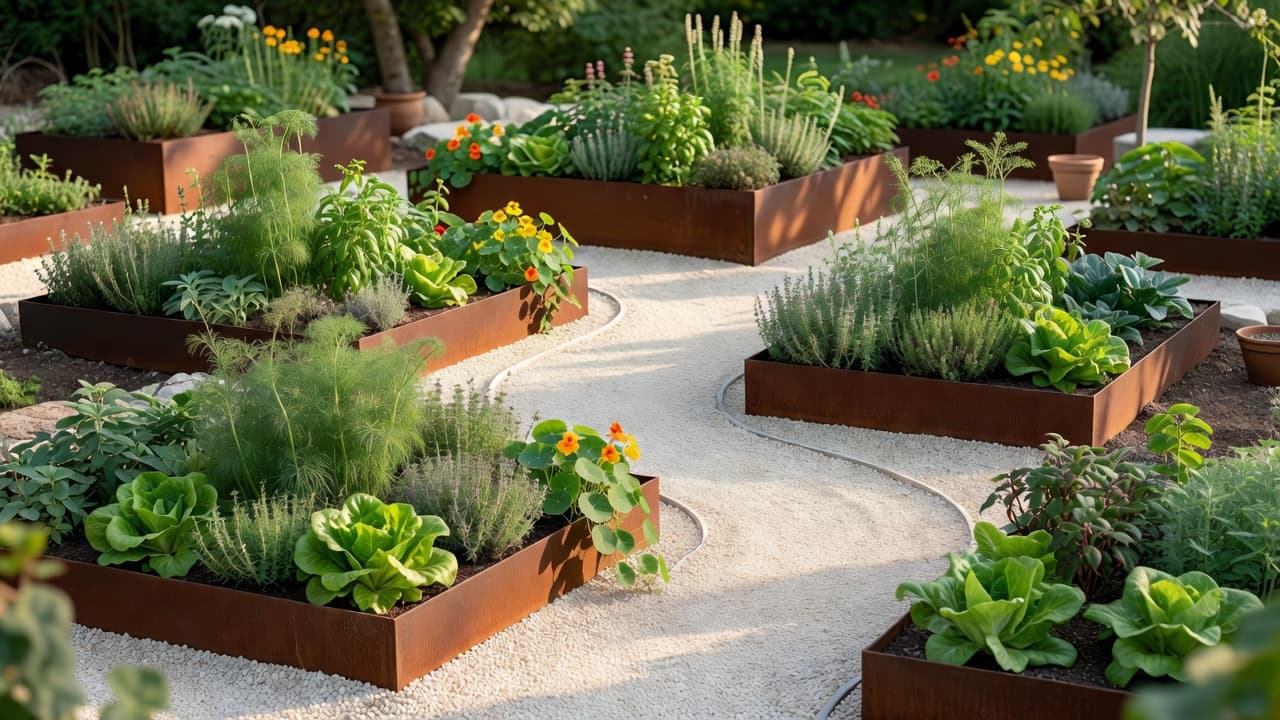
The classic side-by-side rectangles are a safe choice, but they are not the only one. Some layouts that read as considerably more designed for very little extra cost:
- Tiered or staggered heights. Running three or four beds at slightly different heights — say 30cm, 45cm and 60cm — adds visual depth and lets you put taller crops or shrubs at the back without them shading the front row.
- An L-shape or U-shape around a seating area. Beds arranged to partly enclose a patio or bench create an outdoor room rather than a plot you look at from a distance.
- A herringbone or diagonal path. Angling the paths between beds at 45 degrees, rather than running them square to the house, makes a small garden look larger and adds movement to an otherwise rigid grid.
- A keyhole bed. A circular or horseshoe-shaped bed with a narrow path cut into the centre lets you reach every plant from one standing position — a favourite for herb and salad beds close to the kitchen.
- Mixed shapes, one material. Combining a few curved beds with rectangular ones works visually as long as the material and edging are consistent throughout — variety in shape, unity in finish.
A good rule when comparing layouts: sketch (or generate) two or three options on the same garden before committing, because a shape that looks clever on paper does not always suit the actual path widths and sightlines of your space. For smaller plots specifically, our small backyard design ideas guide has layout tricks that translate directly to raised bed placement.
Which material should a raised bed be built from?
Material affects lifespan, cost and look more than almost any other decision. The main options in 2026:
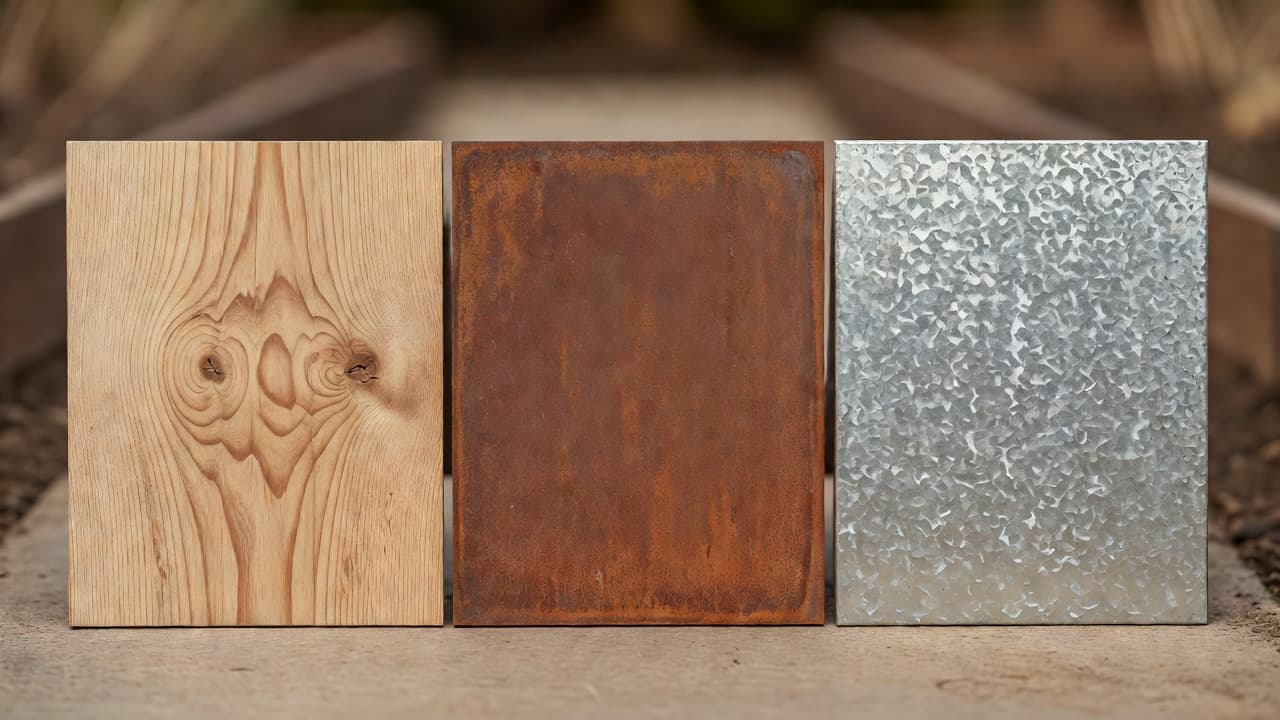
- Softwood or pressure-treated timber. The cheapest and easiest to build or buy as a kit; expect a working life of roughly 7–10 years before boards need replacing, less in consistently wet soil.
- Cedar or redwood. Naturally rot- and insect-resistant, so it lasts notably longer than treated softwood without chemical treatment, at a higher price per board.
- Galvanised steel. Zinc-coated steel panels are now one of the most popular choices — food-safe, since zinc does not leach into soil at harmful levels, and typically the lowest long-term cost of any metal option once you account for a lifespan of 20-plus years.
- Corten (weathering) steel. Develops a stable, rust-coloured oxide layer that protects the metal beneath and needs no maintenance; it costs two to three times more than galvanised steel but can last 20 to 50 years and gives the warm, matte look many contemporary raised bed gardens are built around.
- Brick, concrete block or reclaimed stone. The most permanent and the most expensive to build, but it ties a raised bed visually to the house and boundary walls better than any other material, and needs essentially no upkeep once built.
There is no single correct answer — a kitchen garden that will be rebuilt and rearranged every few years suits timber, while a bed meant to anchor a garden for decades suits steel, brick or stone. The RHS guide to making a raised bed is a reliable place to check construction basics for any material you choose.
How much does a raised bed cost in 2026?
Cost tracks material and size closely. As a rough guide for a standard 4ft-by-8ft bed in the US in 2026:
- DIY timber: around $150–$400 for a basic pressure-treated build, materials only.
- Galvanised steel kit: roughly $150 per bed at typical retail pricing, excluding soil — often the best value metal option for its lifespan.
- Corten steel: approximately $1–$3.5 per square foot of edging, so two to three times the price of galvanised steel for a comparable size.
- Overall range: a full raised bed garden typically runs $150–$600 per bed built DIY, or $400–$1,800 per bed professionally supplied and installed, depending on material, height and soil volume.
Soil and compost to fill the bed are additional and scale with volume, so a taller bed costs more to fill as well as to build — one more reason to settle the height and layout before ordering materials. If budget is the main constraint on your whole garden, not just the beds, our garden design on a budget guide covers where else to spend and save.
What height should a raised bed be?
Height is a comfort and accessibility decision as much as a design one:
- 15–30cm (6–12in) suits most vegetables and is the minimum useful height — enough for root crops like carrots, shallower for salad leaves and herbs.
- 30cm (12in) is a comfortable seated-gardening height for many adults and a common all-round choice for a first bed.
- 60–70cm (24–28in) is the height recommended for wheelchair-accessible beds, allowing access from a seated position without leaning.
- 75cm (30in) suits someone who gardens standing but has difficulty bending or reaching, effectively bringing the soil to worktop height.
Width matters as much as height: the RHS recommends keeping beds under 1.5m wide if they are accessible from both sides, and most experienced growers settle on around 1.2m (4ft) as the standard — narrow enough to reach the centre without ever stepping on the soil. Leave at least 1.2m of path between accessible beds so a wheelchair or walking frame can turn comfortably.
Mixing edible and ornamental planting in raised beds
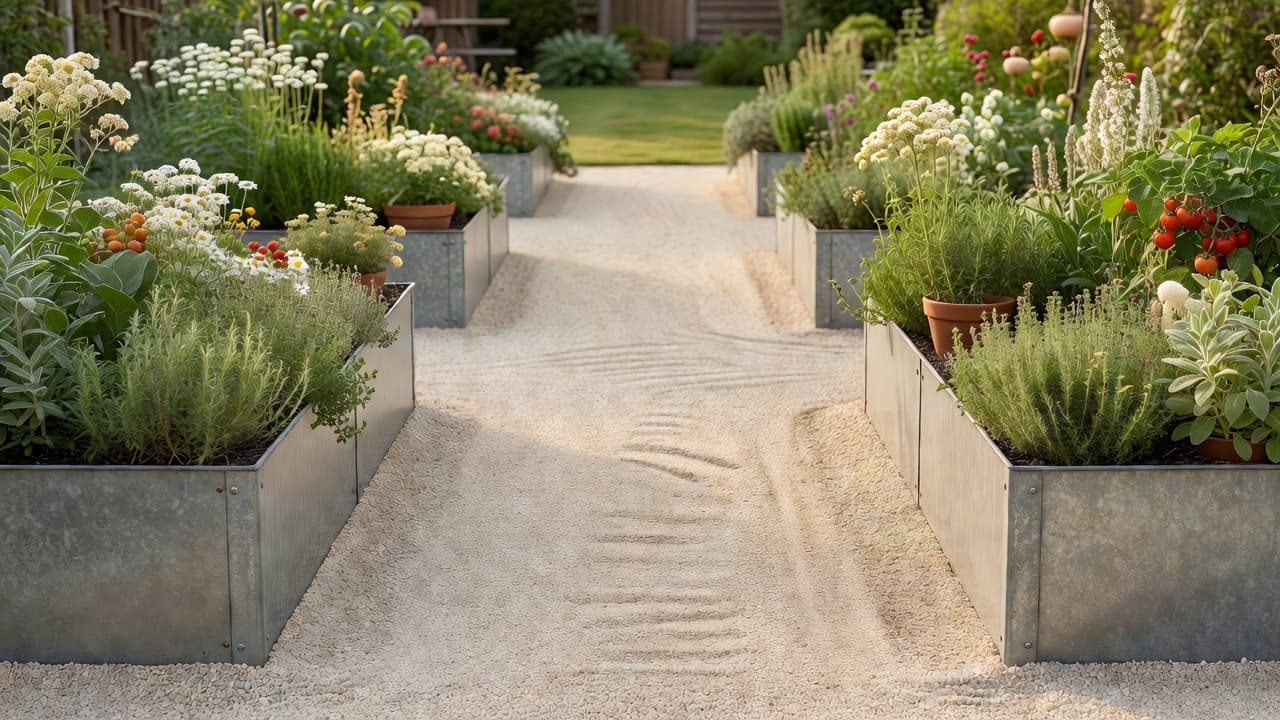
A raised bed does not have to be either a vegetable plot or a flower border — some of the most satisfying designs mix both in the same run of beds. A potager-style bed might pair a cherry tomato plant with basil and marigolds for companion planting, then finish the front edge with a low border of alpine strawberries or trailing nasturtiums, which are edible as well as ornamental. Cut flowers such as zinnias, cosmos and dahlias slot easily between vegetable rows, giving you material for the house as well as pollinator interest for the crops. If your garden leans more towards low-water planting, our drought-tolerant garden design guide covers raised gravel beds and xeriscape planting that work on the same contained-bed principle with far less watering.
For a household with children, raised beds are also one of the easiest ways to give each child their own small, clearly bounded patch to plant and tend — see our family-friendly garden design ideas guide for more on designing a garden the whole household actually uses.
Raised beds and local wildlife
A well-planted raised bed garden is not just tidy — it can genuinely support local pollinators and other wildlife. Leaving a gap between beds unpaved and planted with a low mix of clover or wildflowers gives ground-nesting bees somewhere to live, and a shallow water dish tucked beside a bed helps bees and birds through hot spells. If encouraging wildlife is a priority alongside growing your own, our how to design a wildlife garden guide goes into which plants and features do the most good.
Choosing between raised bed layouts before you build
The single most common regret with raised beds is not the material or the height — it is committing to a layout that turns out to block a path, shade a neighbouring bed, or simply look cramped once it is full of soil and planting. Before ordering timber or steel, run through a short checklist:
- Check the sun. Watch the space across a full day if you can, and keep the tallest beds or trellised crops on the north side so they do not shade shorter beds.
- Measure the paths, not just the beds. A bed that looks generously sized on paper can leave an unusably narrow path once it is physically built.
- Picture it full, not empty. An empty timber frame looks small; the same bed planted and mature will feel considerably more present in the space.
- Compare more than one layout. Whether by sketching, using stakes and string on-site, or generating photorealistic versions of your own garden, seeing two or three options side by side catches problems a single plan misses.
This is exactly the comparison an AI garden design tool is good at — generating your real garden with different bed shapes, materials and heights in place so you are choosing between finished pictures rather than imagining from a sketch. For the difference between designing from a photo of your own space and starting from a blank plan, see our guide on AI garden design.
Frequently asked questions
What is raised bed garden design?
Raised bed garden design is the planning of contained, elevated growing beds — their shape, layout, material and height — so a garden is easier to tend, drains better and looks intentional, whether planted with vegetables, flowers or a mix of both.
What is the best material for a raised garden bed?
There is no single best material: pressure-treated timber is the cheapest and easiest for a bed you may rebuild in under a decade, galvanised steel offers the best value for a long-lasting metal bed, and corten steel or brick suit a garden built to last decades, at a higher price.
How tall should a raised garden bed be?
15–30cm suits most vegetables, 30cm is a comfortable general-purpose height, and 60–75cm (24–30in) is recommended for wheelchair access or gardening without bending, effectively bringing the soil to worktop height.
How much does a raised bed garden cost in 2026?
A standard 4ft-by-8ft bed costs roughly $150–$400 DIY in timber, around $150 as a galvanised steel kit, and $1–$3.5 per square foot of edging for corten steel — with a full garden of beds typically running $150–$600 per bed DIY or $400–$1,800 per bed professionally installed.
Can I mix vegetables and flowers in the same raised bed?
Yes — pairing crops like tomatoes with companion flowers such as marigolds, or edging a vegetable bed with edible flowers like nasturtiums, is a well-established approach that benefits both pollinators and pest control.
Can AI help me design a raised bed layout?
Yes. An AI garden design tool such as FlorAI can generate your own real garden with different raised bed shapes, materials and heights in place, so you compare finished layouts on your actual space before buying any materials.
Last updated: July 2026. Written by the FlorAI garden team.