
Garden Styles · 2026
Boho Garden Design: Ideas, Plants and Materials for a Bohemian Outdoor Space
Boho garden design layers natural, weathered materials — rattan, macrame, terracotta — with abundant, informal planting and global-inspired textiles, rather than clipped hedges and matching furniture sets. It favours a lived-in, collected-over-time look: mismatched cushions, hanging plants, lanterns and a relaxed, curved layout instead of straight lines and symmetry. The style borrows from 1960s bohemian counterculture and decades of global travel, mixing Moroccan lanterns, Mexican textiles and Indian block prints with hardy plants that can take a bit of neglect. This guide covers the real materials, plants and layout principles behind a boho garden, plus what to avoid so it reads as curated rather than cluttered.
AI Garden Design GuidesPublished September 1, 2026Updated September 1, 202610 min read
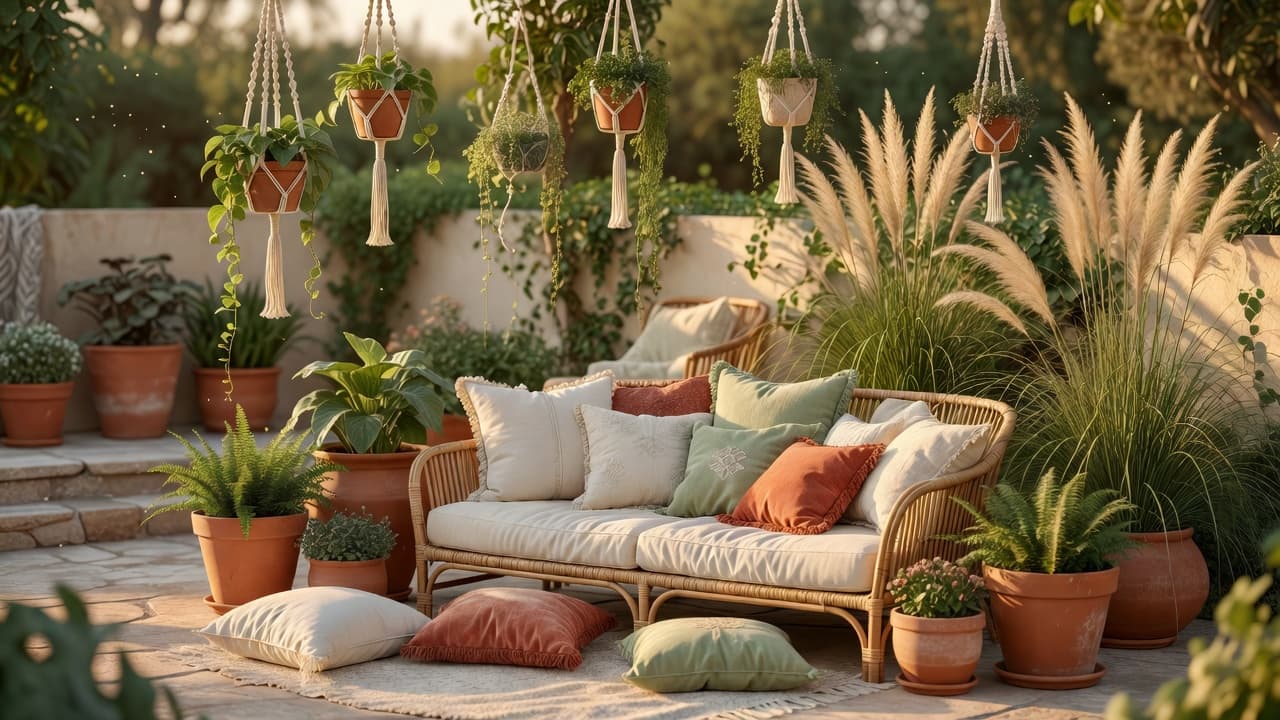
What is boho garden design?
Boho garden design treats a garden the way a well-travelled living room is treated: as a collection built up over time, not a matching set bought in one trip. Furniture is mismatched on purpose, textiles come from different countries and eras, and plants are left to grow a little loose rather than clipped into shape. It sits within the wider world of AI garden design as one particular style choice — less about a fixed shopping list and more about how comfortable and lived-in a space feels.
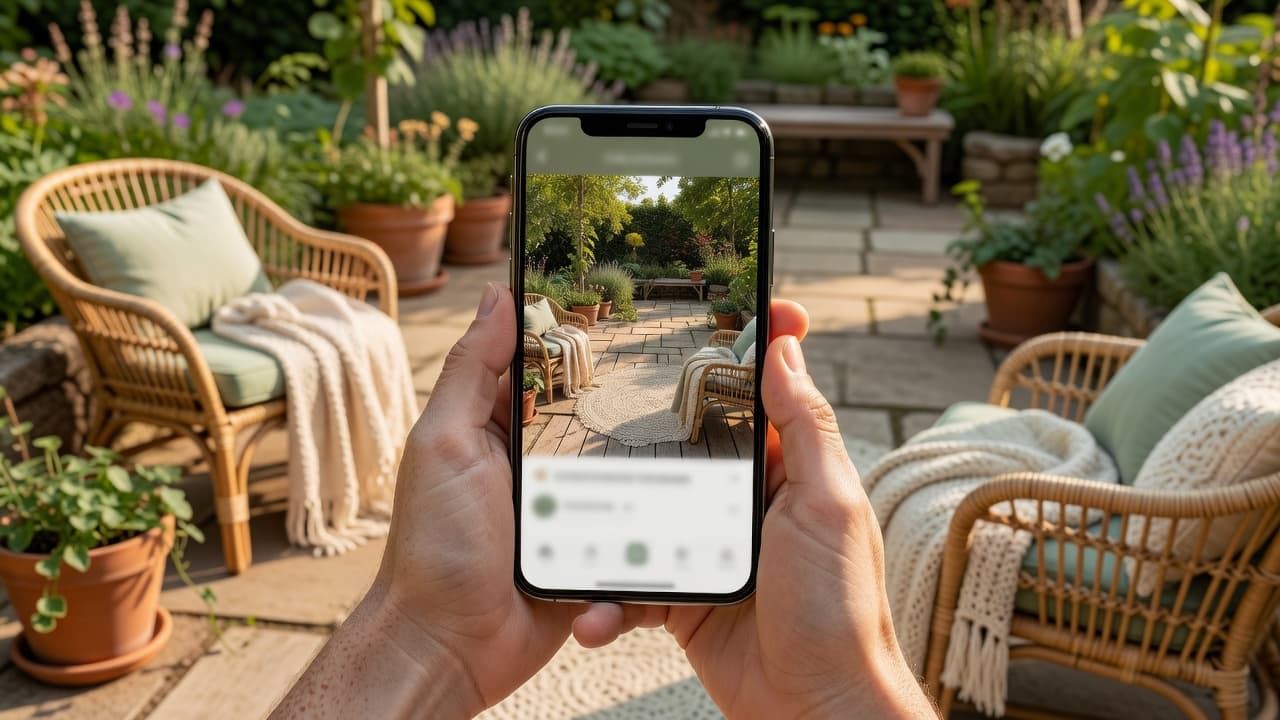
If you want to see whether the look suits a real garden or patio before buying rattan furniture and a dozen new pots, an AI garden design app such as FlorAI can generate a photo-realistic boho version of the actual space from a single photo, which is a cheap way to test the idea before committing to it.
Where the boho garden look comes from
Boho — short for bohemian — borrows its name from 19th-century artists and writers in Paris who were associated, often inaccurately, with Romani travellers from Bohemia, and who lived outside conventional social and financial norms. As Wikipedia's overview of bohemianism explains, the term later attached itself to the 1960s and 1970s counterculture, and from there to a decorating style that mixes influences from wherever its owners have travelled or admired: Moroccan lanterns, Mexican textiles, Indian block prints and West African basketry, layered together rather than kept in separate, matching sets.
In the garden, that translates into a style built from accumulation rather than a single plan: a rattan daybed picked up secondhand, a macrame hanger made by a friend, pots collected over several summers rather than bought as a matching set on one trip to a garden centre. The common thread is warmth and texture over precision — a garden that looks collected, not coordinated.
The core principles of a boho garden
- Layering over matching — cushions, rugs, plants and pots are chosen individually and combined, not bought as a coordinated set.
- Global, mixed influences — Moroccan, Mexican, Indian and West African textiles and craft sit together rather than sticking to one region's aesthetic.
- Natural, tactile materials — rattan, jute, terracotta, macrame and reclaimed wood, chosen for texture as much as looks.
- Abundant, informal planting — plants are allowed to sprawl, self-seed and overflow their beds rather than being clipped to a fixed shape.
- Low, relaxed seating — floor cushions, a hammock or a daybed sit as low as or lower than a standard chair, encouraging lounging over formal dining.
- Warm, layered light — lanterns, festoon lights and candles do more of the work after dark than a single overhead fixture.
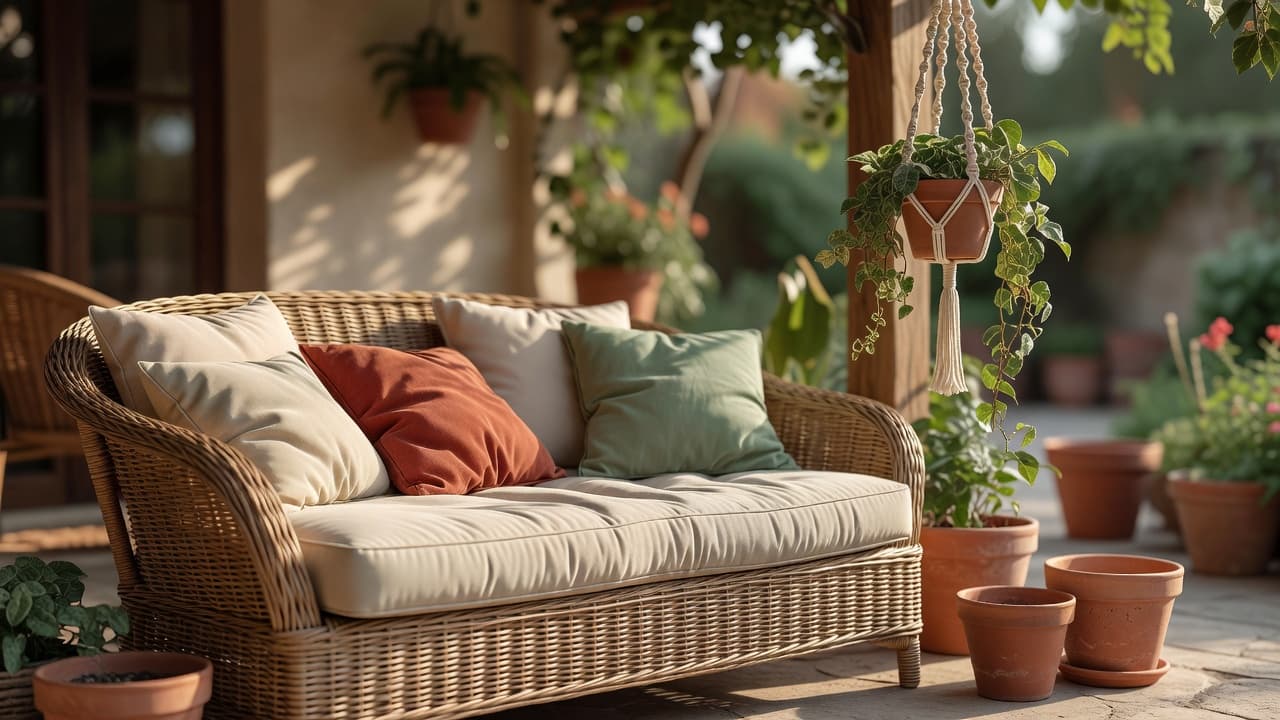
Materials and furniture for a boho garden
Material choice carries most of a boho garden, because texture and warmth matter more than a fixed colour scheme. Rattan is the signature material, but real, untreated rattan is not built for permanent outdoor exposure — it can crack and discolour in rain and direct sun. For furniture that stays outside year-round, resin wicker (sometimes sold as all-weather or synthetic rattan) gives the same woven look with far better weather resistance; see Wikipedia's entry on rattan for how the natural material behaves and why synthetic alternatives exist for outdoor use. Reserve real rattan pieces for a covered porch, or bring them in for winter.
Layering does the rest of the work: two or three outdoor rugs overlapping rather than one rug centred under a table, floor cushions stacked with woven pouffes, and a mix of terracotta, unglazed stoneware and woven baskets for pots rather than a single matching planter range. A simple, repeated palette — terracotta, rust, sage green, ochre — keeps a deliberately mismatched collection of objects from reading as clutter; our guide to colour theory for garden design covers how to choose and repeat a palette like this.
- Resin wicker or all-weather rattan furniture, for pieces that stay outdoors through rain and sun.
- Macrame plant hangers and wall hangings, in natural jute or cotton cord.
- Terracotta and unglazed stoneware pots, mixed in size rather than matched as a set.
- Layered outdoor rugs in jute-look or Moroccan-inspired patterns, in weather-resistant polypropylene.
- Reclaimed or weathered timber for a low deck, raised bed edge or pergola frame.
- Lanterns, festoon lights and a small fire pit or chiminea for evening warmth and light.
Lighting deserves its own attention, since a boho garden is often used more after dark than during the day; our guide to garden lighting design covers layering lanterns, festoon lights and candles so the space works once the sun goes down.
Plants for a boho garden
Planting in a boho garden favours abundance and texture over neat blocks of a single variety. Species are chosen for movement, scent and the way they spill over an edge, and gaps between plants are treated as room to fill in over a season rather than a mistake to correct.
- Pampas grass (Cortaderia selloana) for its feathery plumes and height — but plant it with care. The RHS growing guide to pampas grass notes that its seedlings can self-seed and its leaf edges are sharp, and in several warmer countries it is classed as invasive; a well-behaved ornamental grass such as Miscanthus or Stipa tenuissima, or dried pampas plumes bought as cut stems, give a similar look with none of the risk.
- Olive trees (Olea europaea) in large terracotta pots for a sun-loving, silvery, sculptural anchor plant — hardy enough to stay outdoors year-round in mild climates, and easy to move under cover where winters are harder.
- Star jasmine (Trachelospermum jasminoides) trained over a pergola or arch for scent and evergreen cover.
- Self-seeding annuals and perennials — cosmos, poppies and Verbena bonariensis — left to seed themselves into gaps rather than replanted in neat rows each year.
- Trailing and hanging plants — ivy, trailing pelargoniums or a potted string-of-pearls brought outside for summer — for macrame hangers and pot edges.
- Ferns in shaded corners, for texture where flowering plants struggle.
For more on how height, texture and foliage shape combine into a considered planting scheme rather than a random mix, our guide to texture and layering in planting design covers the same principle from a different angle.
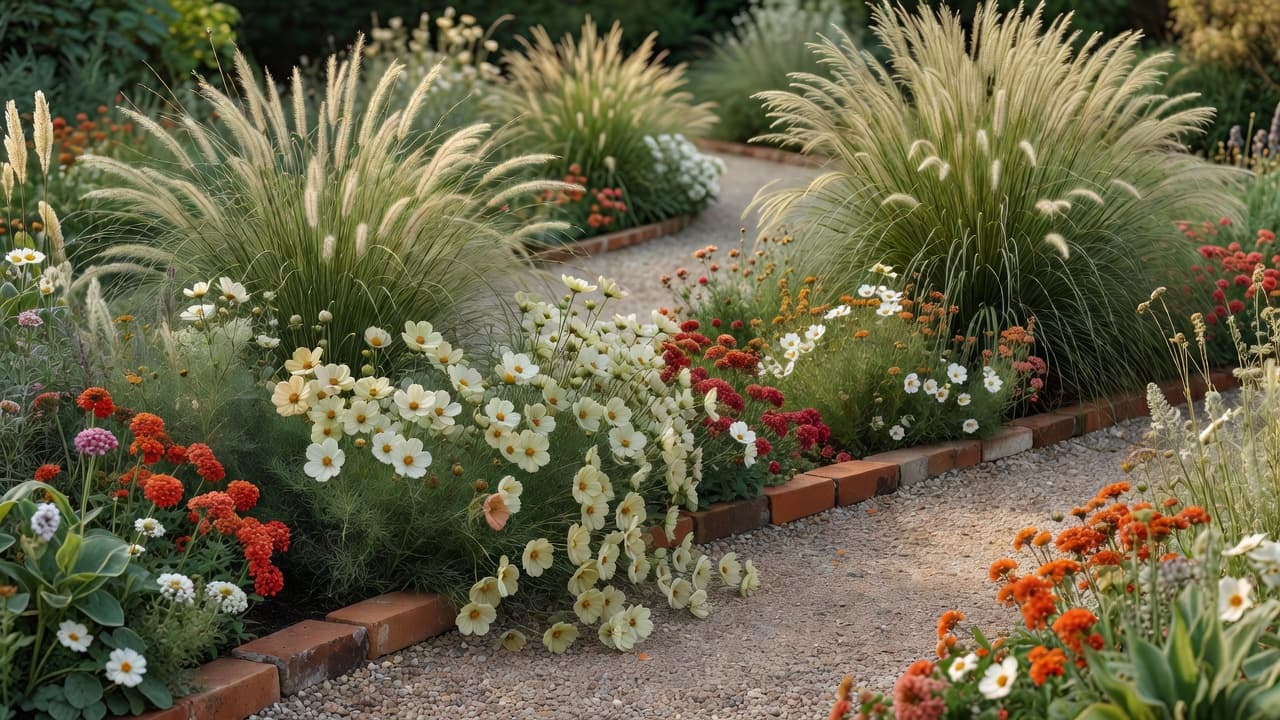
How to lay out a boho garden, step by step
- Start with the floor. Gravel, reclaimed brick or a stone path with soft, curved edges reads as boho far more than a straight, formal path.
- Layer at ground level first — outdoor rugs, floor cushions and low seating — before adding taller furniture, so the space feels grounded rather than furnished around a dining set.
- Pick two or three materials and a warm, earthy palette (terracotta, rust, sage, ochre) and repeat them across furniture, pots and textiles.
- Plant in loose, overflowing drifts rather than blocks of one variety, and leave gaps for self-seeders to fill in over the following seasons.
- Add height with a pergola, arch or tall grasses, and use it to hang lanterns, macrame or a trailing climber.
- Finish with layered light — lanterns, festoon lights and a fire pit or chiminea — since a boho garden is built to be used after dark.
Testing this on a real photo before buying furniture is worth doing, since a rattan daybed or a pergola looks very different in an actual garden than in a showroom. An app such as FlorAI can generate a photo-realistic boho redesign of a real garden or patio from one photo in a matter of seconds.
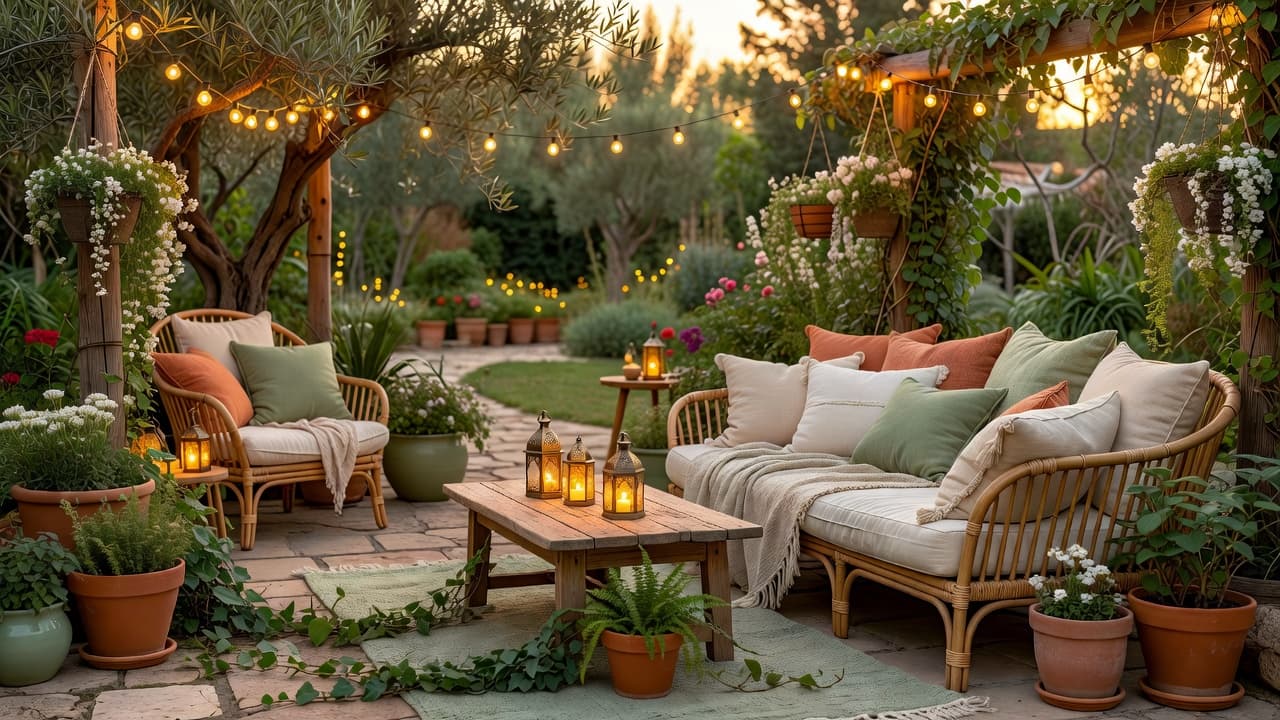
Boho vs cottage vs Mediterranean garden style
The three styles get confused because all three feel informal, but they come from different starting points. A cottage garden is dense, English in origin and built almost entirely from flowering perennials packed into narrow borders, with structure that comes from the planting itself rather than furniture or textiles. A Mediterranean garden is shaped by climate rather than culture-mixing — gravel, terracotta, olive and citrus trees, built to cope with heat and low water. Boho borrows a little from both — the informality of a cottage garden, the terracotta and olive trees of a Mediterranean one — but its real signature is the global, layered furniture and textiles, which neither of the other two styles uses. If the abundance and mismatched furniture feel like too much, a pared-back minimalist garden sits at the opposite end of the same spectrum, and boho ideas scale down well for a small balcony or vertical garden too — a single rattan chair, a macrame hanger and one overflowing pot can carry the whole look in a few square metres.
Common boho garden mistakes to avoid
- Buying a matching furniture set — a boho garden reads as collected, not coordinated; mismatched pieces bought over time work better than one boxed set.
- Planting pampas grass without checking local guidance — in several warmer climates it self-seeds aggressively; a contained ornamental grass or dried plumes give the same look safely.
- Skipping structure entirely — a defined path and one or two anchor plants keep an abundant planting scheme from reading as neglected.
- Using indoor-only textiles and furniture outdoors — untreated fabric and real rattan left out in the rain will mould and crack within a season; choose outdoor-rated fabric and resin wicker instead.
- Forgetting the lighting — a boho garden used only in daylight misses half the point; lanterns and festoon lights are not optional extras.
Frequently asked questions about boho garden design
What is boho garden design?
Boho garden design layers natural, weathered materials — rattan, macrame, terracotta — with abundant, informal planting and global-inspired textiles, rather than clipped hedges and matching furniture, so the space reads as collected over time rather than bought as a set.
Is pampas grass safe to plant in a boho garden?
It needs care rather than avoidance. Pampas grass (Cortaderia selloana) self-seeds and is classed as invasive in several warmer countries; the RHS advises choosing its planting position carefully. A contained ornamental grass such as Stipa tenuissima, or dried pampas plumes, give the same feathery look without the risk.
What furniture works best for a boho garden?
Resin wicker or all-weather rattan handles year-round outdoor exposure far better than real rattan, which is best reserved for a covered porch. Mixed, secondhand or vintage pieces suit the style more than a single matching set.
How is boho different from a cottage garden?
A cottage garden gets its structure from dense flowering perennials in narrow English-style borders. Boho's structure comes from layered global furniture and textiles instead — the two can overlap but are built from different starting points.
Can I create a boho look on a small balcony?
Yes. A single piece of rattan or resin wicker furniture, a macrame plant hanger, layered cushions and one overflowing pot of trailing plants carry the look in a few square metres — the same layering principle just scales down.
Can an AI garden design app help plan a boho garden?
Yes. An app such as FlorAI can generate a photo-realistic boho redesign from a single photo of a real garden or patio, making it easy to test rattan furniture, lighting and planting before anything is bought.
Last updated: September 2026. Written by the FlorAI garden team.