
Garden Styling · 2026 guide
Interior Design Principles for the Garden: Style an Outdoor Room Like a Pro (2026)
Interior design principles for the garden are the same rules decorators use indoors — balance, scale, rhythm, focal points, colour and unity — applied to planting, paving and furniture outdoors. Borrowing them turns a garden from a random collection of plants into a calm, considered outdoor room. This guide walks through each principle in plain English, with real examples you can copy this weekend.
AI Garden Design GuidesPublished July 2, 2026Updated July 2, 202610 min read
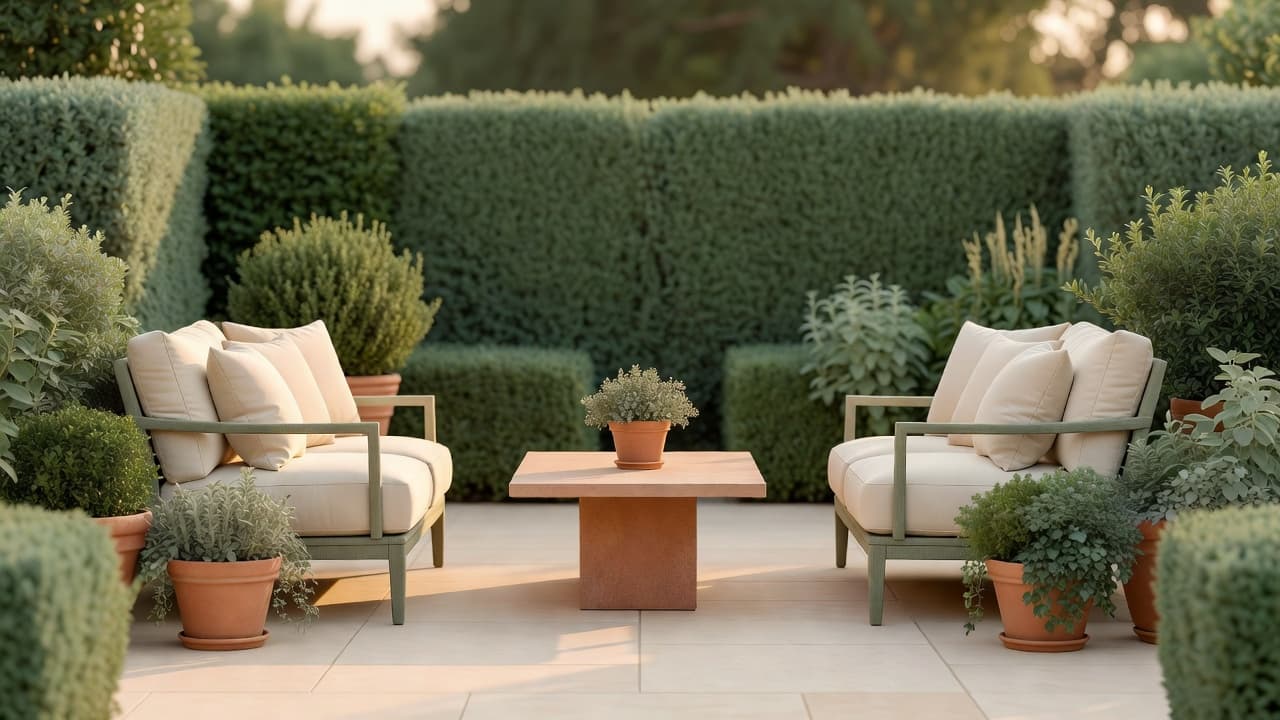
The one-line answer
None of these ideas are new or complicated. They are simply the reasons a well-designed room, or garden, feels calm and a badly designed one feels cluttered — even when both contain nice things.
What are interior design principles for the garden?
Interior designers do not decorate a room by buying furniture they like and placing it wherever there is space. They work from a short list of principles — balance, scale, rhythm, emphasis, colour and unity — that decide where each piece goes and why. Garden designers use almost exactly the same list, with plants, paving and structures standing in for sofas, rugs and lamps.
The link makes sense once you think of a garden as an outdoor room. A patio is a floor. A pergola or tree canopy is a ceiling. A hedge or fence is a wall. Furniture, lighting and planting are the sofa, lamps and soft furnishings. Once you see the garden this way, interior design principles for the garden stop feeling abstract and start feeling like common sense. For a wider look at how these ideas come together, see our AI garden design guide.
Balance: matching visual weight on either side of a space
Balance is about visual weight, not literal weight. A single large shrub can balance three small pots on the other side of a path if the eye reads them as roughly equal in mass. There are two honest ways to achieve it outdoors:
- Symmetrical balance — identical planting, pots or lighting mirrored either side of a path, door or window. Formal and calm, and the easiest version to get right in a small front garden.
- Asymmetrical balance — a large specimen tree on one side offset by a cluster of smaller planting and a bench on the other. Looser and more natural, and usually the better fit for an informal cottage or wildlife garden.
Stand at the window you look through most — usually the kitchen or the living room — and check the view. If one side feels heavier than the other, that is an imbalance an interior designer would fix indoors in five minutes, and a gardener can fix outdoors with one well-placed pot.
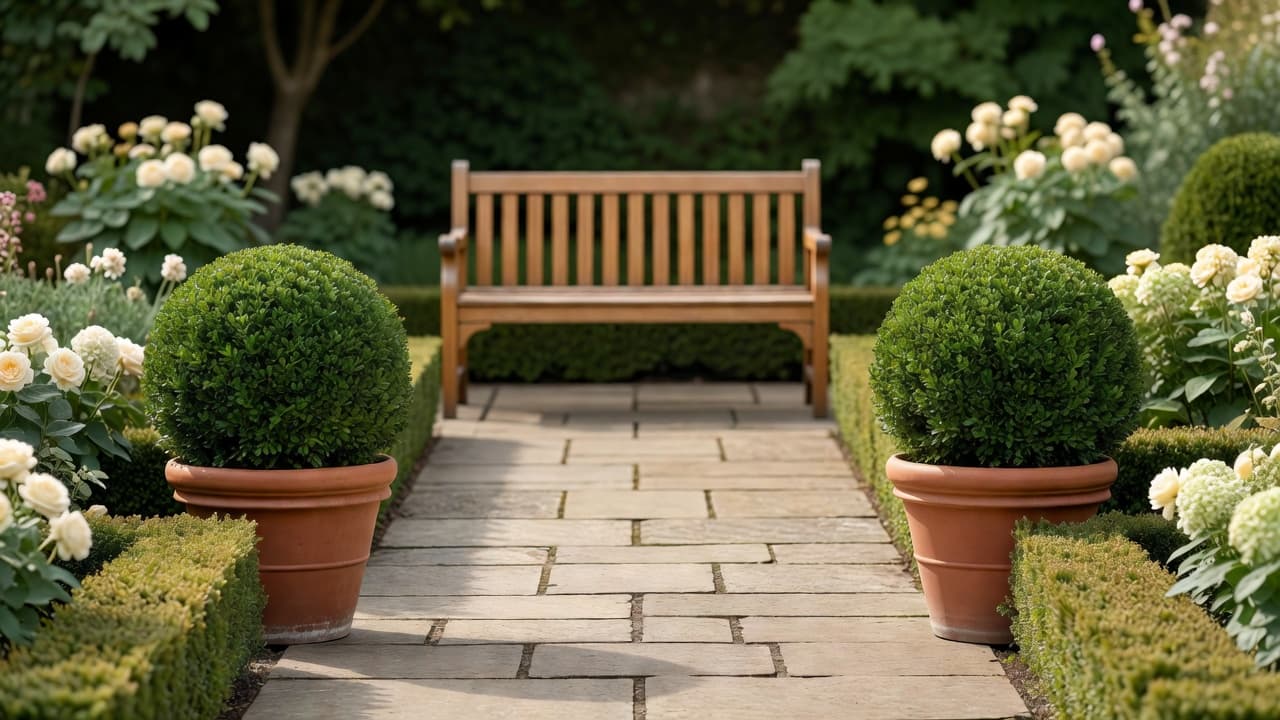
Scale and proportion: sizing everything to the space and to you
Scale is the reason a huge sofa feels wrong in a small flat, and the same idea governs a garden. A pergola sized for a show garden will swamp a small backyard; a bistro table sized for a balcony will look lost on a half-acre lawn. A plant’s scale is really its relationship to its neighbours and to the people using the space, not an absolute size. Drawing a simple scale plan before you buy anything — even a rough one on graph paper — is one of the most effective ways to avoid an over- or under-sized garden.
- Paths and seating areas should be sized for real human movement: at least 90cm wide for a single-file path, 1.2m for two people walking side by side.
- A dining table needs roughly 60cm of clearance behind every chair to pull it out comfortably.
- Tree and shrub canopies should be checked against their mature size, not their size in the pot — a common and expensive mistake.
- Proportion usually starts with the house: the size of your windows, doors and roofline sets a sensible scale for everything planted in front of them.
Rhythm and repetition: repeating shapes and materials to create flow
Rhythm is the visual beat that carries your eye through a space. Indoors, a designer might repeat a cushion fabric across three seats or run the same flooring through an open-plan room. Outdoors, the NC State Extension garden design handbook describes rhythm as the predictable repetition of a material, colour, form or texture along a path or border — it is what stops a long garden feeling like a random assortment of plants.
- Repeat one hard-landscaping material — the same paving, brick or gravel — throughout the garden rather than mixing three or four.
- Plant the same species in odd-numbered drifts (three, five, seven) at intervals along a border, rather than one of everything.
- Reuse a single pot style or colour at each doorway or turn in the path so the eye recognises it as it moves through.
Too much repetition tips into monotony, so leave room for one or two genuine surprises — a single specimen plant, an unusual pot, a change of level — to keep the rhythm interesting rather than flat.
Focal points: giving the eye somewhere to rest
Every well-designed room has a focal point — a fireplace, a piece of art, a statement light — that the eye is drawn to on entry. A garden needs the same anchor, or the eye wanders without settling and the space feels restless even when it is tidy.
- Pick one focal point per view, not five. A fountain, a specimen tree, a sculpture or even a beautifully shaped bench all work.
- Place it on a sightline from the point you actually look from most — the back door, the kitchen window, the top of the garden steps.
- Frame it. A gap in planting, an arch, or a change of paving either side of the focal point does the framing for you.
- Let secondary areas — a bench, a herb bed — stay quieter, so they do not compete with the main focal point.
In a long, narrow garden, more than one focal point is fine as long as each belongs to its own “room” — the sightline rule keeps them from fighting each other.
Colour theory outdoors: using the 60-30-10 rule in planting
Interior designers often use the 60-30-10 rule to stop a colour scheme sprawling: 60% dominant colour, 30% secondary colour, 10% accent. The same ratio works surprisingly well as a planting formula.
- 60% dominant — usually green foliage, the calm backbone of any border, from box hedging to ornamental grasses.
- 30% secondary — a supporting flower colour that repeats through the border, such as blue salvia or lavender.
- 10% accent — a single bold, contrasting colour used sparingly near an entrance, a bench or a focal point, such as scarlet zinnias or bright coreopsis.
The classic complementary and analogous colour schemes used indoors translate directly outdoors — cool blues and purples read as calm and recede visually, while warm oranges and reds feel energetic and advance towards the eye. Plan for bloom timing too: a border that follows the ratio perfectly in June can look bare by September if every accent flowers at once.
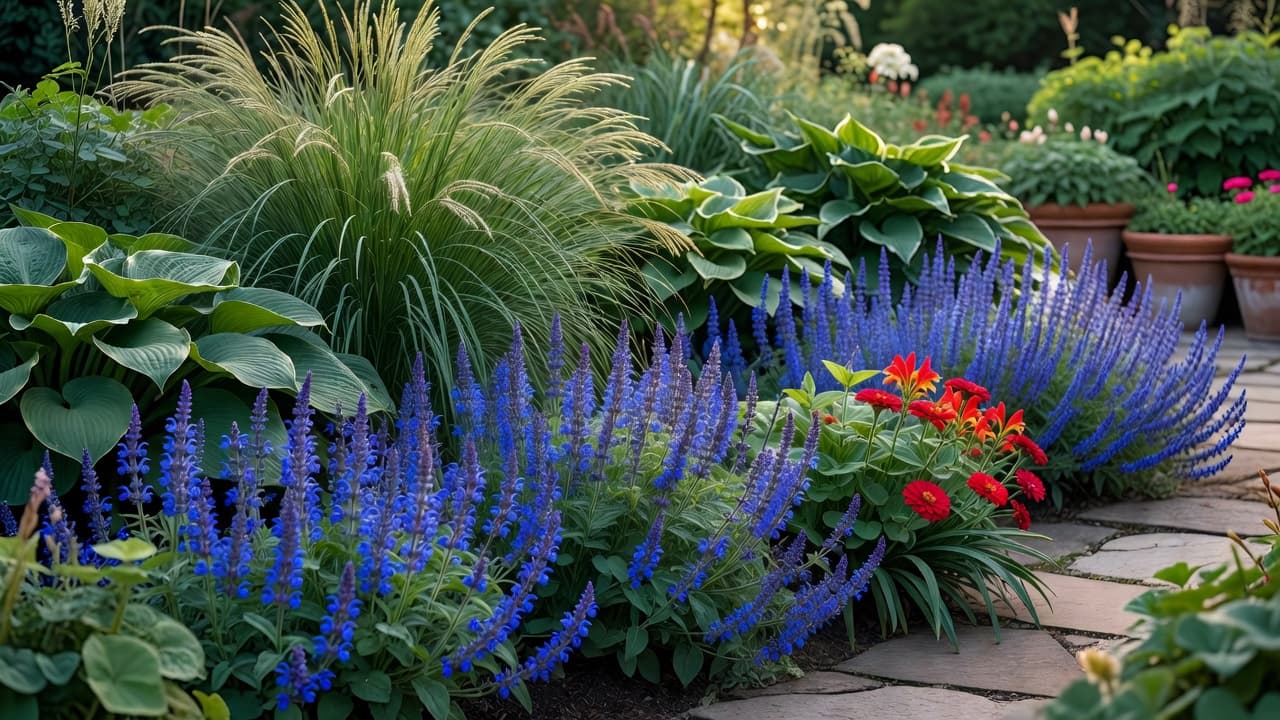
Texture and layering: the garden’s soft furnishings
Indoors, layering means combining a wool rug, a linen cushion and a wooden side table so the room has depth you can feel as well as see. Outdoors, the same instinct works through plant texture: pair the bold, glossy leaves of a hosta with the fine, feathery foliage of an ornamental grass, and add something in between — the medium texture of a lavender or box ball — to bridge the two.
- Layer height as well as texture: low groundcover, mid-height shrubs, then a taller tree or climber, mirrors the low-mid-high layering of furniture, lamps and art indoors.
- Mix at least two leaf textures in every border — fine and bold — so the planting reads as considered rather than flat.
- Evergreen structure (box, yew, ornamental grasses left standing) does the job a good rug does indoors: it holds the design together when nothing is in flower.
Unity: making the house and garden feel like one home
Unity is the principle that ties all the others together — the reason a garden feels like a natural extension of the house rather than a separate, disconnected space. Nearly 60% of US homeowners say they are investing in their outdoor space this year, and the clearest trend is treating the garden as another room rather than an afterthought, according to 2026 outdoor living research covered by Forbes.
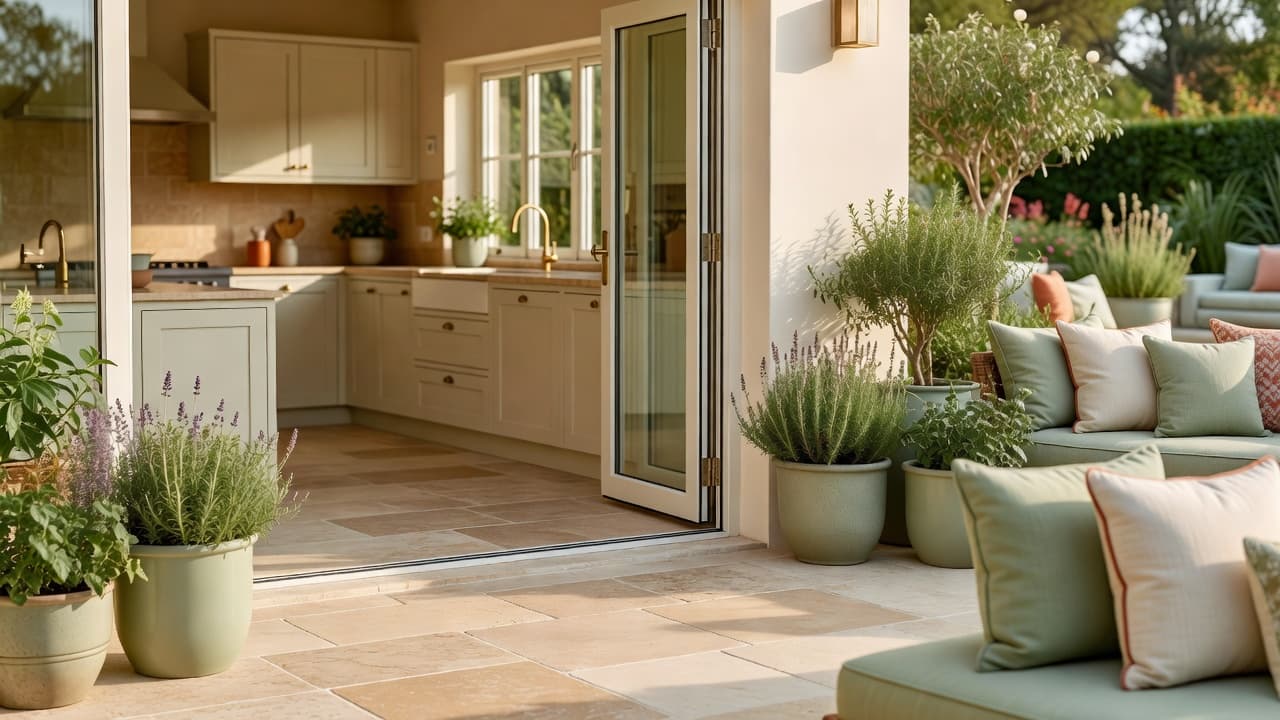
- Repeat one material across the threshold — the same stone, tile or timber tone inside and out — so the eye reads one continuous floor.
- Echo an indoor colour outdoors: if your kitchen has sage cabinetry, a sage-toned bench or pot ties the two spaces together.
- Keep sightlines open. A clear view from a kitchen window straight through to a garden focal point does more for unity than any single plant.
- This idea is sometimes called biophilic design — designing spaces around our innate connection to nature — and it is a big part of why indoor-outdoor flow is one of the most requested features in 2026 renovations.
You do not need a full renovation to apply it. Even renters can borrow one plant colour or pot style from indoors and repeat it on a balcony to get most of the effect. For a fuller look at planning a bigger change, our 2026 garden redesign cost guide breaks down what an indoor-outdoor project actually costs, and AI garden planner vs. landscape designer covers when it is worth bringing in a professional for the technical parts.
Putting it all together in your own garden
You do not need to apply every principle perfectly, or all at once. Start with balance and scale, since a garden that is roughly balanced and correctly sized already feels most of the way resolved. Add one focal point, repeat one material or colour for rhythm, then layer in texture and unity over time as budget allows.
If it helps to see the principles applied before you commit to buying anything, an AI garden design app like FlorAI can show a balanced, scaled, colour-coordinated version of your own garden from a single photo — a fast way to test an idea before a single plant goes in the ground. See our plain-English guide to what AI garden design actually is for how that works, and real before-and-after examples for what a redesign looks like in practice.
Frequently asked questions about interior design principles for the garden
What are the main interior design principles for the garden?
Balance, scale, rhythm, focal point, colour and unity. These six principles, borrowed directly from interior design, decide where planting, paving, furniture and lighting go in a garden and why, in the same way they decide furniture layout in a living room.
How do I use colour theory in my garden?
Apply the 60-30-10 rule: roughly 60% dominant colour (usually green foliage), 30% secondary colour (a repeating flower colour such as lavender or salvia), and 10% accent colour used sparingly near an entrance or focal point. Cool colours read as calm; warm colours feel energetic.
What is a focal point in garden design?
A focal point is the single object — a specimen tree, fountain, sculpture or striking bench — that a garden view is built around. It sits on the main sightline from the house and gives the eye somewhere to rest, the same job a fireplace or artwork does in a living room.
Can I apply interior design principles to a small garden?
Yes — small gardens often benefit the most, since a limited space shows imbalance or clutter more obviously. Symmetrical balance, one focal point and a repeated colour palette are especially effective in a small backyard, courtyard or balcony.
Do I need a professional designer to use these principles?
No. Balance, rhythm and colour theory are simple enough to apply yourself with a tape measure, a plant list and an afternoon. For technical work — levels, drainage, retaining walls — a professional is worth it; see our AI garden planner vs. landscape designer guide for when to call one in.
Is biophilic design the same as interior design principles for the garden?
They overlap but are not identical. Biophilic design is specifically about designing around our connection to nature — daylight, greenery, natural materials. Interior design principles for the garden are the broader toolkit of balance, scale, rhythm, colour and unity that biophilic design also draws on.
Last updated: July 2026. Written by the FlorAI garden team.