
Gravel Gardens · 2026 guide
Gravel Garden Design Ideas: A Practical 2026 Guide
Gravel garden design replaces a struggling lawn or high-upkeep bed with a shallow layer of gravel over prepared soil, planted directly with drought-tolerant perennials and grasses in loose, naturalistic drifts — the approach made famous by garden designer Beth Chatto’s dry garden in Essex, which has needed no irrigation since it was planted in 1992. Contrary to a lot of online advice, most experienced designers now skip the weed-suppressing membrane entirely, since perennial roots need to spread freely underground and a thick gravel mulch alone suppresses weeds once a bed is established. This guide covers how to build a gravel garden without a membrane, which plants genuinely thrive in one, realistic 2026 costs in the UK and US, and the mistakes that turn a gravel garden into a weed magnet instead of a low-water, low-upkeep feature.
AI Garden Design GuidesPublished August 7, 2026Updated August 7, 202610 min read
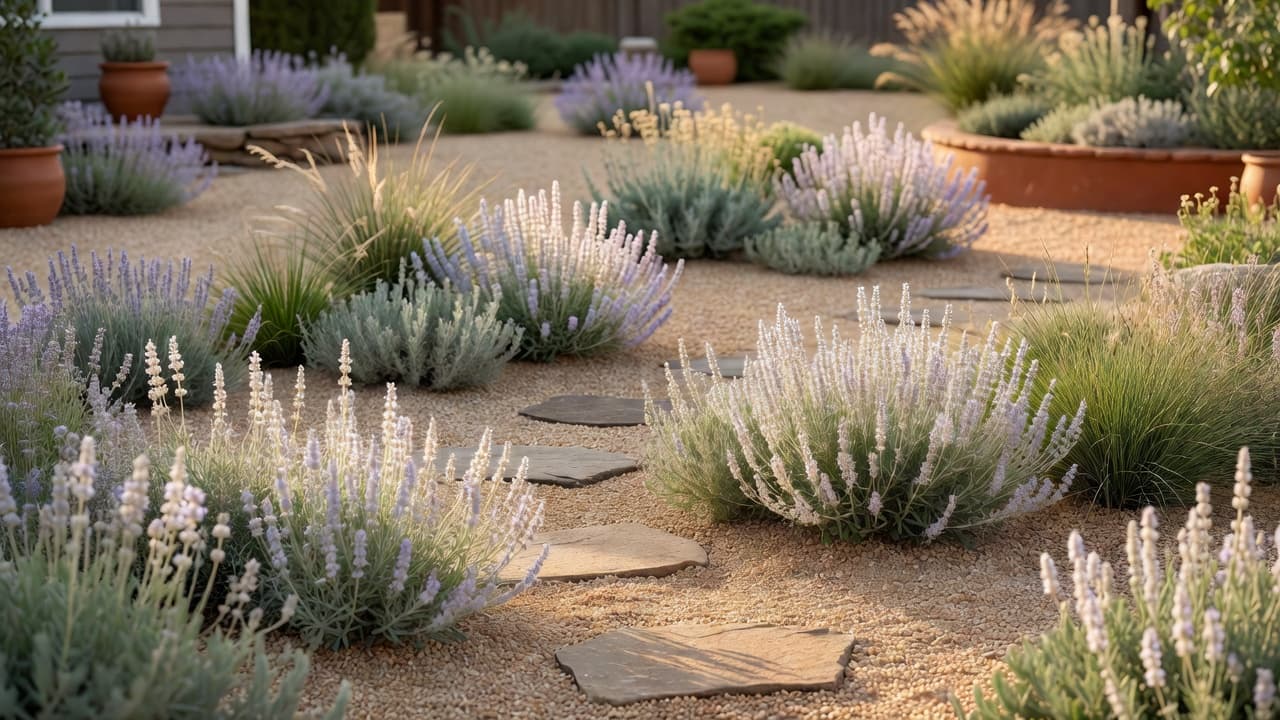
What is gravel garden design?
The reference point for the modern gravel garden is Beth Chatto’s Gravel Garden at Elmstead Market in Essex, created in 1992 on a former car park in an area that receives under 500mm of rain a year. It has never been watered since planting and now supports more than 200 drought-tolerant species growing straight through gravel and rubble. The idea that made it work is simple: match plants to the free-draining, low-fertility conditions gravel creates, rather than trying to improve the soil to suit thirstier plants. Our full AI garden design guide covers wider planning; this guide focuses specifically on building and planting a gravel garden well.
- Clear perennial weeds thoroughly before you start — this matters far more to long-term weed control than any membrane.
- Improve drainage only where needed, working coarse grit into heavy clay so water does not sit around root crowns over winter.
- Skip the landscape membrane — plant into the prepared, open ground so perennial roots and self-seeders can spread freely.
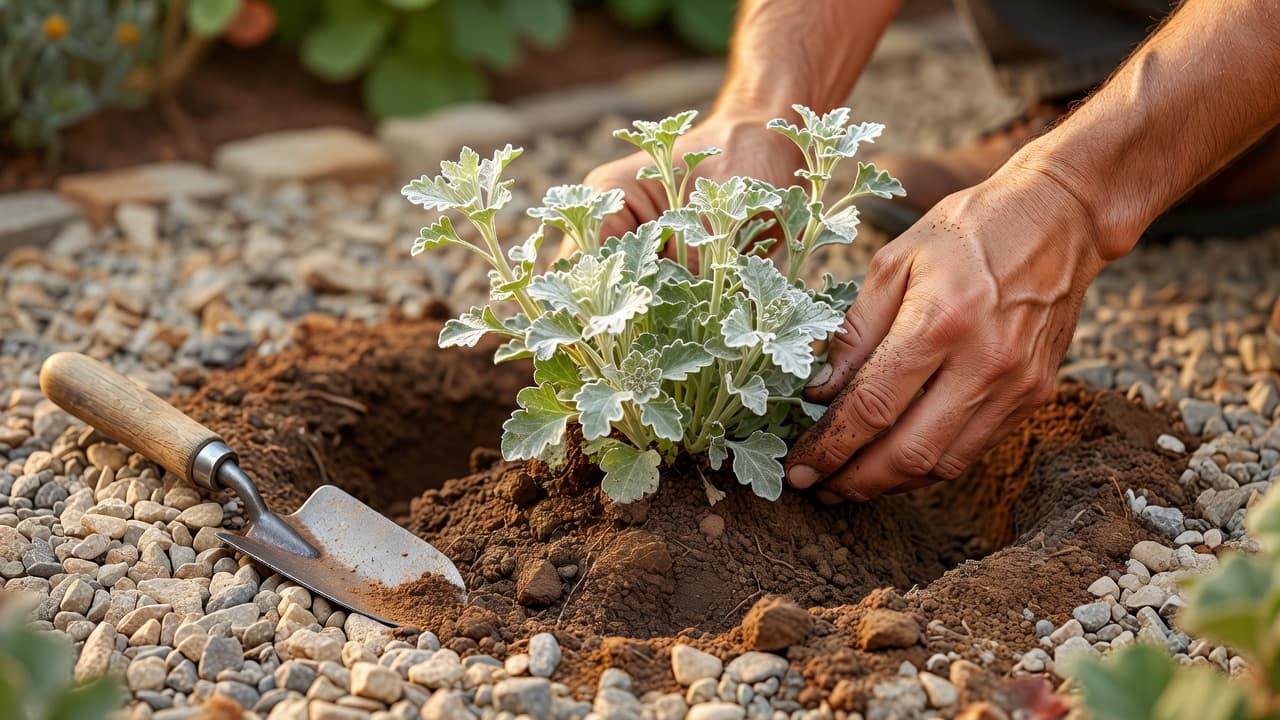
- Plant first, then mulch, spreading 5–7.5cm of gravel around (not over) each plant’s crown once it is in the ground.
- Water through the first growing season while roots establish, then stop — established plants should not need supplemental watering.
- Top up the gravel every few years as it settles and mixes into the topsoil, and hand-pull the occasional weed rather than spraying.
Do you need a membrane under a gravel garden?
Most gravel driveway guides recommend a weed-suppressing membrane, but that advice does not carry over well to a planted gravel garden. A membrane blocks perennial roots from spreading and self-seeders from establishing, works its way to the surface over a few seasons and becomes visible and untidy, and has to be cut open every time you add a new plant. Beth Chatto’s own gardening team has never used one: they clear weeds properly at the start, spread gravel 5–7.5cm deep directly over prepared soil, and rely on dense planting and a healthy gravel mulch to do the weed-suppressing work instead. Expect to hand-weed a little in year one; by year two, established plants and self-sown seedlings knit together and outcompete most new weeds on their own.
The best plants for a gravel garden
A gravel garden favours plants that evolved for poor, sharply drained soil in full sun — many Mediterranean and prairie natives fit perfectly, and most are on the RHS’s own list of Beth Chatto’s favourite drought-tolerant plants:
- Catmint (Nepeta) — long-flowering, silvery-leaved, and one of the easiest gravel-garden fillers between larger plants.
- Russian sage (Salvia nemorosa and Perovskia atriplicifolia) — upright violet-blue spires from midsummer, thriving in lean, dry soil.
- English lavender (Lavandula angustifolia) — evergreen structure, scent, and reliable drought tolerance once rooted.
- Sea holly (Eryngium giganteum) — architectural steel-blue flowerheads that self-seed gently through gravel.
- Spurge (Euphorbia characias) — evergreen structure and acid-green flowers from early spring, one of the backbone plants of Chatto’s original design.
- Mexican feather grass (Stipa tenuissima) — fine, moving texture that softens hard gravel and paving edges.
- Sedum (Hylotelephium) — a true succulent, needing almost no water once established, with structure into autumn.
- Verbena (Verbena bonariensis) — tall, airy, see-through flowering that self-seeds freely in open gravel.
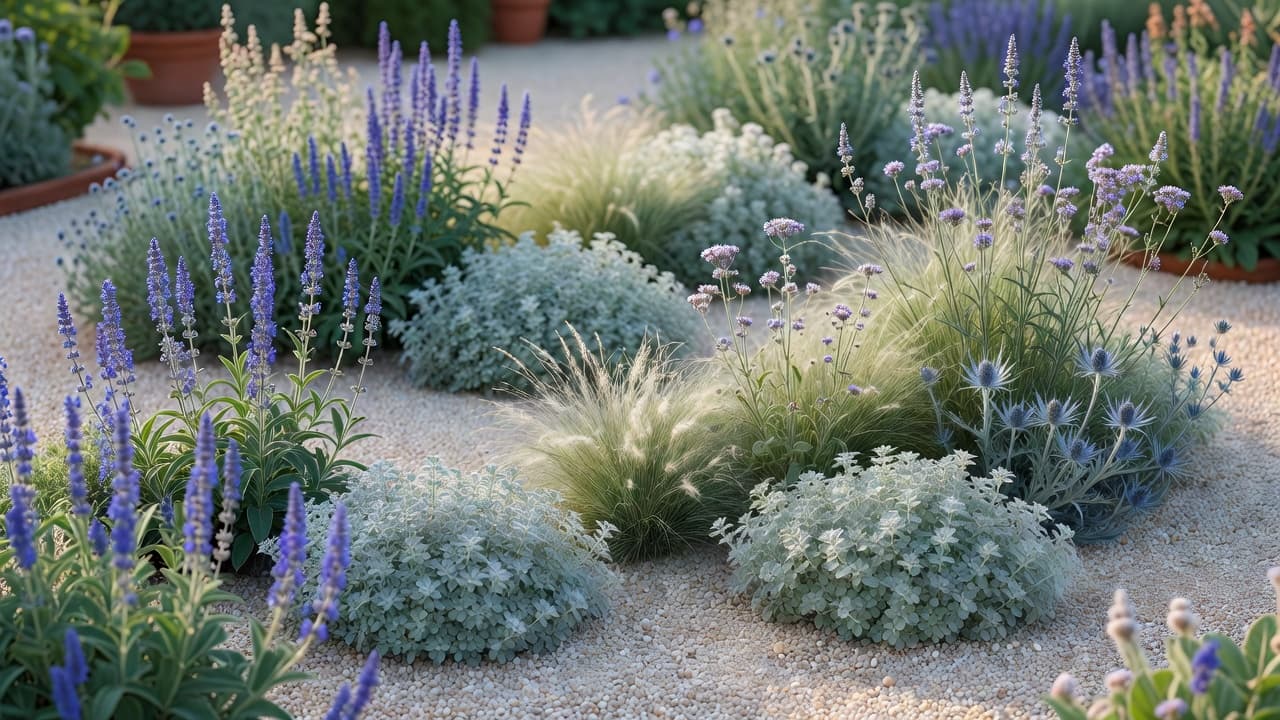
Repeat five or six species across the space in loose, overlapping drifts rather than buying one of everything — it reads as more deliberate and means every plant shares the same watering and cutback routine. Always check a plant against your local hardiness zone before buying; the free USDA Plant Hardiness Zone Map is the fastest way to do that in the US, and Gardeners’ World’s drought-tolerant plant picks are a good UK cross-check.
Choosing the right gravel
- 20mm pea gravel is rounded, comfortable underfoot on paths, and the most widely available choice for a planted gravel garden.
- Angular grit or flint locks together more than rounded gravel, resists scattering onto lawns or paving, and gives self-seeders more purchase.
- Warm buff, honey or golden gravel suits most planting schemes and complements the silver and grey-green foliage typical of drought-tolerant plants.
- Slate chippings or silver-grey gravel read more contemporary and pair well with a minimalist or Japandi-influenced layout.
- Depth matters more than colour for weed suppression — aim for a full 5–7.5cm layer; anything thinner lets light reach the soil and weed seed to germinate.
In England, gravel and other permeable surfaces are exempt from planning permission at any size, because rainwater drains through them rather than running off — unlike solid paving over 5 square metres, which does need permission unless water is directed to a lawn or border. Always check the Planning Portal’s guidance on paving front gardens if your project faces a public road, and check separately if your property is listed or in a conservation area.
Layout and design tips that make a gravel garden look designed
- Plant in loose, overlapping drifts, not straight rows or single specimens — gravel gardens read best when planting looks like it has self-seeded.
- Leave open gravel between plants rather than covering every inch — the bare gravel itself is part of the design, echoing a dry riverbed or scree slope.
- Vary plant height and form — pair upright spikes like Russian sage with mounding catmint, airy verbena, and structural spurge so the bed has rhythm from a distance.
- Set a path or stepping stones through the gravel so the bed can be tended and enjoyed up close, not just viewed from the edge.
- Repeat the same handful of plants across the whole area instead of scattering one-off specimens, which reads as more considered and cuts the number of care routines to remember.
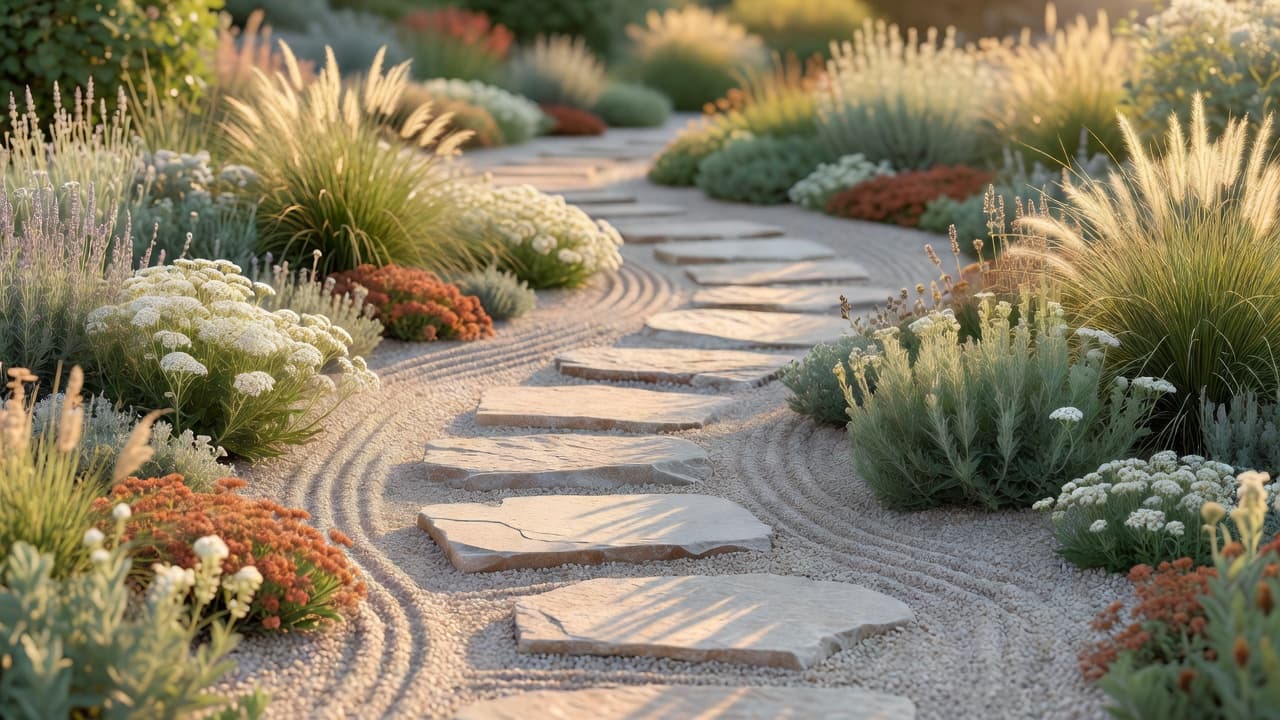
What a gravel garden costs in 2026
Gravel gardens are one of the more affordable ways to redesign a bed or replace a struggling lawn, because there is no membrane, turf or irrigation system to budget for. As a realistic UK baseline for 2026, building a dedicated gravel garden (gravel, plants and edging) runs roughly £15–£30 per square metre, so a modest 6m x 4m area typically costs £360–£720 in total. Gravel itself costs about £15–£40 per tonne or £25–£60 per cubic metre, plus a delivery charge. In the US, installed landscape gravel typically runs $1–$3 per square foot, with pea gravel toward the upper end of that range and crusher run toward the lower end; a professionally installed bed adds roughly $2–$5 per square foot in labour. Our full garden design on a budget guide covers how gravel compares with other low-cost redesign options.
- Converting a small lawn to a gravel bed, prepped soil, gravel and a modest planting plan: roughly £360–£720 / $500–$1,200 for a compact area.
- Gravel material alone, delivered: roughly £25–£60 per cubic metre in the UK, or $1–$3 per square foot installed in the US.
- Adding drought-tolerant plants in blocks of three or five: typically £4–£12 / $5–$15 per perennial, with most gravel gardens needing 15–30 plants for a border-sized area.
- Ongoing cost is close to zero once established — a gravel top-up every few years and no watering, mowing or feeding bill in between.
Mistakes that ruin a gravel garden
- Laying gravel too thin. Under 5cm lets light reach the soil, and weed seed germinates through it just as easily as through bare ground.
- Adding a membrane anyway. It blocks the perennial spread and self-seeding that makes a gravel garden fill in and look established over time.
- Choosing plants for looks alone. A thirsty, shade-loving plant dropped into full-sun gravel will need constant watering to survive, undoing the entire point of the design.
- Skipping soil prep. Perennial weeds left in the ground before gravel goes down are far harder to remove afterwards than before.
- Ignoring drainage. A gravel bed over heavy clay that does not drain will sit wet all winter and rot the crowns of drought-tolerant plants, which need dry roots as much as they need low water in summer.
- Overwatering after the first year. Established drought-tolerant plants that keep getting watered grow soft, shallow roots and become less resilient, not more.
Seeing a gravel layout applied to an actual photo of your own space makes these trade-offs far easier to judge than picturing them from a plant list. FlorAI can generate a photorealistic gravel garden redesign from a single photo, so you can test gravel colour, planting drifts and a path layout before buying any materials.
Frequently asked questions about gravel garden design
What is a gravel garden?
A gravel garden is a bed where drought-tolerant perennials, grasses and shrubs are planted directly into a shallow layer of gravel over prepared soil, rather than into turf or a conventional mulched border. Once established, it needs no irrigation, in the style pioneered by Beth Chatto’s dry garden in Essex.
Do you need a membrane under gravel for a garden bed?
No — most experienced designers skip the membrane for planted gravel gardens. It blocks perennial roots and self-seeders from spreading, works its way to the surface over time, and has to be cut open for every new plant. Thorough weed clearance before planting, plus a full 5–7.5cm gravel depth, controls weeds just as well.
What plants grow well in a gravel garden?
Mediterranean and prairie natives suited to poor, free-draining soil do best: catmint, Russian sage, English lavender, sea holly, spurge (Euphorbia characias), Mexican feather grass, sedum and verbena are all widely recommended and tolerate gravel once their roots establish.
How much does a gravel garden cost in 2026?
A dedicated gravel garden in the UK typically costs £15–£30 per square metre to build, so a modest 6m x 4m area runs roughly £360–£720. In the US, installed landscape gravel usually costs $1–$3 per square foot, plus $2–$5 per square foot for professional installation.
Do you need planning permission for a gravel garden or driveway in the UK?
In England, gravel is a permeable surface and is exempt from planning permission at any size, since rainwater drains through it rather than running off. Solid, impermeable paving over 5 square metres does need permission unless water is directed to a lawn or border — check the Planning Portal’s guidance, and separately check if your property is listed or in a conservation area.
Can AI help design a gravel garden?
Yes. An AI garden design app like FlorAI can turn a single photo of your garden into a photorealistic gravel garden layout, making it much easier to test gravel colour, planting drifts and a path before spending money on materials or plants.
Last updated: August 2026. Written by the FlorAI garden team.