
Buyer’s guide · 2026
Best AI Garden Design Tools in 2026: What Actually Matters
An AI garden design tool turns one photo of your real garden into a believable picture of that same space, replanted and reimagined, usually in seconds. In 2026 there are dozens of them, and they are not all the same. This guide explains, in plain English, the seven things that separate a genuinely useful AI garden design tool from a pretty gimmick — and how to test one yourself in ten minutes before you trust it with your garden.
AI Garden Design GuidesPublished June 14, 2026Updated June 14, 20269 min read

What an AI garden design tool actually does
The important word is your. A weak tool shows you a beautiful garden that belongs to somebody else. A strong one shows you your garden, looking lovelier, so the picture is actually useful when you start digging, buying or briefing a contractor. If you are completely new to the idea, our plain-English explainer of AI garden design is the gentlest place to start, and the AI garden design pillar guide walks through a full redesign with real before-and-after photos.
Under the hood these tools use a generative AI model, the same family of technology behind modern image assistants. You do not need to understand any of that to use one. You only need to know what separates a good one from a bad one — which is the rest of this guide.
The seven things that separate a great AI garden design tool from a gimmick
After the rush of new launches in 2025 and 2026, the tools that are genuinely worth your time tend to share the same seven qualities. Use this as a checklist when you try any AI garden design tool:
- Photorealism from your own photo — it redesigns the garden in your picture, not a generic template, and keeps your fence, shed and trees where they are.
- Climate and hardiness intelligence — it suggests planting that can actually survive where you live, not a tropical fantasy in a cold region.
- Real planting lists — named plants you can buy and grow, with a sense of light, water and eventual size, not just a pretty blur of green.
- A genuine range of styles — cottage, modern, Mediterranean, Japanese, wildlife, tropical — tried on the same garden in minutes.
- Speed — a finished redesign in seconds, so you can explore ten ideas in the time a designer would book a first visit.
- It works on the phone in your pocket — no laptop, no software to install, no CAD to learn.
- An honest free tier — enough free designs to judge it properly before you pay anything.
No single screenshot can prove all seven — which is why the ten-minute test further down matters. Throughout this guide we use FlorAI as the worked example, because it was built around exactly these seven points, but the checklist works for judging any tool.
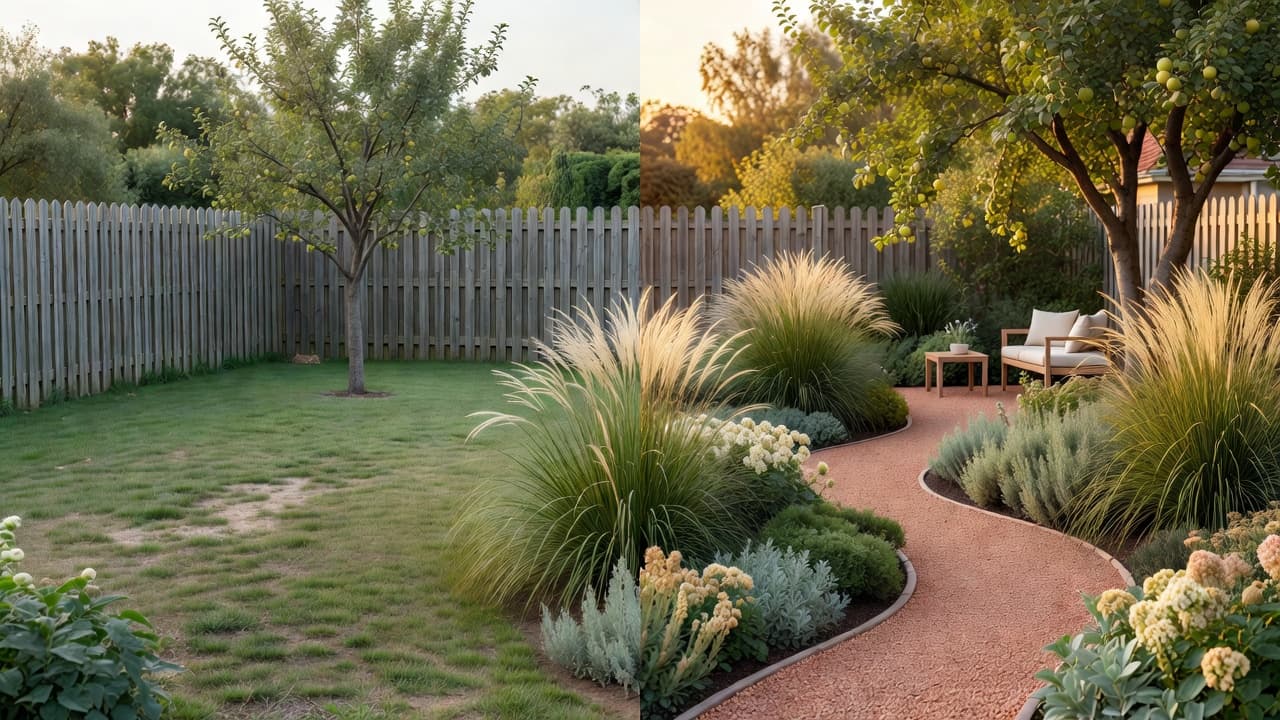
Why photorealism from your own photo matters most
Of the seven, this is the one that quietly decides whether a tool is useful. Plenty of apps can generate a gorgeous garden. Far fewer can generate a gorgeous version of the garden you already have — the awkward narrow side return, the slope, the shed you cannot move, the tree you love. A redesign is only worth acting on if it respects those fixed points.
When you judge an AI garden design tool, upload a real, slightly messy photo of your own space in daylight and ask one question: do I recognise my garden in the result? If the fence line, the boundaries and the big trees are still there, you can trust the rest. If the tool quietly swapped your garden for a stock one, the lovely picture is useless. For a deeper look at this, see designing from a photo versus from scratch.
Climate intelligence: the feature people forget
A garden that cannot survive your winter is not a design, it is a disappointment waiting to happen. This matters more than ever: in November 2023 the USDA updated its Plant Hardiness Zone Map for the first time since 2012, and the new map runs about 2.5°F warmer, shifting roughly half of the United States into a warmer half-zone. The plants that thrive in your area are quietly changing.
A good AI garden design tool takes your location into account so the planting it suggests stands a real chance of surviving. When you test one, try the same garden as if you lived somewhere cold and somewhere mild — the suggestions should change. If a tool offers you the same olive trees and tree ferns whether you are in Aberdeen or Andalusia, it is decorating, not designing. FlorAI weighs your climate before it suggests planting, which is the difference between a picture and a plan you can follow.
Planting lists you can actually buy and grow
The prettiest render in the world is frustrating if you cannot find out what is in it. A strong AI garden design tool names its plants, and the names should be real, growable, and matched to the style you picked. For a relaxed cottage garden that means layered perennials like delphinium, columbine, peony, phlox and yarrow with climbing roses; for a dry, sunny Mediterranean garden it means lavender, rosemary, olive and gravel between drought-tolerant drifts.
When you see named plants you could write on a shopping list, you have a tool that respects you. When you see only a green haze, you have a wallpaper generator. For help reading a result critically, our AI garden design app checklist turns this into a simple tick-box, and Gardeners’ World is a friendly place to look any unfamiliar plant up.
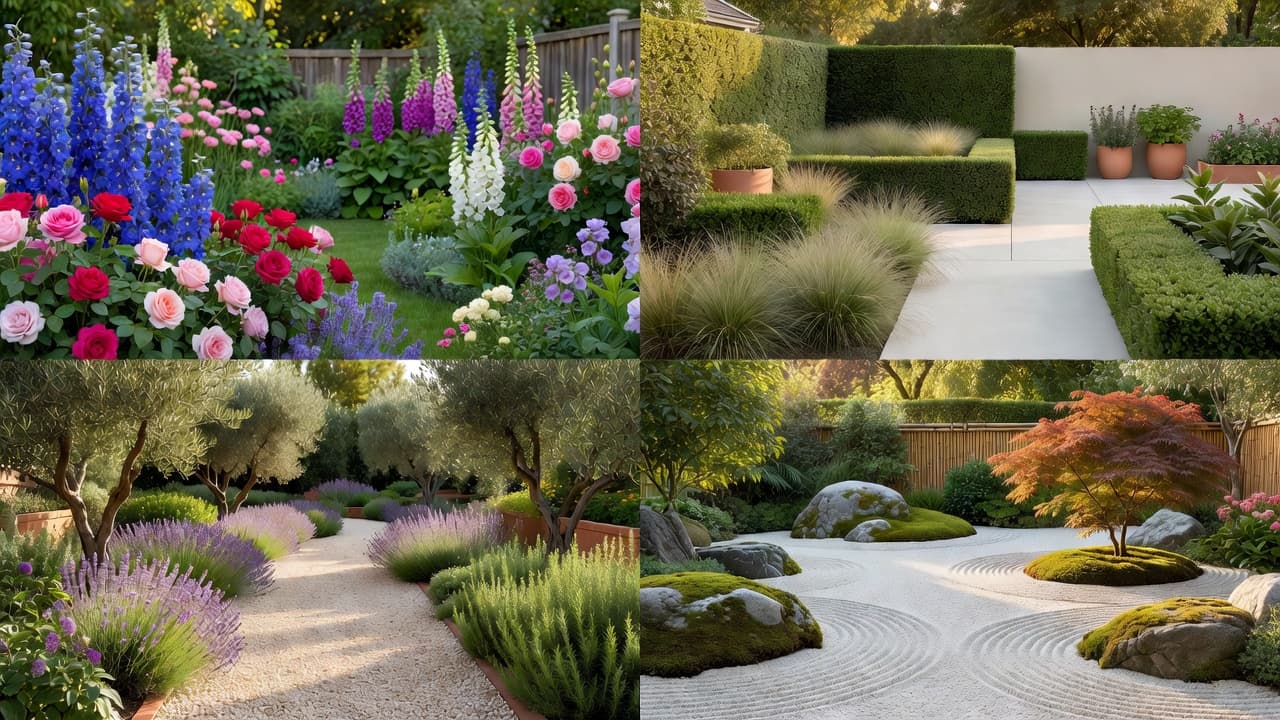
How to test an AI garden design tool in ten minutes
You do not need a review site to tell you whether a tool is any good. You can find out yourself, for free, in the time it takes to make a cup of tea:
- Take one honest photo of your real garden in daylight, from where you usually stand to look at it. No tidying.
- Ask for your least favourite style first. If even a style you dislike looks believable on your space, the tool is strong.
- Check the fixed points. Are your fence, shed and main tree still there and in the right place?
- Switch styles. Try cottage, then modern, then Mediterranean on the same photo — they should feel genuinely different, not recoloured.
- Read the planting. Can you name three plants you could actually go and buy?
- Note the free limit. Did you get enough free designs to decide, or were you blocked after one?
A tool that passes all six is worth keeping. One that fails two or three is worth deleting, however pretty the marketing looked. If you want to weigh the running cost of the build that follows, our 2026 garden design cost guide sets sensible expectations.
Where AI garden design tools still need a human
An honest guide names the limits. Even the best AI garden design tool is a brilliant way to decide what you want, not a replacement for skilled hands when the ground gets complicated. Steep slopes, retaining walls, drainage, boundary disputes and anything structural still want a real landscaper or garden designer. The calm order is to use AI first to settle the look, then hand your favourite picture to a professional so you are both certain before money is spent. We compare the two directly in AI garden planner versus landscape designer.
Used that way, an AI garden design tool is the most reassuring £0 you will spend on your garden this year: it removes the guesswork, shows you the finished feeling in advance, and means the first real spade goes in with confidence rather than hope.
Frequently asked questions
What is the best AI garden design tool in 2026?
The best AI garden design tool is the one that redesigns your photo believably, suggests climate-appropriate named plants, offers a real range of styles, works on your phone and has an honest free tier. FlorAI is built around those seven points, but the checklist in this guide lets you judge any tool for yourself.
Are AI garden design tools free?
Good ones offer a free tier so you can judge them before paying. FlorAI has a free plan on iOS, Android and the web; paid plans typically cost a few pounds a month for unlimited designs.
How accurate are AI garden design tools?
Modern tools are photorealistic and keep your fence, shed and mature trees in place. Treat the planting suggestions as a strong starting point and confirm anything unusual against your own climate before you buy.
Do I need any design skill to use one?
No. If you can take a photo on a phone, you can use an AI garden design tool. There is no measuring, no CAD and no software to install.
Can an AI garden design tool replace a landscape designer?
For an ordinary garden it gets you most of the way. For slopes, drainage, retaining walls or anything structural you still want a professional — use AI to decide the look, then hand your favourite design over.
Last updated: June 2026. Written by the FlorAI garden team.