
Buyer’s guide · 2026
Cottage Garden Design App: Plan a Romantic Garden in 2026
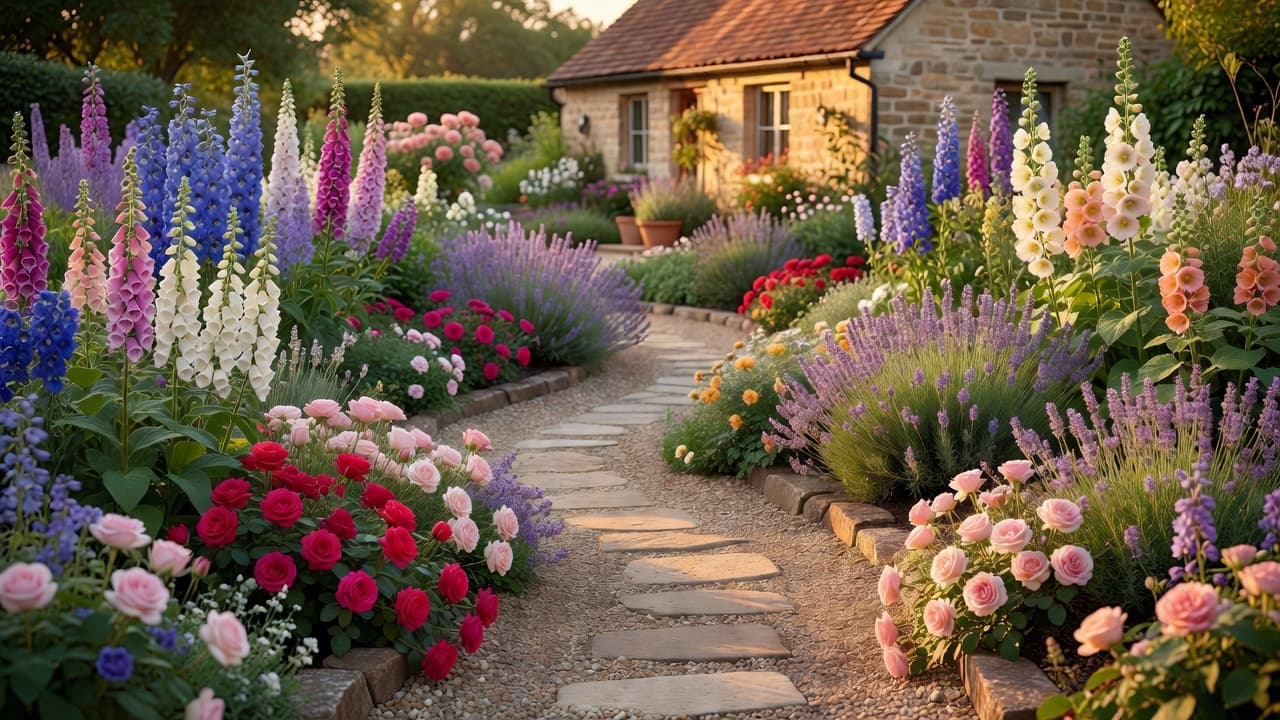
A cottage garden design app turns one photo of your real garden into a photorealistic, abundant cottage-style redesign of that same space — densely planted with roses, foxgloves, lavender, delphiniums and self-seeding flowers in the informal, layered look you choose — usually in under ten seconds. In 2026 it is the fastest, cheapest way to see how a tired border or plain lawn could become a romantic cottage garden before you buy a single plant. This guide explains, in plain English, how a cottage garden design app works, the four principles of cottage garden design it should respect, the best cottage garden plants to try this year, how to keep the look from tipping into chaos, and what a cottage garden really costs to plant — so your first trip to the nursery is a confident one.
AI Garden Design GuidesPublished June 27, 2026Updated June 27, 202610 min read
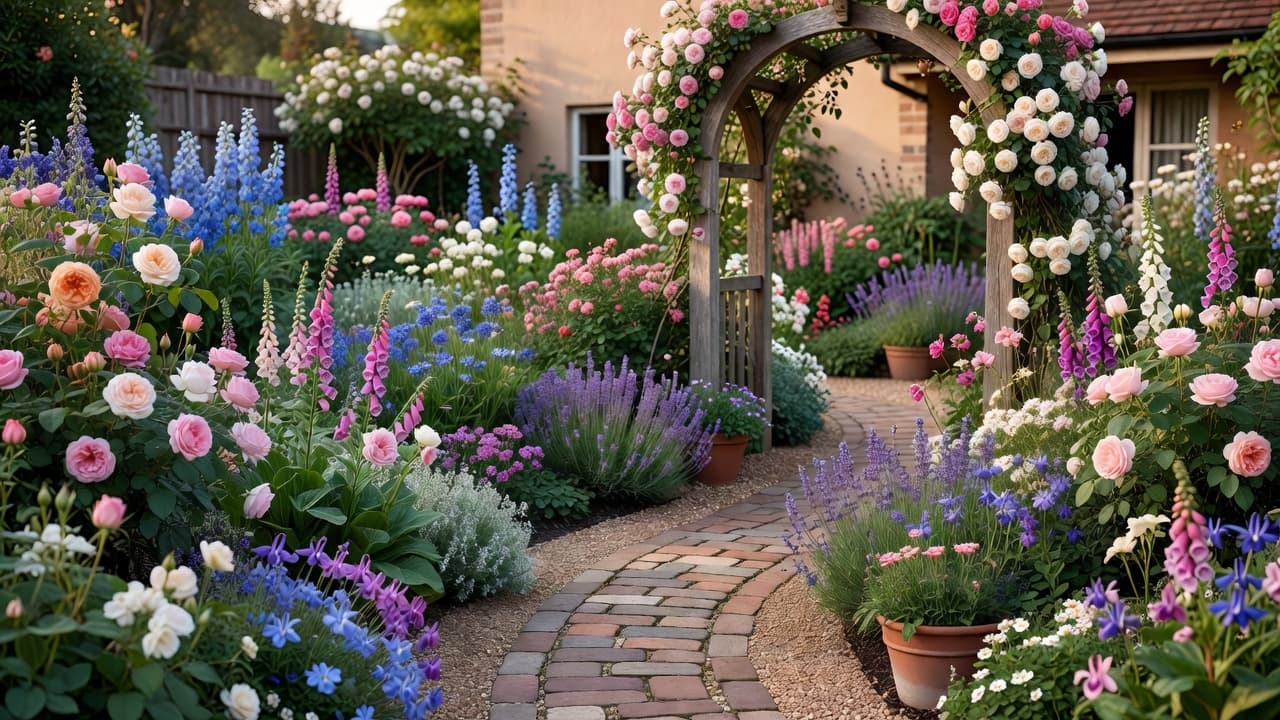
What a cottage garden design app actually does
The idea is refreshingly simple. You open the app, take or pick one photo of your border, front garden or a plain stretch of lawn, choose a cottage style, and a few seconds later you are looking at your own space transformed into a finished, romantic cottage garden. There is no graph paper and no design training involved. If the whole concept is new to you, our plain-English explainer of AI garden design is the gentlest starting point, and the full AI garden design guide walks through a complete redesign with real before-and-after photos.
The word that matters is your. A weak app shows you a gorgeous cottage garden that belongs to someone else; a strong one shows you your garden, brimming with informal planting, so the picture is genuinely useful when you start buying roses, perennials and seeds. FlorAI was built around exactly that, with a free tier, so you can see your own garden reimagined in cottage style before deciding whether it is worth paying for.
What makes a cottage garden a cottage garden
A cottage garden design app is only as good as its understanding of the style, so it helps to know what you are asking it for. The cottage garden began as the practical plot of the English working cottager — a generous, productive jumble of flowers, herbs, fruit and vegetables grown cheek by jowl. The romantic, flower-led version we picture today was shaped in the late 1800s by designers such as William Robinson and Gertrude Jekyll, who championed informal, naturalistic planting over stiff Victorian bedding. Strip away the nostalgia and the style rests on four simple principles:
- Informality. Soft, billowing planting and gently curving paths, never rigid rows or clipped symmetry — the look should feel happily unplanned.
- Abundance. Dense, layered planting that hides the soil, with flowers spilling over edges and climbing every fence, arch and wall.
- A long season of bloom. A deliberate succession of flowers so something is always in bud from spring bulbs through to late-summer dahlias and asters.
- A mix of plant types. Hard-working perennials, tall biennials, cheerful annuals and generous self-seeders all woven together, typically 15–25 varieties in a small garden.
A capable app builds to all four rather than dropping a few roses onto a lawn. The Royal Horticultural Society’s overview of cottage garden plants is a calm, authoritative read if you want the full background before you start.
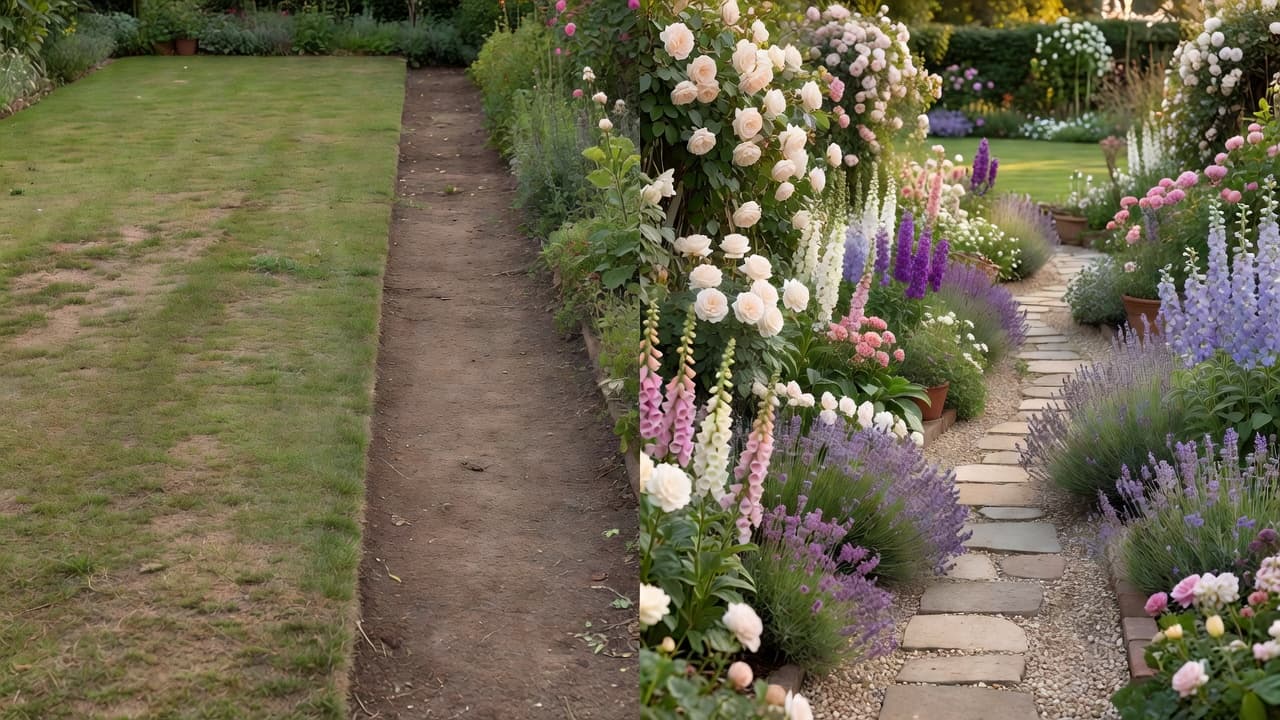
The best cottage garden plants to try in 2026
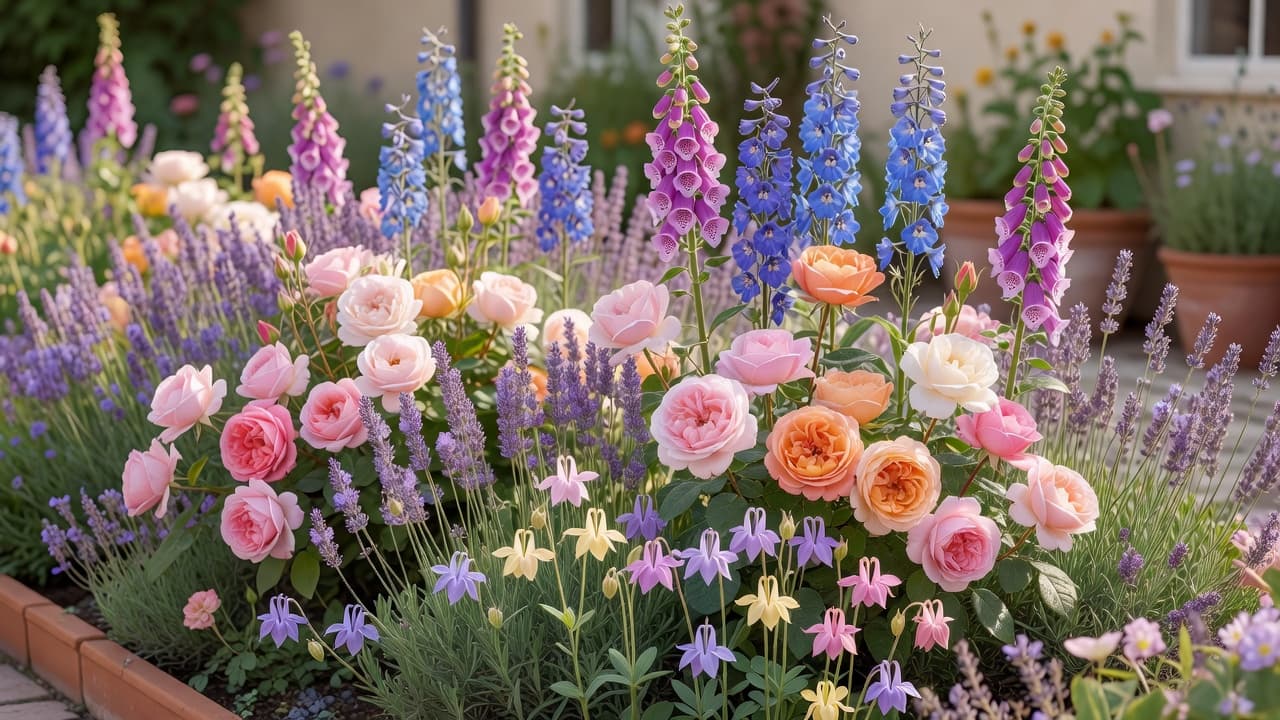
The real value of a cottage garden design app is that it lets you test the year’s most-loved cottage plants on your own space before committing. The classic cottage palette is forgiving, pollinator-friendly and mostly easy to grow. Worth trying on your photo:
- Roses. The heart of any cottage garden. Loose, informal shrub and climbing roses suit the mood best — RHS Award of Garden Merit varieties such as the cream repeat-flowering climber ‘Madame Alfred Carrière’ or the fragrant shrub ‘Roseraie de l’Haÿ’ are reliable starting points.
- Foxgloves (Digitalis). Tall, speckled spires for early-to-mid summer. Most are biennials that flower in their second year, then self-seed to keep the display going with no replanting.
- Hollyhocks (Alcea). Towering spires of papery flowers against a sunny wall from summer into early autumn; leave a few seedheads and they return year after year.
- Delphiniums. Stately blue, purple, pink and white spikes for midsummer. Belladonna Group cultivars are shorter and often repeat-flower; Elatum Group reaches up to 2m (6½ft) at the back of a border.
- Lavender. Fragrant, silver-leaved and pollinator-magnet. Lavandula angustifolia ‘Hidcote’ makes a compact 60cm (2ft) edging or low hedge in full sun.
- Self-seeders and cottage staples. Aquilegia (columbine), hardy geraniums, lupins, phlox, campanula, poppies, larkspur, cosmos and clematis for the arches — the gentle chaos that makes the style sing.
You do not have to pick one. Try each idea as a separate redesign of the same photo, then borrow the parts you like into a single plan. For help arranging them into a real border, our AI flower bed design tool guide walks through planting plans, and you can confirm any unfamiliar plant on the Royal Horticultural Society’s plant finder or BBC Gardeners’ World cottage plant list before you buy.
How to design a cottage garden step by step
The first redesign takes about a minute. The process is the same whether you are filling one tired border, the front garden or a plain rectangle of lawn:
- Take or choose one photo. Stand back so the whole area — border, path, fence and the house wall behind — is in frame, in soft, even daylight.
- Pick a cottage style. Classic English romance, a pastel palette of pinks and blues, a hot border of reds and oranges, or a contemporary cottage look with more structure — choose the mood, then try a second for contrast.
- Let the app redesign it. In a few seconds you will see your own space densely planted in that style, usually with the key plants named.
- Refine and try variations. Ask for a rose-clad arch over the path, more silver and lavender, a self-seeding gravel edge or a wider colour theme, and compare the options side by side.
- Save and shop. Keep your favourites, line the before and after together, and turn the result into a simple shopping list of roses, perennials, biennials and seeds.
Because the app works from a photo rather than a blank plan, you are always editing your real garden — the actual path, fence and house — which is exactly why the output is something you can take to a nursery. Our guide to designing from a photo versus from scratch explains why the photo route is almost always the better place to begin.
How to keep a cottage garden from tipping into chaos
The secret of every good cottage garden is that the wildness is only skin-deep. Underneath the romantic froth sits real structure — and this is where a thoughtful app earns its place, because it can show you the bones before you plant a thing. A few rules keep abundance looking deliberate rather than neglected:
- Plant in three layers. Tall plants at the back (1.5m and over — hollyhocks, delphiniums, climbing roses), mid-height through the middle (60–90cm — lavender, salvia, hardy geraniums) and low edge-spillers at the front (under 40cm — alchemilla, catmint, pinks).
- Give it a firm frame. Curving but clearly defined paths, a clipped hedge, an arch or a picket fence give the eye somewhere to rest, so the planting reads as lush rather than messy.
- Repeat a few key plants. Drifting the same rose, lavender or geranium through a border ties the whole scheme together — repetition is what separates a designed cottage garden from a jumble.
- Limit your colour theme. Two or three colours plus plenty of green and silver foliage looks intentional; a contemporary cottage approach often pairs a strong structural majority of reliable perennials with a looser minority of self-seeders for the romance.
Seeing those layers and repeats applied to your own photo is far easier than picturing them on a plan, which is why a cottage garden design app helps most at the structural stage. For more on tying a scheme together, our AI garden design guide covers structure, focal points and colour in depth.
What to look for in a cottage garden design app
Not every app earns a place on your home screen. Before you trust one with your garden, run through a few quick checks:
- Does it redesign your own photo? Your path, fence and house should still be recognisable in the result. If it quietly swaps in a stock cottage garden, the picture is useless.
- Does it name real cottage plants? A good result names plants you could write on a shopping list — roses, foxgloves, delphiniums, lavender — not just a pretty floral haze.
- Does it respect the layers? Look for tall, mid and edge planting and a sense of structure, not a flat wall of identical flowers.
- Does it consider where you live? Climate- and zone-aware planting is the difference between a pretty picture and a scheme that survives your winters and summers.
- Is the free tier real? You should see clear, un-watermarked results and be able to try more than one style before any paywall.
An app that passes all five is worth keeping even if you never pay; one that fails two or three is worth deleting, however charming it looked. For a deeper version of this test, our checklist of what to look for in an AI garden design app turns it into a simple tick-box, and the 2026 buyer’s guide to AI garden design tools covers the features that separate a useful app from a gimmick.
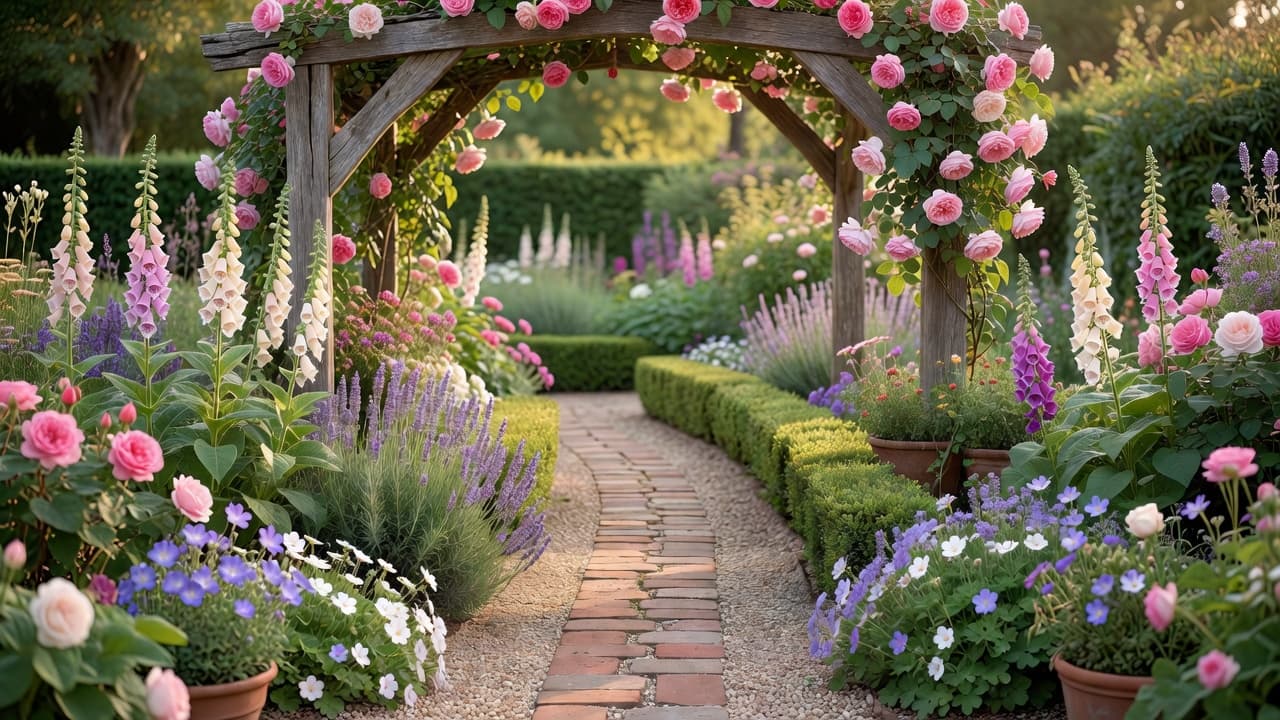
What a cottage garden costs to plant in 2026
The app itself should cost little or nothing. Most good ones give you a real free tier — a set number of designs each month, enough to redesign your garden and try a few styles — with paid plans only if you want unlimited runs. That is usually plenty for a one-off project.
The planting costs more than you might guess for a small border but far less than a hard-landscaped makeover. In 2026 installed planting beds typically run $3 to $15 per square foot in the United States, including plants, light soil prep, planting and mulch, with flower-bed installation averaging around $4.50 to $13.50 per square foot. Individual perennials usually cost $8 to $25 each, and many cottage favourites — foxgloves, hollyhocks, poppies, larkspur, aquilegia — can be raised from a few dollars of seed and then self-seed for free in following years. Pacific Coast and Northeastern markets tend to run 25–35% higher.
The honest advice is the same as for any outdoor room: spend on what lasts and let nature fill the rest. Put your money into a few good shrub or climbing roses and a backbone of reliable perennials; use biennials, annuals and self-seeders to flesh out the abundance affordably. Climate awareness is the feature worth paying attention to, because it protects that spend — plants that cannot survive your winter are a disappointment waiting to happen, and the goalposts are moving. In November 2023 the USDA updated its Plant Hardiness Zone Map for the first time since 2012, and the new map is about 2.5°F warmer on average, shifting roughly half of the country into the next warmer half-zone. An app that weighs your location is doing real work, not decoration. Explore for free first, settle the look on your own photo, then spend — the honest guide to free AI garden design apps explains how to tell a genuine free tier from a teaser, and the 2026 garden design cost guide sets sensible expectations for the wider budget.
Where the app stops and your own judgement begins
An honest guide names the limits. Even the best cottage garden design app is a brilliant way to decide what you want, not a substitute for the practical checks only you can make. Confirm your soil and aspect suit the plants you love — most cottage favourites want sun and reasonable drainage, though there are good choices for a shady plot too. Match every plant to your own hardiness zone, and treat the planting suggestions as a strong starting point rather than gospel. If a small or shady space is your challenge, our guides to the balcony garden design app and shade-friendly schemes will help you adapt the look. You can look up any unfamiliar plant on the RHS before you buy.
Used that way, a cottage garden design app is among the most reassuring tools you will reach for this year: it removes the guesswork, shows you the finished romantic garden in advance, and means your first armful of roses, perennials and seed packets is the right one rather than a hopeful guess.
Frequently asked questions
What is the best cottage garden design app?
The best one redesigns your own photo (not a stock cottage garden), names real cottage plants like roses, foxgloves and delphiniums, respects the layered structure of the style, considers your climate and hardiness zone, and offers an honest free tier. FlorAI meets that bar with a free plan, so you can judge it on your own garden before paying.
Is there a free app to design a cottage garden?
Yes. The honest ones offer a real free tier — a set number of designs each month, enough to redesign your garden and try a few cottage styles. FlorAI has a free plan, with paid plans only if you want unlimited designs.
What are the best plants for a cottage garden?
Classic choices include roses, foxgloves, hollyhocks, delphiniums and lavender, woven together with self-seeders and cottage staples such as aquilegia, hardy geraniums, lupins, phlox, poppies and clematis. Aim for 15–25 varieties in layers and a long season of bloom.
How do I stop my cottage garden looking messy?
Give the wildness a frame: plant in three height layers, define your paths and edges, repeat a few key plants through the border, and limit yourself to two or three colours plus green and silver foliage. A cottage garden design app lets you preview that structure on your own photo before planting.
How much does a cottage garden cost to plant in 2026?
Installed planting beds typically cost $3–$15 per square foot in 2026, with flower-bed installation around $4.50–$13.50 per square foot. Individual perennials run $8–$25 each, while many cottage favourites can be grown cheaply from seed and self-seed for free thereafter. Pacific Coast and Northeastern prices run 25–35% higher.
Can I have a cottage garden in a small or shady space?
Yes. The cottage style scales down beautifully to a small plot or even a balcony, and there are shade-tolerant cottage plants such as foxgloves, hardy geraniums, aquilegia and ferns. A design app lets you test the look on your exact space and aspect before you commit.
Last updated: June 2026. Written by the FlorAI garden team.