
Tool guide · 2026
AI Vegetable Garden Planner: The 2026 Guide
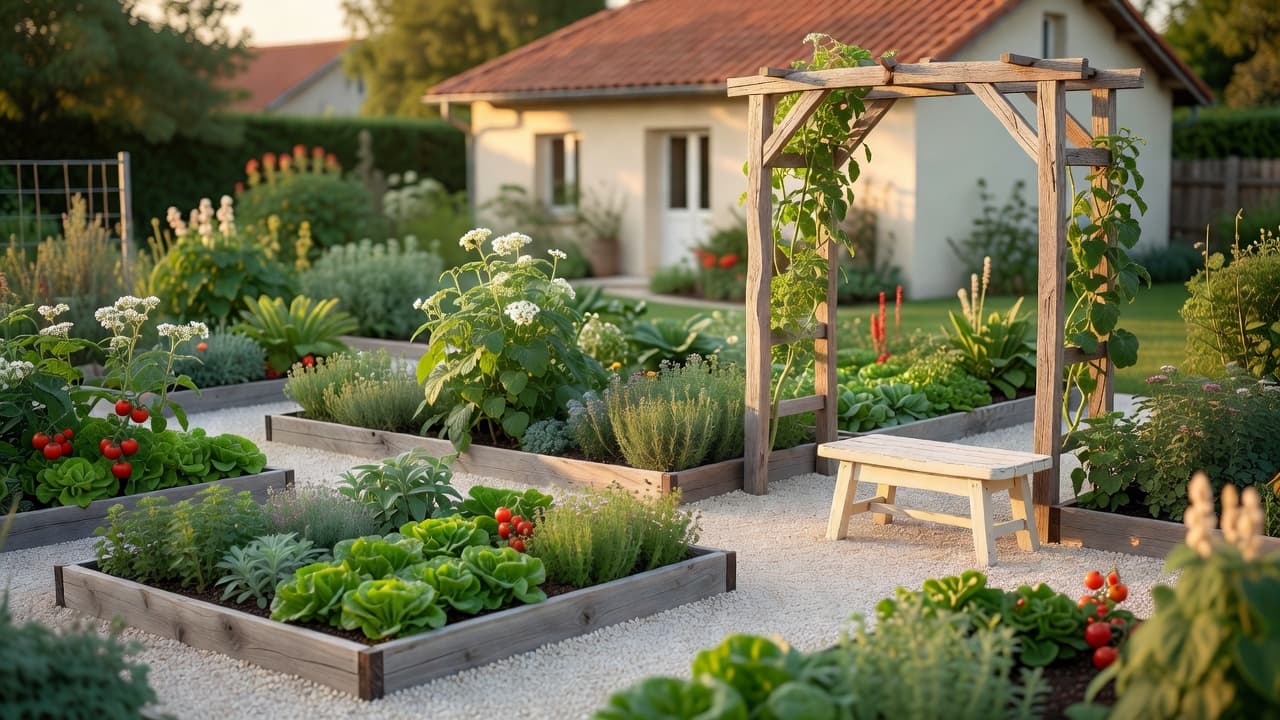
An AI vegetable garden planner turns a single photo of your plot into a productive kitchen-garden layout in seconds — raised beds sized to fit, crops spaced correctly, and rotation and companion planting worked out before you sow a single seed. Instead of guessing how many beds fit, where the sun falls and what grows well beside what, you see the finished plot first: bed positions, path widths, which square holds tomatoes and which holds carrots. In 2026 the best planners do this on a free tier, suggest crops suited to your climate and frost dates, and let you try several layouts on the same space before you buy any timber or seed. This guide explains, in plain English, what an AI vegetable garden planner does, the growing rules it follows, the crops worth trying this year, what a raised-bed plot really costs, and how to tell a genuinely useful planner from a pretty toy.
AI Garden Design GuidesPublished July 1, 2026Updated July 1, 202610 min read
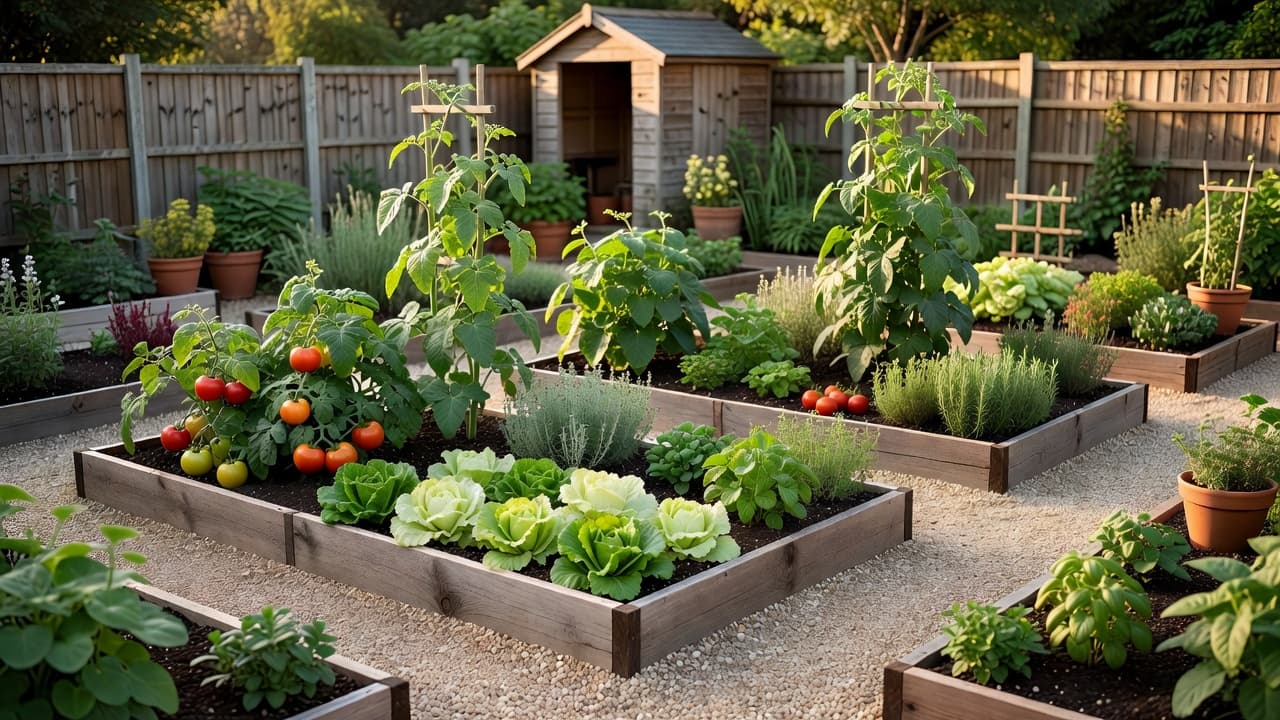
What is an AI vegetable garden planner?
A vegetable plot is deceptively hard to plan on paper. You have to hold sunlight, bed sizes, path widths, plant spacing, crop families and the seasons in your head all at once — and a mistake means a summer of thin harvests, not just a plant in the wrong place. An AI vegetable garden planner closes that gap by drawing the working plot for you: the same garden, the same fences and aspect, but laid out in productive beds. If the whole idea is new, our plain-English explainer of AI garden design is the gentlest starting point, and the complete AI garden design guide walks through a full redesign with real before-and-after photos.
The word that matters is your. A weak tool shows a generic allotment that belongs to nobody; a strong one plans your plot, keeping the fence, the shed and the sunny corner, so the layout is genuinely useful when you start building beds and sowing. FlorAI was built around exactly that — read one photo, keep the bones of the real space, design the planting — and it runs in any browser as well as on iPhone and Android, with a free tier so you can see your own garden reimagined as a kitchen garden before deciding whether it is worth paying for.
Why plan a vegetable garden with AI?
Planning a vegetable garden with AI rather than by guesswork removes the two things that make growing your own stressful: the cost of getting the layout wrong, and the difficulty of picturing a productive plot before it exists. The practical advantages:
- You see it before you build it. Raised beds, timber and soil are the expensive part of a vegetable garden, and a bed in the wrong place is hard to move once it is full. Seeing the finished layout first means you build once, not twice.
- It gets the spacing right. Overcrowding is the single most common reason home plots underperform. A good planner spaces crops at their mature size, so plants get the light, air and root room they need.
- It plans the beds and paths. The planner positions beds you can reach into and paths you can push a wheelbarrow down — the practical layout that makes a plot pleasant to tend rather than a chore.
- It tries several layouts fast. Run the same garden as three long beds, as a square-foot grid, or as a mix of raised beds and a herb border, then choose with your own eyes rather than in your head.
- It respects your climate. The best planners suggest crops suited to your hardiness zone and frost dates, so the plot you draw is one that will actually crop where you live.
None of this replaces the pleasure of growing — it removes the guesswork that comes before it. If your space is tight, our guide to the small garden design app shows how the same photo-first method works on a compact plot, and the balcony garden design app guide covers container growing where there is no soil at all.
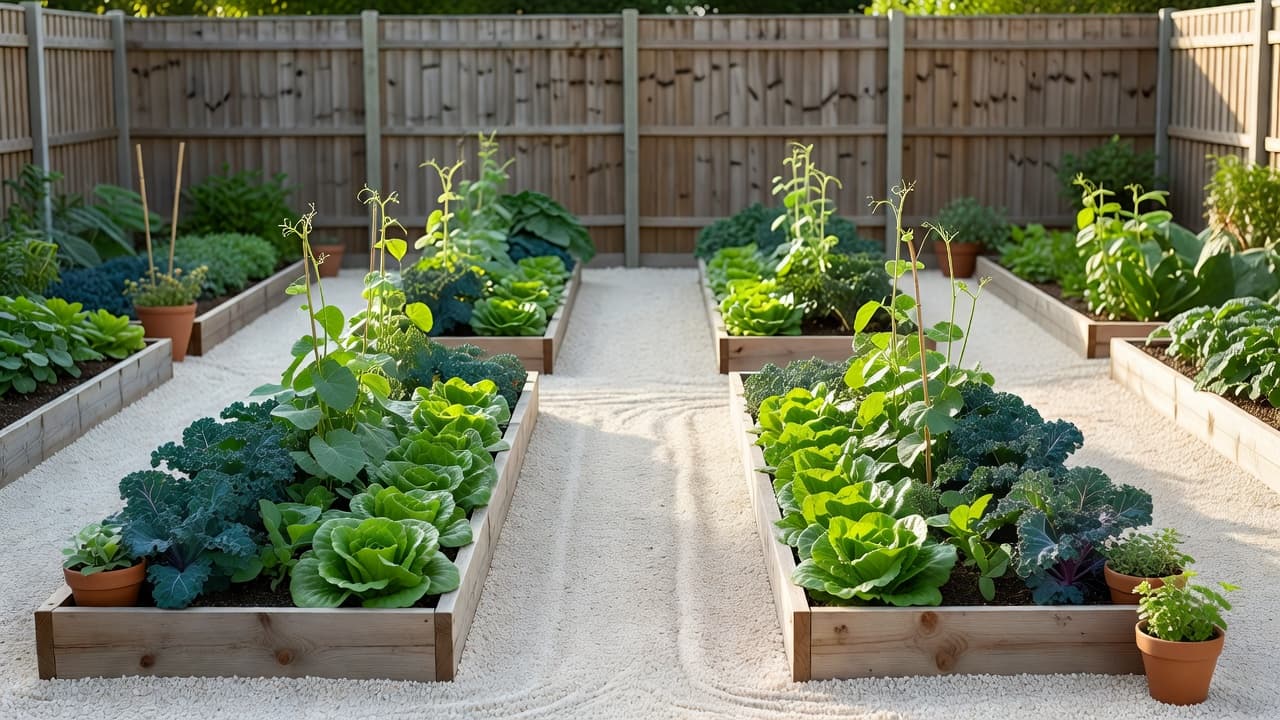
How an AI vegetable garden planner works
Most people get a usable layout in a few minutes. The exact steps vary by tool, but the modern, photo-first approach follows a simple path:
- Photograph the plot. Take one clear, wide photo of the space in daylight — ideally showing the ground, the boundaries and where the sun falls.
- Choose the goal. Pick a direction — raised-bed kitchen garden, square-foot beds, a potager mixing vegetables and flowers, or a few beds tucked into an ornamental garden.
- Generate the layout. The planner returns a finished, photorealistic plot in seconds, with beds positioned and crops arranged in a sensible layout.
- Refine and compare. Swap a crop you dislike, ask for more herbs or a longer bed, or run two or three layouts on the same plot side by side.
- Save the plan and build it. Keep the version you like, note the bed sizes and crops, and use it as a build list for yourself or a brief for a landscaper.
The reassuring part is that it works on top of your real garden, so the result maps onto the actual space rather than a generic rectangle. You are not learning software; you are answering a few questions and choosing between pictures. For the difference between designing on your photo and starting from a blank plan, see designing from a photo versus from scratch.
The rules of a productive vegetable garden
An AI planner is only as good as the growing rules behind it, and a productive plot follows a handful of well-established ones. Knowing them helps you judge whether a layout is genuinely good — or just green. A well-planned vegetable garden tends to:
- Keep beds narrow enough to reach. Raised beds are usually three to four feet wide so you can reach the middle from either side without ever stepping on — and compacting — the soil. Length is flexible; a classic bed is four feet by eight.
- Space crops at their mature size. In the square-foot method, each one-foot square holds one large plant like a tomato, four medium plants like lettuce, nine like bush beans, or sixteen small ones like carrots or radishes. It looks generous at first and perfect by midsummer.
- Rotate crop families each year. Moving each plant family — legumes, brassicas, roots, alliums and the tomato-and-potato family — to a different bed on a three- or four-year cycle keeps soil-borne pests and diseases from building up and balances how crops feed and replenish the soil.
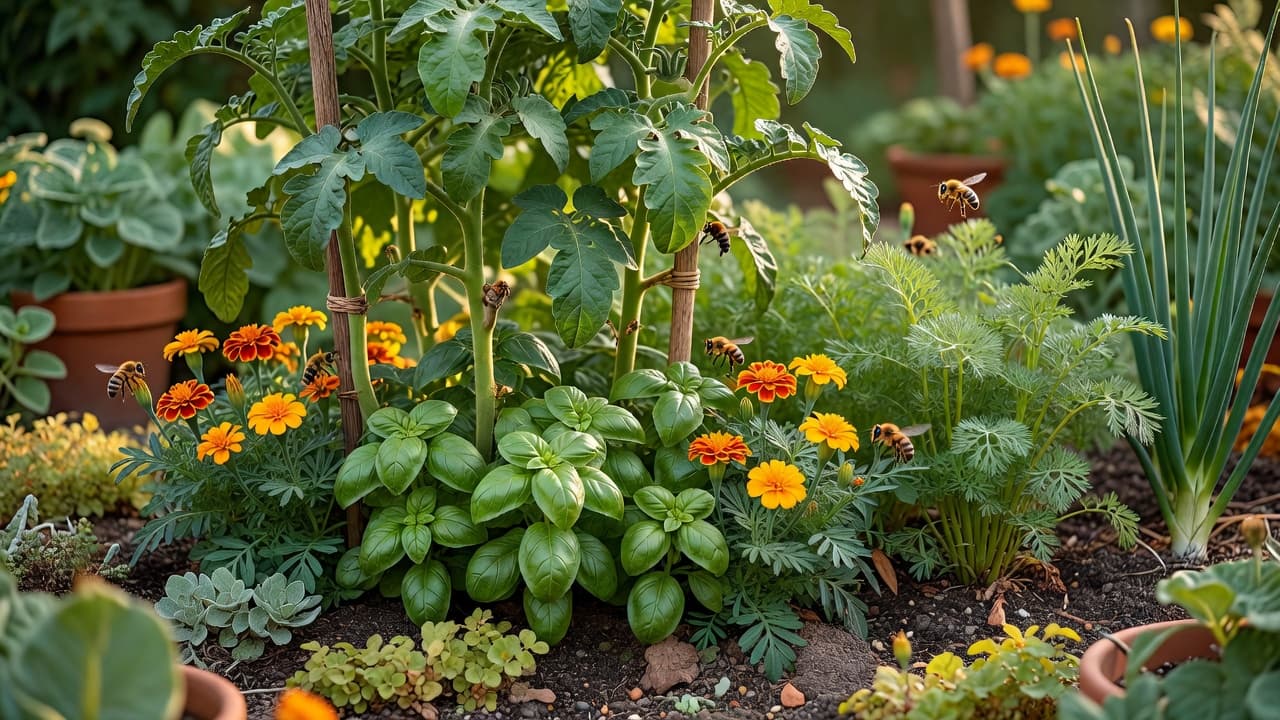
- Pair plants that help each other. Companion planting places crops together so one benefits another — the classic "Three Sisters" of corn, beans and squash, or basil and marigolds among tomatoes to deter pests, are time-tested examples.
- Sow little and often. Succession sowing — sowing quick crops such as salad leaves, carrots, French beans and spinach in small batches every few weeks rather than all at once — gives a steady harvest instead of a glut followed by a gap.
A planner that produces a plot obeying these rules is doing real design work. One that crams every crop in at one spacing with no thought for rotation is making a pretty image, not a plantable plan. The RHS grow-your-own advice is a reliable place to sense-check any crop, and the traditional idea of companion planting shows where these pairings come from.
What to grow in your 2026 kitchen garden
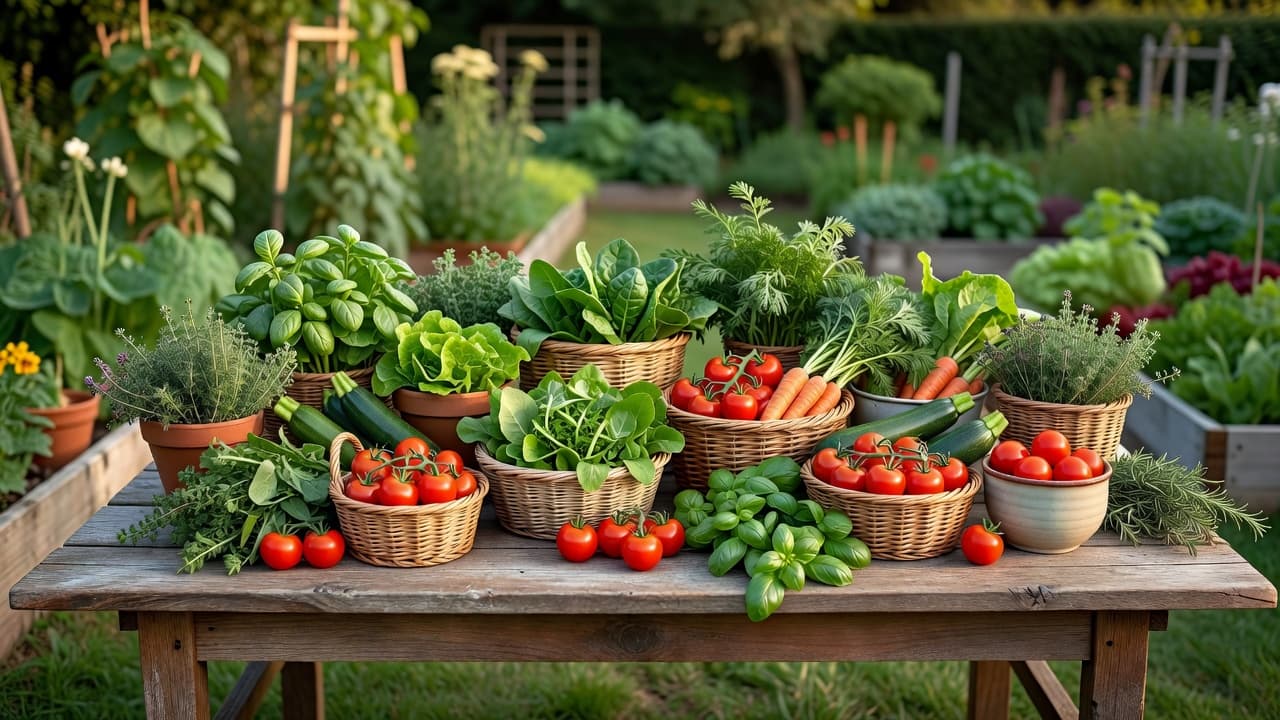
The real value of planning first is that you can test the year’s best ideas on your own plot before committing seed and space. In 2026, with the cost of living still high, more people are growing food to supplement the weekly shop, and plant breeding has made that easier in small spaces. Worth trying on your layout:
- Compact and dwarf varieties. New dwarf breeding means table-top chillies, compact aubergines, hanging-basket cucumbers and even 50cm grape vines now crop happily in tiny spaces — some pretty enough to rival cut flowers, according to the RHS.
- Reliable tomatoes. After the dry summer of 2025 brought high yields and little blight, tried-and-tested varieties such as cherry tomato ‘Sungold’ and ‘Shirley’ are in demand for 2026 — dependable choices for a first kitchen garden.
- Quick succession crops. Salad leaves, radishes, spring onions, carrots and French beans mature fast and are ideal for sowing little and often, so a small plot keeps producing all season.
- Potted and perennial herbs. Basil, parsley, thyme, rosemary and mint earn their space many times over, sit happily near the kitchen door, and — as companion plants — help the crops around them.
- Climbers that save ground. Runner beans, peas and cordon tomatoes grown up supports lift the harvest into the air, leaving the soil below for a low crop such as lettuce — the plot equivalent of using every shelf.
You do not have to pick one approach. Try each idea as a separate version of the same plot, then borrow the parts you like into a single plan. Check any unfamiliar crop on the Gardeners’ World website or the RHS before you buy, and confirm the sowing window suits your area.
Raised beds, spacing and soil depth
Most modern kitchen gardens are built around raised beds, because they warm up earlier, drain better and give you clean, workable soil from day one. The practical numbers a good planner should respect:
- Width. Three to four feet, so you can reach the centre from either side and never tread on the growing soil. Four feet by eight is the classic, versatile size.
- Depth. Most vegetables thrive in the top six to twelve inches of soil, with ten inches a sensible minimum. Root crops such as carrots and potatoes prefer twelve to eighteen inches; shallow crops such as lettuce and herbs are happy with six to eight.
- Paths. Leave at least eighteen inches between beds to kneel and weed, and around two to three feet for a main path if you want to get a wheelbarrow through.
- Aspect. Most vegetables want six or more hours of sun. Position beds to run where the light is best, and keep tall crops such as beans on the north side so they do not shade the rest.
These are the details an AI vegetable garden planner can hold all at once while you focus on what you want to eat. For drought-prone gardens, our drought-tolerant garden design tool guide covers water-wise choices that apply to edibles too, and climate matters more each year: in November 2023 the USDA updated its Plant Hardiness Zone Map for the first time since 2012, using 1991–2020 data from 13,412 weather stations, shifting about half of the United States into the next warmer half-zone.
What a vegetable garden costs in 2026
The planner itself should cost little or nothing — most good ones give you a real free tier, enough to lay out a plot and try a few versions, with paid plans only for unlimited designs. The build is where the money goes, and a raised-bed vegetable garden is one of the better-value projects you can take on, because it pays you back in food.
In the United States in 2026, a DIY wood raised bed typically costs about $25 to $50 per square foot of growing space, with a basic pressure-treated four-foot-by-eight-foot build coming in around $250 to $400 once you add soil. Flat-pack raised-bed kits run roughly $5 to $15 per square foot for the materials, while longer-lasting options cost more — Corten steel around $31 per square foot and stone around $42 per square foot for materials alone. Turnkey professional installation starts higher, often from about $100 per square foot. Soil, compost and seed are extra but modest, and settling the layout first is exactly how you avoid paying twice for a bed in the wrong place. Our 2026 garden design cost guide breaks the wider numbers down piece by piece.
What to look for in an AI vegetable garden planner
Not every tool earns a place in your bookmarks. Before you trust one with your plot, run through five quick checks — a genuinely useful AI vegetable garden planner should pass all of them:
- It works from your own plot. The best planners design your real photo, keeping the fence, shed and aspect recognisable, so the layout is yours and not a stock allotment.
- It respects spacing and beds. Look for reachable beds, sensible paths and crops spaced at their mature size — not a solid mat of vegetables crammed edge to edge.
- It thinks about the season. A strong result considers rotation, companions and succession, not just a single snapshot of everything cropping at once.
- It respects where you live. Climate-aware suggestions tied to your hardiness zone and frost dates are the difference between a pretty picture and a plot that actually crops.
- It offers an honest free tier. You should see clear, un-watermarked results and try more than one layout before any paywall.
A tool that passes all five is worth keeping even if you never pay; one that fails two or three is worth closing the tab on, however slick it looked. Our checklist of what to look for in an AI garden design app turns this into a simple tick-box, and if you are weighing software against hiring a professional, our comparison of AI, a designer and DIY lays out when each makes sense.
Where AI stops and your hands begin
An honest guide names the limits. Even the best AI vegetable garden planner is a brilliant way to decide the layout and what to grow, not a substitute for the growing itself. Building the beds, filling them with good soil, sowing at the right time, watering, weeding and watching for pests all still want a gardener’s hands and attention. Treat the crop suggestions as a strong starting point and confirm sowing windows and spacing against your own climate before you buy seed.
Used that way, an AI vegetable garden planner is among the most reassuring tools you will reach for this year: it removes the guesswork, shows you the finished plot in advance, and means the first decision — and the first spend — is made with confidence rather than hope. For the wider picture of what these tools can and cannot do, the AI garden design guide goes deeper.
Frequently asked questions
What is an AI vegetable garden planner?
An AI vegetable garden planner uses artificial intelligence to turn a photo of a real plot into a productive kitchen-garden layout — positioning raised beds, spacing crops correctly, and arranging rotation and companion planting so you can see the whole plot working before you sow a single seed. FlorAI does this from one photo, in any browser, with a free tier.
Can I plan a vegetable garden for free?
Yes. The honest tools offer a real free tier — a set number of designs each month, enough to lay out your plot and try a few versions. FlorAI has a free plan on the web, iPhone and Android, with paid plans only if you want unlimited designs.
Does it handle crop rotation and companion planting?
A good planner arranges crops with rotation and companions in mind — keeping plant families moving between beds year to year, and pairing crops that help each other, such as basil and marigolds among tomatoes. Always sense-check unfamiliar pairings against a trusted source like the RHS.
How wide and deep should a raised vegetable bed be?
Most raised vegetable beds are three to four feet wide so you can reach the centre without stepping on the soil, and at least ten inches deep — twelve to eighteen inches for root crops such as carrots and potatoes, six to eight for shallow crops such as lettuce and herbs.
How much does a raised-bed vegetable garden cost in 2026?
In the US in 2026, a DIY wood raised bed costs roughly $25 to $50 per square foot, with a basic four-foot-by-eight-foot build around $250 to $400 including soil. Kits run about $5 to $15 per square foot for materials, and professional installation starts higher — which is exactly why it pays to settle the layout first.
Can AI replace a garden designer for a vegetable plot?
For laying out beds, spacing crops and planning rotation it gets you most of the way and costs little or nothing. For soil, drainage, tricky corners and the building and growing itself you still want a gardener or designer — use the planner to decide the plot first, then hand your favourite version over.
Last updated: July 2026. Written by the FlorAI garden team.