
Garden Styling · 2026 guide
Outdoor Room Design Ideas: How to Build a True Outdoor Living Room (2026)
Outdoor room design treats a patio, deck or backyard corner as a real room — with a floor, walls, a ceiling and furniture — rather than just a lawn with a chair on it. The fastest way to get there is to zone the space by activity, define its edges with planting or structure, then add shelter, lighting and comfortable furniture in that order. This guide covers each step in plain English, backed by current 2026 survey data on what homeowners are actually building.
AI Garden Design GuidesPublished July 5, 2026Updated July 5, 202610 min read
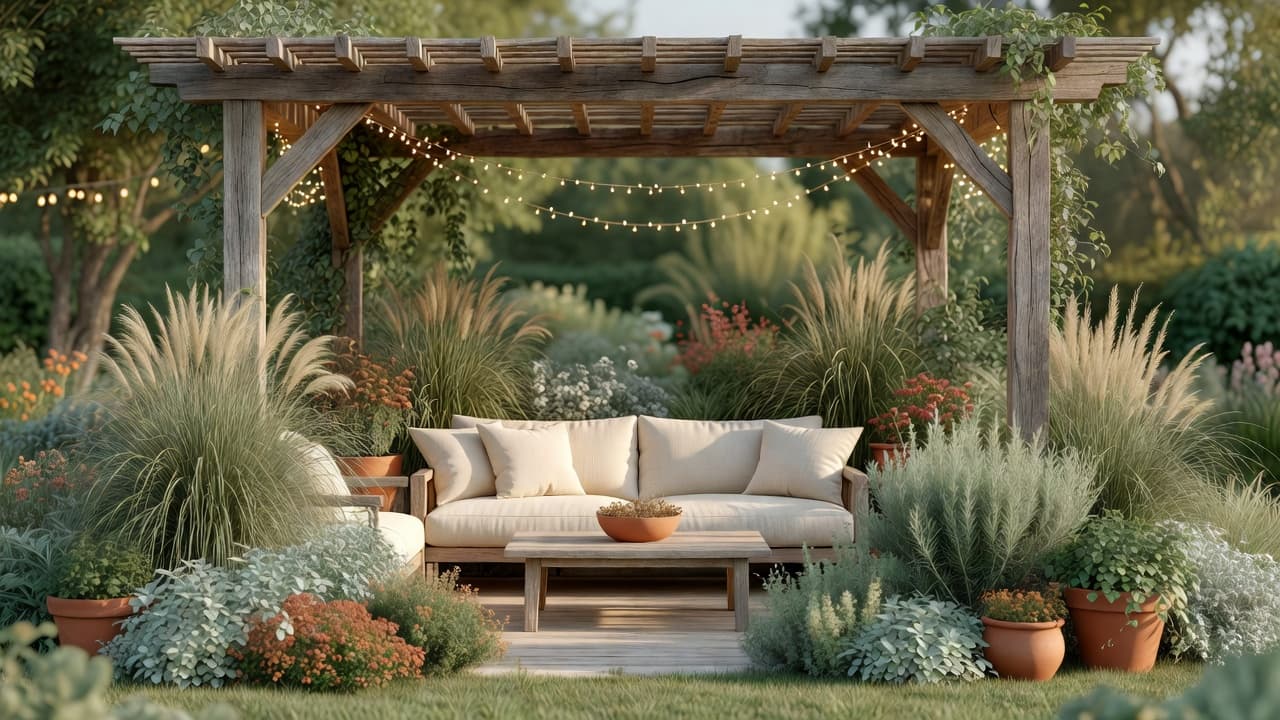
The one-line answer
You do not need a building permit or a big budget to get this right. Most of what makes an outdoor space feel like a room is zoning, edges and layering — the same three moves an interior designer makes indoors, just applied with plants, paving and pergolas instead of walls and carpet.
What makes a space an "outdoor room"?
An outdoor room is any part of a garden given a single, clear purpose — dining, lounging, cooking, reading, working — and the physical cues to support it. Think of the same four layers a home builder uses: a floor (paving, decking, gravel or a defined lawn panel), walls (a hedge, fence, screen or planting bed), a ceiling (a pergola, tree canopy, umbrella or simply open sky) and furniture chosen for that one job. For the wider principles behind this idea, see our guide to interior design principles for the garden.
The concept is not new — garden designers have zoned outdoor space into distinct areas for centuries — but it has become the dominant way homes are extended in 2026, as more people treat the garden as another room rather than an afterthought.
- Floor — paving, decking, gravel, or a mown lawn panel with a crisp edge.
- Walls — a hedge, trellis, fence panel, or a dense planting bed at chest height.
- Ceiling — a pergola, a tree canopy, a retractable awning, or simply the sky when the "room" is only used in fine weather.
- Furniture — chosen for one activity, not scattered from unrelated sets.
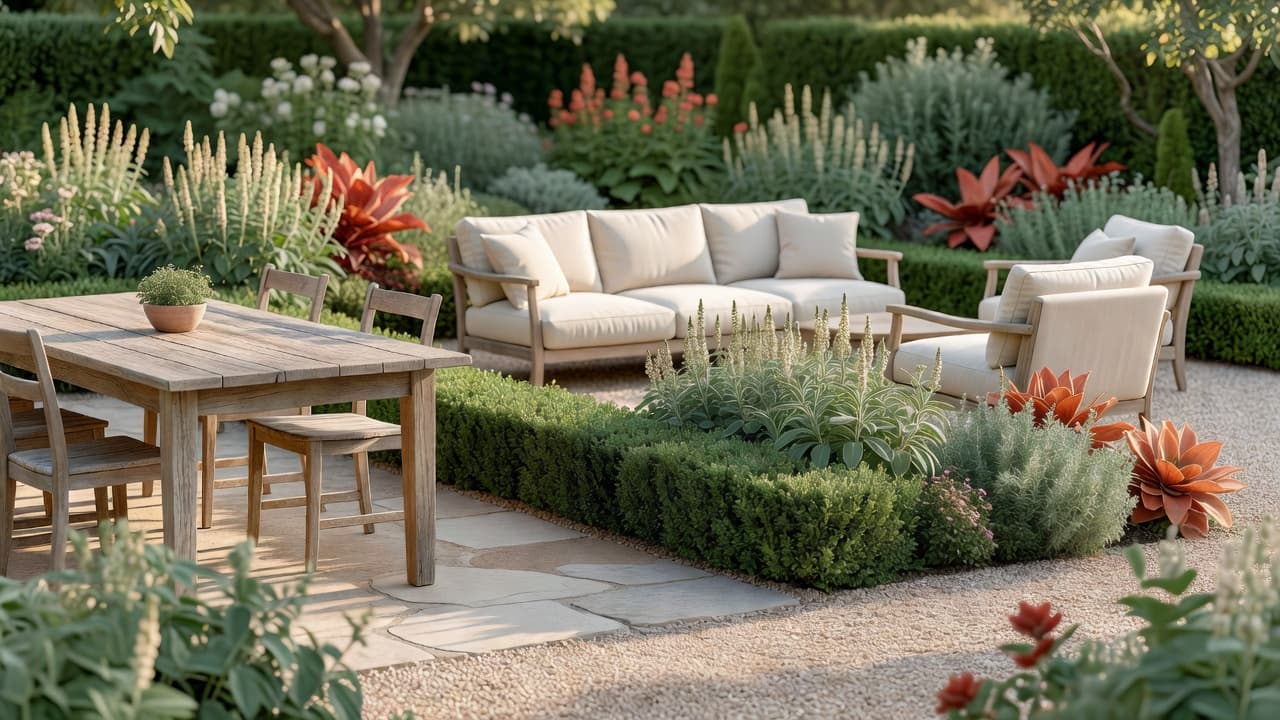
How do I zone a garden into outdoor rooms?
Start with a short list of how you actually want to use the garden, not an aspirational one. A family with young children needs a play zone more than a formal dining room; a couple who entertains needs generous seating more than a vegetable patch. The Royal Horticultural Society's urban garden design advice recommends deciding your priority uses before choosing a single plant or paving slab, since the zones dictate everything that follows.
- List every activity you want the garden to support — dining, lounging, cooking, growing food, play, work — and rank them by how often they will actually happen.
- Match each activity to a location: sunny spots for morning coffee or growing vegetables, a more sheltered corner for evening lounging, a spot near the kitchen door for cooking and dining.
- Decide how each zone will be separated — a change in paving material, a low hedge, a step down, or simply a gap in planting — so the eye reads them as distinct rooms rather than one continuous space.
- Connect the zones with a clear path so movement between them feels intentional, not accidental.
In a small garden, two or three zones is usually the practical limit — for a full walkthrough of scaling these ideas down, see our small garden design guide.
Floors, walls and ceilings: building the outdoor room's structure
The floor is usually the first decision because it sets the budget and the mood: hard paving reads as formal and low-maintenance, decking feels warmer underfoot, and gravel is the cheapest way to define a zone without pouring a slab. Whichever you choose, keep it consistent within one outdoor room and change it — not just the colour, but the material — at the boundary of the next zone.
A pergola, arbour or awning does double duty as both a ceiling and a subtle "wall" when its uprights frame the entrance to the room. In the UK, most garden pergolas and outbuildings fall under permitted development and do not need planning permission provided they stay single storey, are set back at least 2 metres from a boundary if taller than 2.5 metres, and do not cover more than half the garden — always confirm specifics for your property with the Planning Portal before building. For walls, a fast-growing hedge, a slatted screen, or even large potted shrubs in a row will define an edge within a single growing season.
- Hard-landscaping (paving, decking) for the floor of any zone used daily — dining, main seating.
- Gravel or a lawn panel for lighter-use zones — a reading corner, an occasional fire-pit spot.
- A pergola, tree canopy or large umbrella for shelter over any seating area used after dark or in light rain.
- One repeated hedge, fence or screen material as the "wall" that separates the room from a neighbouring zone or boundary.
Furnishing and layering an outdoor room for comfort
Furniture is where an outdoor room stops looking like a garden and starts feeling like somewhere to sit for an hour. Choose pieces sized for the zone, not for what happened to be in stock: a deep sofa needs more clearance around it than a bistro set, and both need at least 90cm of walking space kept clear on every side.
- Weatherproof cushions, an outdoor rug and a couple of throws do for a patio what soft furnishings do indoors — they are the single fastest upgrade from "garden furniture" to "outdoor room".
- Layer height: low coffee table, mid-height seating, then a taller shade structure or floor lamp, mirrors the layering rule used indoors.
- Leave one corner deliberately empty rather than filling every inch — a small breathing space reads as considered, not unfinished.
- Store or cover soft furnishings in poor weather; UV-resistant, quick-dry fabrics now handle most climates without much upkeep.
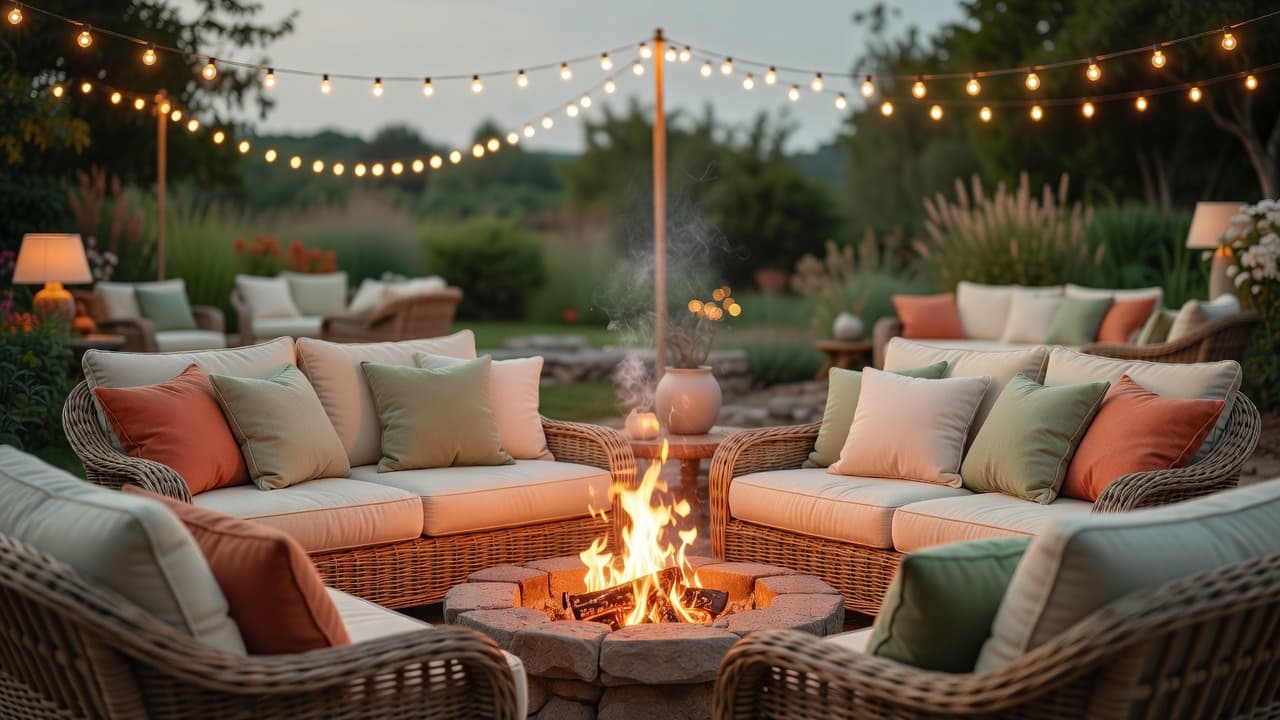
Lighting and fire: what actually gets used after dark
Lighting is the most-added system in outdoor living projects for 2026, ahead of lounge seating, fire features and entertainment systems, according to a Houzz survey of more than a thousand homeowners covered by Forbes in 2026. In that same survey, 66% of homeowners specifically added lighting suited to outdoor living areas, just behind the 71% who upgraded lounge seating, while 48% added a fire feature.
- Layer three light sources rather than one: a warm overhead string or lantern for ambience, a lower path or step light for safety, and a focused reading lamp if the zone is used for anything beyond conversation.
- A fire pit or chiminea extends the usable season in cooler climates by several months and doubles as an informal focal point.
- Solar and battery fixtures now handle most garden lighting needs without an electrician, though a hardwired circuit is worth it for a permanent dining or kitchen zone.
- Keep bulb colour warm (2700K–3000K) to match the warm-toned materials most outdoor rooms already use.
Planting that frames and softens an outdoor room
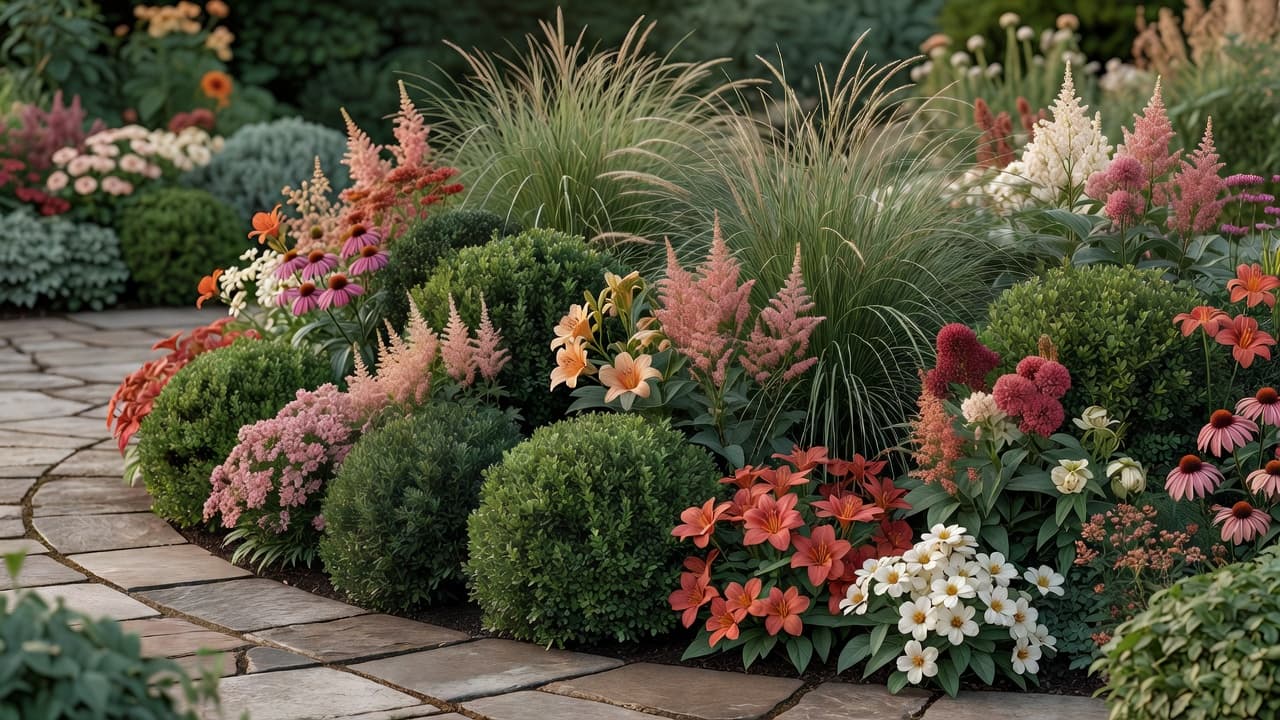
Planting is what stops an outdoor room from feeling like a paved box. In the same 2026 Houzz research, 74% of homeowners said plants, shrubs or trees were part of their outdoor project, most commonly as beds or borders (62%), planters (40%) and plants alongside paths, steps or stairs (45%) — evidence that greenery, not hard structure, is what most people rely on to finish the space.
- Use planting as the "wall" of a room where a fence would feel too enclosed — a mixed border at chest height gives privacy without blocking light.
- Repeat one or two plant species along the edge of each zone for rhythm, rather than a different specimen at every point (see our guide to interior design principles for the garden for more on this).
- Choose evergreen structure — box, yew, hardy grasses — for any "wall" that needs to hold its shape through winter, and add seasonal colour in front of it.
- Soften every hard edge (a paving line, a pergola post) with at least one planted pot or a spilling perennial.
Outdoor room ideas for a small garden, balcony or courtyard
A single well-defined outdoor room is often more effective than a small garden split into three underfurnished zones. A balcony or courtyard can still apply the floor–walls–ceiling–furniture logic at a smaller scale: a textured outdoor rug for the floor, potted screening plants or a trellis for a wall, a retractable shade sail for a ceiling, and one genuinely comfortable chair rather than a set that leaves no room to move. Our guides to balcony garden design and patio design go deeper on furnishing tight spaces.
If it helps to see options before buying anything, an AI garden design app like FlorAI can generate a zoned, furnished version of a small space from a single photo, so you can compare a dining-first layout against a lounge-first one before committing a limited budget.
Budget and priority order for an outdoor room
If budget is tight, work in this order rather than trying to do everything at once: define the floor and edges of one zone first, add basic shelter and lighting second, then furniture, then planting to soften it. Skipping straight to expensive furniture on an undefined patch of lawn rarely reads as a finished outdoor room, however good the furniture is. For a full breakdown of what each stage typically costs in 2026, see our garden redesign cost guide, and our AI garden planner vs. landscape designer guide for when the structural work is worth hiring out.
Frequently asked questions about outdoor room design
What is the difference between an outdoor room and a patio?
A patio is simply a paved area; an outdoor room is a patio (or deck, or lawn panel) given a defined purpose, edges and furniture chosen for that purpose. Every outdoor room needs a floor, but not every patio is designed as a room.
Do I need planning permission for an outdoor room in the UK?
Usually not for planting, paving, furniture or a low pergola. Taller structures need to stay single storey, set back at least 2 metres from a boundary if over 2.5 metres high, and cover no more than half the garden to qualify as permitted development — check your specific plans with the Planning Portal first.
What is the fastest way to make a garden feel like an outdoor room?
Zone one area for a single activity, mark its edges with a change of paving or a low hedge, and add layered lighting. Lighting is the single most commonly added upgrade in 2026 outdoor living projects, ahead of new seating or fire features.
How many outdoor rooms should a small garden have?
One or two, well-furnished, usually beats three or more zones that are each too small to use comfortably. Prioritise the activity you will actually do most — dining or lounging — and build that zone properly first.
What plants work best to define an outdoor room?
Evergreen structure such as box, yew or hardy ornamental grasses holds a "wall" or "floor edge" shape year-round, with seasonal flowering perennials layered in front for colour. A mixed border at chest height gives privacy without a fence.
Can an AI garden design app help plan an outdoor room?
Yes. An app like FlorAI can generate a zoned, furnished visual of your own garden or patio from one photo, which is a fast, low-cost way to compare layouts before buying paving, a pergola or furniture.
Last updated: July 2026. Written by the FlorAI garden team.