
AI Garden Design Tools · 2026
AI Garden Screening Design: Privacy Ideas, Plants and an App to Preview Them
AI garden screening design uses an AI garden planner to show you what a hedge, trellis or fence would actually look like in your own garden, from a single photo, before you plant or build anything. It works by keeping your garden’s real layout in place and adding a believable privacy screen — living or structural — in the style you choose. This guide covers the plants and materials that make good screening, how tall a screen can legally be, and how to preview the options on your own garden in seconds.
AI Garden Design GuidesPublished August 19, 2026Updated August 19, 202610 min read
What is AI garden screening design?
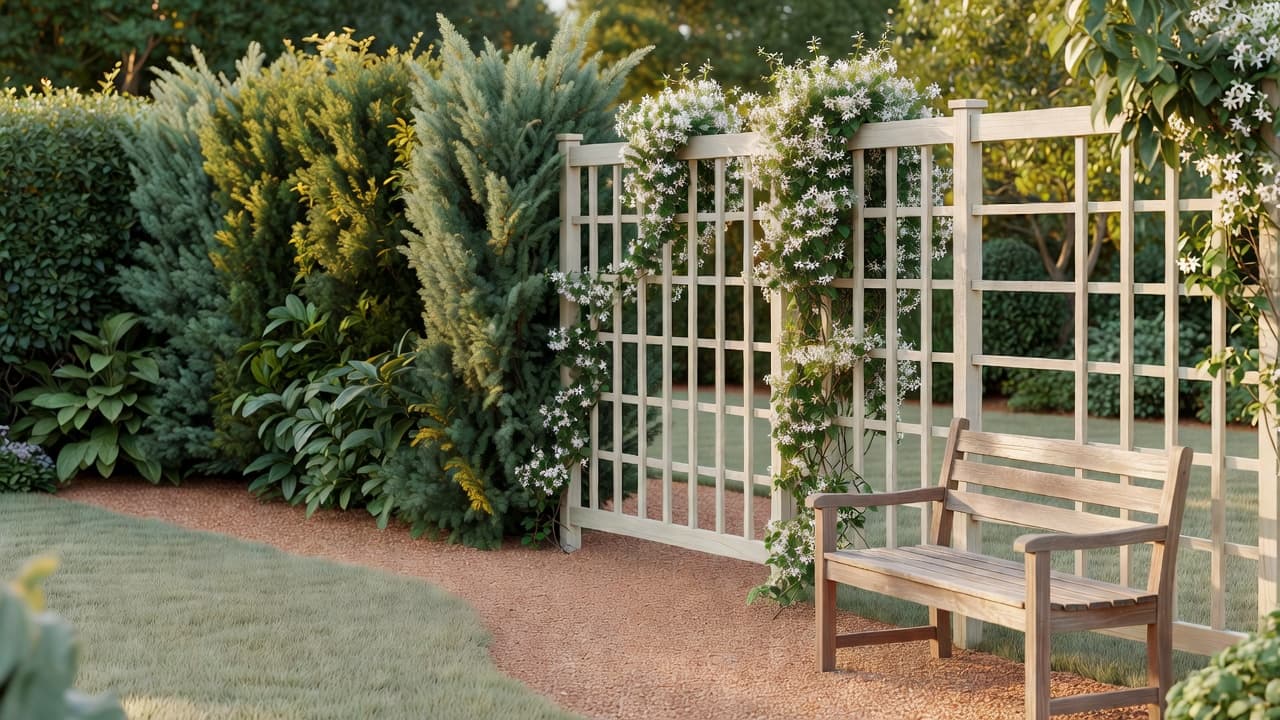
Screening is one of the most common reasons anyone redesigns a garden in the first place: a new house overlooking the garden, a busy street, or simply wanting a quieter, more private spot to sit. The trouble has always been picturing whether a hedge, a trellis or a fence will actually solve it, and what it will look like once it has grown in. An AI garden screening design app closes that gap by generating a photo-realistic version of your own garden with the screening already in place.
For the full picture of how AI garden design works across every style, not just privacy, see our AI garden design guide.
How does an AI garden screening design app work?
The process is the same one used for any AI garden redesign, just aimed specifically at privacy:
- Photograph the boundary you want to screen — the fence line, the overlooked corner, or the whole garden — in daylight, from where you usually sit or stand.
- Choose a screening style: a clipped evergreen hedge, an informal mixed border, a timber trellis with climbers, bamboo screening, or a taller fence.
- The AI garden planner reads the photo and keeps your real boundary, shed and existing planting in place.
- It generates a redesign showing the screen at a realistic mature height and density for the style you picked.
- You compare a few versions — living and structural — before deciding what to actually plant or build.
FlorAI, our own AI garden design app, uses this same photo-to-redesign process, so a homeowner can see three or four screening options on their real garden in the time it would otherwise take to sketch one. If you are still weighing up which app to use, our AI garden design app checklist covers the features worth checking first.
Living screens vs. structural screens: which suits your garden?
Most gardens end up mixing the two, but it helps to know what each is actually good at before you choose.
- Living screens (hedges, bamboo, climbers on a trellis) look softer, support wildlife, and improve with age — but need one to several growing seasons to reach full height, plus ongoing pruning once established.
- Structural screens (fence panels, trellis, screening panels) give privacy immediately and work in any season, but read as harder and more obviously man-made until planting grows up around them.
- Combined screens — a fence or trellis with a climber, or a hedge planted in front of an existing panel fence — give instant privacy from the structure while the planting fills in, which is the option most professional designers default to.
Whichever you lean towards, choosing plants that will not turn a privacy hedge into a twice-yearly chore matters more than it sounds — our low-maintenance garden design ideas guide has more on that trade-off.
The best plants for garden privacy screening
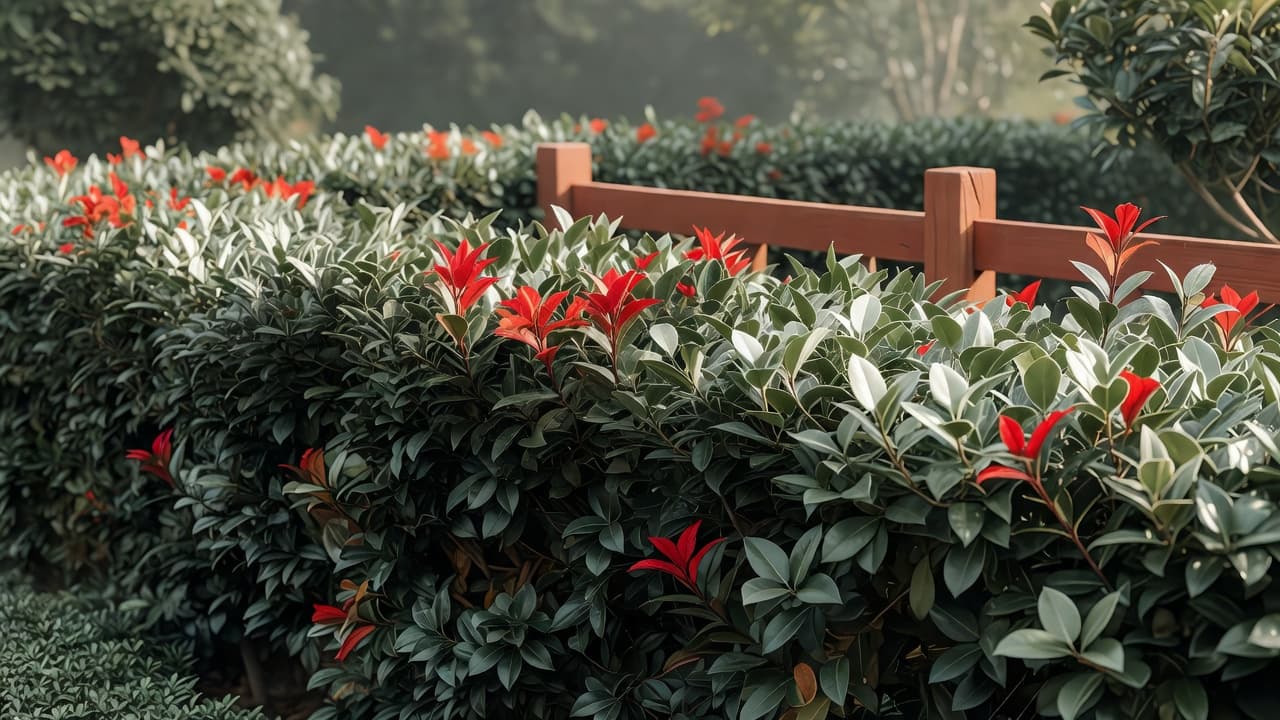
The RHS lists Elaeagnus × ebbingei, Magnolia grandiflora, Photinia × fraseri ‘Red Robin’, Quercus ilex (holm oak) and Sorbus vilmorinii among its top plants for screening, chosen for a mix of density, evergreen cover and manageable size. A few points worth knowing before you plant:
- Elaeagnus × ebbingei and E. pungens tolerate hard pruning and make a dense evergreen screen up to around 4m, even on a shaded site.
- Photinia × fraseri ‘Red Robin’ gives bright red new growth over a dense evergreen base and stays a manageable 5m by 5m.
- Fargesia murieliae, a clump-forming bamboo rather than a running, invasive type, reaches around 4m by 2.5m and suits a narrow bed since it will not spread into the lawn.
- Miscanthus sinensis ornamental grasses give an informal, seasonal screen 1.5–2m tall, with movement and sound in the wind — useful where a solid evergreen hedge would feel too heavy.
- Pleaching — training a hedge or row of trees to clear their lower trunks — lets a screen continue above a standard 1.8m fence without blocking light at ground level, a technique the RHS recommends for extending privacy above a boundary fence.
For establishment, smaller specimens generally settle in faster and more reliably than large, expensive ones — shrubs planted at around 1m and trees at around 1.8m tend to catch up with bigger stock within a couple of seasons.
Fast privacy options: trellis, panels and bamboo screening
If a living screen is too slow for what you need now, several structural options give privacy immediately and can be softened with planting later:
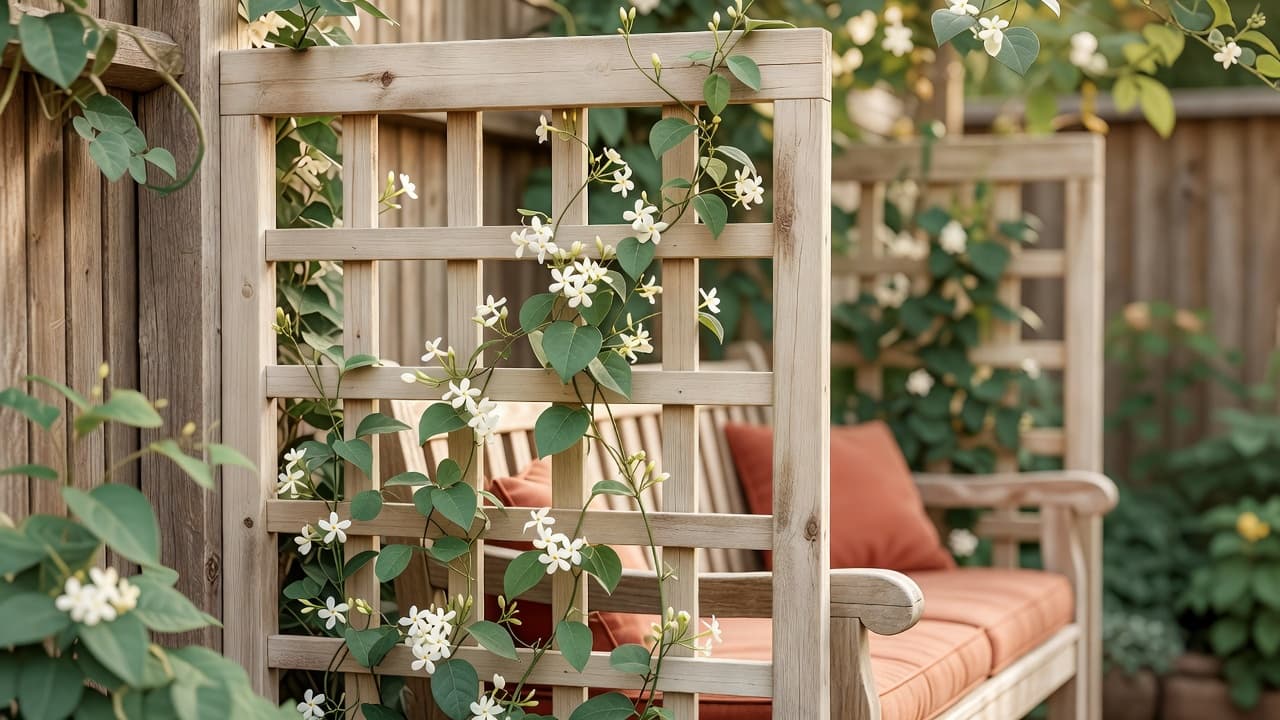
- Trellis panels — timber trellis, typically 1.8–2.4m, is one of the cheapest structural options and gives climbers such as star jasmine or clematis something to grow up quickly.
- Bamboo screening rolls — split-bamboo panels fixed to an existing fence or frame add height and a natural texture fast, without waiting for anything to grow.
- Willow or hazel hurdles — woven panels that suit cottage and wildlife-friendly gardens, informal rather than crisp.
- Screening panels and obelisks — freestanding or fence-mounted panels for a single problem spot, such as an overlooked seating area, rather than a whole boundary.
- Windbreak planting — on an exposed or coastal plot, a screen doubles as shelter from wind as much as from view; our coastal garden design ideas guide covers wind-tolerant planting for that job.
Whichever structural option you pick, planting a climber or a low hedge in front of it turns a purely functional fix into something that reads as a garden feature rather than a barrier.
How tall can a garden screen or fence be?
Height rules vary by country and even by council, so always check with your local planning authority before building anything permanent — but the UK’s rules are a useful example of how these limits typically work. Under England’s permitted development rules, a new or altered fence, wall or gate can be built up to 2 metres high without planning permission away from a highway, and up to 1 metre where it borders a road or footpath, according to the Planning Portal.
A line of two or more evergreens can also fall under separate high hedge rules if it becomes a genuine loss of light or view for a neighbour, which the RHS flags as worth checking before planting a solid evergreen boundary. A living screen has no fixed legal cap in the way a fence does, but a hedge that reaches an unmanageable height becomes exactly the kind of dispute those high hedge rules exist to resolve — one more reason to choose a plant whose mature size actually suits the space, rather than the fastest grower available.
Screening ideas for small gardens, courtyards and balconies
Privacy matters most in exactly the gardens with the least room to spare, so small-space screening tends to lean on height rather than width:
- A single row of Fargesia murieliae bamboo in a narrow bed or large planters gives a tall, clump-forming screen without eating into a small lawn.
- A tall obelisk or single trellis panel with a fast climber solves one overlooked corner without screening the whole garden.
- In a courtyard, a mix of height and greenery — climbers on every wall rather than one boundary — reads as intentional rather than defensive.
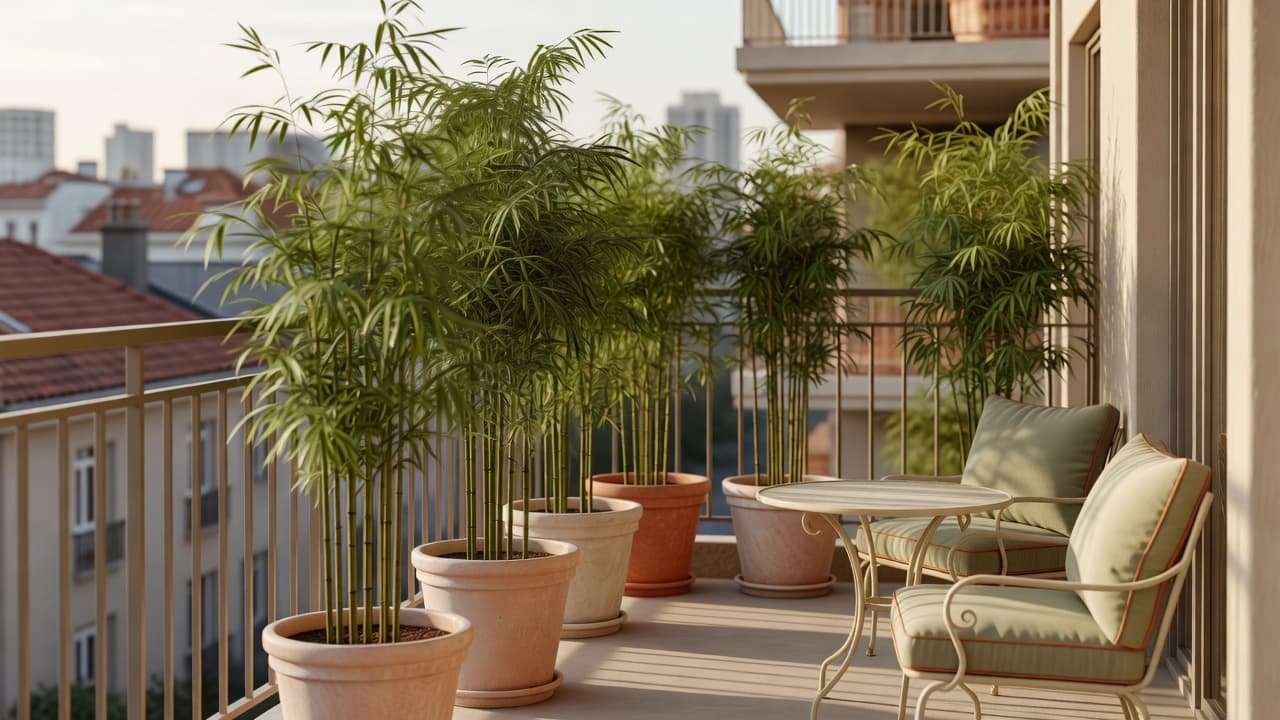
- On a balcony, tall planters with bamboo or ornamental grasses along the railing give privacy from neighbouring balconies without blocking light.
- Stand, not just sit, in the spot you want screened before you plant — it shows exactly where the gap in the sightline actually needs closing.
This is where previewing pays off most, since a small garden has the least room for a mistake — an AI garden design app such as FlorAI lets you see a screening idea on your actual space before committing any of it to soil or timber.
Frequently asked questions about AI garden screening design
What is AI garden screening design?
AI garden screening design is the use of an AI garden design app to add a realistic privacy screen — a hedge, trellis, fence or planted border — to a photo of a real garden, so the owner can compare options before buying plants or materials.
What is the fastest way to get privacy in a garden?
A structural option — trellis, bamboo screening rolls or fence panels — gives privacy immediately. Planting a climber or hedge in front of it lets the space soften over a season or two without leaving you exposed while it grows.
How tall can a garden fence be without planning permission?
In England, permitted development rules allow a fence up to 2 metres away from a highway and up to 1 metre where it borders a road or footpath, without planning permission. Rules vary elsewhere, so check with your local planning authority before building.
Is bamboo good for garden privacy screening?
Clump-forming bamboo such as Fargesia murieliae is a genuinely good screening plant — dense, evergreen and, unlike running bamboo, it will not spread into the lawn. Split-bamboo screening panels are also a fast structural option fixed to an existing fence.
Can an AI garden design app show privacy screening ideas for my own garden?
Yes. FlorAI generates a photo-realistic redesign of your own garden with the screening style of your choice — hedge, trellis or fence — from a single photo, so you can compare options before deciding what to plant or build.
Do I need permission for a tall hedge?
A hedge itself is not usually subject to the same height rules as a fence, but a line of two or more evergreens that seriously blocks a neighbour’s light or view can fall under separate high hedge rules. Choosing a plant whose mature size suits the space avoids the issue altogether.
Last updated: August 2026. Written by the FlorAI garden team.