
Low-Maintenance Gardens · 2026 guide
Low Maintenance Garden Design: A Practical 2026 Guide
Low maintenance garden design means replacing thirsty lawn and high-upkeep planting with hard landscaping or gravel, a short list of genuinely drought-tolerant plants repeated in blocks, a thick layer of mulch, and automated watering — so the garden needs a few hours of care a month rather than a weekend. None of this requires giving up on a garden that looks designed; it just means choosing the right materials and plants before you start, not after the weeding becomes a chore. This guide covers the ground cover options that actually cut work, the 2026 plant list gardening authorities keep recommending, realistic UK and US costs, and the mistakes that quietly create more maintenance than they save.
AI Garden Design GuidesPublished July 23, 2026Updated July 23, 202610 min read
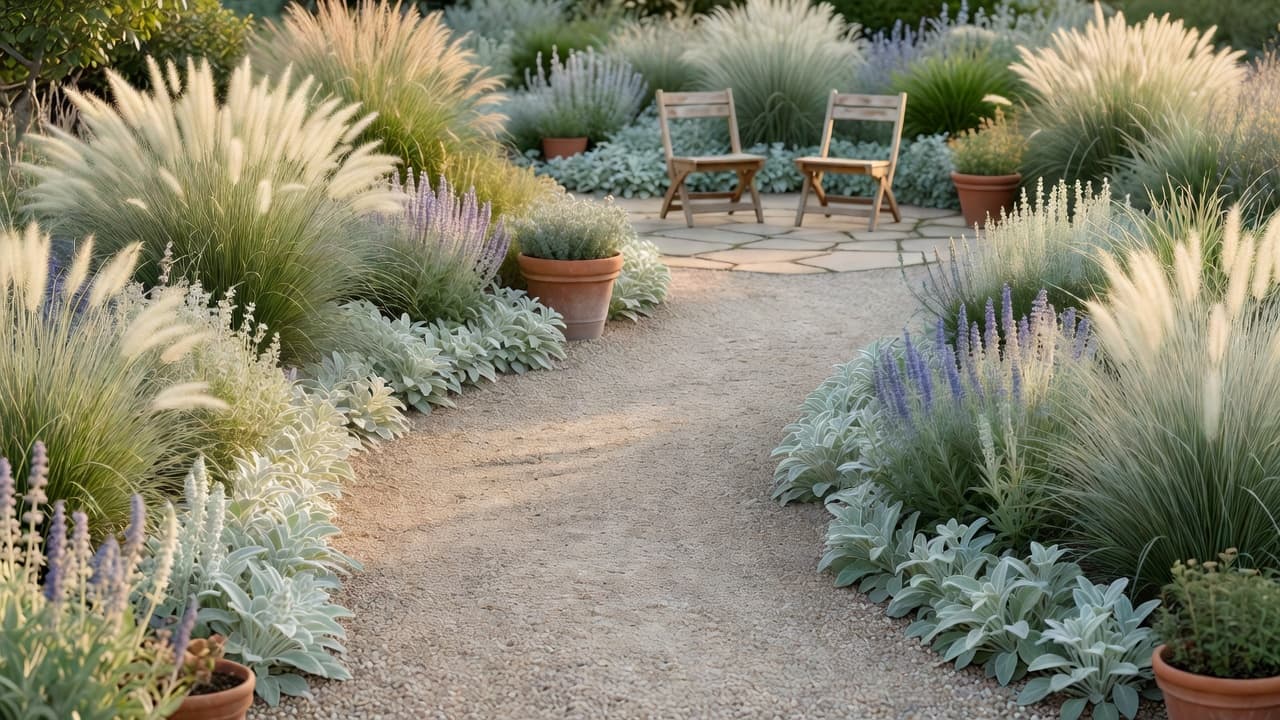
What is low maintenance garden design?
Most gardens that turn into a weekly chore were not planted by lazy owners — they were planted with a long, mixed wish list of plants that each want something different: some need weekly watering, some need staking, some need deadheading every few days through summer. Low maintenance garden design front-loads the decisions that remove that work later, rather than trying to manage it after the fact. Our full AI garden design guide covers the wider planning process; this guide focuses specifically on the choices that cut ongoing upkeep.
- Cut back or replace the lawn — mowing is the single biggest recurring task in most gardens.
- Choose a hard-landscaping base that needs no seasonal attention: gravel, paving or decking.
- Pick a short list of genuinely drought-tolerant plants and repeat them, rather than one of everything.
- Mulch every bed to suppress weeds and hold moisture, cutting both watering and weeding.
- Automate watering with drip irrigation or a smart timer instead of hand-watering.
- Group plants by water need so nothing thirsty ends up stranded among drought-tolerant neighbours.
- Skip features that demand regular attention — tight topiary, annual bedding and unfiltered ponds all add weekly work.
Start by cutting back the lawn
Mowing, edging and feeding a lawn is the single biggest recurring time cost in an average garden, so it is the first thing worth questioning in a low maintenance redesign. That does not mean every lawn has to go — a smaller, simpler-shaped lawn with clean edges is often the easiest compromise, since curves and narrow strips take longer to mow than a plain rectangle and are more prone to scalping and bare patches.
- Shrink it. A smaller rectangular or square lawn, edged with a mowing strip so a strimmer is never needed, cuts mowing time without removing the lawn entirely.
- Replace it with a gravel garden. A gravel bed planted through a permeable membrane needs no mowing, no feeding and far less watering once plants establish.
- Replace it with ground cover planting. Spreading, low perennials knit together over a season or two and shade out most weeds without any mowing.
- Replace it with artificial turf. The most maintenance-free option for a lawn look, though it costs more upfront, does not support wildlife the way real turf does, and can get hot underfoot in full summer sun.
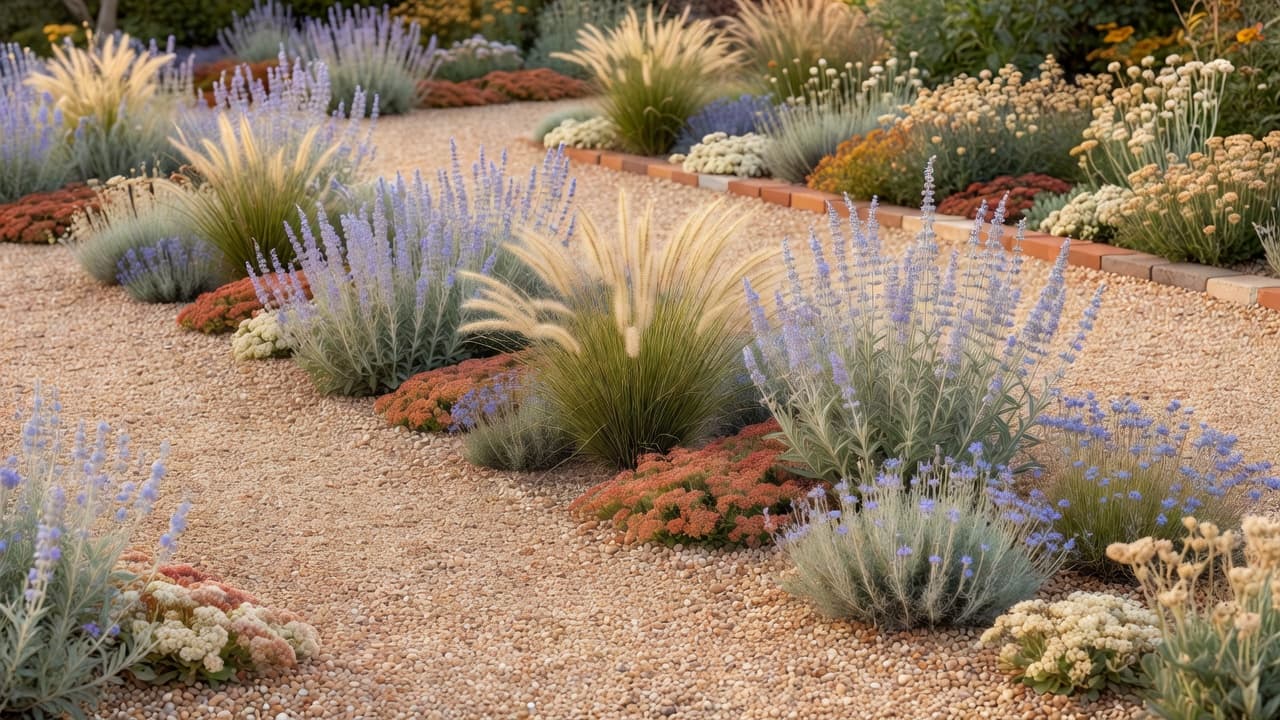
Ground cover and hard landscaping that need no seasonal care
Once the lawn question is settled, the rest of a low maintenance layout usually comes down to picking surfaces that do not need seasonal attention. Our 2026 garden design cost guide breaks these down by price in more detail, but as a starting point:
- Gravel or decomposed granite needs only an occasional rake and a top-up every few years, and works under most planting styles.
- Bark or wood-chip mulch on beds suppresses weeds and holds soil moisture, halving both watering and weeding through the growing season.
- Paving or decking for seating areas needs an annual clean but no weekly attention, and defines a garden clearly without any planting at all.
- Artificial turf removes mowing entirely, at a UK cost of roughly £60–£100 per square metre installed as of 2026, though it needs periodic brushing and rinsing to stay looking good.
- Permeable resin-bound surfaces drain freely, need no weeding, and suit a more contemporary layout than loose gravel.
The best low-maintenance plants for 2026
Gardening authorities keep coming back to the same short list of genuinely tough, low-fuss plants. The RHS list of award-winning drought-tolerant plants and Gardeners’ World’s drought-tolerant plant picks both lean on the same handful of genera, which is a good sign they genuinely perform, not just trend:
- Russian sage (Perovskia atriplicifolia, sometimes sold as Salvia) — silvery foliage, violet-blue flowers from August, thrives in poor, dry soil.
- Rock rose (Cistus varieties) — evergreen, drought-tolerant once established, flowers through early summer with almost no attention.
- Hardy geranium (cranesbill) — long-flowering ground cover that copes with some drought and needs only an occasional cut-back.
- Coneflower (Echinacea purpurea) — drought-tolerant, flowers for months, and self-seeds gently rather than spreading aggressively.
- Sedum (Hylotelephium) — a succulent that needs almost no water once established and adds structure into autumn.
- Daylily (Hemerocallis) — highly drought and poor-soil tolerant, needing only minimal deadheading.
- Yarrow (Achillea) — tough, drought-tolerant, and attracts pollinators through a long flowering season.
- Ornamental grasses such as Miscanthus or Stipa — need one cut-back a year and nothing else, and add movement without any deadheading.
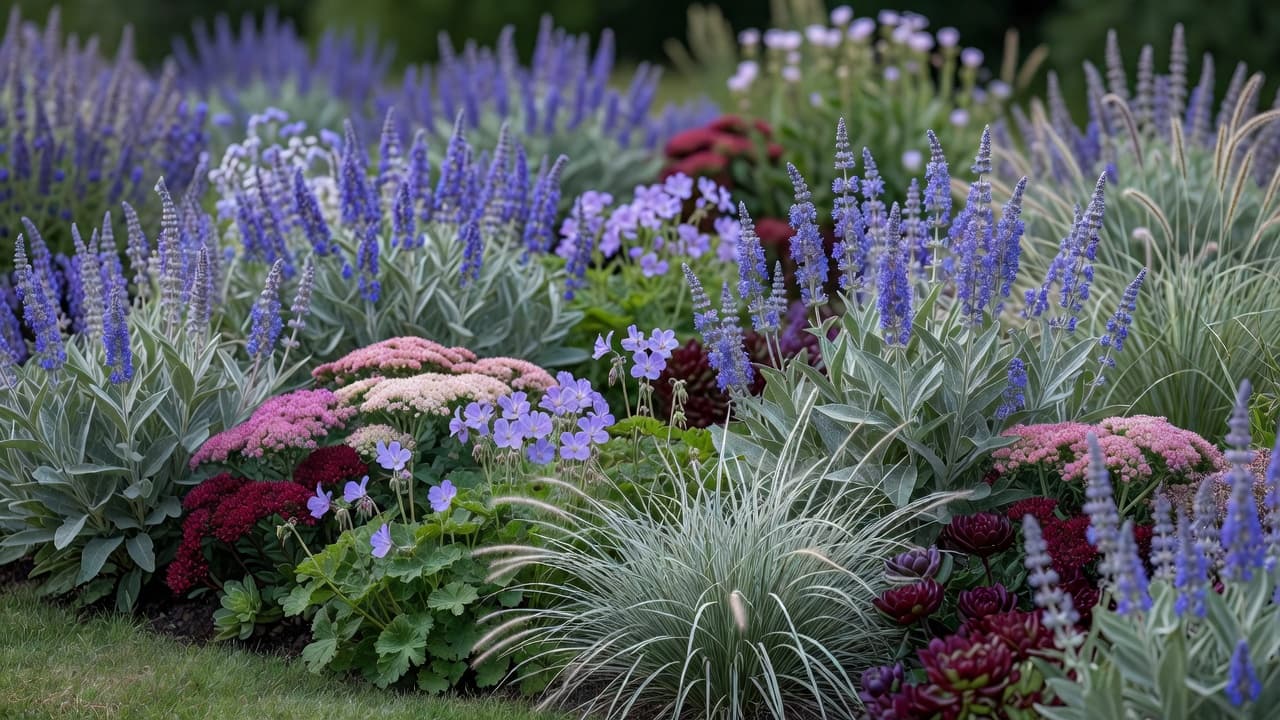
Repeat five or six of these across a border in blocks of three or five rather than buying one of everything — it looks more designed and means every plant in the bed shares the same watering and pruning schedule. Always check a plant against your local hardiness zone before buying; the free USDA Plant Hardiness Zone Map is the fastest way to do that in the US, and most UK nurseries label stock with an RHS hardiness rating.
Design principles that cut upkeep, not looks
A handful of layout decisions do more for long-term maintenance than any single plant choice:
- Group by water need, not just looks. Planting a thirsty hydrangea next to drought-tolerant lavender means one of them is always being over- or under-watered; keep dry-loving and thirsty plants in separate zones.
- Repeat fewer species. A border of six repeated plants needs one watering and pruning routine to remember; a border of twenty different plants needs twenty.
- Right plant, right place. A plant suited to your soil, sun and hardiness zone rarely needs feeding, spraying or extra watering to survive — most high-maintenance gardens are really just plants in the wrong spot.
- Avoid features that need weekly attention unless you genuinely enjoy them — tightly clipped topiary, annual bedding replaced twice a year, and ponds without a proper filtration system are the three most common sources of extra weekly work.
These same principles apply whether you are planning a full redesign or just one border — our guide to planning a flower bed with AI and our dedicated look at xeriscape and drought-tolerant design both go further into planning a planting scheme around water need specifically.
Automate watering so the garden looks after itself
Hand-watering with a hose is the slowest, least efficient way to water a garden, and it is usually the first job that gets skipped when life gets busy — which is exactly when plants need it most. A simple drip irrigation system on a timer delivers water directly to the root zone, uses less water overall than a sprinkler, and runs whether or not anyone remembers to do it.
- Drip lines or soaker hoses under mulch deliver water to roots with minimal evaporation loss.
- A basic timer removes the daily decision entirely and can be set to water early morning, when less water is lost to evaporation.
- Grouping pots together on a single drip line saves far more time than watering each one individually.
- A moisture-retaining mulch layer means the irrigation system itself can run less often once beds are established.
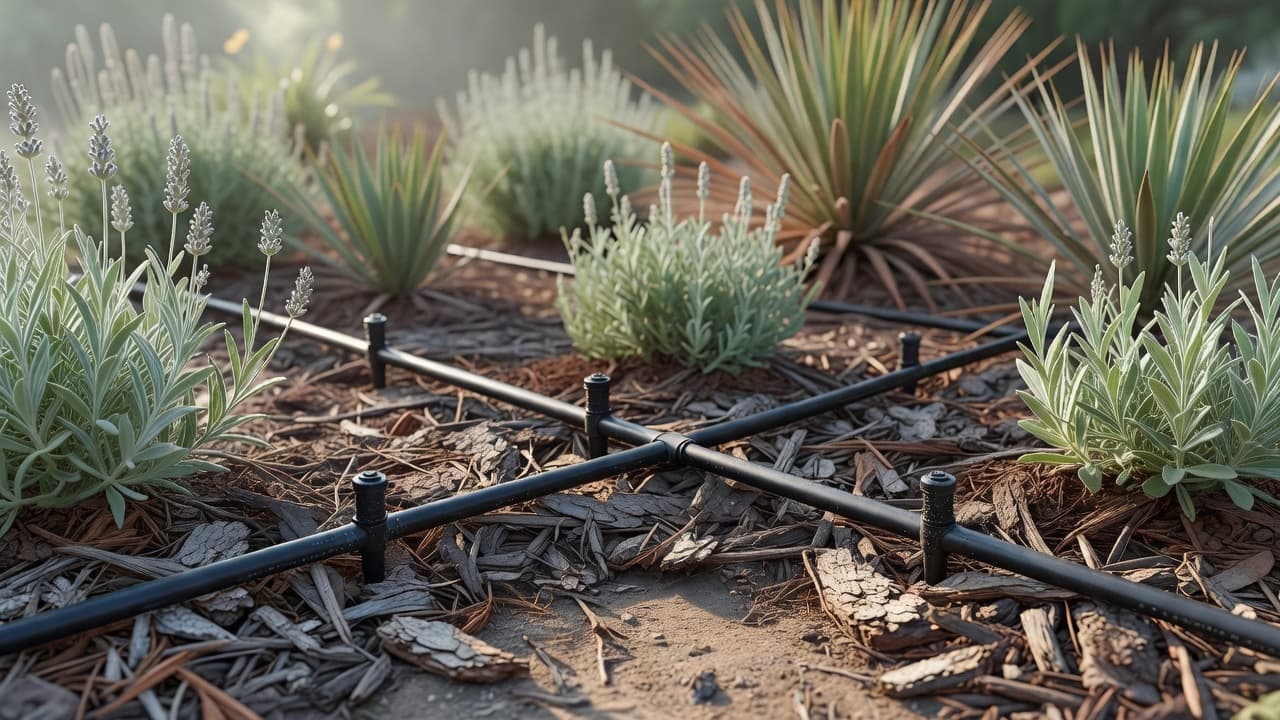
What a low maintenance garden costs in 2026
Costs vary widely by size and materials, but as a realistic UK baseline for 2026, most homeowners tackling a compact low-maintenance project spend roughly £1,000–£4,500, with basic hard-landscaping work running from around £80 per square metre and a fully designed, fully built garden reaching £250 or more per square metre. In the US, a small garden project under 400 square feet typically runs $1,500–$6,000. Our full 2026 garden design cost guide breaks larger projects down further.
- Converting a small lawn to gravel with a permeable membrane and basic planting: roughly £600–£1,800 / $800–$2,200 for a modest area.
- Installing artificial turf over an existing lawn: roughly £60–£100 per square metre installed in the UK, more upfront than gravel but close to zero ongoing cost.
- A full low-maintenance border makeover (soil prep, drip irrigation, a dozen repeated drought-tolerant plants, mulch): roughly £400–£900 / $500–$1,100.
- A complete low-maintenance garden redesign combining hard landscaping, ground cover and planting: typically falls within the wider £1,000–£4,500 / $1,500–$6,000 range above, depending on garden size.
Whatever the total, hard landscaping and irrigation are worth spending on first — they are the elements that actually remove ongoing labour, while plants are comparatively cheap to add or swap later once the harder decisions are settled.
Mistakes that quietly create more work
- Mixing plants with very different water needs in the same bed, which forces a watering compromise that under-serves half the planting.
- Skipping mulch to save a little upfront cost, then losing far more time to weeding and watering over the following seasons.
- Choosing thirsty, exotic-looking plants for a style reason without checking whether they suit the local climate and hardiness zone.
- Ignoring drainage — a bed that sits wet all winter kills drought-tolerant plants just as reliably as one that is too dry in summer.
- Installing irrigation after planting rather than before, which usually means digging up an established bed to add it properly.
- Choosing intricate lawn or bed edges that look attractive on paper but take far longer to trim and maintain than a simple straight or gently curved line.
Seeing a low-maintenance layout applied to an actual photo of your own garden makes these trade-offs much easier to judge than imagining them. FlorAI can generate a photorealistic redesign from a single photo of your space, which is a low-pressure way to test a gravel garden, a smaller lawn or a drought-tolerant border before committing to any materials or plants.
Frequently asked questions about low maintenance garden design
What is the lowest maintenance garden design?
A gravel or hard-landscaped garden with a short list of repeated drought-tolerant plants, mulched beds and drip irrigation on a timer needs the least ongoing attention — typically a few hours a month rather than a weekly commitment.
What ground cover needs the least maintenance?
Gravel over a permeable membrane and artificial turf both need close to no seasonal care beyond an occasional rake or brush. Spreading ground-cover perennials such as hardy geranium are the lowest-maintenance living option once established, though they take a season or two to fully knit together.
What plants need almost no watering once established?
Russian sage, rock rose (Cistus), sedum, yarrow, daylily and ornamental grasses are all widely recommended by gardening authorities as genuinely drought-tolerant once their root systems are established, usually after one full growing season.
How much does a low maintenance garden cost in 2026?
A compact low-maintenance project in the UK typically runs £1,000–£4,500 depending on materials, with basic hard landscaping starting around £80 per square metre. In the US, a small garden under 400 square feet usually costs $1,500–$6,000. Our 2026 garden design cost guide covers larger projects in more detail.
Is artificial grass really low maintenance?
It removes mowing, feeding and most watering, making it one of the lowest-upkeep lawn alternatives, but it still needs periodic brushing and rinsing, costs more to install than gravel or planting, and does not support wildlife the way real turf and planting do.
Can AI help design a low maintenance garden?
Yes. An AI garden design app like FlorAI can turn a single photo of your garden into a photorealistic low-maintenance layout, making it much easier to test a gravel garden, a smaller lawn or a drought-tolerant border before spending money on materials or plants.
Last updated: July 2026. Written by the FlorAI garden team.