
Wildlife Gardens · 2026 guide
How to Design a Wildlife Garden: A Practical 2026 Guide
To design a wildlife garden, give it the four things every animal needs: food from pollinator-friendly planting, water from even a small pond or dish, shelter from a hedge or log pile, and safe places to raise young by leaving some growth undisturbed. You do not need to rewild the whole plot — a single native hedge, one drift of open-flowered perennials and a washing-up bowl pond will bring in bees, birds and hedgehogs within a season. This guide walks through each layer in order, with real plant names, pond dimensions and costs for 2026.
AI Garden Design GuidesPublished July 28, 2026Updated July 28, 202610 min read
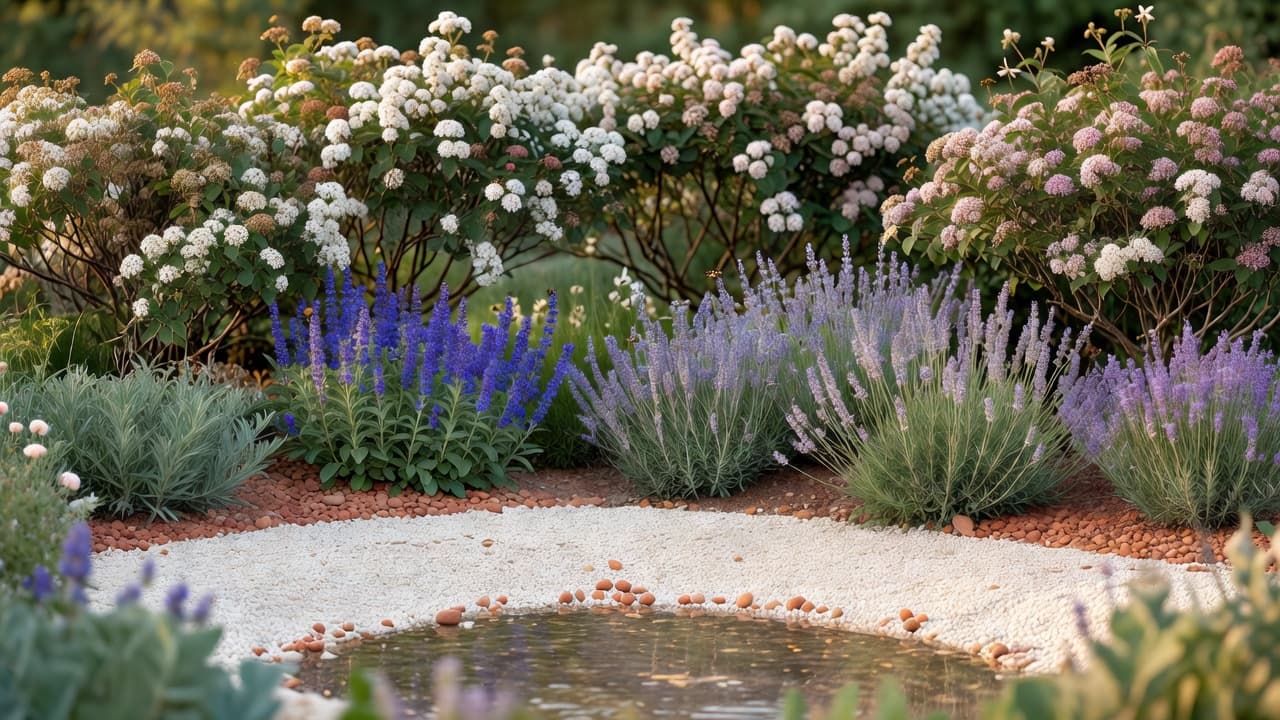
How to design a wildlife garden in four layers
The National Wildlife Federation frames this as four essentials that any habitat, garden-sized or not, needs to support wildlife: food, water, cover and places to raise young. A wildlife garden design simply arranges those four things within a domestic plot, using the boundary, the borders, a water feature and one undisturbed corner to do it. Our AI garden design guide covers layout and style choices more broadly; this guide focuses specifically on the wildlife layer.
- Food — a native hedge plus pollinator-friendly perennials, shrubs and climbers flowering from early spring to late autumn.
- Water — a pond, however small, with at least one shallow, gently sloping edge.
- Shelter — dense hedging, log piles, a bee hotel and undisturbed leaf litter.
- Places to raise young — long grass, a log pile left alone through summer, and nest boxes sited away from disturbance.
Start with a native hedge or boundary planting
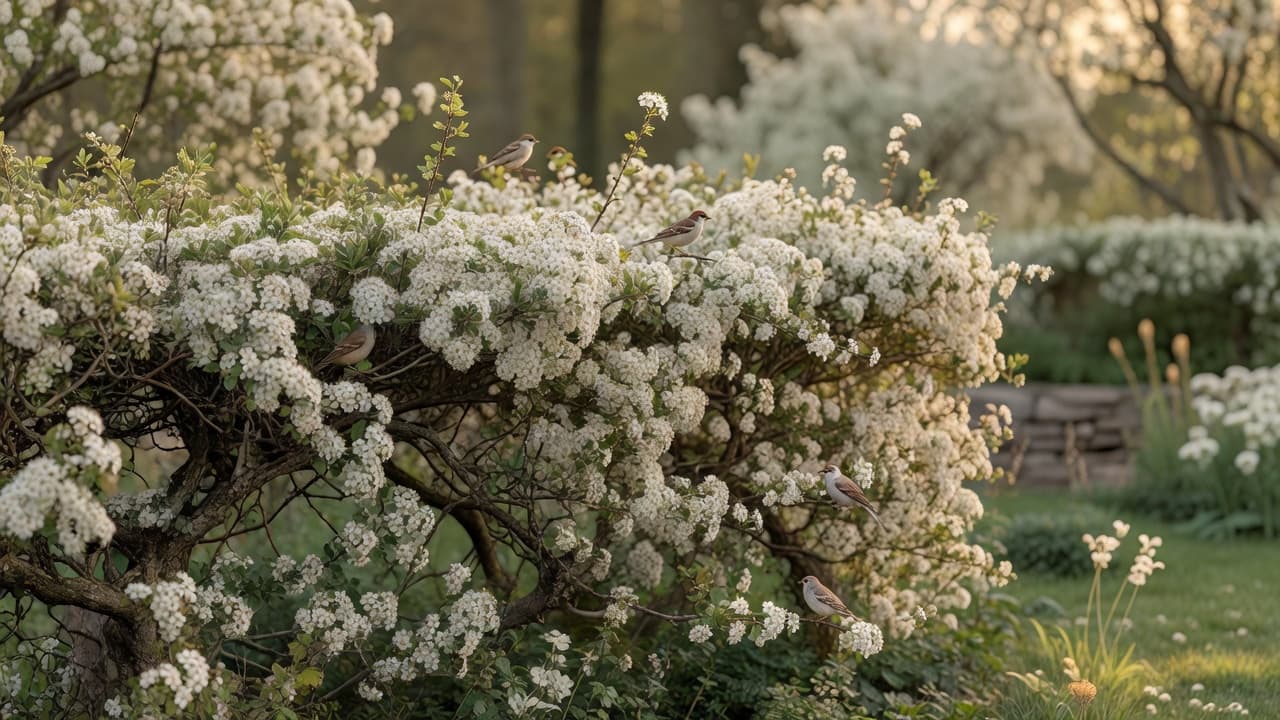
A mixed native hedge is usually the single most valuable feature in a wildlife garden design, because it does the job of food, shelter and nesting site all at once. RHS wildlife gardening guidance recommends hawthorn (Crataegus monogyna) as a strong starting point: it flowers for pollinators in late spring, carries haws for birds into winter, and is dense enough for nesting.
- Hawthorn (Crataegus monogyna) — spring blossom for pollinators, autumn haws for blackbirds and thrushes.
- Field maple (Acer campestre) — good autumn colour and shelter, tolerates most soils.
- Dog rose (Rosa canina) — simple, open flowers that pollinators can actually reach, followed by rosehips.
- Holly (Ilex aquifolium) — dense evergreen cover for roosting birds through winter.
- Ivy (Hedera helix) — one of the few late-autumn nectar sources, plus berries into winter; the RHS lists the whole Hedera genus as a Plant for Pollinators.
If a full hedge is not possible — a rented garden, a tiny courtyard, a wall in place of a fence — a single native shrub in a large container, or a climber such as ivy or honeysuckle trained up an existing fence, still gives some of the same benefit. Our small garden design guide covers vertical and container options for exactly this situation.
Which plants actually help pollinators?
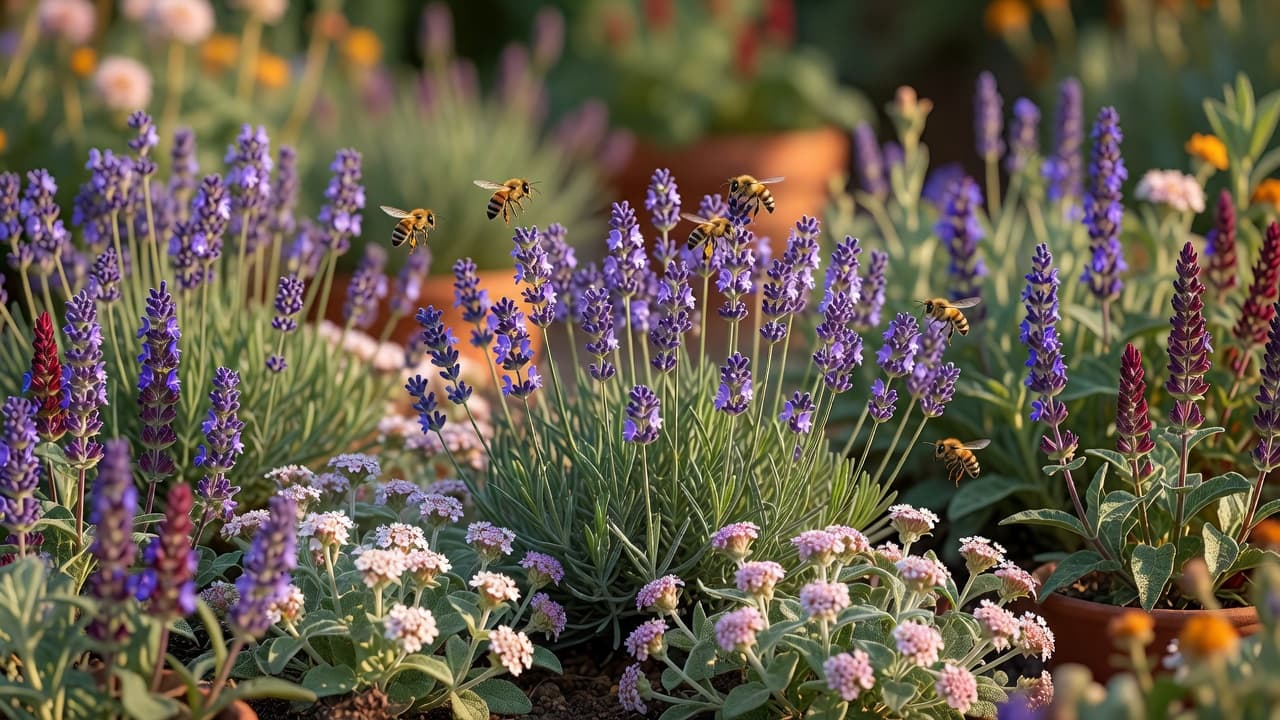
The RHS Plants for Pollinators list, updated after a full scientific review, now covers more than 10,000 garden plants backed by published evidence of pollinator visits — including 19 entire plant genera boosted to whole-genus status, among them Lavandula (lavender), Salvia, Erica (heather), Hedera (ivy) and Origanum (marjoram). Two practical rules cut through the size of that list for a real garden:
- Choose simple, open flowers over double blooms. Double-flowered cultivars often hide or replace the pollen and nectar structures pollinators need to feed, so a single-flowered Salvia nemorosa or Geranium does more for bees than a fully double rose of the same size.
- Plant in clumps of three to seven, not single specimens, so foraging insects can feed efficiently without expending more energy finding the next flower than they gain from it.
- Cover the full flowering season. Crocus and hellebore for late winter and early spring, lavender and salvia through summer, and ivy, sedum and Michaelmas daisy (Symphyotrichum novi-belgii) for autumn, so nectar is never unavailable for more than a few weeks at a stretch.
- Mix a majority of native or naturalised plants with a smaller proportion of non-native nectar sources — the RHS has found garden pollinators use both, so a wildlife garden design does not need to be exclusively native to work.
For the layering and repeat-planting principles that make a pollinator border look designed rather than accidental, see our guide to layering in planting design.
Do you need a pond for a wildlife garden?
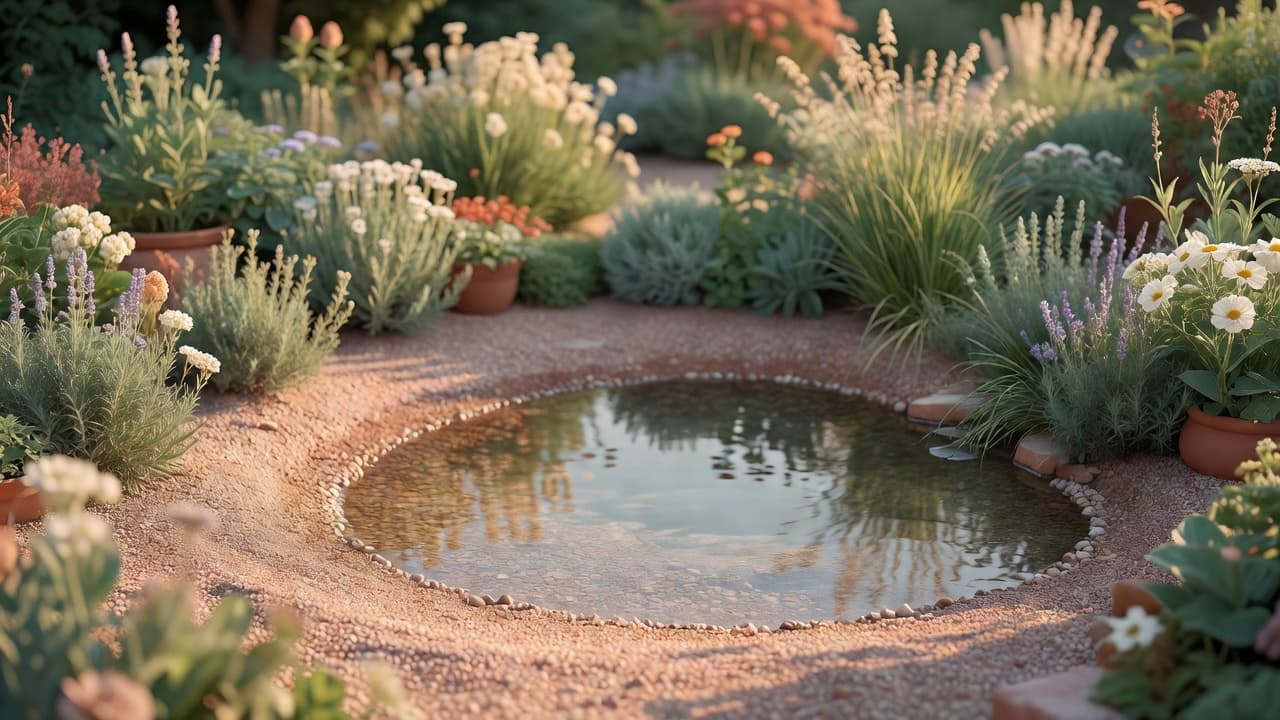
Not strictly, but water is one of the fastest ways to bring in visible wildlife, and it does not need to be large. RHS guidance on wildlife ponds notes that even a half-barrel or an old washing-up bowl sunk into the ground, with a stone ramp for access, will attract dragonflies, hoverflies and birds to drink and bathe.
- Depth: a range of 20–60cm across the pond suits most pond plants and amphibians, since different species and plants prefer different depths.
- Shape: at least one long, gently sloping shallow edge — a kidney or irregular outline creates more of these shallow pockets than a neat circle or rectangle.
- Edge treatment: gravel, mud or large flat stones on the shallow side let hedgehogs, birds and ground-feeding insects drink safely and climb out if they fall in.
- No fish in a genuinely wildlife-focused pond — fish eat the tadpoles, larvae and invertebrate eggs the pond is meant to support.
- Rainwater over tap water where possible, since it avoids the chlorine and added nutrients that encourage algae.
A container pond can be installed in an afternoon for well under £50 in materials; a proper dug wildlife pond with a shallow beach typically costs a few hundred pounds if you dig it yourself, more if a landscaper installs the liner and edging.
Build in shelter: log piles, bee hotels and a wild corner
Food and water bring wildlife into a garden; shelter is what keeps it there through winter and lets it raise young the following spring. None of the following need much space or budget:
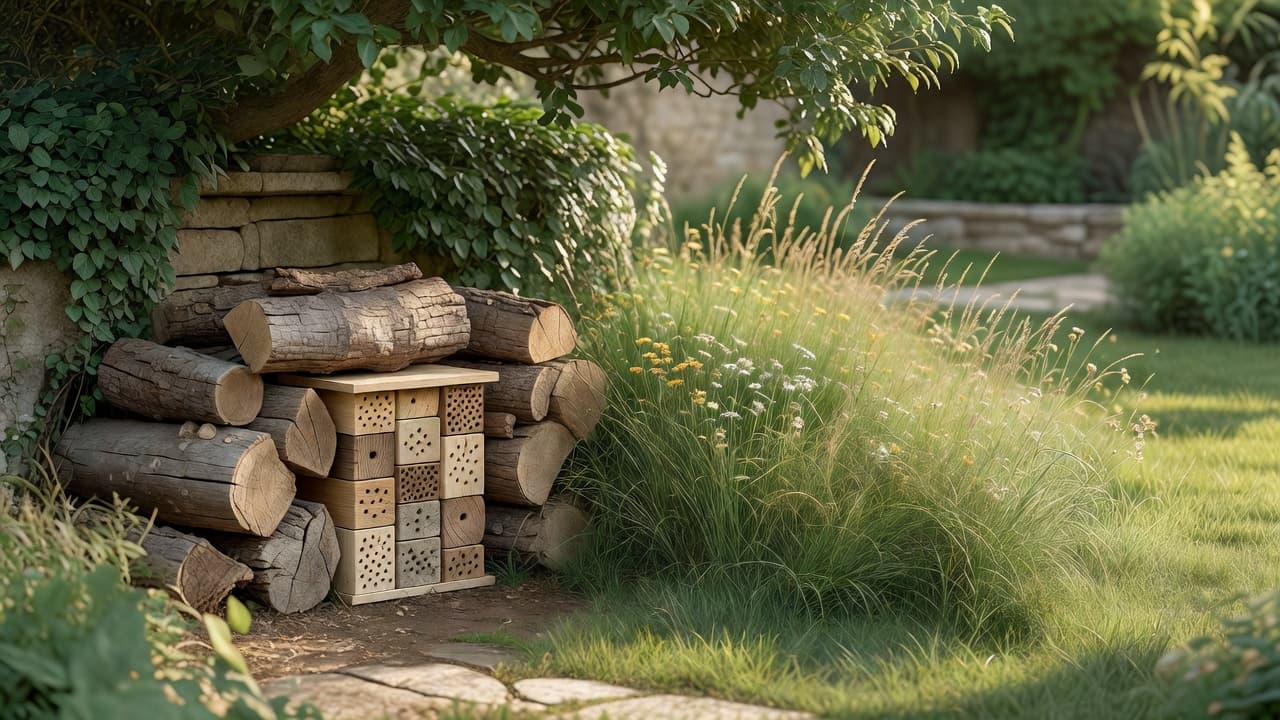
- A log pile in a shaded, undisturbed corner shelters beetles, woodlice and overwintering amphibians, and slowly rotting deadwood is itself a habitat that RHS and conservation guidance both rank highly for garden biodiversity.
- A bee hotel of hollow bamboo or drilled wood blocks, fixed at around 1–1.5m height facing south-east for morning sun, gives solitary bees somewhere to lay eggs.
- A patch of long grass, left unmown from spring to late summer, supports far more insect species than a regularly cut lawn — even a single metre-square patch behind a shed makes a measurable difference.
- Leaf litter left under hedges and shrubs over winter shelters hedgehogs, toads and countless invertebrates that a tidy autumn clear-up would otherwise remove.
- A small gap at the base of a fence, about 13cm square, lets hedgehogs move safely between neighbouring gardens to forage — a single garden is rarely large enough to support one on its own.
Skip the pesticides and go easy on tidying
The single biggest lever in a wildlife garden design costs nothing: using fewer pesticides and tidying less. Slug pellets, most insecticides and broad-spectrum weedkillers do not distinguish between a pest and the pollinator or predator that would otherwise control it naturally. A garden that tolerates some aphids will usually attract enough ladybirds and hoverfly larvae to keep them in check without any product at all.
This pairs naturally with a low maintenance garden design — leaving seed heads standing through winter instead of cutting borders back in autumn feeds birds and shelters overwintering insects, and both save time as well as help wildlife.
See your wildlife garden design before you dig
Wildlife planting can be harder to picture in advance than a formal border, because the whole point is a slightly looser, layered look rather than neat blocks of one plant. FlorAI can generate a photo-realistic wildlife-style redesign of your actual garden from a single photo, so you can see how a native hedge, a pollinator border and a small pond would sit together in your own space before committing to any digging or planting.
This is particularly useful for anyone unsure how much of the garden really needs to change — most wildlife gardens keep the lawn, the patio and most existing structure, and simply add planting and habitat features around the edges. Seeing that in a photo of your own garden, rather than imagining it, makes the decision much easier.
Common mistakes when designing a wildlife garden
- Choosing double-flowered cultivars for colour without checking whether pollinators can actually access them — a double bloom often looks fuller but offers far less usable nectar and pollen.
- Adding fish to a wildlife pond. A pond designed to support amphibians and invertebrates works against itself once fish are introduced, since they eat the eggs and larvae.
- Tidying every border in autumn. Cutting all seed heads and stems back before winter removes food and shelter that would otherwise carry insects and birds through the coldest months.
- Planting only native species and ignoring season gaps. A garden that flowers beautifully in June but offers nothing in March or October still leaves pollinators short of food for half the year.
- Forgetting hedgehog access between gardens. A completely sealed boundary, however well planted, still shuts out any wildlife that needs to roam beyond a single garden to survive.
Frequently asked questions about designing a wildlife garden
What is the single best thing to add to a wildlife garden?
A source of water. Even a small container pond with a shallow, gently sloping edge attracts birds, hedgehogs and insects faster than any planting alone, according to RHS wildlife gardening guidance.
Do I need a big garden to make it wildlife-friendly?
No. A single native shrub, one pollinator-friendly border planted in clumps, and a washing-up bowl pond will bring in bees, birds and beneficial insects even in a small courtyard or balcony garden.
Are native plants always better for wildlife than non-native ones?
Native plants generally support the widest range of insect life, but RHS research shows garden pollinators use both native and non-native nectar sources, so a wildlife garden built mostly from native planting with some well-chosen non-native flowers still works well.
Will a wildlife garden look messy?
Not if it is designed rather than left to chance. Repeating plants in clumps of three to seven, keeping a mown edge or path around looser planting, and containing a log pile to one defined corner all keep a wildlife garden looking intentional rather than neglected.
How long does it take for wildlife to find a new garden?
Pollinating insects often arrive within days of flowers opening. Birds and hedgehogs typically take a full season to establish a new garden as part of their territory, and amphibians can take a year or two to find and colonise a new pond.
Can an AI garden design app help plan a wildlife garden?
Yes. FlorAI can generate a photo-realistic wildlife-style redesign of your own garden from one photo, which is a useful way to see how a hedge, pollinator border and pond would look together before any digging starts.
Last updated: July 2026. Written by the FlorAI garden team.