
Garden Styling · 2026 guide
Garden Design Trends 2026: The 8 Worth Following (and What to Skip)
Garden design trends 2026 centre on naturalistic, matrix-style planting, drought-tolerant borders, reclaimed and enduring materials, water-wise technology, and gardens that double as outdoor living rooms — a shift away from neat, high-maintenance schemes toward denser, climate-aware planting that needs less water and less weeding. This guide covers the eight trends actually worth adopting this year, drawn from RHS Chelsea 2026 and current landscape research, plus which ones to skip if they do not suit your garden.
AI Garden Design GuidesPublished July 18, 2026Updated July 18, 202610 min read
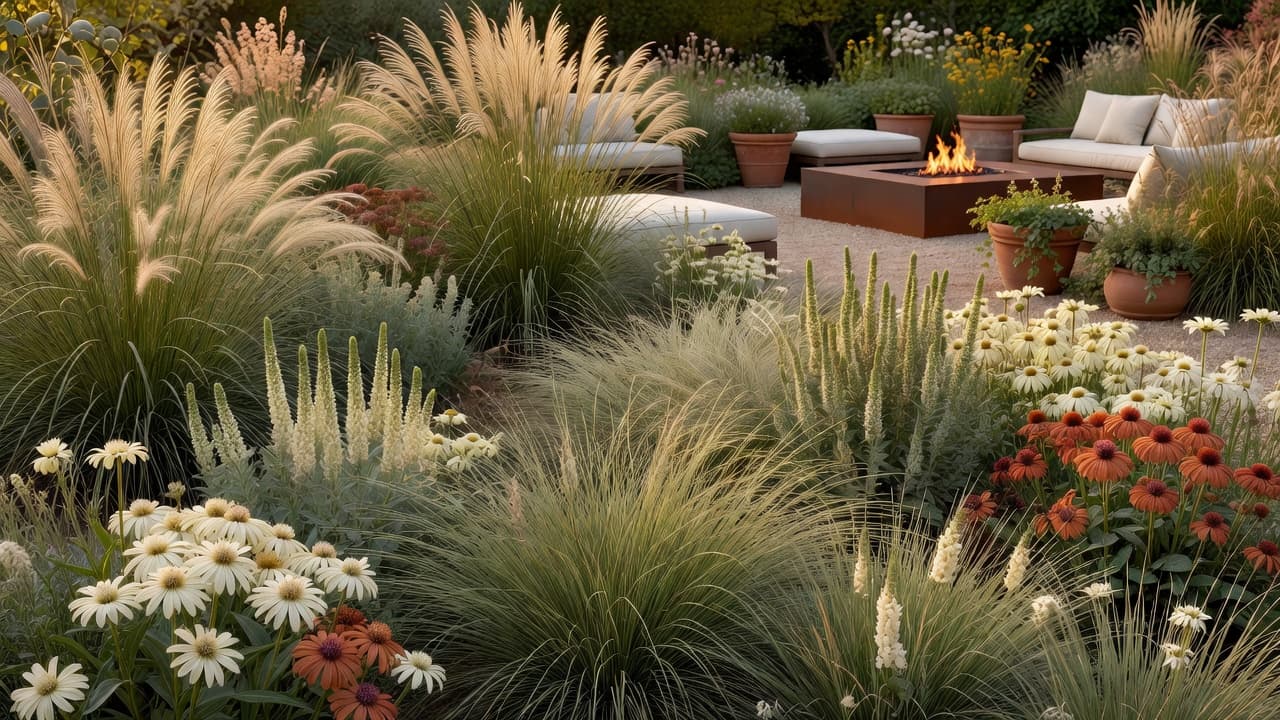
What are the garden design trends for 2026?
These themes were consistent across the RHS Chelsea Flower Show 2026, where naturalistic planting, drought-tolerant choices and reclaimed materials appeared across the majority of show gardens, and across independent landscape-industry forecasting for the year. None of this requires starting from scratch — most gardens can adopt one or two of these trends within an existing layout. If you have not yet settled on the wider layout, our AI garden design guide is a good starting point before layering trends on top.
Naturalistic, matrix-style planting is replacing neat borders
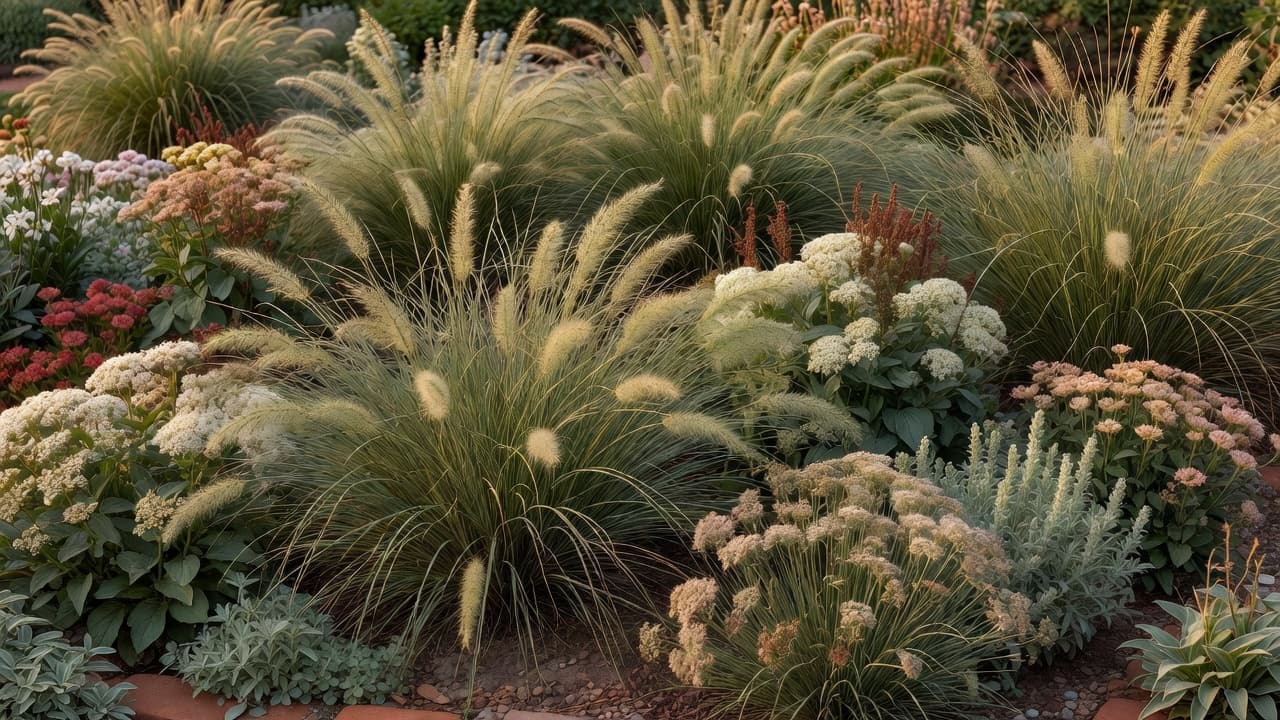
The single biggest shift in 2026 garden design trends is planting density and looseness. Instead of isolated plants in bare soil, matrix planting interweaves grasses and perennials at similar heights so the border reads as one continuous, self-supporting community rather than a row of individual specimens — a technique that dominated multiple RHS Chelsea 2026 show gardens this year.
- Denser planting, less bare soil. More plants per square metre means less room for weeds to establish and less exposed soil losing moisture to evaporation.
- Grasses as the connective tissue. Ornamental grasses like Deschampsia and Sesleria thread through perennial blocks, softening the transitions between plants and adding movement.
- Woodland-edge and meadow references. Layered heights and self-seeding perennials mimic how plants actually grow together in the wild, rather than the clipped, single-species blocks of a traditional border.
- Less deadheading, more structure left standing. Seed heads and faded foliage are left through autumn and winter for texture and wildlife food, rather than cut back the moment flowering finishes.
Drought-tolerant, climate-resilient planting
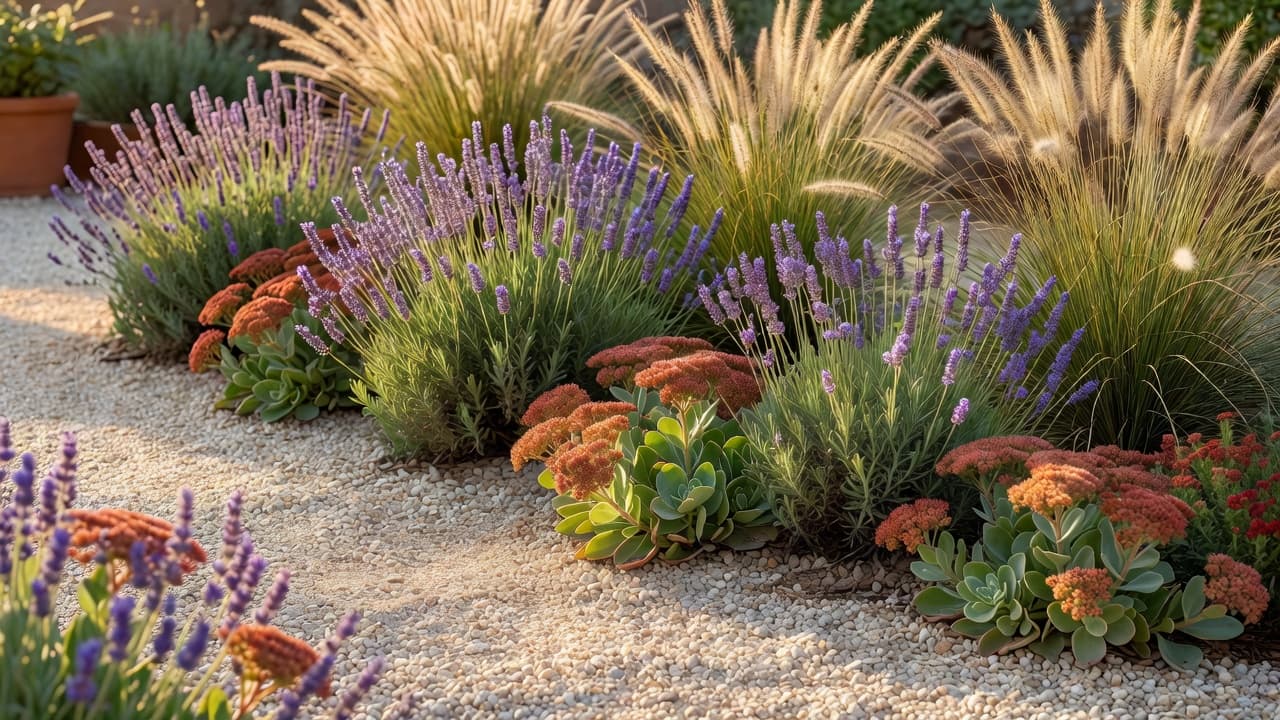
Climate-aware planting is no longer a niche choice for hot, dry regions — it is a mainstream 2026 garden design trend everywhere summers are getting hotter and rainfall less predictable. Mediterranean-inspired planting and drought-tolerant perennials featured heavily across this year's show gardens, reflecting genuinely changing weather patterns rather than a passing look.
- Deep-rooted, low-water plants. Lavender, rosemary, sedum, achillea and ornamental grasses like Stipa tenuissima tolerate dry spells once established and need little irrigation after their first year.
- Gravel and permeable mulch over bare soil. A gravel mulch reduces evaporation, suppresses weeds and lets rain soak in rather than run off — a core principle covered by Clemson Cooperative Extension's guidance on water-wise landscaping.
- Right plant, right place. Grouping plants with similar water needs together avoids over-watering the drought-tolerant ones and under-watering the thirsty ones in the same bed.
- Soil-first thinking. Less tilling and more mulching keeps soil structure intact, which holds moisture far better than bare, compacted ground.
For a garden that leans fully into this trend, our xeriscape design tool guide covers the plant lists and layout principles in more depth.
Wabi-sabi: reclaimed materials and stone that ages well
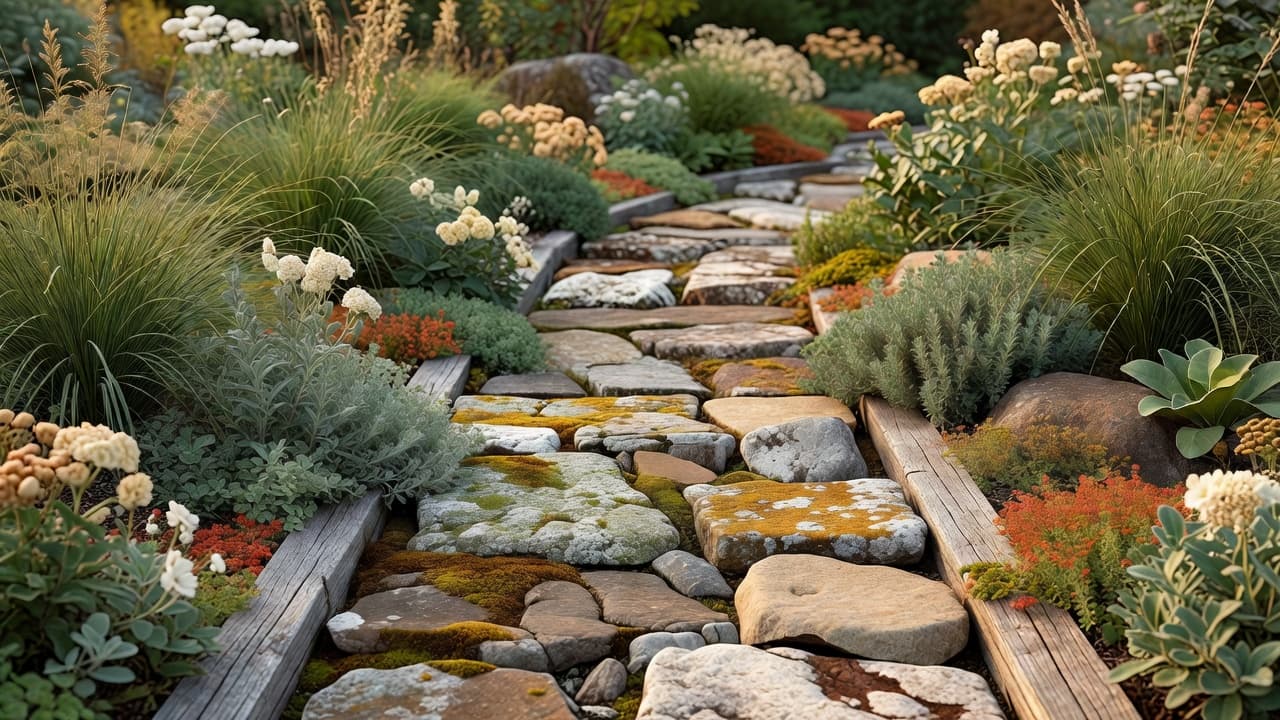
A second material shift running through 2026 garden design trends is a preference for reclaimed, weathered and imperfect materials over anything that looks brand new. Several Chelsea 2026 designers embraced wabi-sabi, the Japanese aesthetic that finds beauty in imperfection and the passage of time, reusing steel, timber and even old filing cabinets as planters rather than sourcing new materials.
- Reclaimed brick, timber and steel in place of new-cut stone or composite decking, chosen for character rather than uniformity.
- Natural stone that develops patina. Unlike porcelain paving, natural stone weathers and softens with lichen and moss over years, which is treated as an asset rather than a flaw.
- Fewer, better hard-landscaping choices made to last decades, instead of frequent replacement of cheaper synthetic materials.
- Visible repair and imperfection — a cracked pot left as a planter, a patched path — rather than everything looking freshly installed.
Water-wise tech: rain chains and smart irrigation
Rain is being treated as a resource to capture rather than drainage to remove. Rain chains — decorative chains that guide roof run-off down into a butt or basin, visibly rather than through a hidden downpipe — are a small, low-cost 2026 garden design trend that pairs naturally with the wider water-wise mood.
- Rain chains and visible water capture replace a plain downpipe with something decorative, funnelling water into a butt for later use on beds and containers.
- Smart irrigation with soil-moisture sensors waters only when the soil actually needs it, rather than on a fixed timer regardless of recent rainfall.
- Weather-linked scheduling pauses irrigation automatically ahead of forecast rain, cutting water use without any manual adjustment.
- Rain gardens and permeable paving let run-off soak into the ground on-site instead of overloading drains during heavy downpours.
Wellness gardens and edimentals
Gardens are increasingly designed around how they make people feel, not just how they look. "Edimentals" — ornamental plants that are also edible, like nasturtiums, alpine strawberries, rainbow chard and many culinary herbs — let a border do double duty as a decorative planting scheme and a small harvest, without the separate, high-maintenance vegetable patch that used to be the only way to grow food at home. For a garden built entirely around growing, our AI vegetable garden planner guide covers raised beds and kitchen garden layouts in detail.
- Edimentals mixed into ornamental beds — chard for foliage colour, nasturtiums as a trailing edge, alpine strawberries as ground cover — rather than a separate vegetable plot.
- Sensory planting chosen for scent and texture near seating, not only for flower colour.
- Quiet, low-stimulation zones with simple planting and a single focal point, distinct from the busier, denser areas elsewhere in the garden.
- Fewer hard edges between "growing" areas and "ornamental" areas, so a kitchen garden no longer has to look utilitarian.
Outdoor living rooms and smart garden tech
The garden as an extension of the house, rather than a separate space to visit occasionally, continues to grow as a 2026 trend. Outdoor kitchens, fire features and weatherproof furniture are turning patios into rooms used for most of the year, not just a handful of summer weekends — our outdoor room design ideas guide covers the layout and shelter principles behind this in more depth.
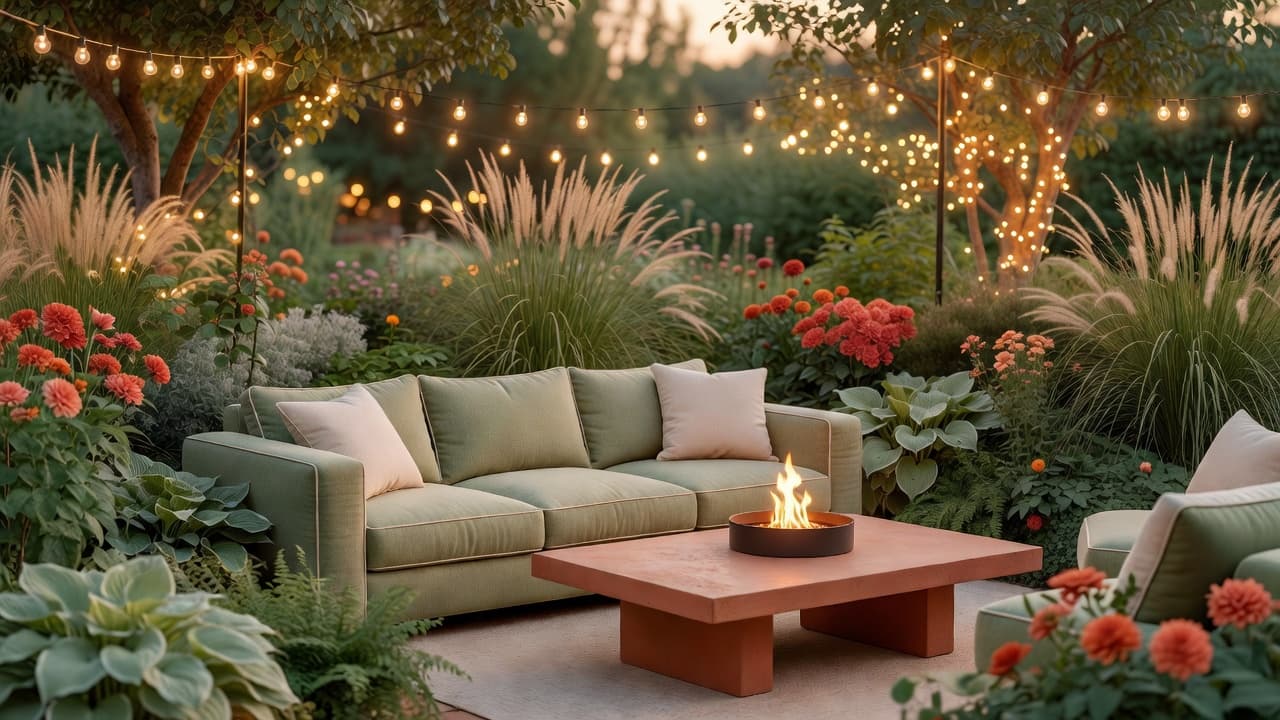
Alongside the furniture, the technology running a garden has quietly become part of the design brief. App-controlled lighting, robotic mowers and the smart irrigation covered above are now planned in from the start rather than added as an afterthought — see our garden lighting design guide for how the lighting layer fits in. AI garden design tools are part of the same shift: rather than describing a redesign to a landscaper in the abstract, FlorAI turns a single photo of an existing garden into a photo-realistic preview of naturalistic planting, reclaimed materials or an outdoor living room in place, which makes it far easier to agree on a 2026-style scheme before any digging starts.
Which 2026 garden trend actually suits your garden?
Not every trend suits every garden, and chasing all eight at once usually looks less considered than committing to two or three that fit the space and the household. A small, shady garden gets more from denser naturalistic planting and reclaimed materials than from drought-tolerant Mediterranean planting bred for full sun; a family garden used daily benefits more from an outdoor living room and smart lighting than from a low-stimulation wellness zone. If a pared-back look still appeals more than dense matrix planting, our minimalist garden design guide covers the alternative, and our Japanese garden design guide covers the more structured end of the naturalistic spectrum that also featured heavily at Chelsea 2026.
Frequently asked questions about 2026 garden design trends
What is the biggest garden design trend for 2026?
Naturalistic, matrix-style planting — grasses and perennials woven together at similar heights, planted densely enough to shade out weeds and reduce watering — is the most consistent 2026 garden design trend, appearing across the majority of RHS Chelsea Flower Show 2026 gardens.
Is minimalist garden design still popular in 2026?
Sparse, minimalist planting has given way to denser, more layered schemes for 2026, though a more structured, minimalist look remains a valid style choice for smaller or shadier gardens rather than a rule that applies everywhere.
What is wabi-sabi garden design?
Wabi-sabi garden design applies the Japanese aesthetic that finds beauty in imperfection and the passage of time — reclaimed materials, natural stone that weathers with age, and visible repair rather than everything looking brand new.
Are edimentals worth planting in an ornamental border?
Yes, for most gardens. Edimentals such as chard, nasturtiums and alpine strawberries add colour and texture like any ornamental plant while also being edible, so they do not need a separate vegetable plot to be useful.
Do I need to redo my whole garden to follow 2026 trends?
No. Most gardens can adopt one or two of these trends — denser planting in an existing border, a rain chain and water butt, or reclaimed materials for one new feature — without a full redesign.
Can AI help plan a garden around 2026 design trends?
Yes. An AI garden design app like FlorAI can turn a photo of an existing garden into a photo-realistic preview showing naturalistic planting, drought-tolerant borders or an outdoor living room in place, which makes it easier to test a 2026-style scheme before buying plants or materials.
Last updated: July 2026. Written by the FlorAI garden team.