
Vertical Gardens · 2026 guide
Vertical Garden Design Ideas: A Practical 2026 Guide
Vertical garden design turns a bare wall, fence or balcony rail into growing space by combining a support structure — a trellis, modular felt pockets, or a freestanding frame — with plants chosen for that structure and its light and water conditions. A simple trellis with a self-clinging or twining climber costs almost nothing and needs only ordinary garden care, while a professionally installed living wall of modular planting pockets runs $30–$70 per square foot for a DIY panel kit and $175–$250 per square foot for a full designed installation with irrigation. This guide covers the main vertical garden systems, the plants that genuinely thrive in each one, what irrigation a living wall actually needs, real 2026 costs, and the mistakes that kill most vertical gardens within a year.
AI Garden Design GuidesPublished August 27, 2026Updated August 27, 202611 min read
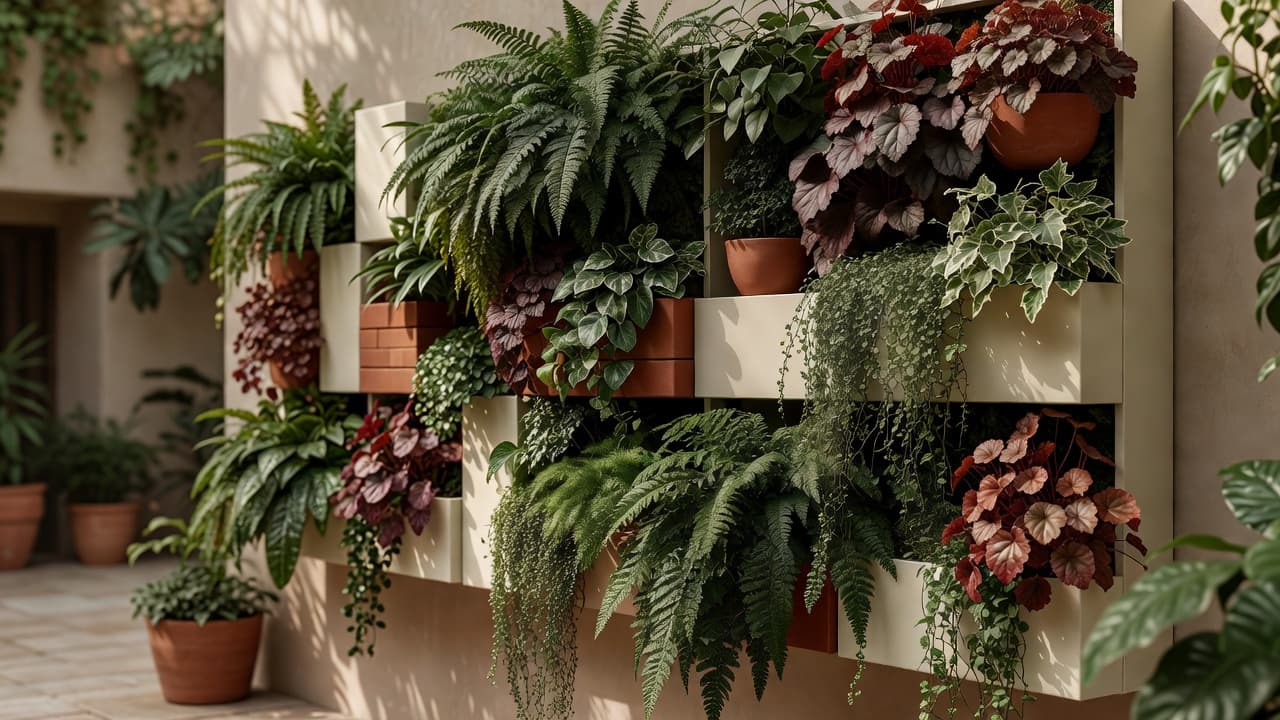
What is vertical garden design?
The idea covers a wide range, from a single trellis with one climbing rose through to a fully irrigated modular living wall covering an entire courtyard elevation. What ties them together is the same design decision: choosing a structure that matches the wall, the light it gets, and how much upkeep the owner actually wants to do. Good garden design treats a vertical garden as part of the whole layout, not an add-on bolted to a blank wall after everything else is finished.
Types of vertical garden systems
Almost every vertical garden falls into one of four structural categories, and the right one depends far more on the wall and the watering commitment than on taste alone.
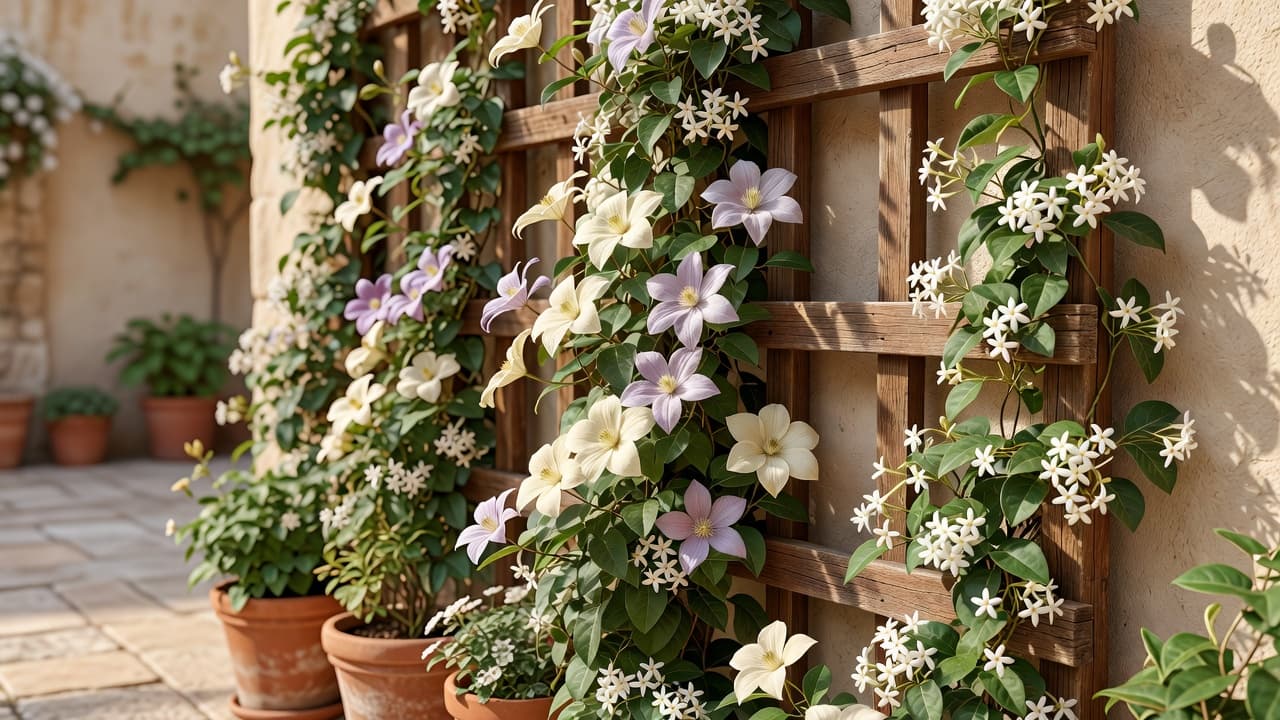
- Trellis and climbers — the simplest and cheapest option. A timber, metal or wire trellis fixed a few centimetres off the wall (for airflow) supports a twining or tendril climber. Self-clinging climbers like ivy or Boston ivy need no trellis at all, but can damage soft mortar and render over time.
- Modular felt or plastic pocket panels — pre-made panels of individual planting pockets, hung on a batten frame with a waterproof membrane behind them. This is the standard "living wall" look, dense and layered, and the most common DIY green-wall kit.
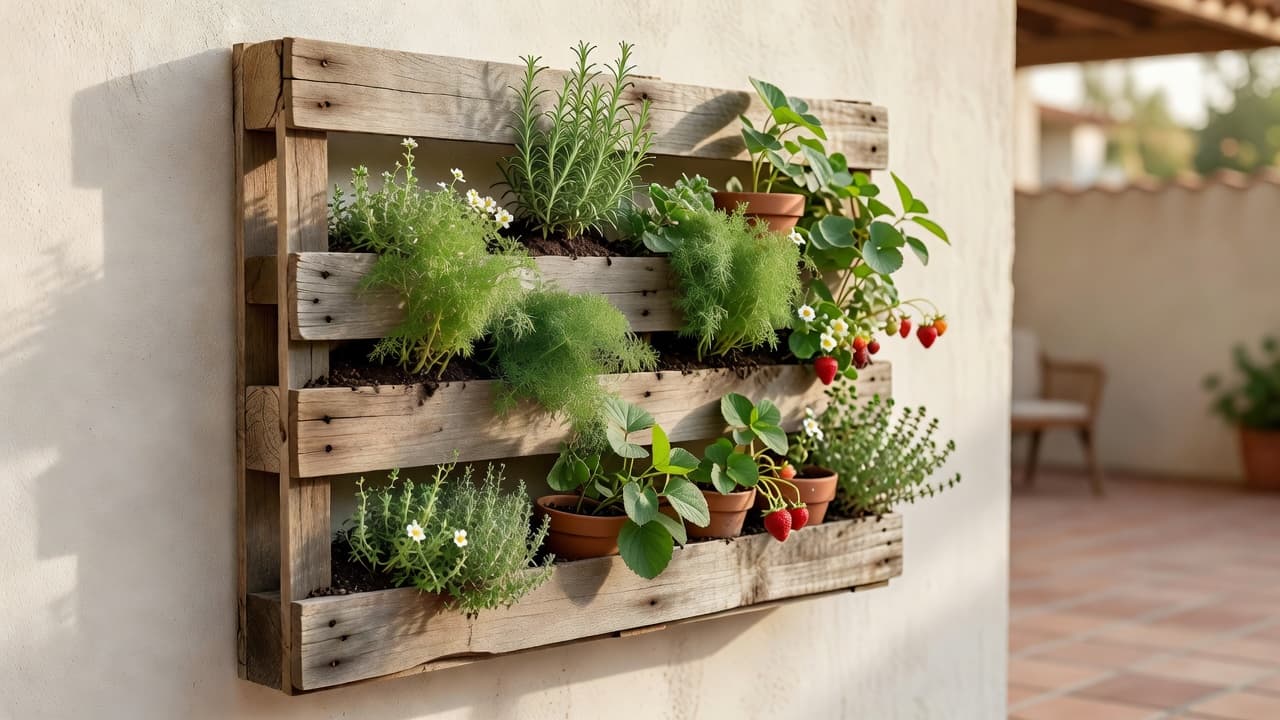
- Pallet and crate planters — an upcycled wooden pallet or a stack of crates fixed to a wall or fence, lined with landscape fabric and filled with potting mix. Cheap, quick, and well suited to herbs, strawberries and shallow-rooted annuals.
- Freestanding living wall frames — a self-supporting steel or timber frame that does not attach to a wall at all, useful for dividing a garden, screening a bin store, or adding planting where there is no wall to work with. Our garden screening design guide covers freestanding screens in more depth.
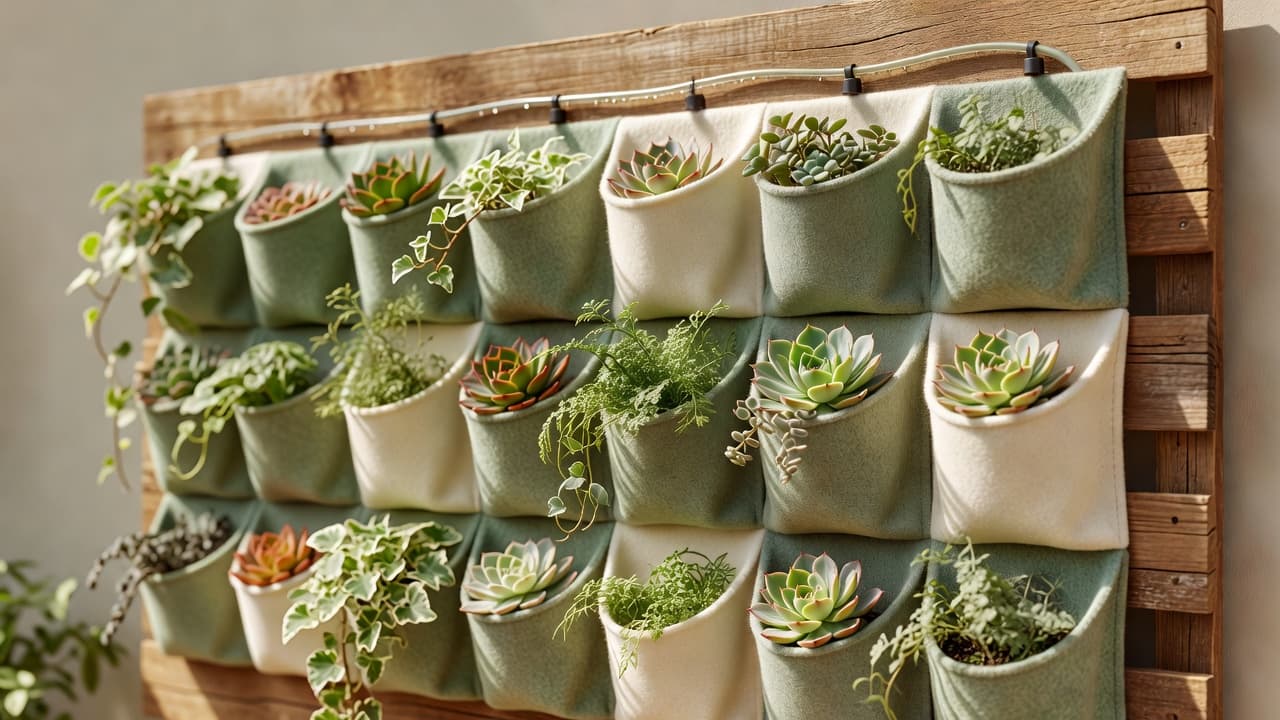
Choosing the right system for your space
The honest starting question is not "which system looks best" but "how much water and attention will this wall realistically get." A trellis with a well-chosen climber can be almost self-sufficient once established, needing only an annual prune. A modular pocket wall, by contrast, behaves more like a bed of container plants stood on its side — every pocket dries out faster than a garden bed and needs a proper watering plan from day one.
- Balconies and small courtyards — lightweight is essential. Felt pocket panels and trellis systems both work; avoid heavy soil-filled troughs on a balcony without checking the load limit first. Our balcony garden design guide covers weight limits and container choice in more detail.
- Small backyards — a trellis along a boundary fence or a single modular panel by a seating area adds height without eating into usable floor space. See our small garden design guide for how vertical elements fit a tight layout.
- Shaded courtyards and side returns — ferns, heucheras and other shade-tolerant pocket-panel plants outperform most climbers here, since few flowering climbers thrive without several hours of direct sun.
- South- or west-facing sunny walls — the best spot for flowering climbers like clematis or star jasmine, and for edible vertical planting such as trailing tomatoes or strawberries.
Best plants for a vertical garden in 2026
Plant choice depends entirely on which system is doing the growing. Climbing plants need something to climb; pocket-panel plants need shallow, spreading roots that tolerate a thin soil profile.
- Clematis — large, showy blooms on a support 2–6m tall, happiest in full sun to part shade with, as the RHS notes, "feet in the shade, head in the sun."
- Star jasmine (Trachelospermum jasminoides) — evening fragrance, small white flowers, twines onto wires or trellis in a warm, sheltered, sunny spot.
- Honeysuckle (Lonicera) — a reliable, fast-covering twining climber for a trellis or wire grid, tolerant of part shade.
- Boston ivy and Virginia creeper — self-clinging climbers for a bare wall with genuinely fast autumn colour, but best kept off soft or older render.
- Heuchera — reliable, colourful foliage for the shadier pockets of a modular living wall.
- Ferns, such as Dryopteris and Asplenium species, for damp, shaded panel sections where little else settles quickly.
- Sedum and other succulents — for a sun-baked panel that dries out fast between waterings.
- Strawberries, herbs and trailing tomatoes — the most popular edible choices for pallet planters and sunny pocket panels.
As with any planting scheme, check a climber's vigour before committing a whole wall to it — some, including certain ivy cultivars, are considered invasive in parts of the UK and US once established. Our planting layers guide covers how to combine foliage texture and height so a vertical garden reads as designed rather than simply green.
Irrigation and drainage for a living wall
A trellis-and-climber wall can usually be watered by hand once established, much like any border. A modular pocket panel wall cannot — the growing medium in each pocket is thin, dries out within a day or two in summer, and without a proper watering plan the top rows scorch while the bottom rows rot. Nearly every real living-wall failure traces back to irrigation, not plant choice.
- Drip irrigation line run along the top of the panel, feeding each pocket or row by gravity, is the standard approach for anything larger than a few pockets.
- A waterproof membrane behind the whole system protects the wall itself from damp and staining — essential on an occupied building, optional on a freestanding garden wall.
- A drainage channel or gutter at the base collects run-off so it does not pool against a foundation or patio surface.
- A timer on the drip line takes the guesswork out of daily watering, particularly for a balcony or courtyard wall no one passes every day.
For a small trellis or pallet planter, a simple watering can and a weekly check is genuinely enough — irrigation infrastructure only becomes necessary once a wall is too large to water by hand in a few minutes.
What does a vertical garden cost in 2026?
Cost varies enormously by system. A basic timber trellis with a climber can be built for well under $100 in materials, plus the cost of the plant itself. A DIY modular felt pocket panel system typically runs $30–$70 per square foot including plants once established, while a fully designed and professionally installed living wall — with irrigation, a waterproof membrane and mature planting — runs $175–$250 per square foot. Small installations (up to about 50 sq ft) commonly total $5,000–$15,000 professionally fitted; a single DIY panel a few feet wide can be built for a few hundred dollars. The gap between DIY and professional pricing is almost entirely the irrigation system and the labour to keep a wall alive through its first year, not the panels themselves.
Common mistakes in vertical garden design
- Skipping the waterproof membrane behind a pocket panel system, leaving damp and staining on the wall behind it within a season.
- Fixing a trellis flush to the wall instead of a few centimetres off it, which starves the climber's stems of airflow and traps damp against the wall.
- Choosing flowering climbers for a shaded wall, where they will grow leggy and rarely flower — shade calls for foliage plants, not sun-lovers.
- No watering plan for a modular panel wall, which dries and fails within weeks without drip irrigation once summer arrives.
- Letting a self-clinging climber loose on old or soft render, which can trap moisture and lift the surface over several seasons.
- Ignoring weight limits on a balcony — soil-filled troughs are heavier than they look once watered; always check the load rating first.
Frequently asked questions about vertical garden design
What is the cheapest way to build a vertical garden?
A timber or wire trellis with a twining climber is the cheapest genuine vertical garden, often built for well under $100 in materials plus the cost of the plant. An upcycled pallet planter is a close second and suits herbs and strawberries particularly well.
How much does a living wall cost?
A DIY modular pocket panel system typically runs $30–$70 per square foot once planted, while a fully designed and professionally installed living wall with irrigation runs $175–$250 per square foot. Small professional installations commonly total $5,000–$15,000.
Do vertical gardens need special watering?
A trellis-and-climber wall can usually be hand-watered like any border once established. A modular pocket panel wall needs a proper watering plan, typically a drip irrigation line, since its growing medium dries out within a day or two in summer.
What plants grow best on a vertical garden?
Clematis, star jasmine and honeysuckle suit a sunny trellis. Heucheras and ferns suit shaded modular panel pockets. Strawberries, herbs and trailing tomatoes are the most popular edible choices for pallet planters and sunny panels.
Can a vertical garden damage a wall?
A well-detailed system will not — a waterproof membrane behind a panel system and a trellis fixed a few centimetres off the wall both protect the surface. Self-clinging climbers on old or soft render are the main risk and are best avoided on that type of wall.
Can FlorAI design a vertical garden or living wall?
Yes. FlorAI works from a single photo of a wall, fence or balcony and generates a photorealistic vertical garden redesign with trellis or living wall planting in seconds, so the look can be tested before any structure is built.
Last updated: August 2026. Written by the FlorAI garden team.