
Native Plant Gardens · 2026 guide
Garden Design with Native Plants: A 2026 Layout Guide
Garden design with native plants means choosing species already suited to your local climate and soil, then arranging them the way any well-designed border works: in repeated drifts, layered by height and season, with structure that holds through winter. It is a design approach as much as a plant list — the same principles of repetition, structure and seasonal succession used in any strong planting scheme, applied to plants that need less water, less feeding and less replacing. This guide covers the four structural layers, how to choose plants for your actual site, and how to keep a native scheme looking intentional rather than a patch of weeds.
AI Garden Design GuidesPublished September 11, 2026Updated September 11, 202611 min read
What is native plant garden design?
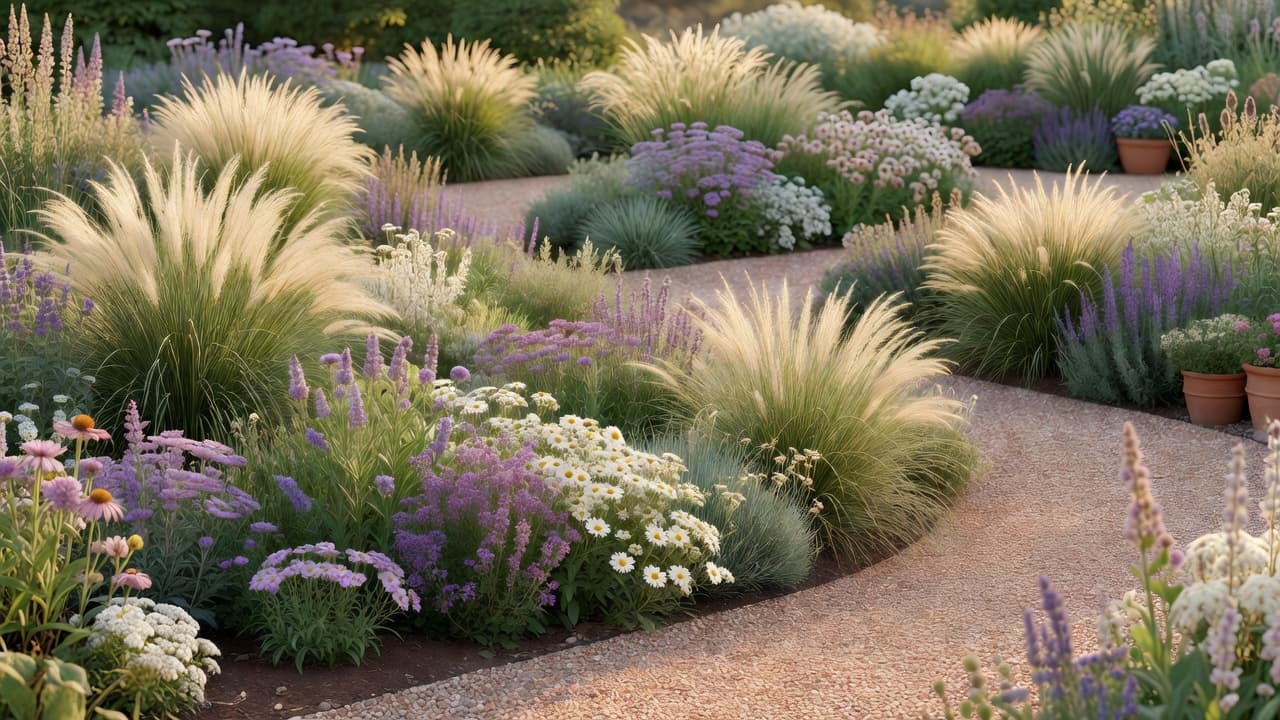
It is easy to assume a native garden means giving up control of the look — letting a corner "go wild" and hoping for the best. In practice, the most convincing native gardens use exactly the same design tools as any other planting scheme covered in our AI garden design guide: repetition, layered height, a clear structure that holds when nothing is in flower, and a limited plant palette used generously rather than a huge palette used thinly. The plants are native; the design discipline is not different from a formal border or a perennial garden design. If your priority is habitat features like a pond or log pile rather than layout, our guide to designing a wildlife garden covers that ground; this guide focuses specifically on how to lay a native scheme out so it looks designed.
Why design with native plants
The practical case is straightforward: plants that evolved with your local rainfall, soil and temperature range typically need less irrigation, less soil amendment and fewer replacements once established, because they are simply suited to the conditions already present. There is also a measurable ecological case. Research summarised by the conservation group Homegrown National Park found that introduced plant species support, on average, 68% less insect life than a native species in the same genus — insects that in turn feed the birds and other wildlife a garden supports.
- Lower water use once plants are established in their first one to two seasons, since they are matched to typical local rainfall.
- Fewer chemical inputs — native plants are generally less prone to the pest and disease pressure that pushes gardeners toward treatments.
- Stronger local ecology — more insect life supports more birds, which is measurable and well documented, even where the garden itself is small.
- A garden that suits its own site rather than fighting it, which in design terms usually means less maintenance for a comparable visual result.
The four structural layers of a native planting scheme
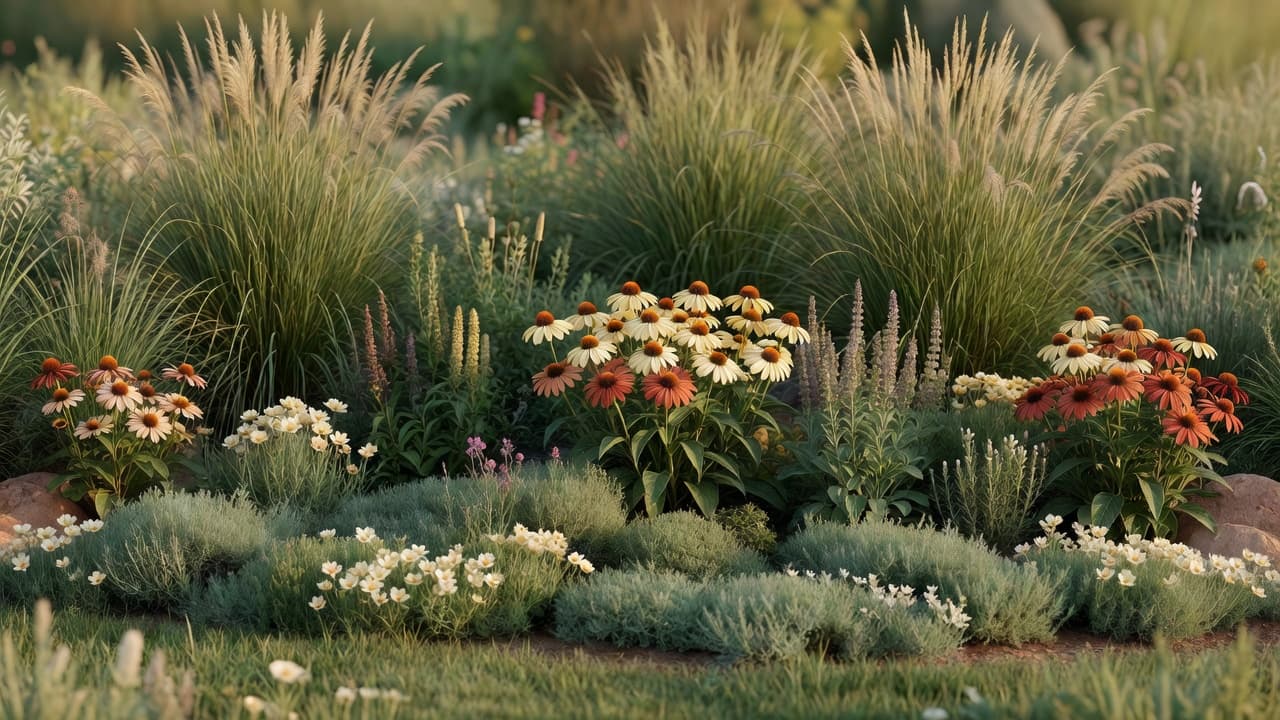
Naturalistic planting designers, including the influential work behind projects like the High Line in New York, build native and near-native schemes from a small number of structural layers repeated across the whole bed, rather than one plant of everything. Four layers cover most gardens:
- Framework plants — taller native grasses or shrubs that hold their shape and give the bed a backbone visible in every season, including winter.
- Feature drifts — the showiest flowering perennials, placed in repeated groups of three to seven so they read as a deliberate sweep rather than a single accent.
- Matrix or filler planting — lower, often grass-like native species planted through and around the feature drifts to knit the bed together and suppress weeds.
- Seasonal accents — native bulbs, self-seeding annuals or short-lived perennials that fill early-spring or late-season gaps between the other three layers.
This is the same layering logic covered in our guide to texture and layering in planting design — native plant selection changes which species go in each layer, not the underlying structure.
Design in drifts, not single specimens
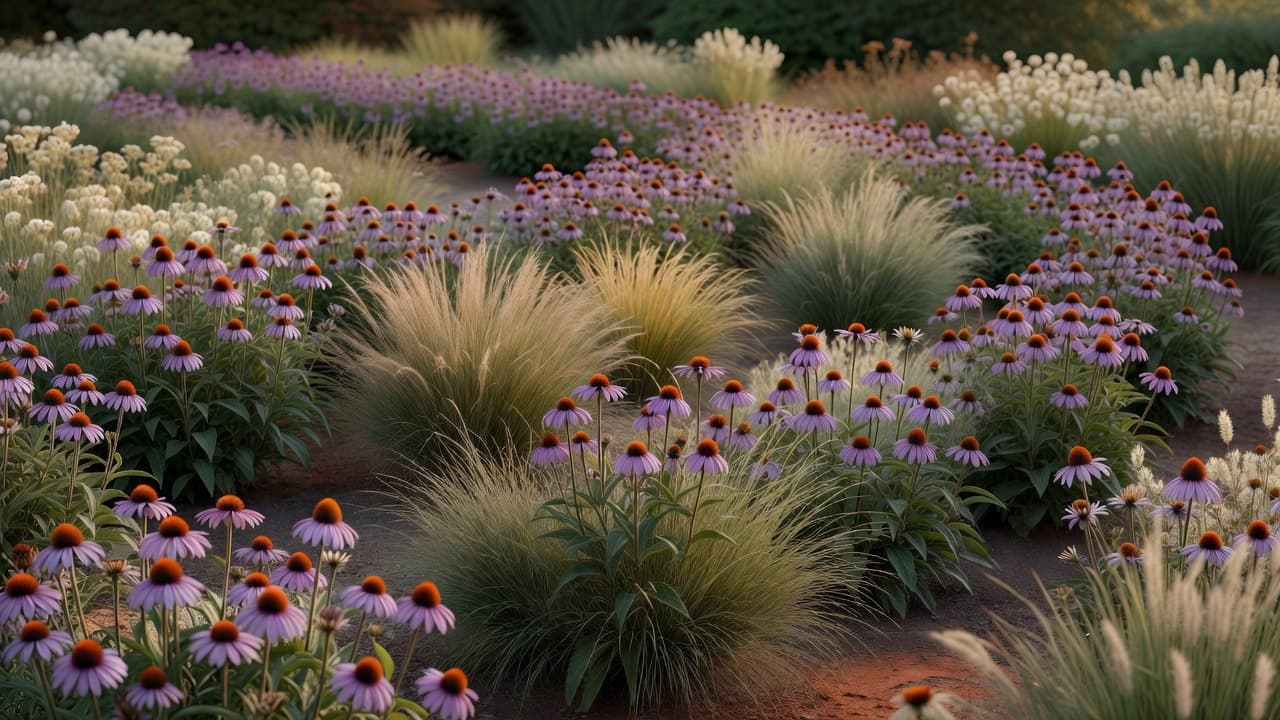
The single biggest difference between a native garden that looks designed and one that looks like an abandoned meadow is repetition. Planting three coneflowers together reads as a modest cluster; planting the same three in a repeated drift of seven across a bed reads as a deliberate sweep of colour visible from across the garden.
- Plant in odd numbers — three, five or seven of a single species, rather than one of each of many species, which is the most reliable way to avoid a scattered, spotty look.
- Limit the palette to roughly seven to ten species for a typical border, used generously, rather than twenty species used thinly.
- Repeat drifts across the bed in loose, irregular sweeps rather than a straight line, so the eye moves naturally through the planting.
- Let some drifts intermingle at the edges rather than keeping hard-edged blocks — this is closer to how the plants actually grow together in the wild and softens the transition between groups.
These same repetition principles apply whether the palette is entirely native or, as in a typical perennial garden design, a mix of native and well-behaved non-native perennials.
Choosing the right native plants for your site
"Native" only helps if the plant also suits the specific conditions in your garden — the same right-plant-right-place principle the RHS applies to planting design generally. A plant native to your country but adapted to woodland shade will not thrive in an open, sun-baked front border, and vice versa. Before choosing species, check four things about the actual planting site:
- Soil type — heavy clay, free-draining sand and chalky soil each suit different native species; a local native-plant society or extension service can usually confirm what grows well nearby.
- Sun exposure — full sun, part shade and deep shade each rule out large parts of the native plant list, so match the layer to the light before the look.
- Moisture — a naturally damp corner and a dry bank under a hedge need different native species even a few metres apart.
- Mature size — many native perennials and grasses spread considerably once established; plan drift spacing for the plant at three years old, not at planting.
A gravel or dry-garden approach to native planting can work well on free-draining soil where irrigation is limited — see our gravel garden design guide for the surface and drainage side of that combination.
Keep structure through winter
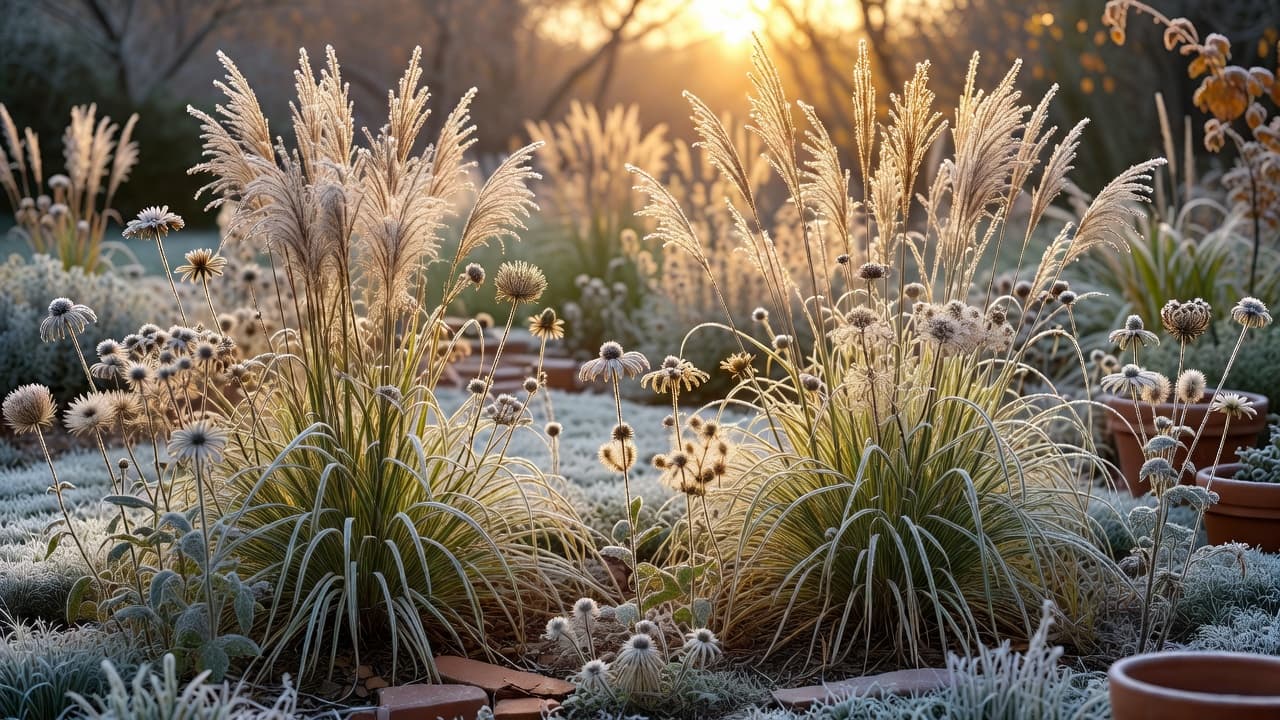
Naturalistic planting pioneer Piet Oudolf, whose work shaped public plantings from the High Line to the Lurie Garden, is known for prioritising a plant's structural shape — seed heads, stems, grass plumes — over its flower colour, so a border still has presence once flowering finishes. A native scheme benefits from the same thinking: choosing at least some species for how their dried seed heads and grass stems look through autumn and winter, not only for bloom time, keeps the garden from going flat for four or five months of the year. Leaving seed heads standing over winter also feeds birds and shelters overwintering insects, which pairs naturally with a low maintenance garden design approach — less fussy autumn cutting-back, not more.
Native garden design ideas by style
- Naturalistic meadow-style border — drifts of native grasses and flowering perennials intermingling at the edges, best suited to a larger, sunnier plot.
- Layered native hedge boundary — a mixed native hedge doing structural and habitat work at once; see our guide to designing a wildlife garden for species suggestions.
- Dry native planting on gravel — a crisp, low-water look using drought-tolerant native species set into a mineral mulch; covered in our gravel garden design ideas.
- Coastal native planting — wind- and salt-tolerant native species used the same way, drift by drift; see our coastal garden design guide.
- Native lawn-alternative front border — replacing a strip of lawn with a structured native drift planting, which reads as considerably more deliberate than a bare patch of bare soil or an unmown lawn edge.

See a native planting scheme on your garden first
Native planting can be harder to picture on paper than a formal border, because so much of whether it works depends on how the drifts sit together and how they relate to existing structure like a path, patio or fence. FlorAI can generate a photo-realistic native-style redesign of your actual garden from a single photo, so you can see how the structural layers, drifts and seasonal accents would look in your own space before digging or ordering plants.
This is particularly useful for a front garden or lawn-replacement project, where most of the hesitation comes from not being able to picture whether a looser, native-led planting style will look designed or simply overgrown next to a neighbour's tidy lawn.
Common mistakes when designing with native plants
- One of everything. Buying a wide variety of native species and planting a single specimen of each is the fastest way to a spotty, unresolved-looking border — repetition is what reads as design.
- Ignoring mature size. Many native perennials and grasses spread significantly by their third year; planting too tightly creates a jungle that then needs heavy editing.
- Skipping the winter layer. A scheme chosen purely for summer flower colour can look bare and unfinished for nearly half the year without structural grasses or seed heads.
- Matching plant to region but not to site. A native species suited to woodland shade will struggle in an open, sun-baked border even though it is technically native to the area.
- Cutting everything back in autumn. Tidying a native border completely before winter removes both the structural interest and the shelter that overwintering insects and birds rely on.
Frequently asked questions about garden design with native plants
What does "garden design with native plants" actually mean?
It means building a planting scheme mostly from species native to your region, arranged using the same design principles as any border — repeated drifts, layered height, and structure that holds when nothing is in flower — rather than simply scattering native species around a bed.
Do native plants really need less watering?
Generally yes, once established over their first one to two growing seasons. Because native species are matched to typical local rainfall, they usually need less supplemental irrigation than exotic species from a very different climate, though a new planting still needs regular watering while it roots in.
Can I mix native and non-native plants in the same design?
Yes. Most successful native-led gardens use a majority of native species for structure and habitat value, mixed with a smaller proportion of well-behaved non-native plants for extended flowering or particular colour and texture needs.
How many plant species should a native border include?
Roughly seven to ten species for a typical border, each repeated in drifts of three, five or seven, tends to read as far more designed than twenty species each represented by a single plant.
Is a native plant garden the same as a wildlife garden?
They overlap but are not identical. Native plant garden design is primarily a layout and planting-structure question — how the drifts and layers are arranged. A wildlife garden adds habitat features like a pond, log pile and nesting sites; see our guide to designing a wildlife garden for that side of the project.
Can an AI garden design app show me a native planting scheme?
Yes. FlorAI can generate a photo-realistic native-style redesign of an existing garden from one photo, which makes it much easier to judge whether a looser, drift-based native planting style will suit a specific space before any plants are bought.
Last updated: September 2026. Written by the FlorAI garden team.