
Buyer’s guide · 2026
AI Pool Landscaping Design: A 2026 App Guide
AI pool landscaping design uses a photo of your existing pool area to generate a photorealistic redesign — new decking, coping, planting beds and screening — in seconds, so you can compare options before committing to a contractor quote. The best AI pool landscaping apps let you test travertine against pavers, swap in chlorine-tolerant plants, and preview privacy screening around the exact pool you already have, not a generic stock render. This guide covers what a genuinely useful AI pool landscaping tool should do, the decking, coping and planting choices that hold up around chlorinated water, the safety-barrier rules any redesign has to work around, and what pool landscaping realistically costs in 2026.
AI Garden Design GuidesPublished August 11, 2026Updated August 11, 202610 min read
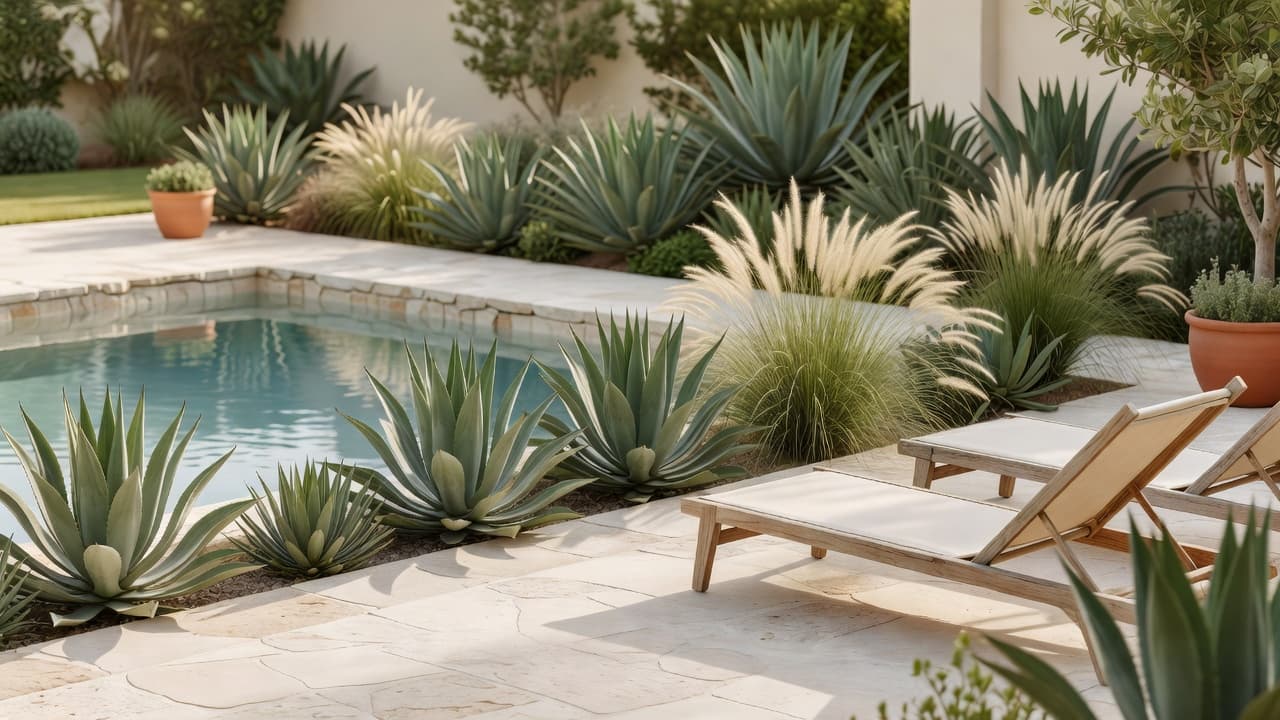
What is AI pool landscaping design?
A pool area is one of the harder spaces to redesign well, because decking, coping, drainage and safety fencing all have to work together around a fixed body of water — you cannot simply move the pool the way you can move a flower bed. That is exactly where an AI tool is most useful: instead of imagining how a new travertine deck or a hedge of clumping bamboo would look from a plan, an AI pool landscaping app renders it directly onto a photo of the pool you already have. Our broader AI garden design guide covers how this technology works across a whole garden; this guide focuses specifically on the pool area.
Most tools work the same basic way: upload one photo of the pool from your patio doors or a corner of the yard, and the app returns several redesign options — different decking materials, planting beds, and screening layouts — rendered against the real geometry of your pool, existing fence line and house. It is a starting point for a conversation with a landscaper or pool builder, not a replacement for a structural or safety review.
What to look for in an AI pool landscaping app
Not every AI image tool is built for this job. A generic AI image generator will happily invent a pool that looks nothing like yours; a genuine pool landscaping tool keeps your actual water body, coping line and house in place and only changes the surrounding materials and planting. Look for:
- Photo-based, not prompt-only. The redesign should be generated from your own photo, keeping the pool shape, deck footprint and sightlines from your house intact — not a fresh AI-generated pool that happens to look similar.
- Multiple decking and coping options in one run. A useful tool lets you compare travertine, concrete pavers and timber-look composite against the same photo, so you are judging materials, not different angles.
- Planting suggestions matched to a sunny, splash-exposed spot — not a generic "add plants" pass that ignores chlorine exposure, reflected heat off the deck, or root systems near buried plumbing.
- A rough cost range alongside the visual, even an approximate one, so a decking or coping idea can be sanity-checked before you call a contractor.
- Fast turnaround. A useful redesign should render in well under a minute, so you can compare five or six options in one sitting rather than waiting on a single mockup.
FlorAI is built around exactly this brief for outdoor spaces: upload a photo of your pool area and it generates a photorealistic redesign — deck material, planting and screening — from that same photo in seconds, free to try on iOS, Android and the web. Many pool areas double as the main patio too, so it is worth reading our AI patio design app guide alongside this one if you are planning the paving and seating zone as a single project.
Pool deck and coping materials compared
Deck and coping choices matter more around a pool than almost anywhere else in a garden, because the surface has to stay cool and grip-safe when wet, bare feet cross it constantly, and it sits right at the water’s edge. Coping — the capping stones that finish the pool edge — is priced separately from the deck field and needs precision cutting around curves, typically running $40–$75 per linear foot regardless of the deck material chosen.
- Tumbled travertine — naturally pitted, so it holds traction even wet, and stays notably cooler underfoot than concrete or pavers in direct sun; avoid honed or polished finishes, which are slippery poolside. Installed cost typically runs toward the higher end of paving options.
- Concrete pavers — a textured, slip-resistant surface that is widely available and easier to patch or replace individual units on than poured concrete; needs periodic sealing near a pool to resist chlorine staining.
- Poured concrete with a broom or knockdown finish — the most budget-friendly decking option and easy to keep genuinely non-slip with the right texture, though it can crack over time and is harder to repair invisibly than pavers.
- Textured porcelain pavers — a structured, slip-resistant surface with one of the highest outdoor durability ratings of any decking material, at a premium price point.
- Wood or composite decking — warmer underfoot and a softer look than stone, but needs the widest gaps and best drainage of any option to avoid standing chlorinated water, and composite in particular can run hot in full sun.
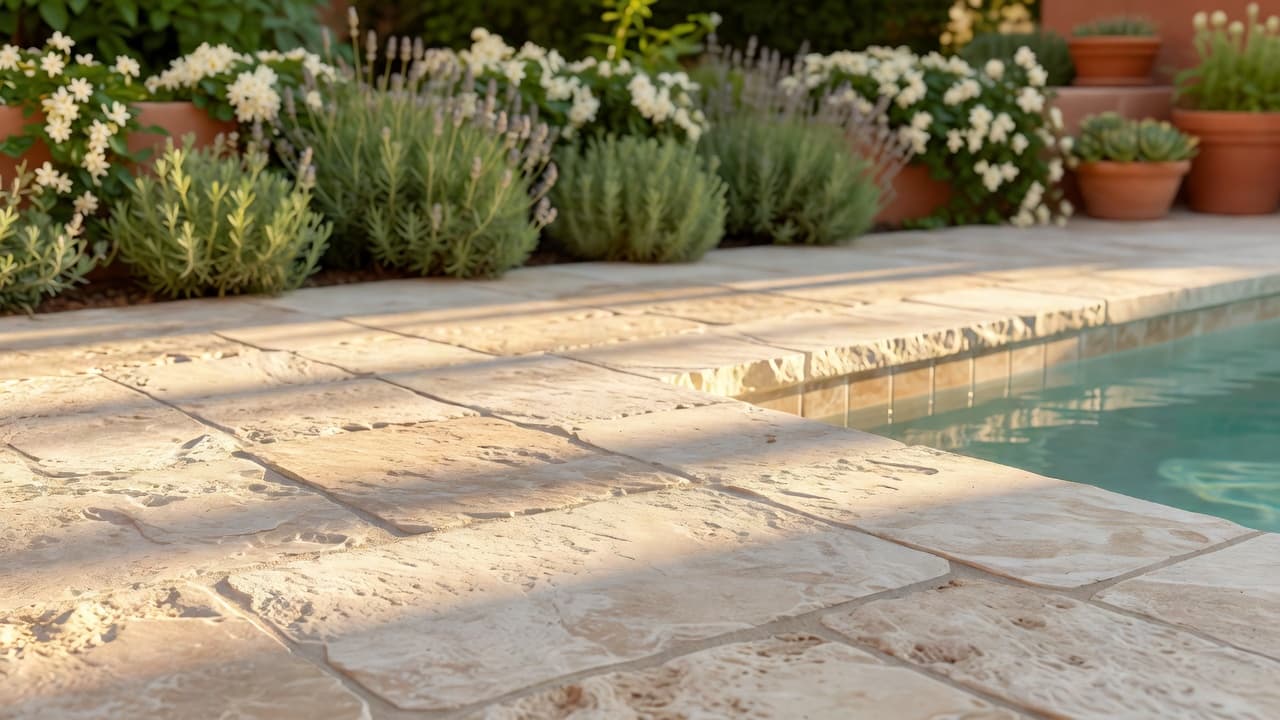
The best plants for poolside landscaping
Poolside planting has one job a normal border does not: staying tidy right next to water that gets skimmed and filtered. The University of Florida IFAS Extension’s guide to poolside plants puts it simply — the best candidates look good without making a mess on the deck and can shrug off an occasional splash of chlorinated water.
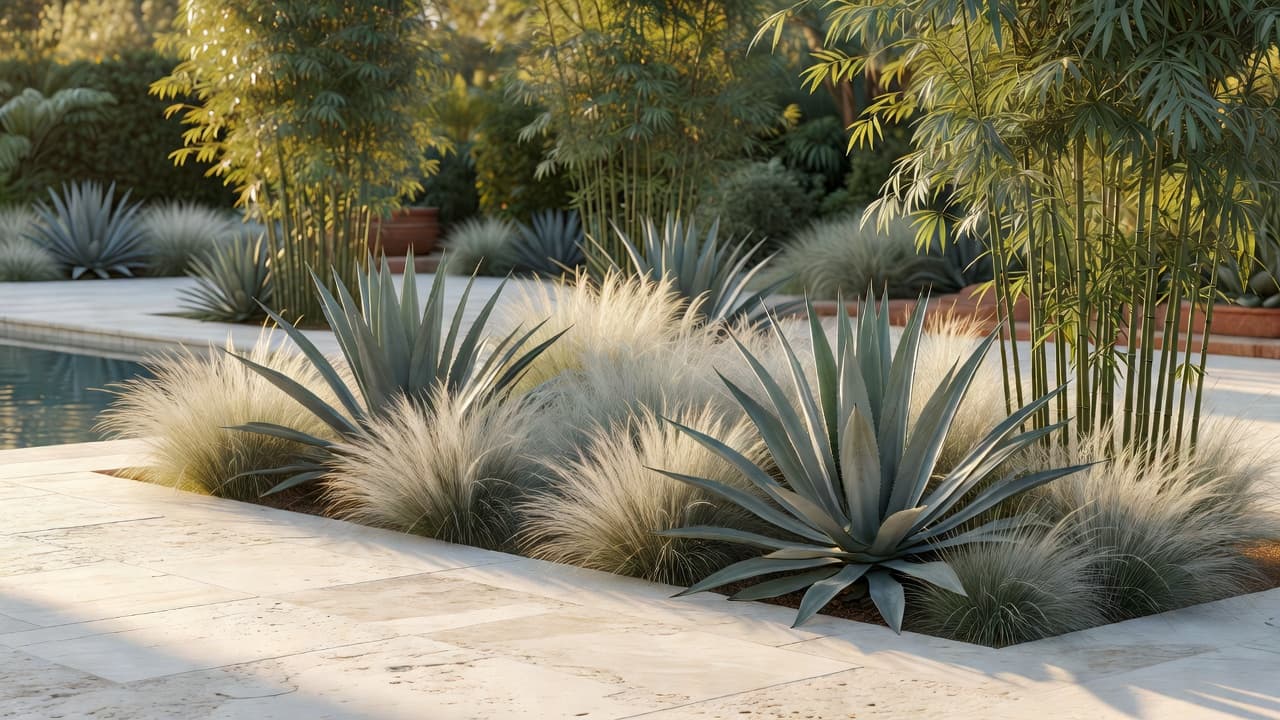
- Agave and other architectural succulents — near-zero litter, thrive in full reflected heat off a deck, and tolerate occasional chlorine splash without damage.
- Clumping (non-running) bamboo or ornamental grasses — screen quickly, drop minimal debris, and move nicely in the breeze without shedding petals into the water.
- Boxwood or other dense evergreen hedging — reliable year-round structure and a clean edge along a deck line, with no seasonal leaf drop to skim out.
- Star jasmine — evergreen, low-litter, and tolerant of reflected heat and occasional splash once established, with fragrant flowers that do not drop heavily.
- Society garlic or other strappy-leaved perennials — low, tidy edging plants that handle full sun and poolside heat without constant deadheading.
Steer well clear of large deciduous or fruiting trees within about 15 feet of a pool — species with aggressive, water-seeking roots such as willows, silver maple and some oaks can infiltrate buried pool plumbing within three to five years, and messy fruiting trees leave sticky drops and stains on decking that no amount of skimming fixes. Always check a plant’s cold hardiness against your region before buying; the USDA Plant Hardiness Zone Map is the fastest way to confirm what will actually survive winter where you live. Our low-maintenance garden design ideas guide covers more easy-care planting principles that apply well beyond the pool area.
Pool fencing and safety-barrier rules to design around
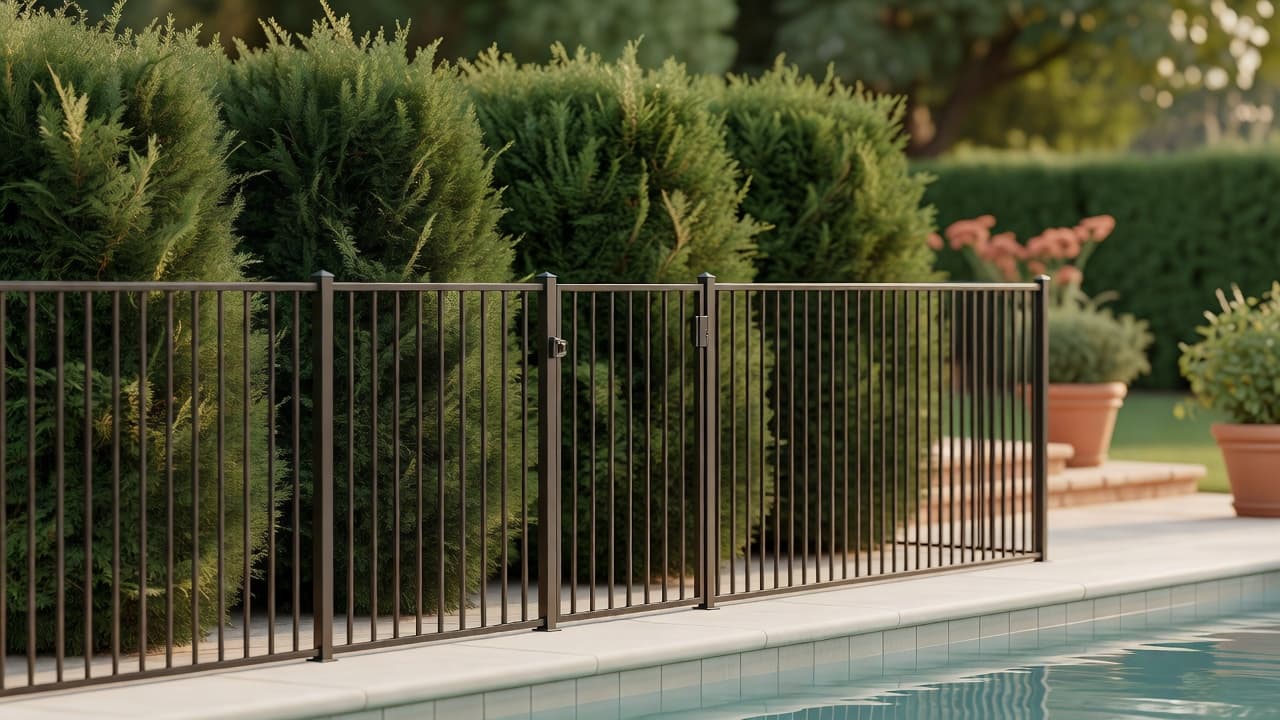
Any pool landscaping redesign has to work within safety-barrier rules, not around them — this is the one area where a design idea has to bend to code, not the other way round. The U.S. Consumer Product Safety Commission’s safety barrier guidelines for home pools recommend a barrier at least 48 inches (four feet) tall that fully encloses the pool and isolates it from the house and yard, with self-closing, self-latching gates that swing away from the water.
- The 4-inch sphere rule — no gap in a fence, gate or barrier should be wide enough for a 4-inch sphere to pass through, the standard test used to stop a small child squeezing under or between rails.
- Climb-resistant by design — no horizontal rails, footholds or nearby furniture that would let a child climb over; vertical pickets or mesh are generally safer than horizontal styles for this reason.
- Self-closing, self-latching gates, with the release mechanism mounted high enough — commonly around 54 inches — that a small child cannot reach it, swinging away from the pool rather than toward it.
- Barrier height and gate rules vary by state and municipality, from roughly 42 to 60 inches depending on where you live, so confirm the exact figure with your local building department before finalising a fence or screening design.
- Dense hedging can supplement but not replace a compliant barrier — it reads beautifully in a redesign, but most jurisdictions still require a code-compliant fence or wall underneath any planted screening.
If children use the pool area, plan the wider layout with that in mind from the start — our family-friendly garden design ideas guide covers safety-first planning for the rest of the yard beyond the barrier itself.
What pool landscaping costs in 2026
Decking is usually the single largest line item in a pool landscaping redesign. In 2026, a professionally installed pool deck typically runs $25–$50 per square foot depending on material, with a full deck replacement commonly landing between $5,000 and $20,000 for an average residential pool. Our garden design on a budget guide covers general ways to phase a larger outdoor project like this one, and our AI backyard design app guide covers planning the wider yard around the pool itself.
- Pressure-treated wood decking: roughly $25–$40 per square foot installed — the most affordable decking material, though it needs more upkeep than stone or composite.
- Concrete pavers or textured concrete: roughly $10–$35 per square foot installed, a mid-range option with good slip resistance and easier repairs than poured slab alone.
- Travertine or premium porcelain paving: toward the top of the range, often $35–$75+ per square foot installed, reflecting the material cost and precision cutting required around a curved pool edge.
- Pool coping: priced separately from the deck field, typically $40–$75 per linear foot, because of the precision masonry needed to finish the water’s edge cleanly.
- A fast-growing evergreen screening hedge (installed, per plant): roughly $80–$200 per plant for a mature specimen capable of screening quickly.
- A compliant safety fence adds a separate, non-negotiable line item on top of any decking or planting budget — get a local quote early, since it constrains the rest of the layout.
Mistakes that ruin a pool landscaping design
- Planting large trees too close to the pool. Roots from willows, silver maple and similar species can reach buried plumbing within three to five years, turning a landscaping choice into a plumbing repair bill.
- Choosing a polished or honed stone finish. It looks striking in a showroom but becomes genuinely dangerous the moment it gets wet — always confirm a tumbled or textured finish for anything within splash range.
- Treating hedging as a substitute for a compliant barrier. Privacy planting is a nice-to-have; a self-closing, self-latching, code-height fence around the water is not optional.
- Ignoring drainage on the deck. A deck that does not slope water away from the house or pool edge leaves standing chlorinated water that stains stone, rots timber joints and stays slick underfoot.
- Over-planting right up to the coping line. Leaves and petals end up in the skimmer basket daily; keep flowering and deciduous planting set back from the immediate deck edge.
- Finalising a fence or hedge layout before checking local code. Barrier height and gate rules genuinely vary by state and city — a design that looks right can still fail inspection.
Seeing a decking material, a planting bed or a screening hedge applied to a real photo of your own pool makes these trade-offs far easier to judge than picturing them from a materials list. FlorAI can generate a photorealistic pool landscaping redesign from a single photo, so you can compare deck materials and planting options before any contractor sets foot on site.
Frequently asked questions about AI pool landscaping design
What is AI pool landscaping design?
AI pool landscaping design uses an app to turn a single photo of an existing pool area into a photorealistic redesign — new decking, coping, planting and screening — in seconds, keeping the real shape of your pool and yard rather than generating a generic image.
What is the best decking material around a pool?
Tumbled (not polished) travertine offers some of the best slip resistance and stays cooler underfoot in direct sun than concrete or standard pavers, though textured concrete pavers are a more affordable option with good grip. Always avoid honed or polished stone finishes right at the water’s edge.
What plants are safe to grow around a swimming pool?
Low-litter, chlorine-tolerant plants do best: agave and other succulents, clumping bamboo, ornamental grasses, boxwood hedging, star jasmine and society garlic are all commonly recommended by extension horticulturists for poolside planting.
How tall does a pool fence need to be?
U.S. safety guidelines recommend at least 48 inches, though actual requirements vary by state and municipality, from roughly 42 to 60 inches. Always confirm the exact height and gate rules with your local building department before finalising a design.
How much does pool landscaping cost in 2026?
A professionally installed pool deck typically costs $25–$50 per square foot depending on material, with a full deck commonly running $5,000–$20,000. Pool coping is priced separately, usually $40–$75 per linear foot.
Can AI help design pool landscaping?
Yes. An AI garden design app like FlorAI can turn a single photo of your pool area into a photorealistic redesign, making it much easier to compare decking materials, planting and screening before committing to a contractor quote.
Last updated: August 2026. Written by the FlorAI garden team.