
Cutting Gardens · 2026 guide
How to Design a Cutting Garden (2026 Layout Guide)
How to design a cutting garden comes down to five decisions made before you sow a single seed: a full-sun spot, rows instead of drifts, support in place early, flowers chosen for repeat cutting rather than good looks left alone, and spacing tight enough to fill a vase all summer. Get the layout right first and the growing takes care of itself — get it wrong and you spend the season fighting floppy stems and gaps. This guide walks through each decision in order, with the spacing, support and plant choices that separate a genuinely productive cutting garden from a pretty flower bed that empties after one bouquet.
AI Garden Design GuidesPublished August 30, 2026Updated August 30, 202610 min read
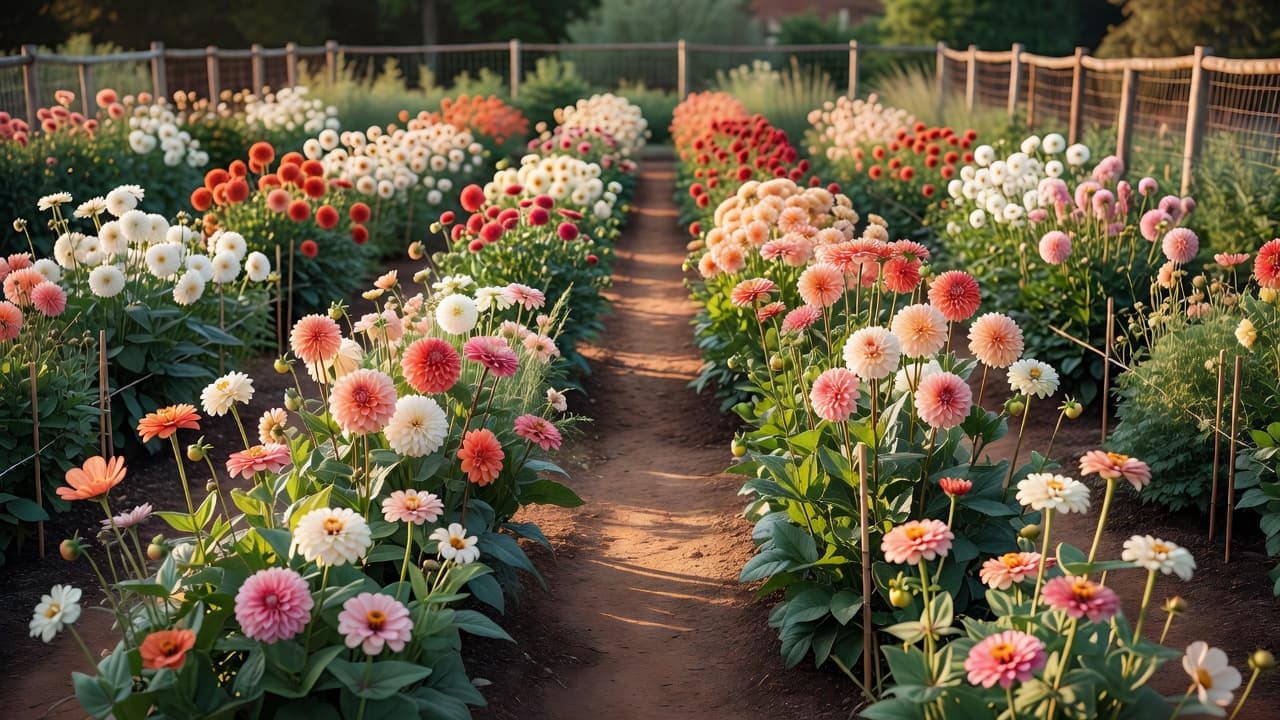
How to design a cutting garden, step by step
Most flower beds are designed to be looked at where they stand. A cutting garden is designed to be raided — cut back hard, again and again, from early summer to first frost — so a handful of rules that would ruin an ornamental border are exactly what make a cutting patch work. If you already have a favourite border and want to test a cutting garden idea on it before you dig, our guide to AI flower bed design covers the photo-first tools that let you try a layout on your own space first, and our plain-English explainer of AI garden design is the gentlest starting point if the whole idea is new.
Choose the right spot before you choose a single flower
Almost every good cutting flower — dahlias, zinnias, cosmos, sweet peas, snapdragons — wants the same thing: six to eight hours of direct sun a day. Skimp on light and you get short stems and fewer flowers, whatever else you get right. Wind matters almost as much, since the tall, top-heavy stems a cutting garden produces on purpose are exactly the ones a gust snaps; a spot with a hedge, fence or wall to the prevailing wind side is worth more than a slightly sunnier but exposed one.
- Six to eight hours of direct sun. Anything shadier and you are choosing from a much shorter, less rewarding plant list.
- Shelter from wind. A fence, hedge or wall on the windward side keeps tall dahlias and cosmos upright between stakings.
- Water within hose reach. A cutting garden is watered more often than a settled border, especially while seedlings establish.
- A path down every side. You should never need to step on the growing soil to reach a stem — compacted soil grows shorter, weaker flowers.
Lay it out in rows or blocks, not drifts
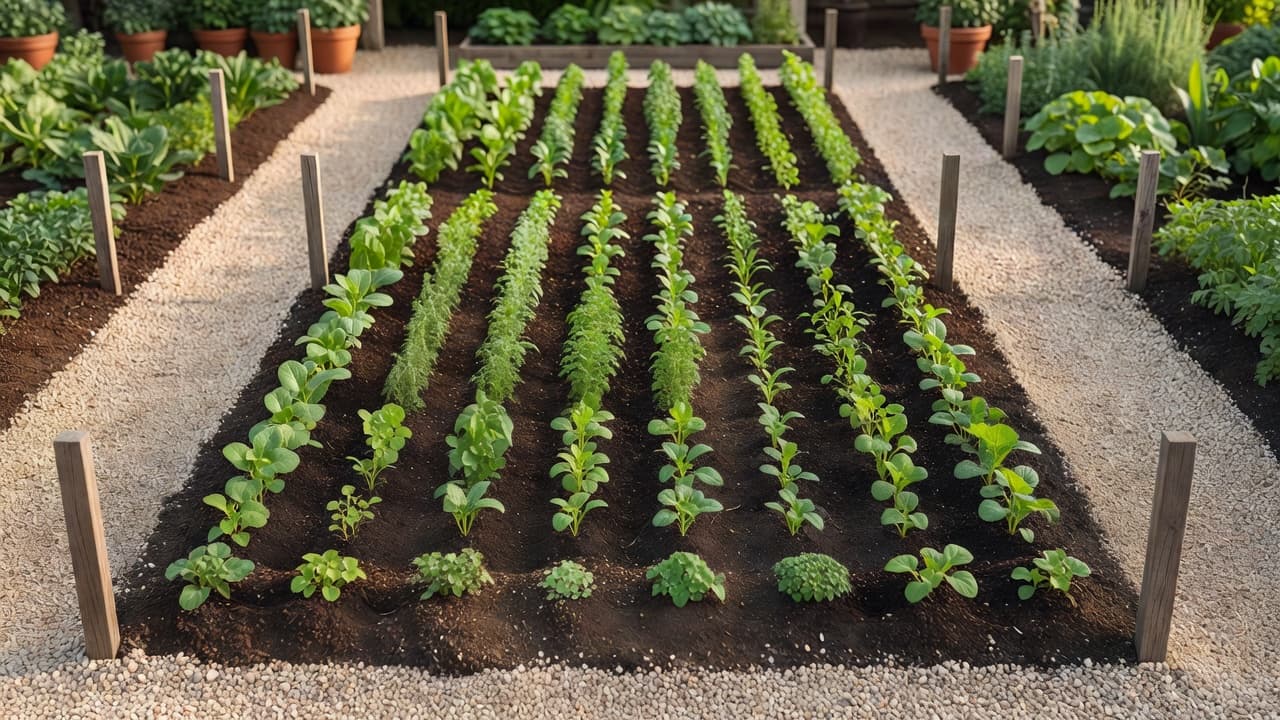
You need less space than you think. A bed roughly 3m by 4m (about 10ft by 13ft) — smaller than most people picture — grows enough zinnias, cosmos and dahlias for a household’s worth of cut flowers most weeks of summer. Orient the rows north to south where you can, so neither row shades its neighbour as the sun moves through the day, and keep each bed narrow enough — 90 to 120cm — that you can reach the centre from either side without ever standing on the soil.
- Mark out one or two beds rather than a single sprawling patch — smaller, well-tended beds outproduce one large, half-managed one.
- Run rows north to south so every plant gets even light through the day rather than shading the row beside it.
- Cap bed width at about 120cm so the middle row is always within arm’s reach from a path on either side.
- Leave 40 to 45cm paths between beds — enough for a wheelbarrow and a kneeling pad, not so much that you waste growing space.
- Group by final height, tallest at the back or one end (dahlias, cosmos) and shortest at the front or other end (zinnias, sweet peas on a low frame), so nothing shades its neighbour.
If open ground is in short supply, the same rules translate directly onto a raised bed — our guide to raised bed garden design covers the layout in more depth. And because a cutting garden is picked for colour as much as for structure, it is worth deciding your palette before you order seed: our guide to colour theory for garden design is a quick way to choose a scheme that makes every bunch you cut look deliberate rather than accidental.
Give every stem something to lean on
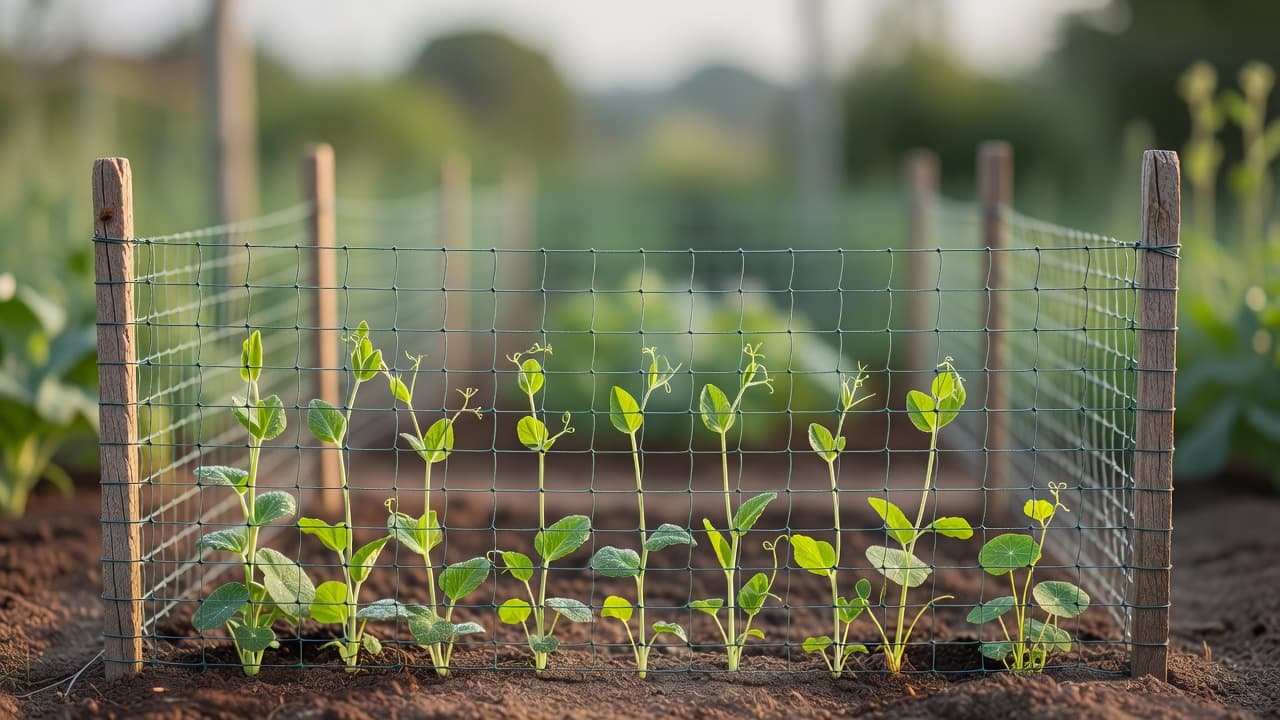
Support is the step beginners skip and regret. Push stakes in early — before plants need them, not after the first stem has already flopped — and the plants will grow up through the support rather than being tied to it afterwards. The standard method is a simple grid: a stout stake at each corner of the bed (and along its length, every 1 to 1.5m, for anything longer), with pea netting or wide-mesh plastic or metal fencing stretched horizontally about 30 to 40cm above the soil. As the plants grow through the mesh and gain height, add a second layer of netting 30 to 40cm above the first. The RHS growing guide for dahlias recommends the same principle for taller varieties: stake early and support the whole clump, not just a single cane per stem.
- Grow-through netting for blocks of zinnias, cosmos and dahlias — corner stakes, mesh stretched at 30 to 40cm, a second layer added as height increases.
- Individual canes for single, heavy-headed stems like dinner-plate dahlias or delphiniums.
- Twiggy pea sticks pushed in among shorter cut-and-come-again annuals for light, invisible support.
- Posts every metre or so along a long row, so the netting cannot sag or twist in wind.
Choose flowers that reward cutting, not just growing
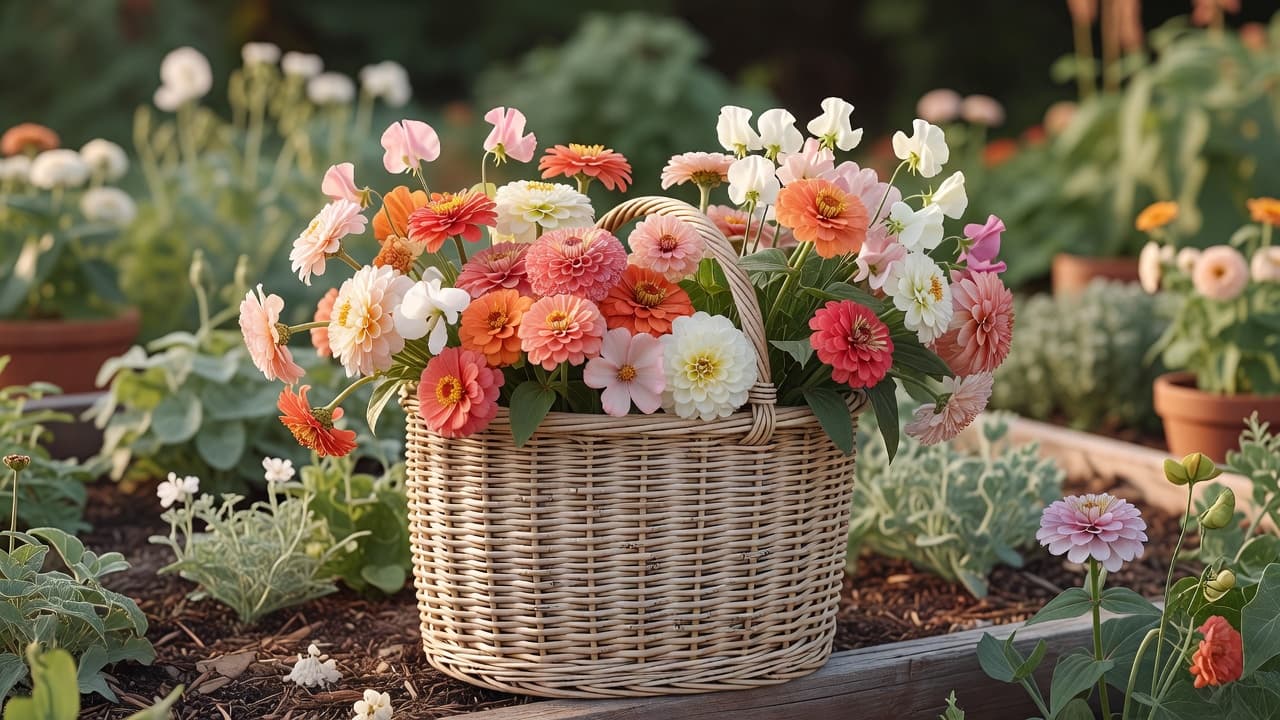
The best cutting-garden flowers share one trait: the more you cut them, the more they bloom. Removing a stem before it sets seed tells the plant to put its energy into producing another one instead — the opposite of an ornamental border, where the goal is often to leave flowers in place as long as possible.
- Zinnia (Zinnia elegans). The easiest cut-and-come-again annual there is — fast from seed, branches hard once cut, and 2026’s newer series lean into heat tolerance and richer, more complex colours for a warming, less predictable summer.
- Cosmos (Cosmos bipinnatus). Airy, daisy-like filler that softens a bunch of bolder flowers; frillier double forms have become especially popular as breeders chase texture as well as colour.
- Dahlia. The structural workhorse of a late-summer cutting garden — ball, decorative and collarette types all cut well. Grown from tubers rather than seed, so the upfront cost is higher, but in most climates outside the mildest winters the tubers are lifted and stored to come back next year.
- Sweet pea (Lathyrus odoratus). A cool-season climber that wants its support and its seed in the ground earliest of anything on this list — plant it before you plant anything else.
- Snapdragon (Antirrhinum). Cool-season vertical spires that fill the gap between spring bulbs and the summer main event.
You do not need all five to start — a single bed of zinnias and cosmos, sown a few weeks apart, will out-produce a more ambitious plan you never quite finish planting. Check anything unfamiliar against the RHS zinnia growing guide or Gardeners’ World before you buy, and confirm anything perennial suits your winters.
Space tighter than a border, and sow in succession
A cutting garden is planted closer than an ornamental bed, because the goal is volume, not a specimen plant with room to spread. As a rule of thumb, plant 20 to 30% closer than the spacing given on a seed packet — the plants stay a little shorter and support each other, and you get more stems per square metre. Wider row spacing pays off too: growers who compare it find that giving cosmos about 40cm between rows and zinnias about 50cm noticeably lengthens and thickens the stems, since better airflow between rows also cuts down the fungal problems, like botrytis, that thrive in a crowded, still bed.
The second lever is succession sowing: rather than one big sowing in spring, put in a new short row of zinnias or cosmos every three to four weeks from mid-spring into midsummer. Each batch takes over as the one before it starts to tire, so the bed keeps producing at its peak instead of giving you one enormous flush followed by six weeks of thin pickings. If the cutting garden is part of a larger redesign rather than a stand-alone project, our guide to planning a garden redesign covers how to sequence a project like this alongside everything else.
Pinch out the tips for bushier plants and more stems
Once zinnias and dahlias reach about 30 to 45cm, pinch or snip out the growing tip, cutting back to just above a leaf pair. Removing the tip breaks the hormone signal that keeps a plant growing one dominant stem upward — the same principle behind the RHS "Chelsea chop" technique for herbaceous plants — and the plant responds by sending up several branching stems instead of one. It feels counterintuitive to cut back a plant that has barely started, but it is the single biggest thing you can do to multiply your harvest.
After that, keep it simple: a balanced liquid feed every couple of weeks once flowering starts, and cut or deadhead promptly. A cutting garden left unpicked for a week does not rest — it sets seed and slows right down, so the bed that gets harvested hardest is, counterintuitively, the one that keeps producing longest.
See the layout before you dig a single row
Nearly every mistake in this guide is a layout mistake made before anything was planted — beds too wide to reach, rows running the wrong way, no room left for netting posts. That makes a cutting garden a good candidate for testing on a photo before you mark out a single row with string. FlorAI takes one photo of the spot you have in mind and shows it laid out — rows, paths and height order included — so you can move things around on screen instead of in the soil. It runs free on the web, iPhone and Android. A cutting garden along a fence line is also one of the better ways to bring in pollinators; if that is part of the goal, our guide to designing a wildlife garden pairs well with this one.
What a cutting garden costs to start
A cutting garden is one of the cheapest ways to fill a house with flowers. Most of the plants on this list are grown from seed: a $3 to $5 packet of zinnia or cosmos seed reliably produces several dozen stems over a season, next to the cost of a few canes and a roll of pea netting for support. Compare that with the cost of a professionally installed, fully planted ornamental flower bed — typically about $4.50 to $13.50 per square foot in the US in 2026 — and the case for growing your own cutting patch from seed is mostly about the price of a few seed packets and some patience.
Dahlias are the exception worth budgeting for: grown from tubers rather than seed, they cost more to start, but a tuber that is lifted and stored somewhere frost-free over winter, as the RHS recommends for all but the mildest climates, comes back and multiplies for years — so the real cost is spread a long way past the first summer.
Frequently asked questions
What is a cutting garden?
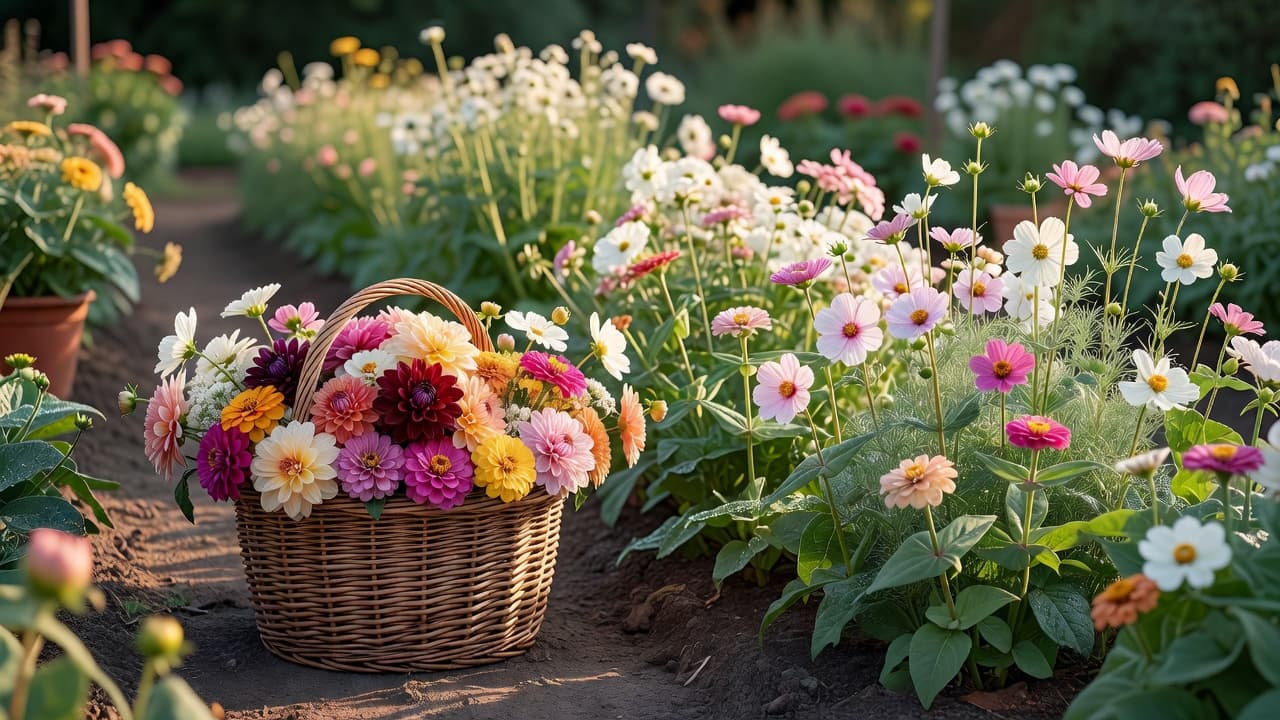
A cutting garden is a dedicated bed, usually laid out in straight rows or blocks, planted and spaced specifically to be cut for indoor arrangements — judged on how many stems it produces rather than how it looks left alone.
How big should a cutting garden be?
Smaller than most people expect. A bed around 3m by 4m (about 10ft by 13ft), planted intensively with succession sowing, produces enough zinnias, cosmos and dahlias for a household’s cut flowers through most of summer.
What flowers are easiest for a beginner cutting garden?
Zinnias and cosmos. Both grow easily from seed, bloom within weeks, and reward cutting with more flowers rather than fewer. Add dahlias and sweet peas once the basics are established.
Do cut flowers need staking or support?
Yes, almost all of them. Push stakes and horizontal netting in early, before the plants need it, so stems grow up through the grid rather than flopping and needing to be tied afterwards.
How much does it cost to start a cutting garden?
Very little to start from seed — a few dollars per packet, enough for several dozen stems, plus stakes and netting. Dahlias, grown from tubers, cost more upfront but return for years if lifted and stored over winter.
Can I fit a cutting garden into a small backyard?
Yes. Even a single bed a couple of metres square, planted intensively with zinnias and cosmos and sown in succession, will produce a regular supply of cut flowers — it does not need to be a dedicated field.
Last updated: August 2026. Written by the FlorAI garden team.